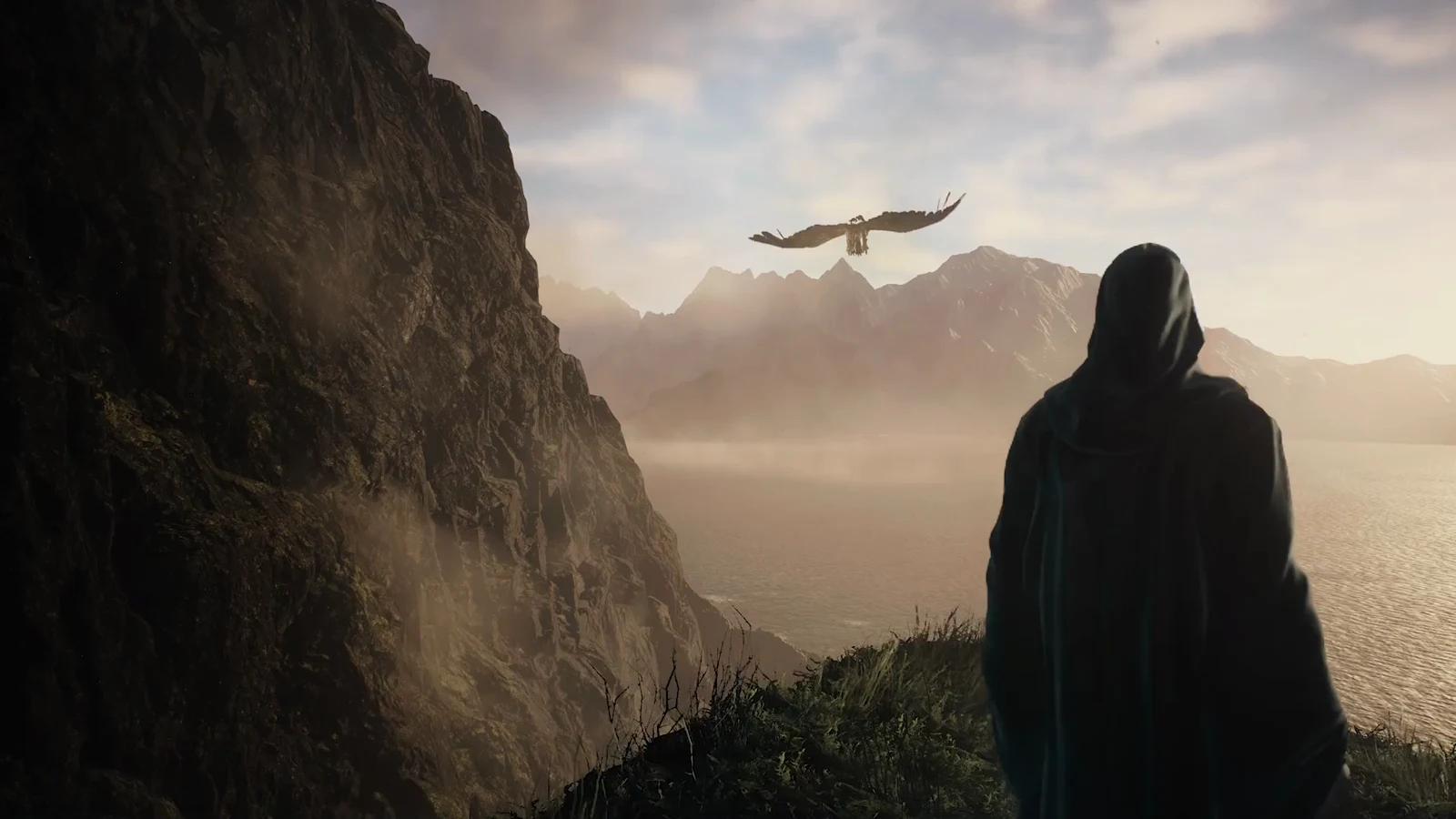
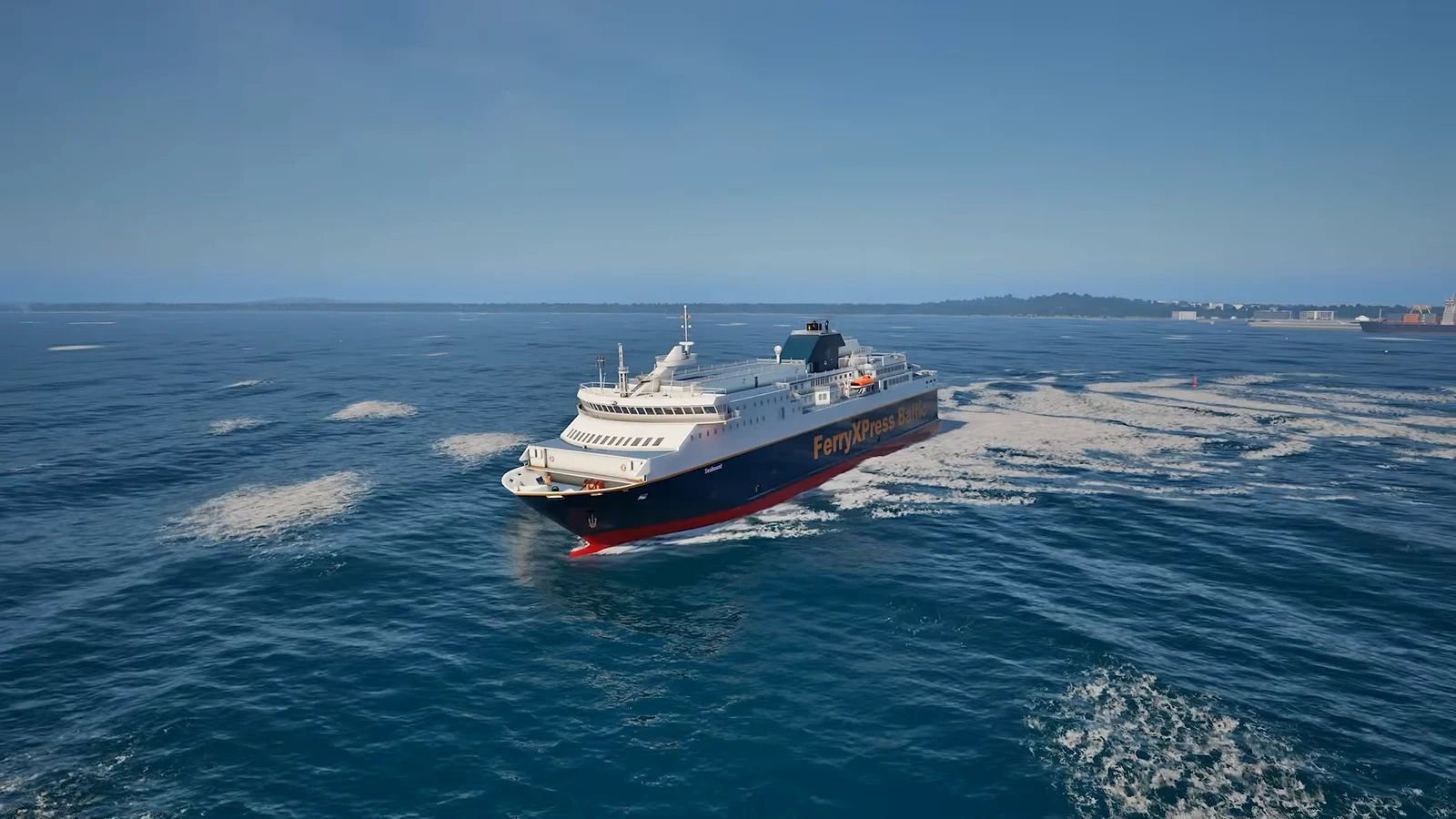
Professional Ship Simulator has left the demo stage. The maritime sim from German studio SWE Systems, published by Aerosoft and previously known as NauticXP, is now live in Early Access on Windows, built around fully clickable bridges, real-world chart data, and a hydrodynamics model that has no arcade mode to fall back on.
Quick answer: The Early Access build released on September 16th, 2026 at 14:00 UTC for Windows. It ships with nine playable vessels, two large maps, eight mission types, and a first batch of tutorials.
What the Early Access build includes
The launch version is a foundation, not a finished game, and the developers say so plainly. The physics model is in place, both main sceneries are explorable, and eight mission types cover the core professional work. Tutorials and scenarios exist, but only a first set of them.
It is single-player only, runs on Windows, and supports Steam Achievements and Steam Cloud. Nine languages are covered for interface and subtitles — English, French, Italian, German, Spanish, Brazilian Portuguese, Simplified Chinese, Polish, and Russian — with full voice audio in English alone. Installing it also means accepting a separate Nautic XP Ship Simulator EULA.
Modding is not in the launch build. Support for custom ships, missions, scenery, sounds, and flags through Unreal Engine integration is planned to arrive during Early Access.
The nine playable ships
You start small and work up. Credits earned from missions go toward expanding the fleet and buying licenses, which is how you move from harbor operator to captain of the larger commercial hulls.
- Tugboat
- Fishing trawler
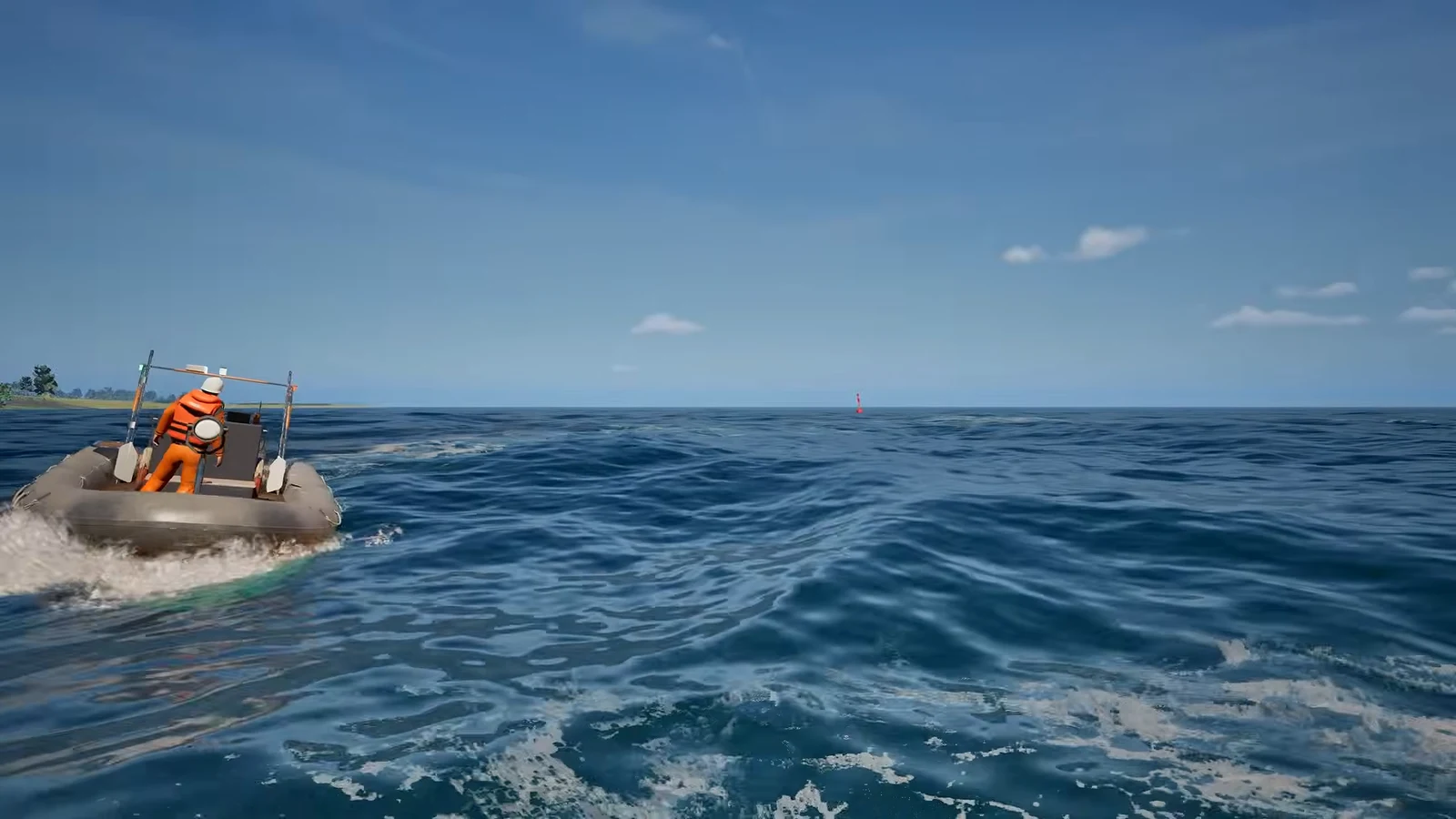
- Rescue vessel
- Offshore ship
- Yacht
- Container ship
- Bulk carrier
- LNG tanker
- Cruise ship
Both maps and where they are set
Two sceneries are built from real geographic data, and both are large enough that a single crossing takes real time. There is no time acceleration promised, so distance is a genuine cost.
| Scenery | Size | Region |
|---|---|---|
| Island of Rügen | 60km x 120km | Baltic Sea |
| Strait of Dover | 140km x 140km | English Channel |
Across both maps there are more than 40 harbors, plus thousands of real seamarks, navigation lights, and charted obstacles. The map system is tile-based and designed to be extended later by mods.
Ship systems, physics, and weather
The handling model is the selling point. It accounts for propeller torque, bank effect, wind and current drift, anchor behavior, and line tension, and ships take hull damage and flood when you get it wrong. Mooring and towing are simulated as physical interactions, and the larger vessels have working wing control stations on the bridge wings.
Onboard systems run deeper than steering. You manage power generation and transmission, then work with radar that includes AIS and CPA readouts, sonar, and radio communication with harbors and other traffic.
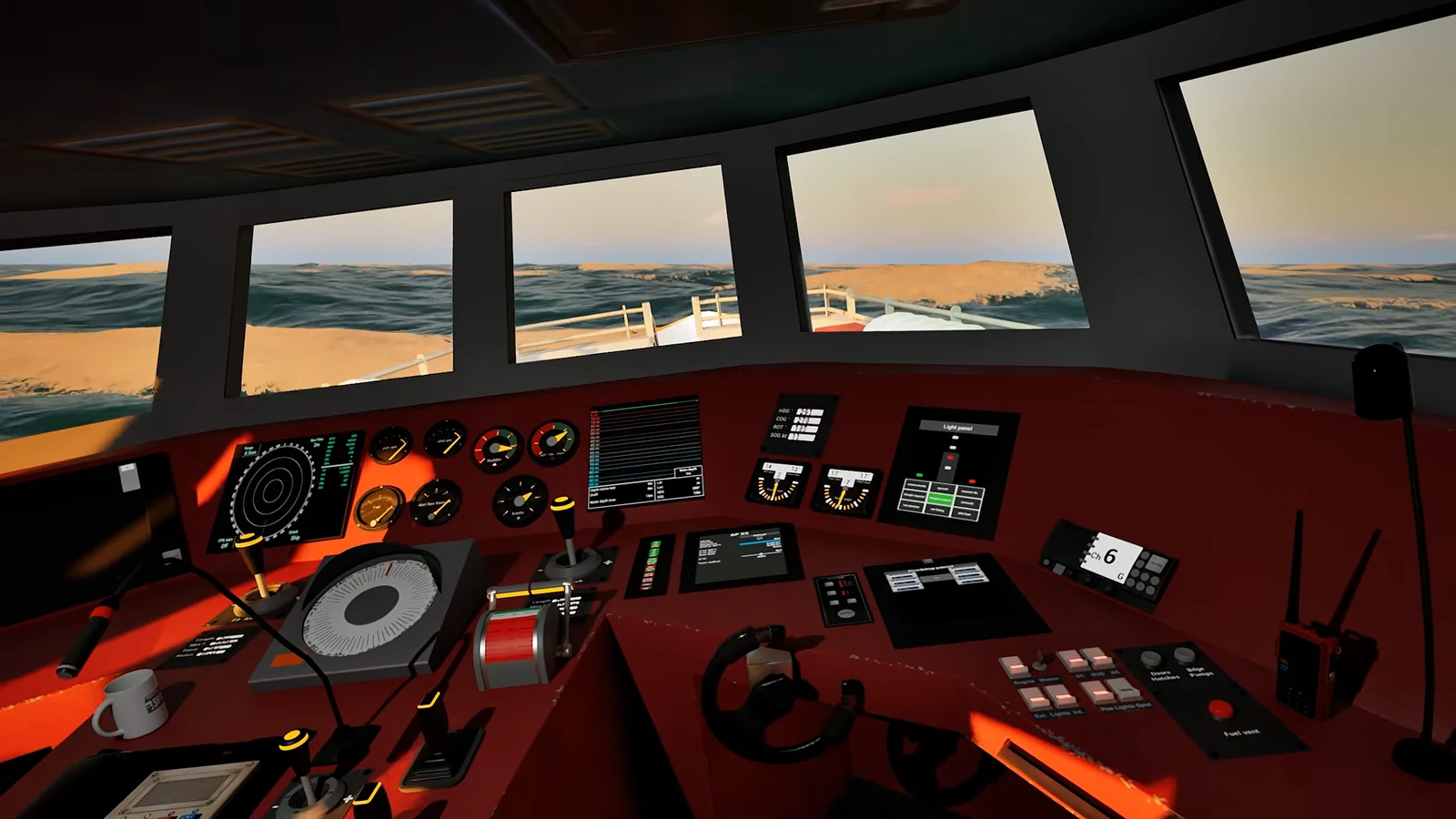
Weather is dynamic, with a full day/night cycle and an option to pull real-time weather data. Storm fronts move, wind and currents shift, and sea states run from flat calm to heavy swell, with fog, rain, and snow on top. AI traffic fills the shipping lanes and the harbor approaches, so the water is rarely empty.
Mission types and career mode
Work splits between structured jobs and free sailing in the open world. Cargo transport, ferry runs, fishing with sonar, and offshore logistics make up the routine end. The specialist tasks are tug assistance, buoy maintenance, search and rescue, and firefighting on burning vessels.
Career mode wraps those jobs in licensing and training. Missions pay credits, credits buy ships and licenses, and licenses open up the heavier tonnage. Every mission type still runs on the same physics, so a docking job in a gale is a different job than the same docking on a calm morning.
Controls: Clickable bridge, gamepad, and joystick
Every switch and lever on the bridge is clickable, and input mapping is open. The scheme spans over 50 buttons, 9 axes, and a triple-layer keyboard layout, with support for joysticks and gamepads. External tools can hook in through NMEA and GPX for chart and map integration, and built-in editors let you build custom harbor areas, ships, and scenarios.
The learning curve is steep by design. Demo players repeatedly got stuck before leaving the dock, and the developers have said the sim will stay complex rather than gain an arcade mode, while adding better accessibility tools. Printable keyboard and gamepad layouts are worth keeping open on a second screen, and both are published on the game’s official site alongside the online manual.
Price, storefronts, and the free demo
The sim is sold on Steam and the Epic Games Store. Aerosoft also sells it directly as a download with a Steam key, currently at €24.86 excluding VAT — a 20 percent launch discount off €31.08 — with that offer running until September 30th, 2026 and not combinable with other discounts.
The price stays the same for the whole Early Access period, with an adjustment possible only at full release. If you want to test the control scheme before paying, the free demo is still on Steam, and the Aerosoft store listing carries the direct download version.
PC system requirements
| Component | Minimum | Recommended |
|---|---|---|
| OS | Windows 11 Home | Windows 11 Home |
| CPU | Intel Core i5-12500H or similar | Intel Core i7-13700HX or similar |
| RAM | 16 GB | 32 GB |
| GPU | GTX 1080 Ti, 8GB VRAM min. | RTX 4070 12GB or RX 7800 XT |
| DirectX | Version 12 | Version 12 |
| Storage | 16 GB | 16 GB |
A broadband connection, a Steam account, and a DirectX-compatible sound card are required in both tiers. The frame rate target is set to 60fps.
How long Early Access is expected to last
SWE Systems is aiming to close out the Early Access phase in mid-2027, with the caveat that community requests for new features could move that. The plan for the road to 1.0 is more playable ships, more missions and real-world-inspired scenarios, better step-by-step tutorials, and the modding support that did not make launch.
Feedback is being collected through the game’s Discord and the Steam discussion boards, and the developers have been answering demo complaints there since last year — including admitting that AI traffic does not yet follow COLREGS properly and that performance needs work. That is the honest state of things: a detailed simulation with the systems in place and a long list of rough edges still being filed down.