Roblox RDC 2026: Every Major Announcement for Players and Creators
Browser play, offline modes, AI game creation, and the new Roblox Wallet and Card headline this year's conference.
Browser play, offline modes, AI game creation, and the new Roblox Wallet and Card headline this year’s conference.
by AllThingsHow Staff · Edited by Pallav Pathak
Roblox used its 2026 Developers Conference in San Jose to lay out how people will play and build games over the next year, and the plan reaches well beyond the app most players open today. The headline shifts touch how games are launched, how they are created, and how creators get paid, wrapped around Roblox’s 20th anniversary and a quarter in which players logged more than 29 billion hours across 180-plus countries.
Quick answer: Players will be able to launch Roblox games in Chrome by the end of 2026 and play offline modes by mid-2027, creators get AI-driven game-building tools plus the option to ship standalone apps, and a new Roblox Wallet will pay earnings in real currency every business day.
Image credit: Roblox
Browser play, offline modes, and standalone apps
The biggest change for players is where games live. By the end of 2026, you will be able to open a game directly in Chrome from its Experience Details Page, with no download or install required. More browsers are set to follow. The point is to remove friction so a link shared over search, YouTube, X, or a message from a friend drops you straight into a game.
Friends can share a text or social media post, and someone can click it and drop right into the game.
That is how Lead Engineer Nick Tornow framed the web player. Alongside it, Roblox is building offline solo play. Over the coming year, creators will be able to enable an offline solo mode next to a live multiplayer mode, so a game keeps running on a subway, on a flight, or anywhere the connection drops. Offline play is scheduled to arrive by mid-2027, with early access planned sooner.
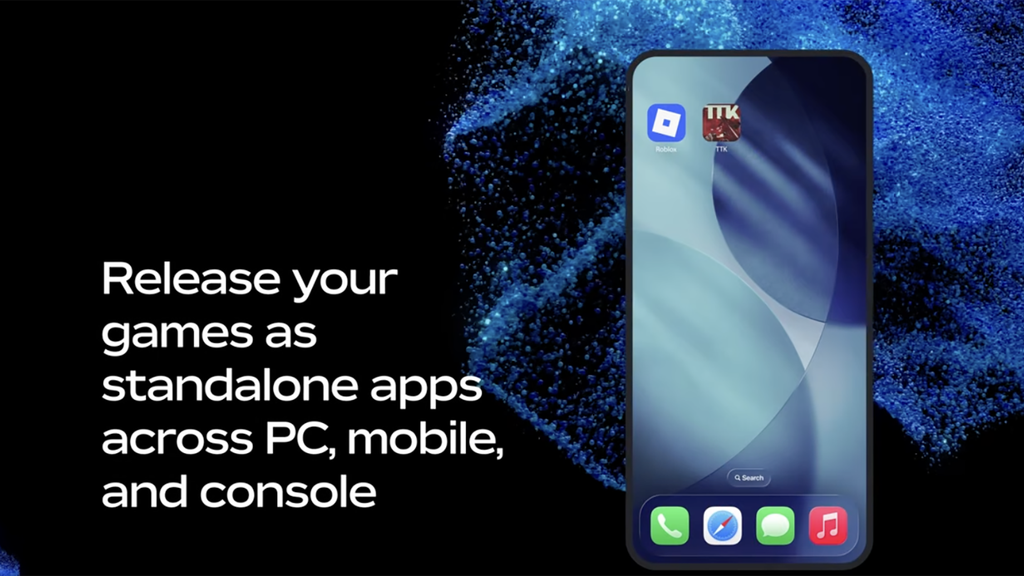
Roblox is also introducing “Roblox Everywhere,” which lets creators publish their games as standalone apps on mobile, PC, and consoles. The games still run on Roblox’s engine, and Roblox handles the underlying infrastructure and services, so developers do not have to manage server hosting or app plumbing themselves. Faster loading and rendering are meant to accompany all of this.
Image credit: Roblox
Chat and social changes
A new Friends chat tab now follows you across games, so you can coordinate with friends and jump into a new game together without losing the thread. Voice typing has been released, letting you speak instead of type while playing, and emoji support is coming to chat.
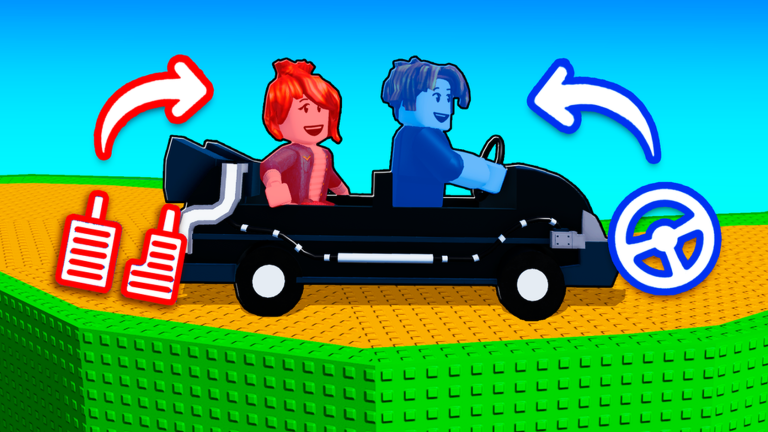
Later this year, creators will be able to add pre-set Quick Words to their games, such as “start your engines” in a racing title. Quick Words are reviewed for policy compliance ahead of time so players of any age can use them to coordinate safely.
New game types and engine features
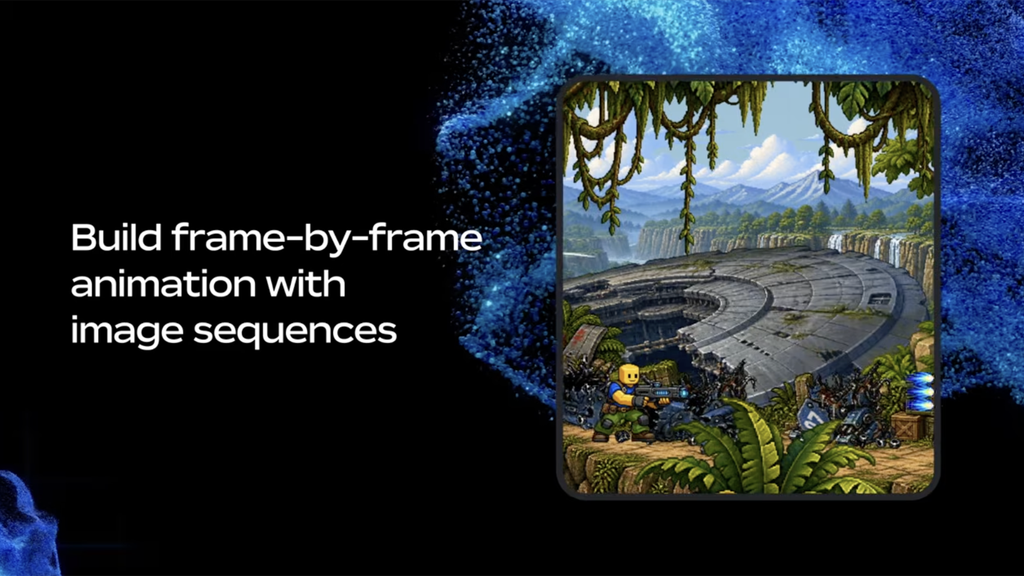
Roblox has long been known for 3D multiplayer worlds, and it is now opening the engine up to genres it had not fully supported. New tools target 2D and puzzle games, including a new orthographic camera, animated image containers, and direct sprite-sheet import for animation.
On the presentation side, new UI features add blur, text shadows, and improved gradients, along with orthographic 2.5D-style camera support. For turn-based, asynchronous games, a new notification system alerts players when it is their turn. That system arrives in Studio Beta in October 2026 and reaches full release by the end of the year.
Image credit: Roblox
AI game creation with Build and Scene Generator
Roblox is expanding Build, a tab in the Roblox app that lets anyone create a game from natural-language prompts. After launching in alpha in New Zealand, Build has been used to publish roughly 9,000 games, and 71% of the people who made a game with it had never used Roblox Studio before. The public alpha is now expanding to Serbia and Singapore, and every creator at the conference received access.
Build is gaining a new asset library, desktop access, and iterative control, and Roblox is starting to connect Build with Studio so creators can view, operate, and manage their games from the app. Creators can already review analytics and add monetization from their phones, with the ability to launch ads for their games coming soon.
Later this year, Scene Generator will bring prompt-to-scene creation to both Build and Studio. You supply a text prompt and a reference image, and it returns a working layout you can refine in Studio. Roblox also outlined broader AI work, including NPCs that can pick up and interact with objects, AI-driven playtesting without real players, dialogue and behavior generation for NPCs, and Roblox Reality for changing environments and weather without editing code.
Image credit: Roblox
Roblox Wallet and Roblox Card change how creators get paid
The most significant shift for the Robux economy is how earnings leave the platform. Creators have earned more than $5 billion on Roblox since DevEx launched in 2013, including about $1.7 billion in the past 12 months. The new Roblox Wallet moves that payout model toward real currency instead of a periodic Robux exchange.
Wallet is an account provided through a financial partner and accessible in Creator Hub. Once a creator opens one, earnings are paid out every business day in real currency as holds clear, with richer analytics showing where the money comes from. Funds can be moved to other Roblox accounts or an external bank account. It rolls out to eligible U.S.-based independent creators aged 18 and older later this year, with international expansion planned for the year ahead.
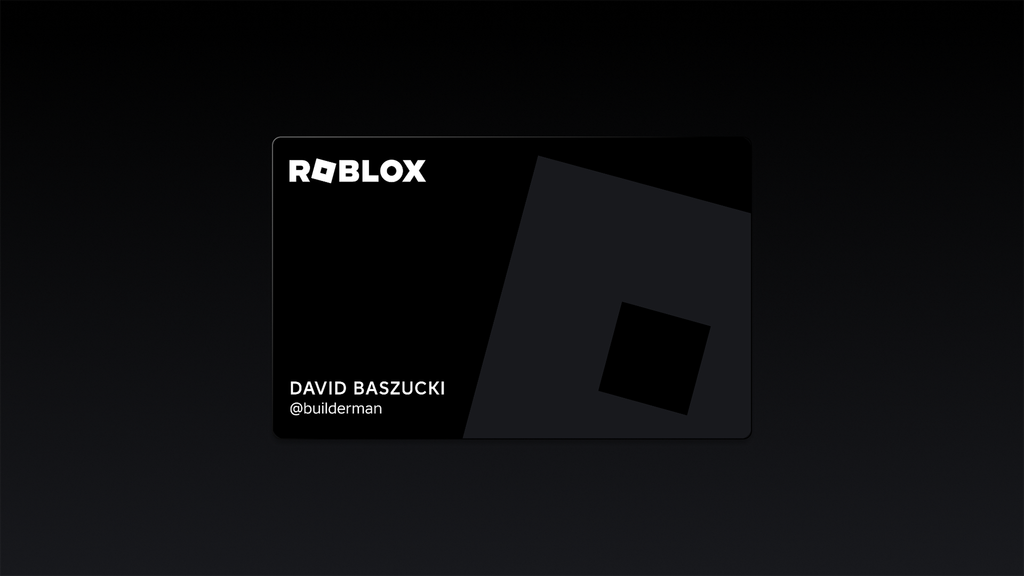
Roblox Card connects to the Wallet and lets creators spend their available balance directly, anywhere the card is accepted, with no bank transfer required. Roblox is working with Airwallex on the payments side and plans to begin rolling out the card in 2027. Chief Business Officer Enrico D’Angelo was clear about the limits of the move.
This does not mean that Roblox will become a financial institution or run as a bank.
Image credit: Roblox
Game discovery and Moments
Discovery is being reworked to serve different audiences. The ranking system is becoming more age-aware, recommending shorter-form games to younger players and deeper, return-visit games to older players. It also looks past the first week, measuring engagement across the first 28 days and beyond, and Roblox is testing a “direct growth” signal that tracks how many brand-new players a game brings to the platform.
The short-form video feed, Moments, is now fully available in the United States. Later this month, videos from a game’s Experience Details Page will start appearing in the feed. In October, players will be able to tap any avatar in a clip to buy the items or background shown, and Build games will become playable directly in the tab in the months that follow.
Rollout timeline
Feature
Timing
Browser play in Chrome
By the end of 2026
Turn-based multiplayer notifications
Studio Beta in October 2026, full release by end of 2026
Scene Generator (Build and Studio)
Later in 2026
Roblox Wallet (U.S. creators 18+)
Later in 2026
Offline solo play
By mid-2027, with early access sooner
Roblox Wallet (international)
2027
Roblox Card
Begins rolling out in 2027
Taken together, the announcements point to a Roblox that wants to be less of a single destination and more of a layer beneath games that run in browsers, offline, and as their own branded apps, with AI doing more of the building and real money reaching creators faster. The features arrive on staggered timelines through 2026 and 2027, so the near-term changes to watch are browser play in Chrome, the U.S. Wallet rollout, and the first waves of AI-assisted creation.