

Magic in RuneScape: Dragonwilds is not a class you pick at the start. It is a supply chain. Runes are the ammunition for staves and the fuel for utility spells, rune essence is the raw material, and Runecrafting is the skill that turns one into the other. Get that loop running and magic stops being a novelty stick and starts covering combat, mining, cooking, travel and gear repair.
Quick answer: Mine rune essence near the glowing geysers, craft it at a Rune Altar using Attune for the full 1:10 ratio and full XP, and siphon anima vents for rune types your level cannot craft yet.
Spells come from 12 skills, not just Magic
Utility spells unlock across a dozen different skills, so even players who never touch a staff end up casting. Woodcutting, Mining, Farming, Cooking, Construction, Agility and Runecrafting all hand out spells at milestone levels. That is why Rocksplosion, Bones to Peaches and Personal Chest sit in the same book as your combat kit.
Open the Spell Book menu with P. The left side lists everything, with locked spells greyed out until you hit the skill requirement. The right side is the wheel you actually use in the field, and it holds up to 12 spells across four separate spellbook pages. Drag spells in, then pull the wheel up mid-game with Q without losing sight of your surroundings.
Four pages is enough to keep a combat loadout, a travel and exploration loadout, and a farming or crafting loadout permanently set up. Swapping pages beats fishing through a single crowded wheel while something is chewing on you.
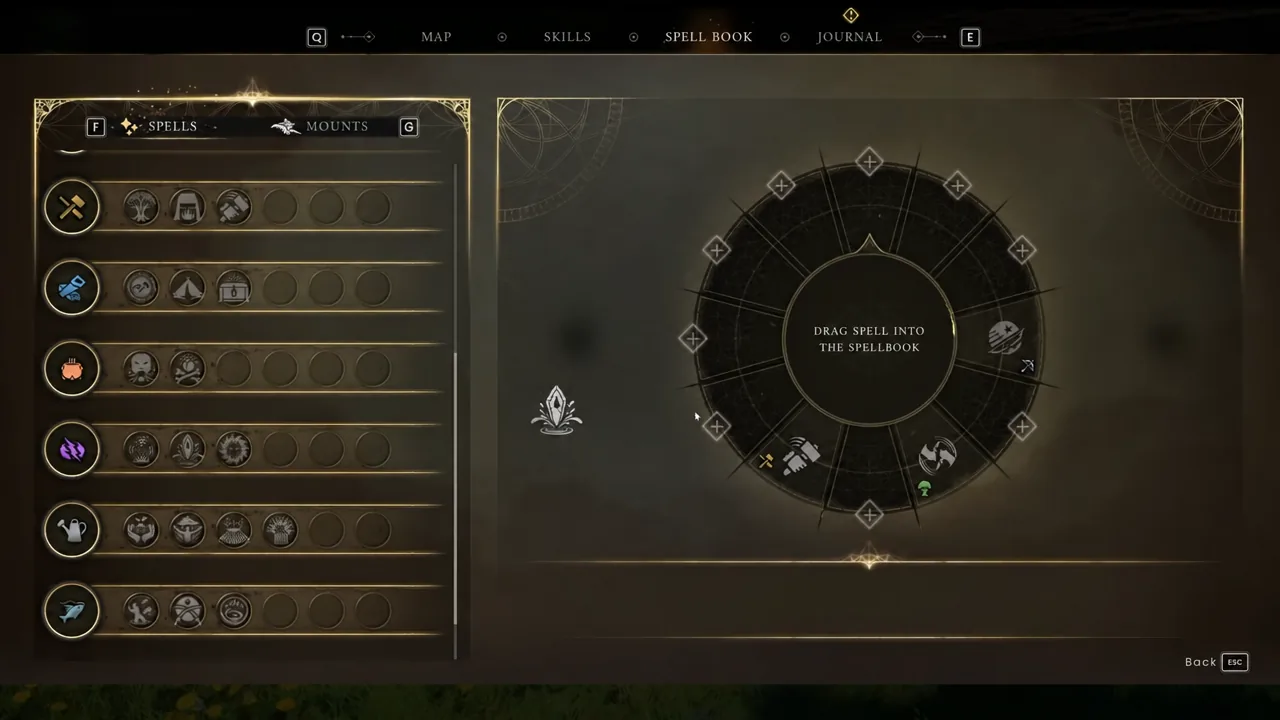
Windstep only needs Runecrafting 8 and 5 Air Runes, and it makes early traversal far less painful. Tempest Shield is an Attack spell at level 11 and costs 15 Air Runes on a 60-second cooldown, so it is not free just because you are a caster.
Rune types and the Runecrafting levels they need
Runes are weightless and live in a dedicated inventory tab, separate from your normal slots. They also stay with you when you die, which makes them the one resource you never have to run back for. There are four elemental runes and three catalytic runes.
| Rune | Runecrafting level | XP per craft | Efficiency upgrade |
|---|---|---|---|
| Air | 1 | 5 | 22 |
| Astral | 3 | 8 | 30 |
| Water | 11 | 10 | 58 |
| Earth | 15 | 13 | 68 |
| Fire | 25 | 18 | 75 |
| Nature | 38 | 25 | 87 |
| Law | 50 | 50 | 94 |
Law Runes power the lodestone network, so a mage who cannot make them is a mage who walks home. Fire Runes feed combat, Superheat and Mining spells. Astral Runes sit behind a lot of the better utility recipes. Early on you can scrape by on runes pulled from goblin packs and garou packs, but that supply dries up the moment you start autocasting.
How to farm rune essence
Rune essence geysers are scattered around Ashenfall and are hard to miss once you know the tell: a pink glow with chunks of rock floating in the air above it. Like other resource nodes, they come back after three in-game days, so a short circuit of known geysers is a reliable route.
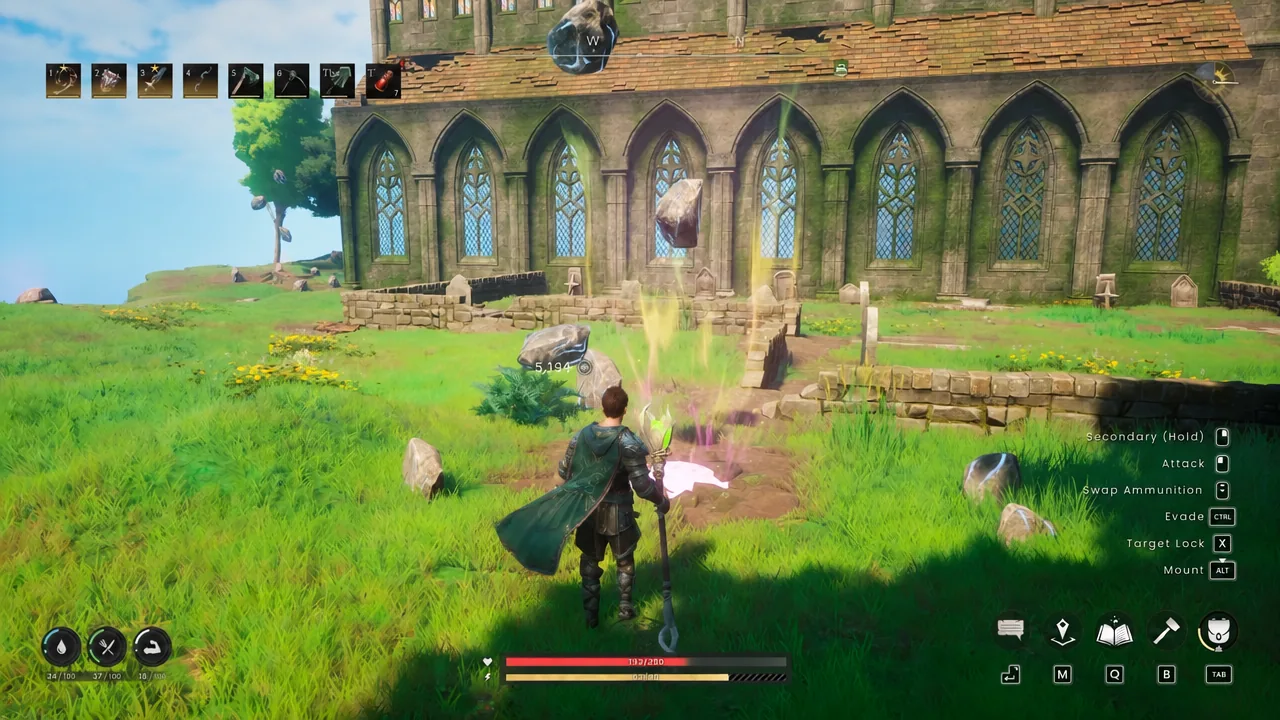
Two trinkets speed the mining up. The Unholy Symbol adds 15 percent damage to rune essence rocks and the Amulet of Glory adds 25 percent, at the cost of the Unholy Symbol shaving 15 points off your maximum HP. Leggings of Lightness add 50 to your carry weight, which matters when you are hauling several stacks back.
There is also a recycling route. Runes to Rune Essence unlocks at Runecrafting 27 and refunds 40 percent of each rune converted back; the upgrade at level 81 pushes that to 60 percent. Since runes weigh nothing and sit in their own pouch, you can generate essence on the road without carrying rocks.
Rune Altar: Attune versus Auto Craft
The Rune Altar unlocks as a craftable station the first time you pick up rune essence. Its menu lets you pick the rune type, set a batch size between 1 and 50, and then choose one of two conversion methods.
| Method | Essence to runes | XP | Effort |
|---|---|---|---|
| Attune | Up to 1:10 | Full | Two-phase minigame |
| Auto Craft | 1:5 by default | 25 percent | Instant |
Auto Craft only reaches the 1:10 ratio once you have bought the Efficiency upgrade for that specific rune, and those upgrades sit at high levels — 94 for Law Runes. Combine that with the quarter XP and it is hard to justify Auto Craft as a training method at any point before 99.
Attunement phase
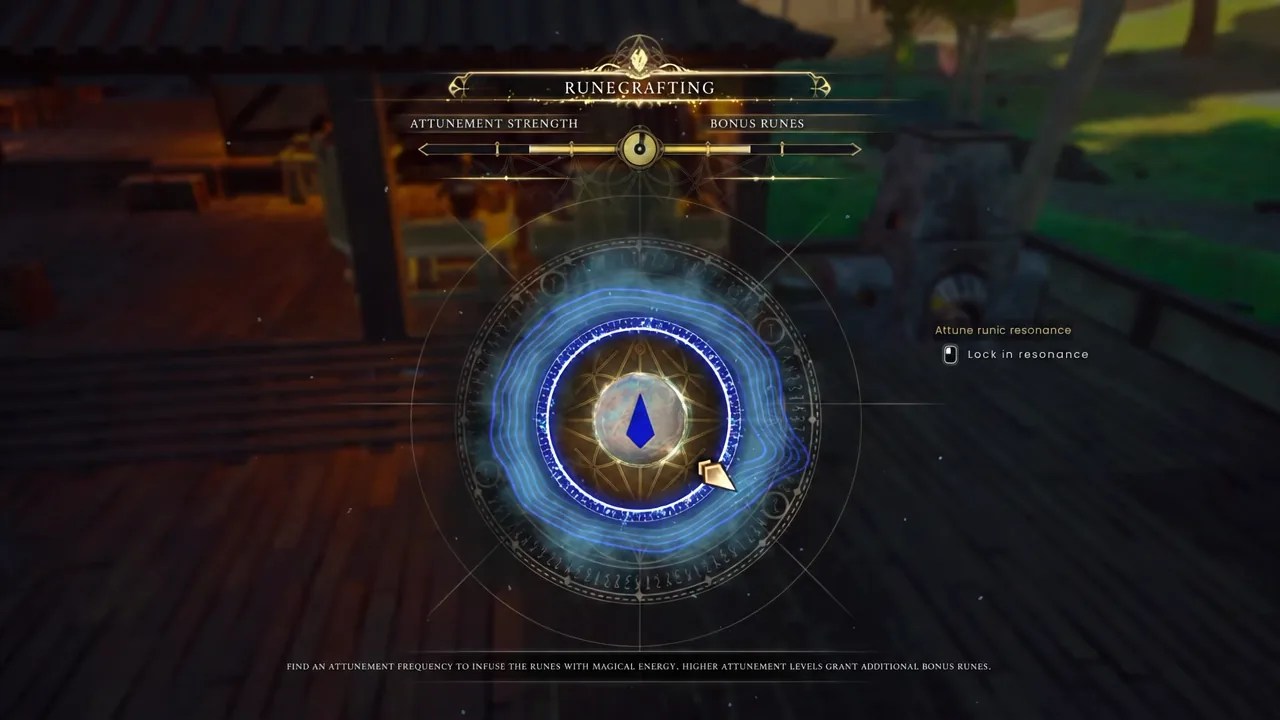
Infusion phase
The pointer flips inwards and cracks start opening across the rune. Click each crack to seal it. Clicking anywhere else halts the pointer, so precision beats spamming. The pointer tracks short mouse movements slowly and large ones quickly, and it will jump across the rune when you overshoot — overshooting on purpose and then sealing as the pointer arrives is the cleanest technique.
Up to five cracks can be open at once. Each one has a short grace period before it begins draining your bonus runes, and sealing every crack inside that window produces a Perfect Infusion. Let five cracks sit open for a few seconds and your bonus drops to slightly below what Auto Craft would have given you — though even a botched infusion still beats Auto Craft on XP.
Infusion Duration reductions arrive at Runecrafting 17, 48 and 78. By 78 the phase is short enough that only five cracks can appear at all, which makes perfect runs far more repeatable. Until then, low and medium attunements are a reasonable place to practise before committing to strong ones.
You know it worked when the ATTUNEMENT COMPLETED screen appears listing the rune type, the crafted count and a separate bonus rune line — for example a batch of Nature Runes finishing with x4 bonus runes. No bonus line means the cracks drained you.
Anima vents: runes you cannot craft yet
Anima vents are found across Ashenfall and each one produces a specific rune type, announced by its own sound and colour. You siphon them by spending rune essence, and there is no level requirement, so a low-level character can walk away with Law or Nature Runes long before the altar will make them. Vents respawn on the same three in-game day timer as other nodes.
- A standard vent converts 10 rune essence into 100 runes and 40 Runecrafting XP.
- Lesser Anima Siphoning at level 46 raises that to 120 runes, a 1:12 ratio.
- Greater Anima Siphoning pushes it to 150 runes per 10 essence, a 1:15 ratio.
- Concentrated vents hold triple the runes if you bring triple the essence — up to 450 runes for 30 essence.
- Summon Elemental Spirits (Runecrafting 19) flags concentrated vents once Greater Elemental Spirits unlocks at level 64.
From Runecrafting 34, siphoning has a 1-in-5 chance to spawn a Pure Essence rock. It floats, moves fast and vanishes quickly, but hitting it with a combat spell, arrow or bolt pays out 700 XP plus 20 to 30 extra runes matching the vent and another 20 to 30 Nature and Law Runes.
Pair that with the Runes to Rune Essence refund and vents become close to free. Siphon every vent you pass, convert surplus runes back into essence, and you keep the XP and the Pure Essence rolls while barely denting your stock.
Elemental damage types in magic combat
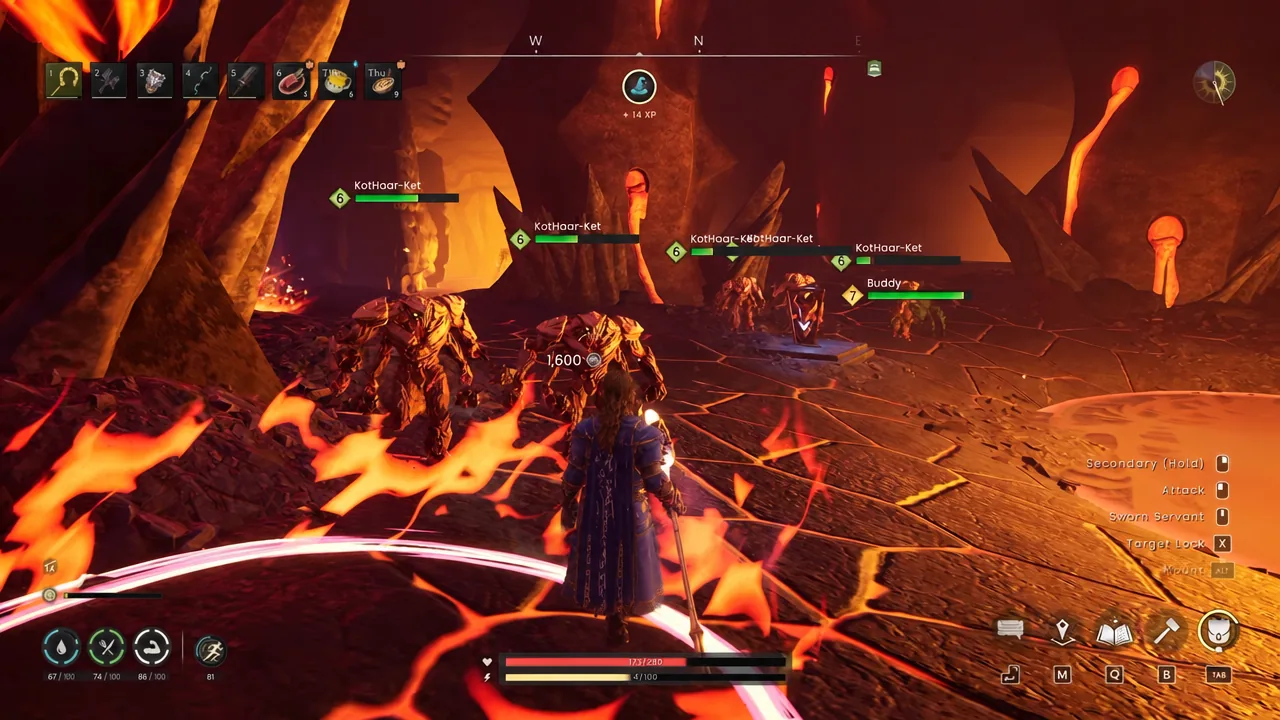
Staves fire whichever elemental rune you have set as ammunition. Pick it in the second inventory tab by right-clicking the rune you want to autocast. Air, Water and Fire can all be loaded; Earth Runes are utility-only for now and cannot be used as combat ammunition.
| Rune | Base damage | Passive | Arcane Expertise finisher |
|---|---|---|---|
| Air | 13-22 | Knockdown | Wind tunnel AoE that floors enemies |
| Water | 7-13 | Slowness | Tsunami plus a splash that heals and hydrates |
| Fire | 6-10 | Burn | Ground fire shower that burns over time |
Air is the crowd-control option and hits hardest per cast, which makes it the pick for packs and for anything you want knocked flat. Fire trades raw numbers for area coverage and stacking Burn, so it suits drawn-out fights. Water is the survival element, slowing targets while topping up your own health and thirst meter, and its kills can drop water orbs.

Magic levels feed the rest of the kit. Air Magic is available at level 1, Water Magic at 7 and Fire Magic at 21. Surge at 11 turns dodges into longer, longer-invulnerable channels, and Arcane Expertise at 16 adds the finisher listed above to the end of a staff combo. Runic Refund at 20 gives a 30 percent chance to keep a rune on every magic attack, which quietly halves the pressure on your altar runs.
Staves, robes and prep before a vault
A staff applies a passive damage multiplier to whatever rune you are firing, so the weapon matters as much as the element. Staves are two-handed, which means no shield — your defensive answer is movement and Tempest Shield, not blocking.
| Staff | Power level | Damage multiplier | Durability |
|---|---|---|---|
| Ash Battlestaff | 2 | 1.9 | 900 |
| Necromancer’s Staff | 5 | 5.9 | 1,050 |
| Toktz-Mej-Tal | 7 | 8.4 | 1,000 |
The Ash Battlestaff is the standard entry point, crafted at a Crafting Table from 12 Ash Logs, 6 Rune Essence and 2 Coarse Thread. The Necromancer’s Staff comes from a recipe learned at a dragonkin effigy in the Vekchenven Kara Vault and burns durability faster in exchange for damage, though it only takes 2 Undead Bone to repair. Toktz-Mej-Tal is built from 22 Refined Obsidian and 4 Dragonstone at the Mystic Forge after studying an Elongated Obsidian Construct from KotHaar-Hur, and it raises critical hit chance at the cost of durability.
Armour works on set bonuses within a combat type, and you can mix pieces freely as long as they are all magic. One piece cuts stamina regeneration delay by 50 percent, two pieces add 17.5 percent magic attack speed, and the full three grant 15 percent magic critical chance. A single melee piece breaks the third tier, so wearing plate legs under a Mystic top wastes both sets. Magical Mending exists specifically so expensive robes are not a one-death purchase.
Jewellery and consumables close the gap. The Amulet of Magic adds 12.5 percent magic damage, the Amulet of Glory boosts critical damage across all styles, and Magical Focus — craftable at Magic 39 — imbues an equipped staff with a 15 percent damage multiplier for 10 minutes. The Lesser Magic Potion adds 25 percent critical hit chance for the same duration.
Runes are your ammunition, and there is no altar inside a vault. Fill the pouch with the element you intend to use, plus Law Runes for the trip home, before you go through the door.
Runecrafting XP boosts
You can stack one trinket, one food and one potion. Foods do not stack with each other and neither do potions — eating or drinking a second one simply overwrites the first perk.
- Inspiring Ring of Runecrafting: +5 percent Runecrafting XP while worn.
- Knowledgable Nourishment foods such as Wild Pie or Sweet Veg Ball: +10 percent XP in all skills.
- Focused Runecrafting potions: +15 percent Runecrafting XP.
- Focused Runecrafting II potions: +30 percent Runecrafting XP.
Training order follows what you can craft. Air Runes carry you to level 3, Astral to 11, Earth to 15, Fire to 38, Nature to 50, and Law Runes take it from there toward 99.
The practical rhythm is simple enough. Clear the geysers on your usual route, siphon every anima vent you walk past, and bank the essence for strong attunements at the altar rather than dumping it into Auto Craft. Do that and the Law Runes for lodestone hops, the Fire Runes for Superheat, and the Air Runes for a boss fight all come from the same trip.