WARDOGS moved into Season 2 with version 0.2.0 on October 15, 2026, and the logistics and building loop took the heaviest rework. Base delivery payouts fell, repeat runs now stack bonuses, fortifications and drill rigs cost more to keep running, and the role XP grind dropped sharply. If you spend your matches hauling crates, feeding drills, and building defenses, almost every number you relied on in Season 1 has shifted.
Quick answer: Season 2 (version 0.2.0) cut base logistics payouts by roughly half, added stacking delivery streaks, raised build and drill-rig costs, and reduced role-track XP requirements between levels 10 and 50 by 23% to 55%.
Logistics payouts cut, delivery streaks added
Single delivery rewards dropped across crates, pallets, and passenger runs. The intent is to pull the economy back and reward players who keep vehicles alive and run loops rather than cashing in one trip.
| Delivery | Old cash | New cash |
|---|---|---|
| Player delivered | $150 | $100 |
| Player delivered (ground vehicle) | $500 | $350 |
| Return trip (ground vehicle) | $250 | $150 |
| Supply crate (small) | $500 | $250 |
| Supply crate (large) | $1,000 | $500 |
| Supply pallet | $2,500 | $1,250 |
XP dropped alongside the cash. A player delivery now pays 25 XP instead of 50, a ground-vehicle return trip pays 50 instead of 100, and pallet XP falls to 400 (or 500 when dropped from a ground vehicle).
To offset the cuts, consecutive deliveries now stack a bonus. Each item delivered in a row adds to the reward until the streak caps out.
| Streak | Bonus per delivery | Max in a row |
|---|---|---|
| Crates | +$100 / +50 XP | 10 |
| Pallets | +$250 / +100 XP | 10 |
| Players | +$25 / +5 XP | 25 |
| Return trips | +$50 / +25 XP | 10 |
A full crate chain is worth up to +$100 per crate across ten crates, and player transports reward the longest streak at 25 deliveries in a row.
Drill rigs burn fuel faster and demand more resupply
Drill rigs now need 2,000 fuel to activate, up from 1,500. Each unit of fuel runs for less time, so maximum uptime falls from 375 seconds to 300, matching capturable towers. Maximum fuel capacity rose from 7,500 to 10,000 to push more logistics runs, and a destroyed rig can no longer be replaced immediately because the post-spawn cooldown was raised substantially.
Taking a hostile drill tower is worth more now. Capturing one pays $1,500 and 300 XP, up from $750 and 250 XP. The Heavy Drill unlock also moved to a $50,000 cost, double its previous $25,000.
Build costs rise, breaching moves to the Halligan
Fortifications and manual emplacements cost far more supplies to raise, while heavy automated defenses were made cheaper. The result pushes walls, doors, and mortar pits toward larger logistics commitments.
| Structure | Old cost | New cost |
|---|---|---|
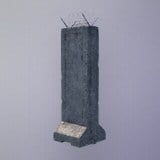 Bremmer wall Bremmer wall | 15 | 32 |
| Door | 22 | 80 |
| Gate | 85 | 200 |
| Air raid shelter / bunker / crow’s nest | 100 | 200 |
| L81 Mortar | 150 | 600 |
| Stingray | 150 | 650 |
| Talon 9K-SAM | 1,000 | 650 |
| Vanguard CIWS | 1,500 | 1,200 |
| Hot Zone Magnet | 2,250 | 2,750 |
Restocking ammunition also costs more. The Talon 9K-SAM now takes 200 munition supplies per resupply, up from 50, with its reload time stretched from two seconds to five. L81 Mortar restocks cost 150 munition supplies, double the old 75.
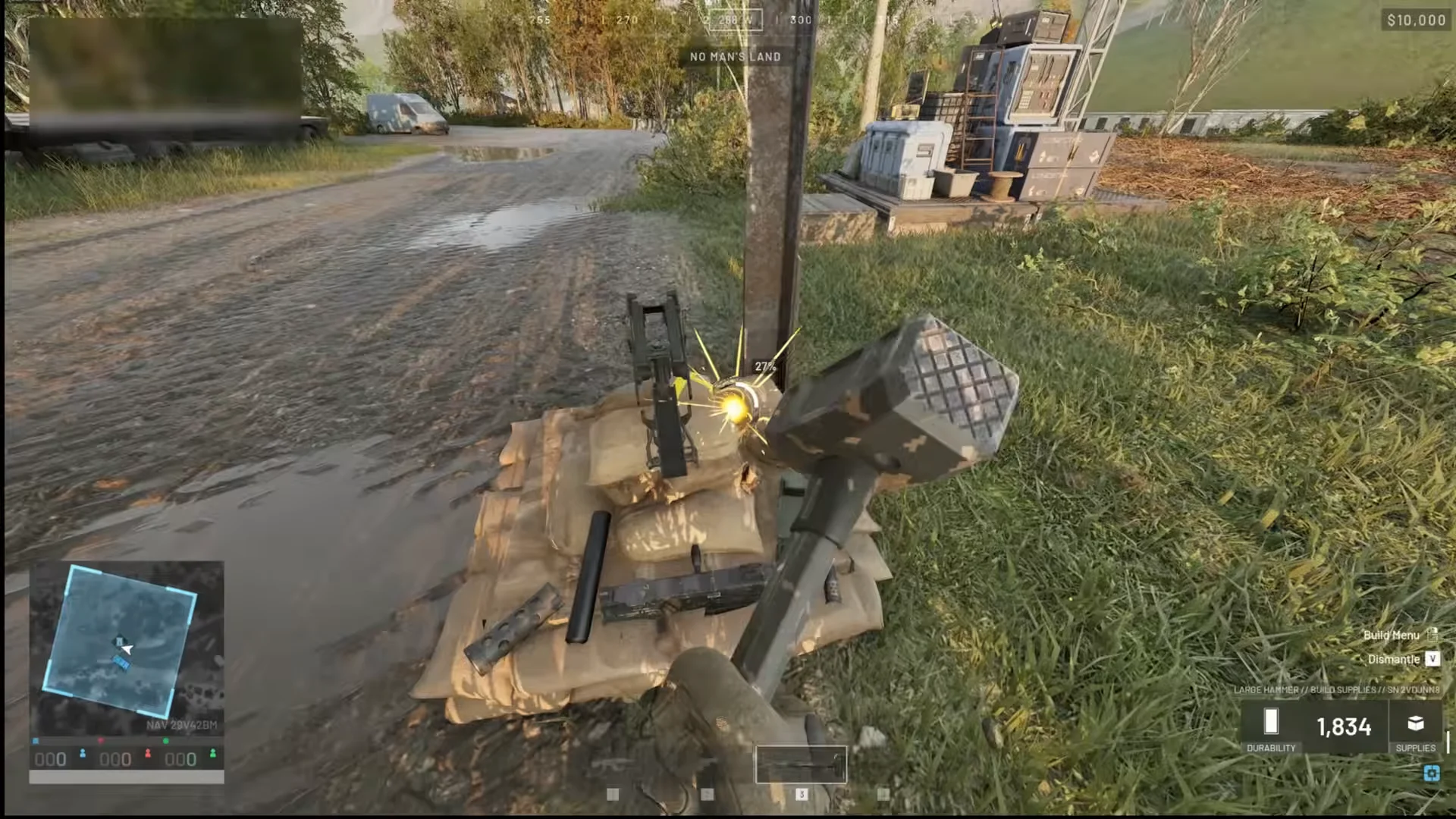
Hammers can no longer breach doors or gates; use explosives or the Halligan tool instead. The Halligan now lasts seven uses, compared with five before. Medium hammers add less progress with each swing, and hitting a critical spot provides a smaller bonus. Large hammers build at the same rate per swing as before. Add sandbags or barbed wire along the upper edges of Bremmer walls to block enemy vaults. Structures that are still under construction fall if their supports are destroyed.
Three additional buildables are available. A small hammer places a Wooden Step for 15 wood supplies; a medium hammer is needed to build the Large Shelter, which costs 250 supplies. The MG Nest takes a large hammer and 650 supplies to construct, and comes with a manned M2 Browning.
FOB rewards and door actions
Destroying a fully stocked enemy Forward Operating Base now pays a scaled bounty up to $7,500 and 250 XP, measured against 25,000 supplies held inside. An empty crate gives half the normal cash and XP when destroyed.
Smaller actions pay out too. Closing a friendly FOB door returns $75, a second door scales down toward $38, and breaching a door with the Halligan pays $100. Hacking an FOB gives the hacker $2,500 and 250 XP, with $1,000 and 250 XP shared to teammates inside the radius.
New transport and armor for haulers
Four vehicles entered the roster, all gated behind Driver progression. The Wolf-110 line is built for moving players and crates, while the T-72B3 and Flakpanzer Gepard add heavy armor.
| Vehicle | Class | Driver unlock | Buy price |
|---|---|---|---|
| Wolf-110 | Transport | Level 8 ($50,000) | $2,200 |
| Wolf-110 [M2 Browning] | Transport | Level 16 ($125,000) | $7,800 |
| T-72B3 | Tank | Level 20 ($250,000) | $16,000 |
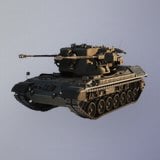 Flakpanzer Gepard Flakpanzer Gepard | Anti-Air Tank | Level 25 ($300,000) | $10,000 |
The Wolf-110 carries four people, or two if a large crate is loaded in its rear. The M2 Browning version holds five: a driver, passenger, gunner, and two rear-seat occupants. That capacity remains five with a large crate stowed below the gunner. Compared with the L2A6, the T-72B3 costs less and uses slightly less fuel, though it is slower; it gives factions another main battle tank. The Gepard is the first platform built specifically for anti-air defense, targeting helicopters.
Vehicle inventories and handling
Purchased vehicles default to a locked, squad-only inventory, so teammates outside your squad cannot pull equipment or flares without permission. Team vehicles stay public. Explosives can no longer be thrown and placeable equipment can no longer be deployed from inside a vehicle.
Tracked vehicles now handle turns and movement more smoothly. Humvee suspension and acceleration have been adjusted, while dune buggies have less effective brakes so they slide more. Destroying spawn vehicles now takes the Vanguard CIWS 2.25x as long.
Role XP cuts and pallet unlocks
Role-track leveling is much faster. Every milestone from level 10 to 50 needs far less XP than it did in Season 1.
| Role level | Old XP | New XP |
|---|---|---|
| 10 | 35,000 | 25,000 |
| 15 | 110,000 | 54,750 |
| 20 | 250,000 | 111,500 |
| 25 | 365,000 | 206,600 |
| 30 | 500,000 | 318,200 |
| 35 | 750,000 | 525,000 |
| 40 | 975,000 | 712,500 |
| 45 | 1,225,000 | 920,850 |
| 50 | 1,500,000 | 1,150,000 |
Supply pallets are now locked behind levels and cash. The Mechanical Supply Pallet unlocks at Wardog level 5 ($10,000), the Ammo Supply Pallet at level 9 ($25,000), and the Fuel Supply Pallet at level 16 ($50,000). On the Driver track, the Large Crate shifted from level 16 to 17 and the Ural Defender moved from level 18 down to 15. The SPH-2 moved from Wardog level 90 to Driver level 31, with its unlock price cut from $500,000 to $350,000.
Reference: vehicle and tool stats for logistics play
These figures are useful while running the industrial loop. The Dune Buggy is a three-seat rapid wheeled transport that burns 5 litres per kilometre and yields $300 when destroyed. The Flakpanzer Gepard is a two-seat anti-air tank that burns 10 litres per kilometre. Neither spawns in the world during a match; both are bought from the vehicle vendor in your faction’s safe zone.
| Vehicle | Top speed (km/h) | Fuel capacity (L) | Seats |
|---|---|---|---|
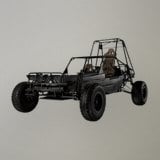 Dune Buggy Dune Buggy | 130 | 68 | 3 |
| Flakpanzer Gepard | 65 | 110 | 2 |
On the build and breach side, the key tools carry these prices, weights, and unlocks.
| Item | Price | Weight | Role unlock |
|---|---|---|---|
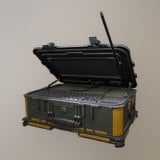 Forward Operating Base Forward Operating Base | $7,500 | 6.5 kg | — |
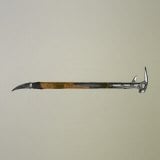 Halligan Bar Halligan Bar | $1,100 | 2.8 kg | — |
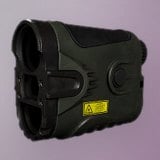 Range Finder Range Finder | $400 | 0.23 kg | Recon 8 ($15,000) |
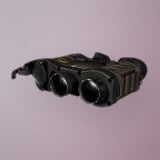 Infrared Range Finder Infrared Range Finder | $1,200 | 0.43 kg | Recon 32 ($50,000) |
The Forward Operating Base is what you drop to build larger structures; it holds items and resources and provides the radius inside which players can build. The Halligan Bar pries open doors but does nothing against gates and has limited durability. Both range finders spot enemy infantry and vehicles and give an accurate distance readout, and the Infrared model now runs on batteries that last around 80 seconds of continuous use. With deliveries worth less per run and defenses costing more supplies, the fastest returns now come from keeping vehicles alive, chaining streaks, and taking or wrecking enemy drill towers and FOBs.