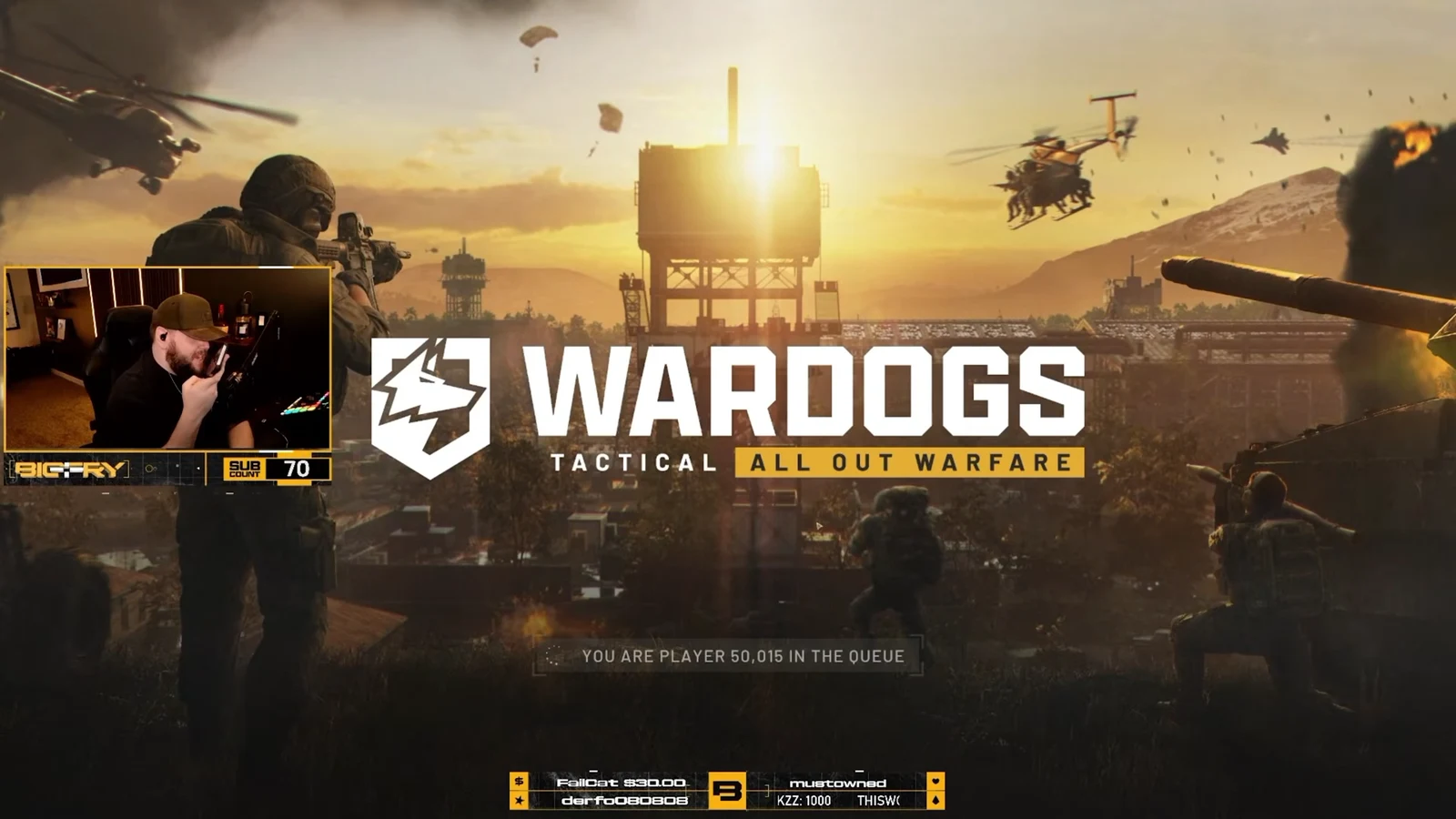
WARDOGS moves into its second season on October 15, 2026, the first large content drop since the tactical shooter entered Steam Early Access in September. BULKHEAD is pairing new weapons, vehicles and a weather system with a long list of balance changes aimed at the strategies that dominated the game’s opening month.
Quick answer: Season 2 launches October 15, 2026, with four weapons, four vehicles, three buildables, a Molotov, rain weather, and an experimental Wager Vendor, alongside wide-ranging combat and economy changes.
When WARDOGS Season 2 starts
Season 2 goes live Thursday, October 15, 2026. Full patch notes are expected in the days leading up to launch, and BULKHEAD CEO Joe Brammer has said later seasons will not follow a fixed monthly rhythm. Season 1 ran roughly a month, but the length of future seasons is being left flexible so content and feature work can set the schedule.
Season 2 also carries a full progression reset. Player level, role progression and unlocked weapons, attachments and vehicles all clear. Remaining seasonal cash converts into Gold Bars, a permanent account currency, and cosmetics bought with Gold Bars stay on the account across resets.
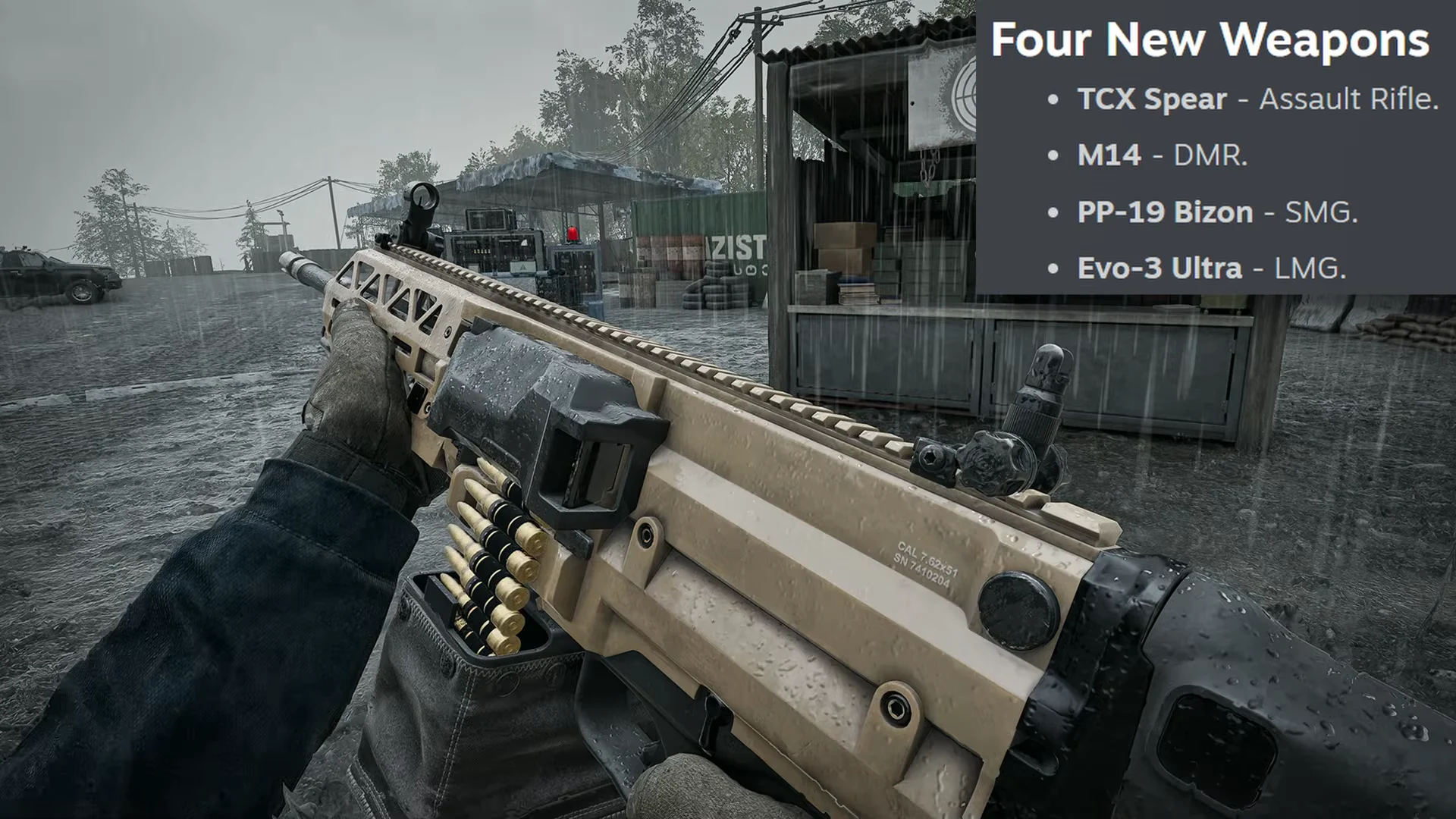
Four new weapons, one per role
Each of the four infantry roles gains a weapon, and all four arrive with new attachment options including optics, suppressors, magazines, bipods and foregrips.
| Role | Weapon | Type |
|---|---|---|
| Assault | TCX-SPR | Assault Rifle |
| Medic | PP-19 Bizon | SMG |
| Recon | M14 | DMR |
| Support | Evo-3 Ultra | LMG |
Molotov throwable for Assault
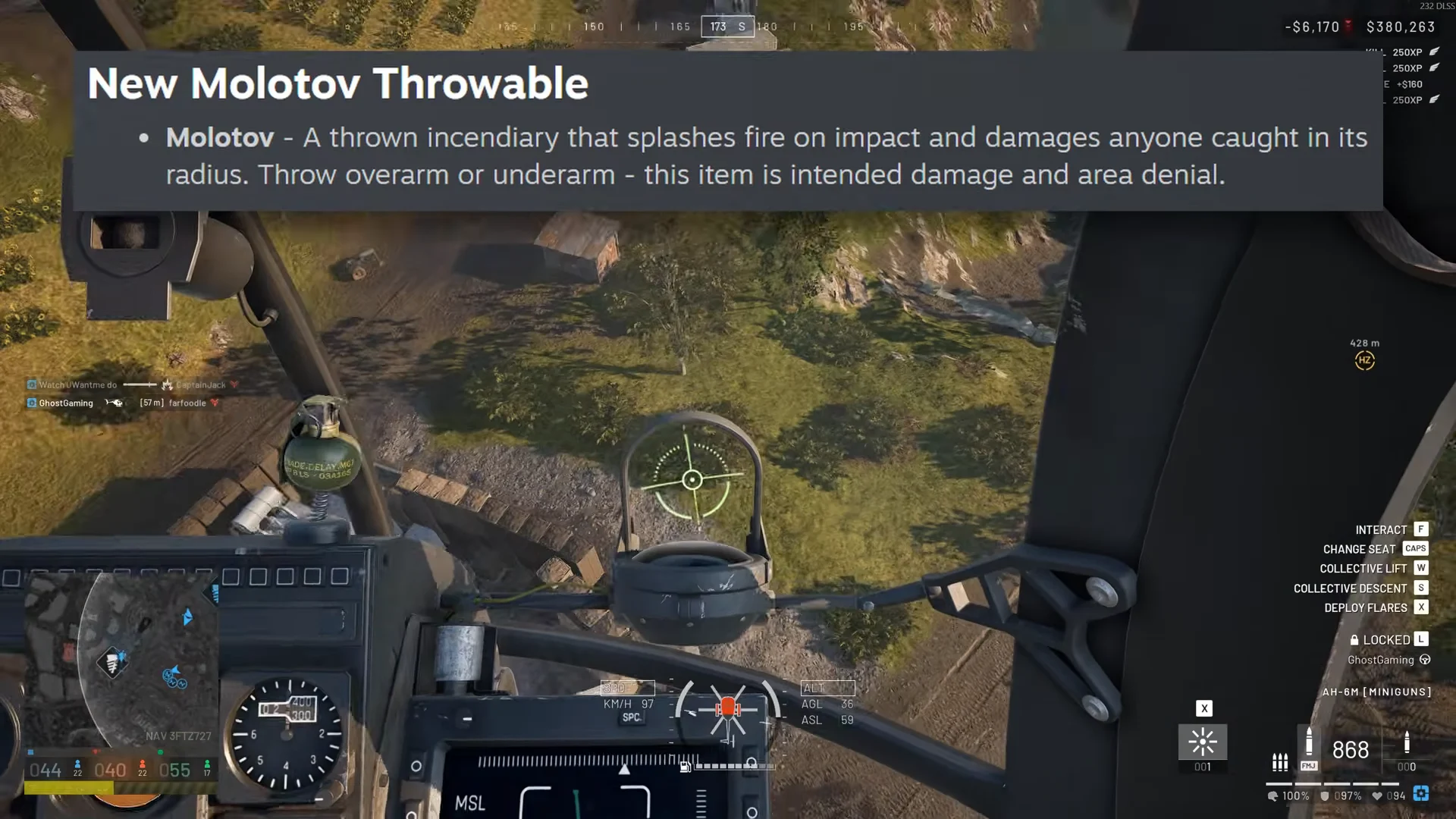
Assault players get the Molotov, a thrown incendiary that spreads fire on impact and burns anyone caught in its radius. It can be thrown overarm or underarm and is built for area denial, blocking doorways or forcing enemies out of tight rooms. It is not effective against vehicles.
Four new vehicles
The vehicle roster grows by four entries, covering transport, armor and anti-air roles.
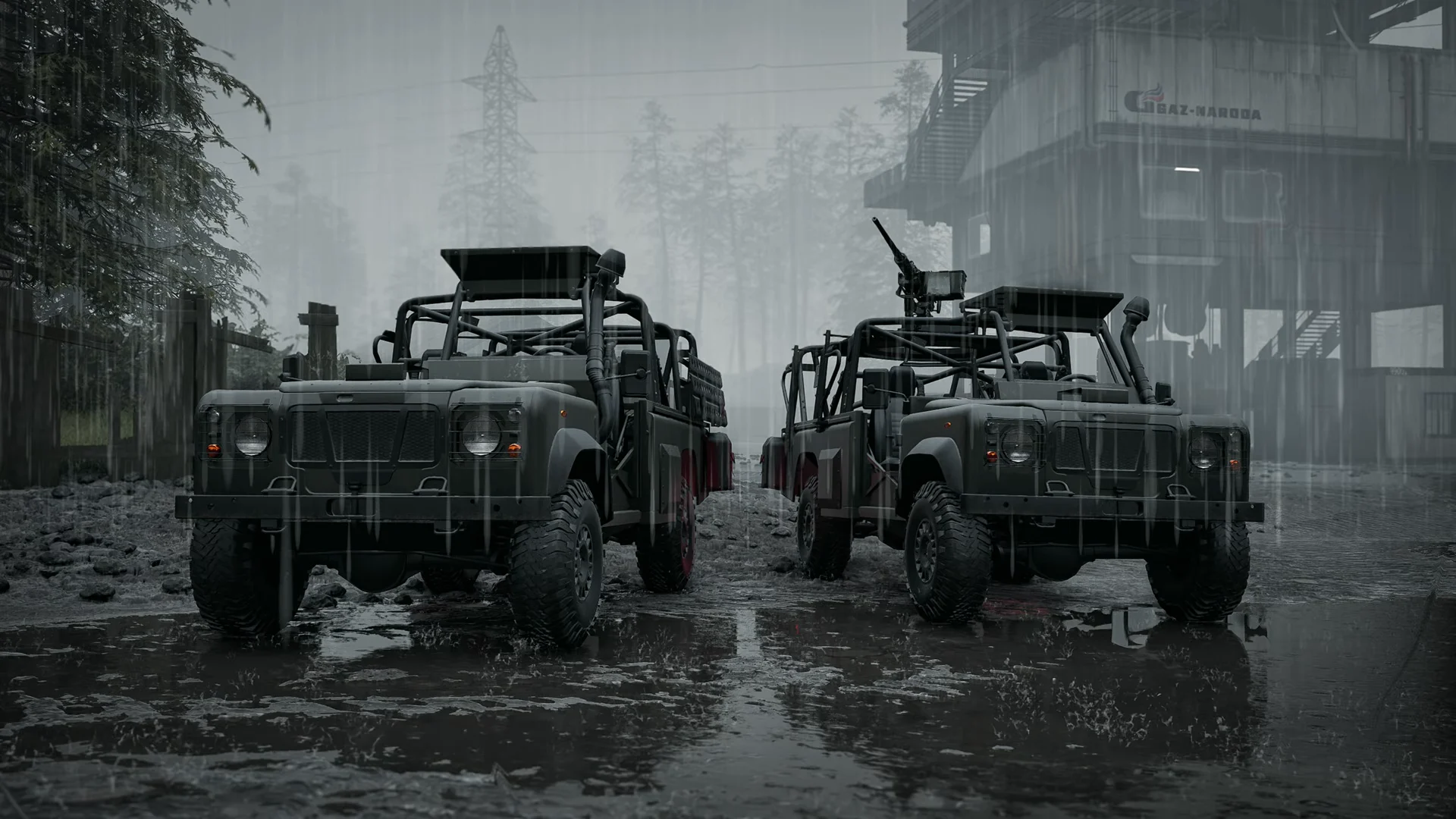
- Wolf-110 — a fast, lightweight wheeled transport.
- Wolf-110 Assault — a weaponized model fitted with an M2 Browning.
- T-72B3 — This main battle tank gives up speed compared with the Leopard in exchange for a lower price and better fuel economy.
- Flakpanzer Gepard — a tank built specifically to fight aircraft.
Vehicle handling is getting an overhaul as well. The Humvee will handle rough ground better, while tracked vehicles will feel less buoyant and springy, preventing tanks from being thrown into the air by bumps. Vehicle inventory access is changing too: purchased vehicles are limited to the driver and their squad unless the vehicle is fully unlocked and access is opened to everyone. Team-spawned vehicles remain available to all players for free.
Vehicle reference stats
These are the shipped figures for the anti-air newcomer and the vehicles whose prices draw the most comparison when weighing a purchase against an infantry kit. The Flakpanzer Gepard seats two, carries 110 litres of fuel and burns 10 litres per kilometre, which makes it thirsty to run compared with the wheeled transports.
| Vehicle | Price | Top speed (km/h) | Seats |
|---|---|---|---|
 Flakpanzer Gepard Flakpanzer Gepard | $10,000 | 65 | 2 |
 Havoc Havoc | $18,000 | 400 | 2 |
| Ural Defender [M249] | $6,750 | 79 | 3 |
| Ural Defender | $6,000 | 79 | 3 |
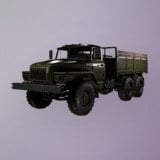 Ural Ural | $5,000 | 79 | 3 |
Purchase the Flakpanzer Gepard from the vehicle vendor in your faction’s safe zone; it does not spawn during a match. The Havoc is obtained the same way, becomes available at Pilot level 35, and costs $500,000 as a one-time fee. The Ural line opens much sooner, beginning at Driver level 3.
Three new buildables and higher construction costs
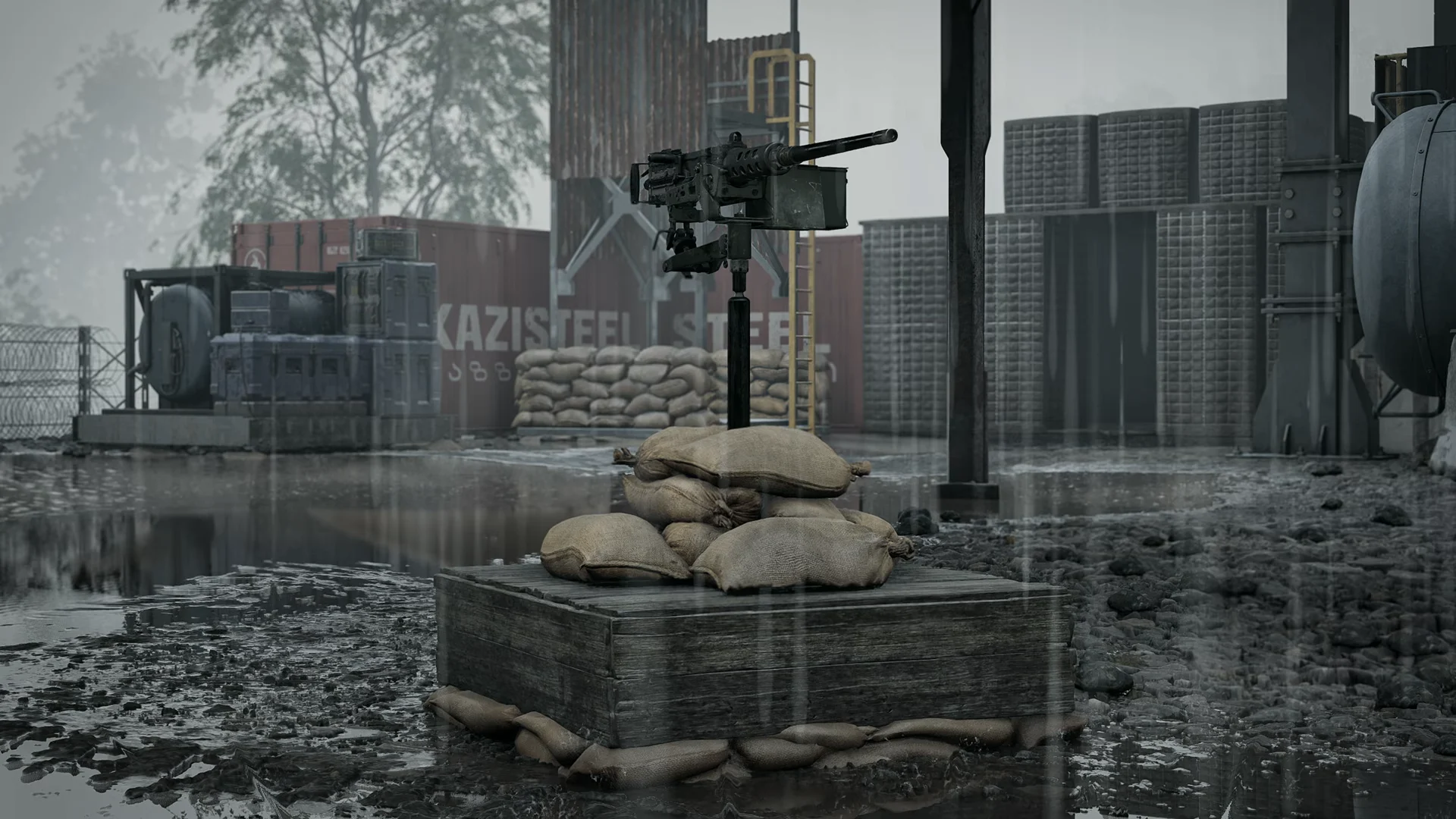
FOB building gains three structures: an MG Nest with a manned M2 Browning, a Large Shelter made of metal for covering gear, vehicles or players, and a simple Wooden Step for construction.
Construction will take longer and cost more. Mortar and radio tower emplacements rise in price from 150 to 800 building supplies; mortars will consume twice as much ammunition when restocked and fire with a slower animation. The Talon will take five seconds to reload, up from two, and its restock price will go from 50 to 200 munitions. Drill rigs will require additional fuel to start and operate for 300 seconds rather than 375. Doors and gates will be pricier, while each hammer swing will contribute less progress.
Rain weather and how it changes fights
Rain joins as a new weather state that a map can run, with wet surfaces on characters and vehicles and audio that changes depending on whether you are outside, indoors, under cover or inside a vehicle. Destroying a building’s roof lets rain fall through the opening.
Weather does not shift mid-match. A server runs either the clear or the rainy version of a map rather than transitioning during play. Thunder is synchronized, so every player hears the same strike at the same time from the same direction, and it can be loud enough to mask footsteps and gunfire. Reduced visibility is expected to pull more fighting into close and medium range and make life harder for snipers and helicopter crews who rely on long sightlines.
Weapon, armor and helmet balance changes
To give weapon classes clearer roles, base damage is reduced on larger-caliber ammunition: .308 Winchester by 25%, 7.62x54mmR by 20%, 7.62x39mm by 19%, and .50 caliber by 16%. The changes primarily affect assault rifles, DMRs and LMGs, including the FAL, BMR and PKM. Hit-location damage for sniper rifles will be raised as compensation; DMRs will do a little less damage on head and upper-body hits. Body damage will be more consistent for assault rifles and LMGs.
Suppression is being reworked so nearby gunfire has more effect, with standardized curves per weapon class, screen shake reduced and rate of fire taken into account. Heavy and Super Heavy helmets gain 30% and 60% suppression resistance in return, giving them a protective role beyond raw damage reduction.
Level 4 armor and helmets will mitigate 60% of damage, down from 65%. The Super Heavy helmet now has trade-offs: muffled sound, a narrower field of view, and a visor that fogs during a sprint.
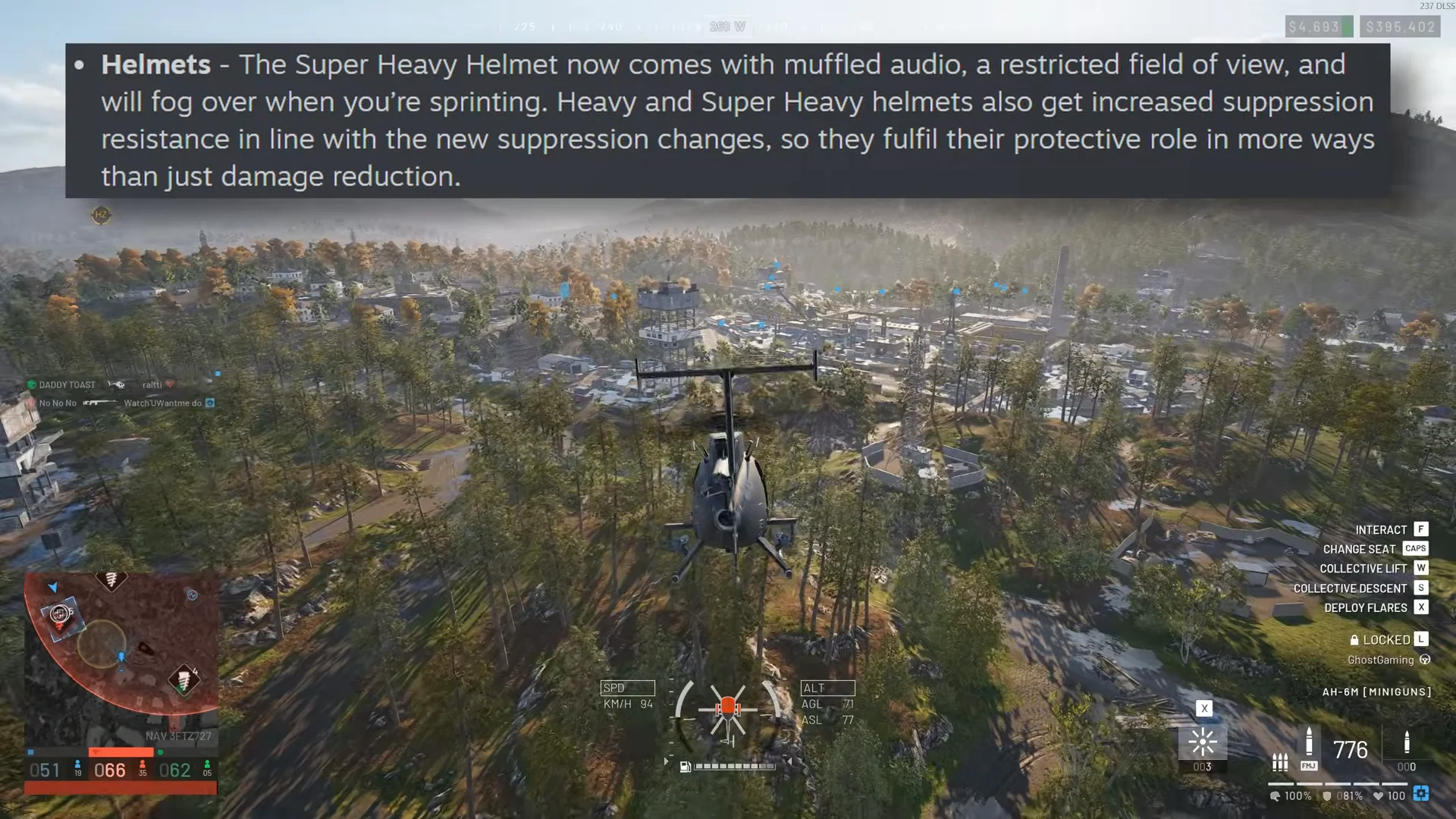
A major balance cut targets the MMGL grenade launcher, particularly when used aboard Little Bird helicopters. Its muzzle velocity drops by 25%, and explosive damage falls off more quickly over distance. Firing from helicopter benches also brings pronounced sway and reduced accuracy.
Parachutes change as well, with higher minimum deploy altitudes, slower canopy opening and higher cost, aimed at stopping last-second drops. Attack vehicle prices across the board rise, with several armed vehicles becoming considerably more expensive to answer complaints that powerful vehicles cost about the same as a loaded infantry kit.
Armor reference stats
Durability and unlock levels for the vest and helmet tiers give a baseline for judging the Level 4 reduction change. Each tier unlocks at a set Wardog level and carries its own one-time unlock fee on top of the listed purchase price.
| Vest | Price | Durability | Wardog level |
|---|---|---|---|
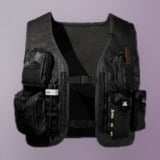 Level 1 Armor Level 1 Armor | $400 | 200 | 3 |
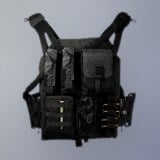 Level 2 Armor Level 2 Armor | $1,000 | 220 | 30 |
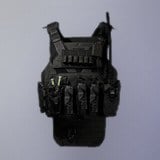 Level 3 Armor Level 3 Armor | $2,000 | 250 | 60 |
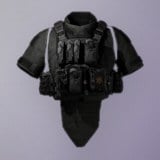 Level 4 Armor Level 4 Armor | $4,000 | 300 | 100 |
| Helmet | Price | Durability | Wardog level |
|---|---|---|---|
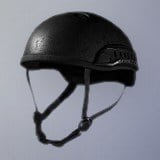 Level 1 Helmet Level 1 Helmet | $200 | 80 | 3 |
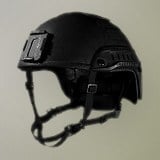 Level 2 Helmet Level 2 Helmet | $500 | 100 | 30 |
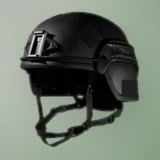 Level 3 Helmet Level 3 Helmet | $1,500 | 180 | 60 |
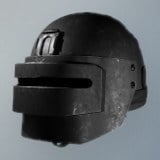 Level 4 Helmet Level 4 Helmet | $3,000 | 200 | 100 |
Level 1 and 2 helmets protect the head, while Level 3 and 4 helmets also cover the neck. Vests protect the upper and lower torso, with Level 4 extending to the upper arms and pelvis.
The experimental Wager Vendor
The Wager Vendor lets you bet in-game cash on your own performance in a match. You pick objectives, such as getting a number of kills in the hot zone or delivering a set number of players, set how many deaths you are willing to spend, then place a stake. Stacking more objectives lengthens the odds and raises the payout. A live tracker sits above the minimap showing your stake and progress.
BULKHEAD calls this a first-pass Early Access feature and has said it may pull the Wager Vendor during the season if it proves too exploitable.
Lonestar faction changes on Bakurani
The blue Lonestar faction has been winning around 10% of matches, against 40% for the red team and 50% for green. BULKHEAD is treating Season 2 as a social experiment to see whether rewards can shift that. The studio’s read is that player sentiment toward the blue team, more than spawns or uniforms alone, drives people away from it.
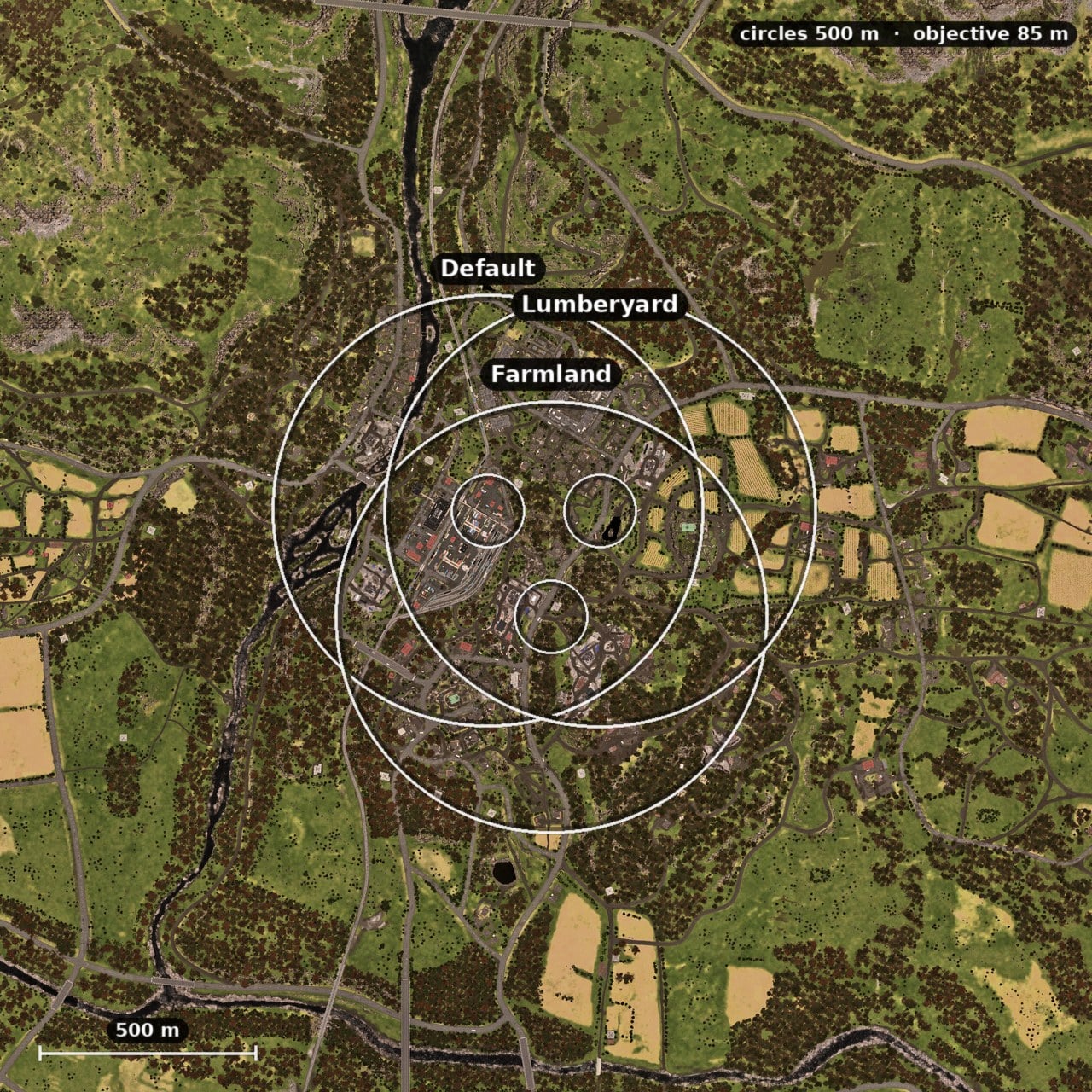
- Bakurani’s faction spawn points have all been relocated, creating new approaches to the control zone.
- Lonestar uniforms are more desaturated so they stand out less against the other factions.
- Lonestar players get exclusive cash and XP bonuses and multipliers for Season 2 only.
- Teams at least 40 points behind the second-place team qualify for a 20% discount at vendors.
Community server hosts caught exploiting the faction bonus will be punished.
Team-switching limits and progression
Team switching is being tightened to stop players hopping factions to gather intel or sabotage. Once a team is more than 10 points ahead, players cannot switch again for 15 minutes after joining one. Anyone switching factions or entering a match in progress has their map obscured and cannot use spawn vehicles until they reach the control zone.
Unlock trees are being rearranged, and new reward streaks reward delivering supply crates and transporting passengers. A persistent skill system will not launch in Season 2, but BULKHEAD plans to convert XP earned across Seasons 1 and 2 into “Intel” currency and skill points when that system arrives in a later 1.0 milestone. Alongside the headline additions, Season 2 brings squad coordination tweaks, controller responsiveness work, performance fixes and server stability improvements, with the complete patch notes expected in the run-up to launch.