Running the repair shop in ReStory: Chill Electronics Repairs means juggling a tight budget against a long wishlist of tools, licenses, and decorations. Most of what shows up on the marketplace and depot store is too expensive to grab on day one, so the order you buy things in decides how quickly your shop starts paying for itself.
Quick answer: Buy the Electric Screwdriver and a Thick Brush first, add the Shredder and tip jar to start earning on scrapped parts and jobs, then spend everything else on licenses to unlock more device types and push the story forward. Skip the can of air, the airbrush, and the reprogramming toolkit until a job or achievement forces you to buy them.
Priority shop purchases and what each one does
These are the purchases that pay back the fastest. Costs are in Yen, and a few items (the ultrasonic bath, licenses, and any device you buy for parts) vary depending on the model or listing.
| Item | Cost | Why it matters |
|---|---|---|
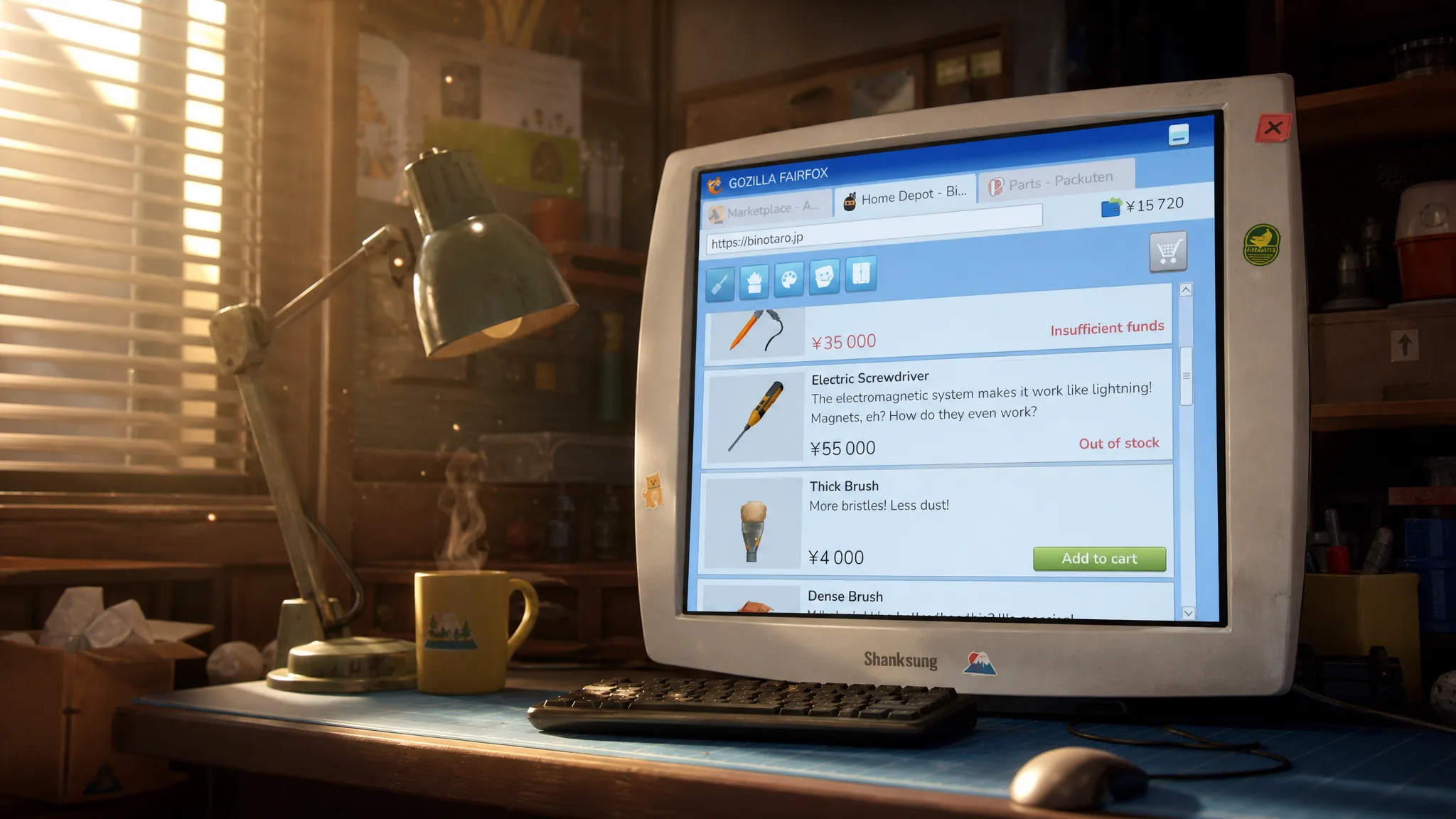
| Electric Screwdriver | 55,000 | Every device has screws, and the fast screwdriver removes them in a fraction of the time. The final upgrade handles screws instantly. |
| Thick Brush | 4,000 | Clears dust as well as the pricier Dense Brush at a much lower cost. One of the first tools to grab. |
| Shredder | 70,000 | Turns broken parts that would otherwise be trash into roughly 200-500 Yen each. The basic model is enough. |
| Tip jar | Cheap | Adds 200-500 Yen per completed job on both walk-up and online orders. |
| Toolkit | 90,000 | Lets you reprogram and hack devices. Useful only when a customer’s job requires it. |
| Ultrasonic Bath | Varies | Cleans up to three items automatically and ties to an achievement, but the wait time makes it a mid-to-late purchase. |
| License (per device type) | Varies | Required to progress the story and buy parts direct from the source. Owning all of them unlocks an achievement. |
Buy the Electric Screwdriver before anything else
The Electric Screwdriver at 55,000 Yen is the single upgrade that changes how every job feels. No device in the game is screw-free, so you unlock screws before you can clean or repair anything. Manually working each one out is slow, and that time adds up dramatically once you are past 50 repairs.
The tool has only two upgrades, and the second one pulls screws out instantly. Prioritizing it early is the fastest way to speed up your whole workflow, since every future job benefits from it.
Cleaning tools: get the Thick Brush, skip the can of air
Dusting is a huge part of every restoration, and the Thick Brush at 4,000 Yen handles it just as well as the more expensive Dense Brush. It is one of the cheapest and earliest quality-of-life upgrades on your save, so grab it first.
The can of air is not worth the money. It runs out quickly, and the brush upgrades are cheap enough that they cover dust removal for good. Put your Yen into the brushes instead.
The Ultrasonic Bath is a different case. It removes manual cleaning by washing up to three items at once and is linked to an achievement, but a single cycle takes around 30 seconds while you sit idle. Early on you will usually be waiting on it, so hold off until mid-to-late play when you can also afford the follow-up bath upgrades.
Money-makers: Shredder, tip jar, and spare part boxes
More cash means faster access to licenses and tools, so the upgrades that increase income deserve early attention. The Shredder at 70,000 Yen is the biggest one. Almost every device you take apart has a broken part, and without the Shredder those parts go straight into the trash. With it, each shredded part returns roughly 200-500 Yen. The basic model works fine, so there is no reason to pay extra.
The tip jar is a small purchase with an outsized payoff. It is a physical jar in your shop, but it earns tips on both walk-up and online orders, adding around 200-500 Yen to every completed job.
On the marketplace, keep an eye out for functioning devices at a fair price. You can resell them for profit or strip them for parts to complete repairs, both of which put money back in your pocket. Just avoid overpaying, or you turn the flip into a loss. Spare part boxes in small, medium, and large sizes are also worth buying. You cannot see the contents until they arrive, but they bundle several parts for less than buying components or whole devices individually.
Licenses drive story progress and parts access
Licenses are the purchases that matter most over a full playthrough. The story advances as you buy them, and walk-up customers will sometimes bring devices you cannot legally fix yet. You still take the item in, but you cannot complete that job until you own the matching license.
Owning a license for a device type also lets you buy new parts straight from the source instead of gambling on used electronics off the marketplace, where listed conditions and ratings do not always reflect what you receive. Aim to collect all of them over time, since a complete set unlocks its own achievement.
Note: If you want to build up savings before a major upgrade, the gap while waiting for a license is a good moment to keep cleaning and fixing devices you already handle, without missing story beats.
What to hold off buying early
Some purchases look tempting but do not pay off until a specific job or achievement calls for them. Spending on these too soon drains money you could put toward licenses.
- Airbrush painting upgrade — painting a device does not raise its value, so only buy it if you enjoy decorating or a job specifically requires paint.
- Toolkit reprogramming — the reprogram mini-game where you tap keys to fill a bar does not increase an item’s value either. Wait until a client’s order needs it.
- Ultrasonic Bath (early) — worth it later for the achievement and bulk cleaning, but the idle wait makes it a poor early buy.
Get the fast screwdriver and cheap brush running first, lean on the Shredder and tip jar to build a cash cushion, then funnel the rest into licenses. That order keeps every repair quicker and every job more profitable while steadily opening up new devices and the story branches tied to them.