Inverted is the permanent stat mutation in Grow a Chicken Fighter, and it is the difference between a chicken that stalls out in the PIT and one that keeps climbing the TOWER. It arrived with the game’s first major content update on August 15, 2026, and it is entirely luck-based, which is why so many players end up with an Inverted chicken they never wanted and none on the fighter they actually use.
Quick answer: Open eggs until one hatches Inverted (0.5% chance per egg, any egg type), then fuse that Inverted chicken with your main chicken to move the mutation across, with a maximum 50% transfer chance when both chickens share the same rarity.
Hatching an Inverted chicken: 0.5% on every egg
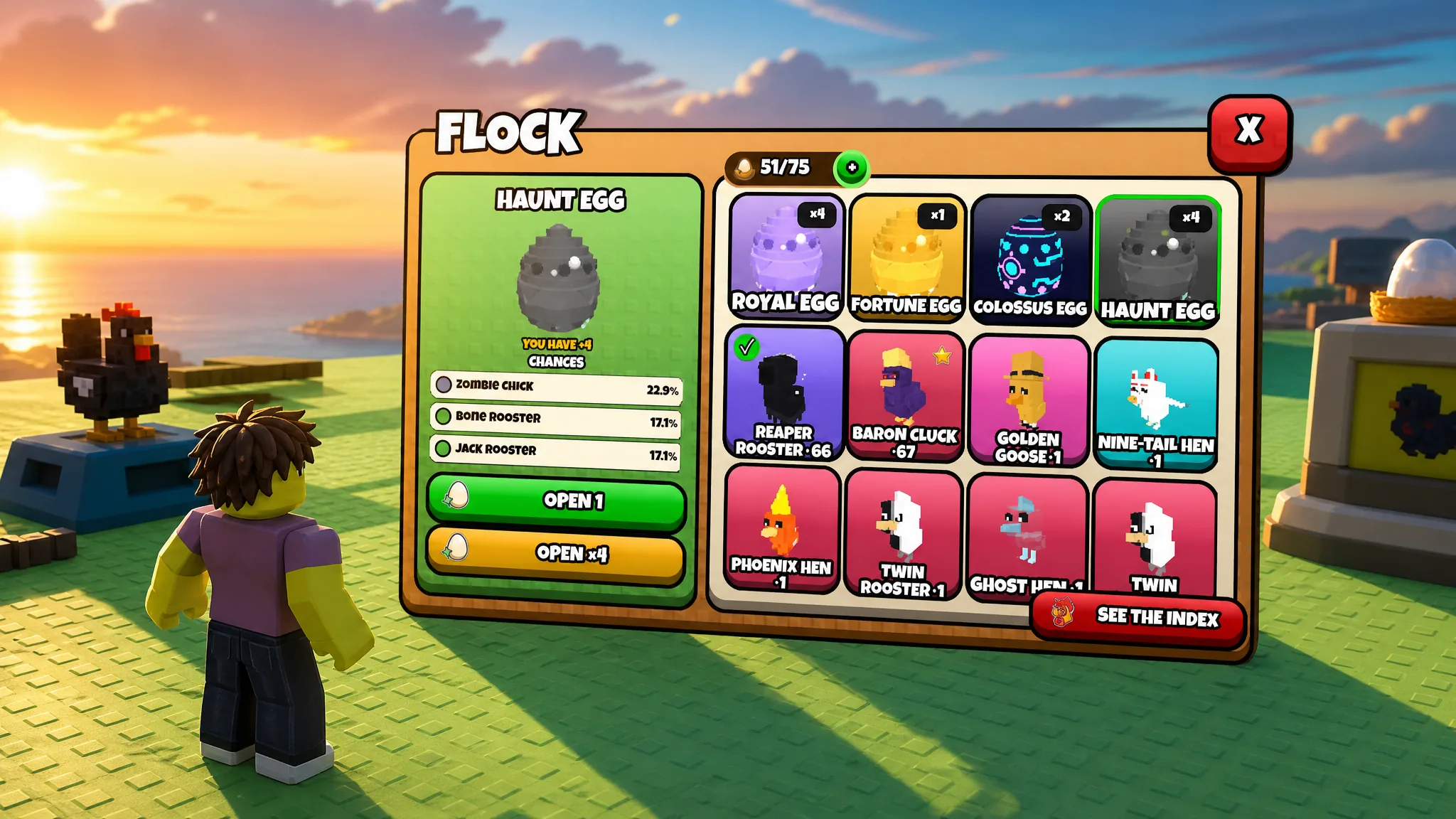
There is no special egg for this. Every single egg currently in the game rolls a 0.5% chance to hatch its chicken with the Inverted mutation already applied. That includes the cheapest starter eggs and the Colossal Egg alike, so a Storm Colossus pull has the same 0.5% shot at coming out Inverted as anything else.
Because the roll is independent on each hatch, volume is the only thing that helps. Open eggs in bulk rather than one at a time, and do not save a specific egg type hoping it has better mutation odds, because it does not.
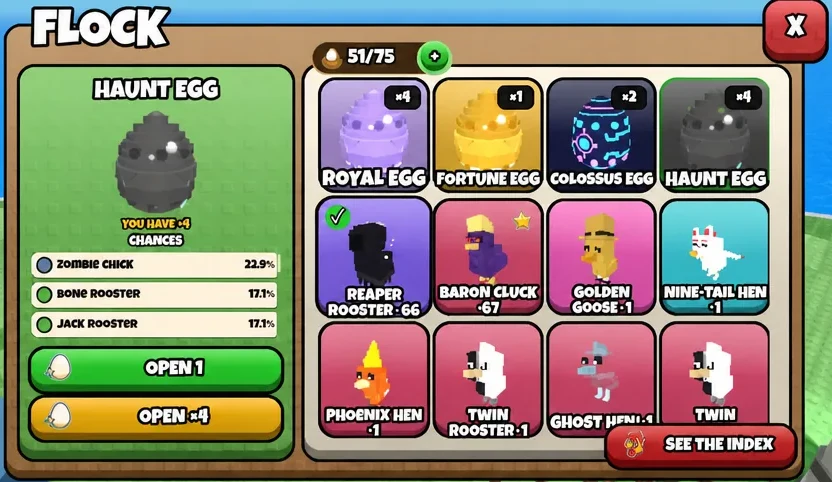
You will know instantly when it works. The chicken hatches with the Inverted name prefix attached, so an Inverted pull from the Colossal Egg reads as Inverted Storm Colossus in your flock.
Transferring Inverted to your best chicken with FUSE
The mutation you hatch will almost never land on the chicken you actually fight with. You do not have to raise the Inverted one from scratch, though. Fusion moves the mutation.
Fusion transfer chances by rarity
Fifty percent is the ceiling, and you only reach it when both chickens sit in the same rarity bracket. Fusing an Inverted Secret Chicken into another Secret Chicken, for example, gives you a coin flip. Every step of rarity difference pushes that number down, and the wider the gap, the worse it gets.
| Pairing | Chance the mutation transfers |
|---|---|
| Both chickens Inverted | 100% |
| Same rarity, one Inverted | 50% (the maximum) |
| Different rarities, one Inverted | Below 50%, dropping as the rarity gap widens |
The exact percentages for each mismatched rarity pair are not published in game. The only reliable rule is to match rarity as closely as you can. If you already own two Inverted chickens, fusing them together is guaranteed to produce an Inverted result, which makes stacking duplicates a safe way to bank the mutation while you hunt for the right base.
Note: fusion balancing for Inverted chickens was adjusted in HOTFIX 1.1, released the same day as the update that introduced the mutation.
What a failed fusion costs you
A failed transfer destroys the Inverted chicken. Your base chicken survives, but the mutation is gone and you are back to opening eggs at 0.5% to find another one. There is no pity counter and no partial success, so treat every attempt as spending the Inverted chicken outright.
That is the case for patience. Holding an Inverted chicken until you have a same-rarity fighter to fuse it into doubles your odds compared to firing it at whatever is convenient.
Inverted mutation stat boosts
Inverted raises the chicken’s base stats permanently. The boosts apply on top of whatever the chicken already has, and they do not decay or need to be reapplied.
| Stat | Increase over a base chicken |
|---|---|
| HP | +15% |
| ATK | +15% |
| SPD | +5% |
| PWR | +5% |
The health and attack gains are what actually keep a chicken alive in PvP, since being knocked out of the pit usually comes down to losing a damage race. The speed and power bumps are smaller, but they stack on the same chicken with no downside.
None of this is a project you finish in one sitting. Between a 0.5% hatch rate and a 50% ceiling on transfers, getting Inverted onto a specific top-tier chicken can take a lot of eggs and more than one failed fusion, and the only thing that reliably shortens the process is having eggs to burn.