
Dungeon Quest Reborn drops you into a Roblox dungeon crawler where you clear rooms full of enemies, grab loot, and finish each run against a boss. It carries the same structure as the original Dungeon Quest, built by Delta Quarters OG and officially licensed by Voldex, with a wider set of dungeons and difficulty tiers stacked on top. The fastest way to make progress is to treat one full dungeon run as a loop you repeat, not a race to your first Legendary.
Quick answer: Join the lobby, talk to the upgrade, sell, and Daily Reward NPCs, pick one damage stat (Physical or Spell), equip a Sword, Sceptre, or Bow that matches it, then clear Desert Temple on Easy and upgrade only the drop you plan to keep.
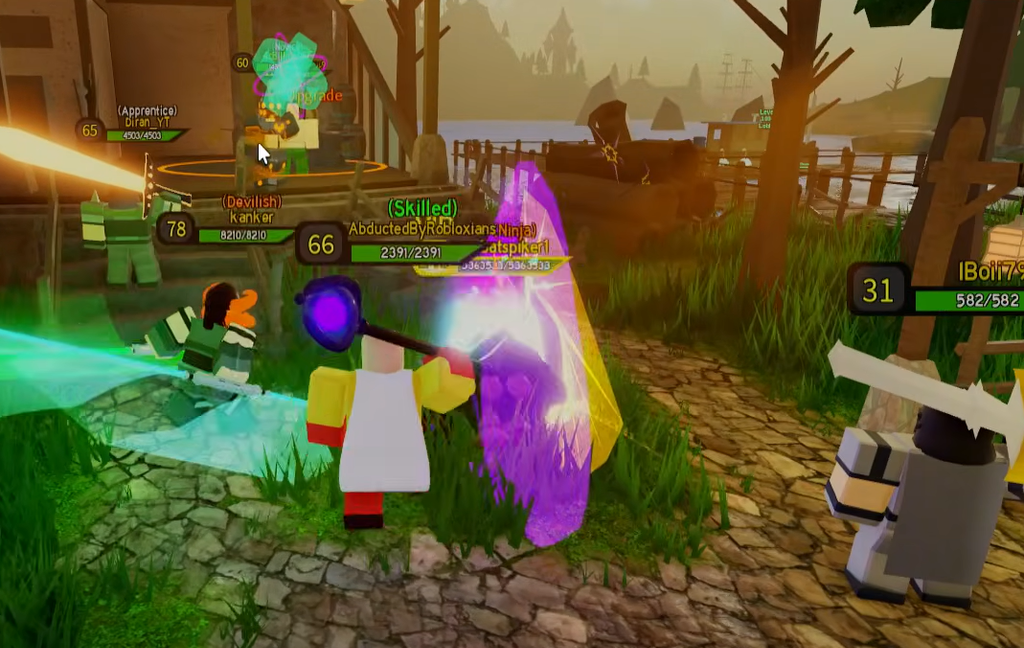
The core loop in Dungeon Quest Reborn
Every run follows the same shape. You move through a series of rooms, defeat enemies for XP and Gold, then face the boss at the end. Beating the boss hands over the best rewards the dungeon has to offer, usually including the strongest gear drops.
When a run ends, you return to the lobby, which acts as your staging area. That is where you sort equipment, upgrade gear, reset skill points, and prepare the next run. Leveling up raises your stats, and better stats let you meet the minimum level threshold on tougher dungeons. The game is free to play, so you can clear every dungeon without buying anything.
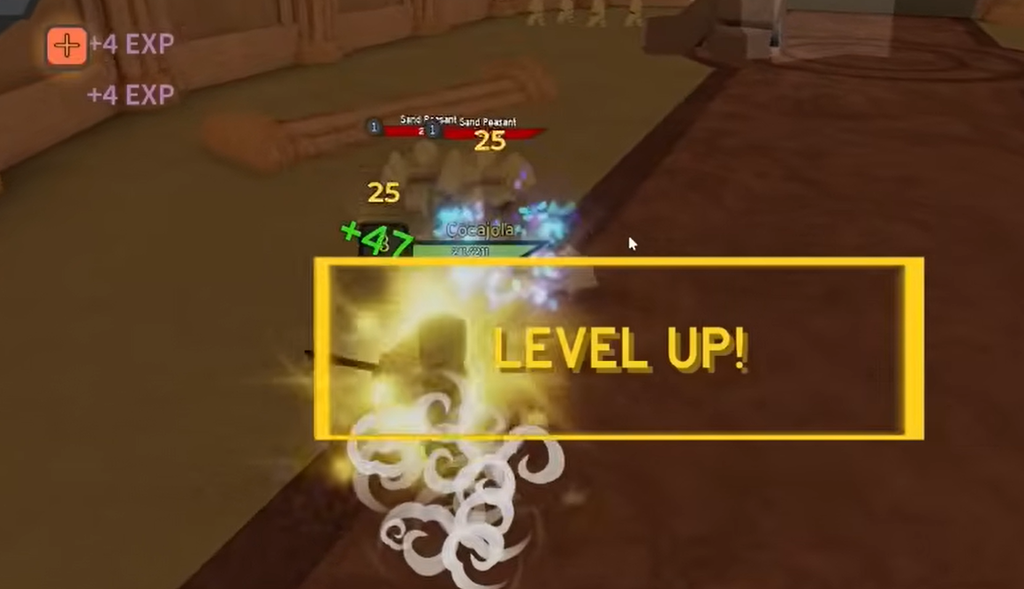
Start in the lobby, not the portal
Your spawn point is the lobby, and three NPCs there matter from your first minute. Learning them before you queue saves you gold and stops you from throwing away useful gear.
- Upgrade NPC — raises the Health, Spell, and Physical stats on an item you want to keep. Upgrades stay on the item card, so commit only to a drop with a strong roll.
- Sell NPC — turns gear you do not need into Gold. Check the required level and the stat roll before selling, because an endgame roll you cannot equip yet is a farm goal, not junk.
- Daily Reward NPC — gives one free item per day. There is no code redemption system in the current Early Access build, so this is your steady source of free gear.
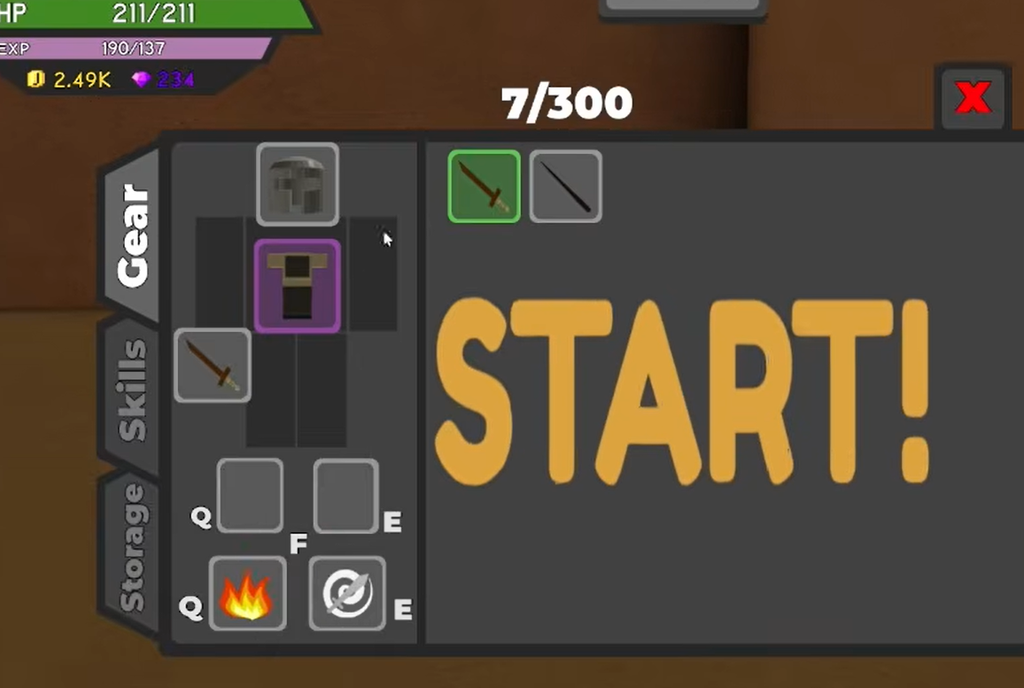
Before you enter a portal, open your inventory and read your current weapon and armor fields plus any ability names. Menu positions can shift by device and update, so read the on-screen labels rather than copying inputs from a video.

Pick one damage stat and stick to it
Your build identity comes down to a single early choice: are you a Physical melee player or a Spell caster? Every weapon and armor piece lists four fields, and each drop rolls them on its own, which is why two items with the same name can feel completely different.
| Archetype | Main stat | Role |
|---|---|---|
| Warrior | Physical Power | Physical DPS |
| Mage | Spell Power | Spellcasting DPS |
| Tank | Health | Absorbs damage |
| Healer | Support gear | Keeps the party alive |
The rule that keeps early progression cheap is to focus one damage stat instead of spreading skill points. A master of one performs far better here than a jack of all trades. Warriors invest in Physical Power, Mages in Spell Power, and Tanks can pour points into Health. Stamina only matters after your damage plan is clear.
Do not judge a weapon by its rarity color alone. A caster staff can show something like Physical 414 against Spell 38,103, so read the dominant stat on the card and build toward it. If you ever mispick, Gold can reset your skill points.
Which starting weapon to pick
Three archetypes are the most forgiving while you learn room layouts. A Sword is the all-round physical option, a Sceptre keeps you at range for a caster build, and a Bow lets you kite enemies. Physical builds can also branch into a Great Sword, Dagger, Axe, or War Hammer once you know your stat.
Controls
| Action | Input |
|---|---|
| Movement | W, A, S, D |
| Jump | Spacebar |
| Attack | Left Mouse Button |
| Ability 1 | Q |
| Ability 2 | F |
Abilities are special moves that deal damage as a Warrior or Mage or provide support as a Tank or Healer. Like gear, they drop from powerful dungeon enemies and come in rarities, so tougher dungeons hand out stronger abilities. In your rooms, use short, reliable attacks first and save a long cast for openings you can survive.
Loot, rarity, and how to compare drops
Armor and weapons drop at random, and the best pieces usually come from a dungeon’s final boss. Each piece is built for a specific archetype, so not every drop fits your build. Rarity acts as a value signal across every kind of loot.
| Rarity | Meaning |
|---|---|
| Common | Abundant, lowest value |
| Uncommon | Slightly better base value |
| Rare | Bridges gaps while you farm |
| Epic | Reliable progression piece |
| Legendary | High value, worth investing upgrades |
| Ultimate | Most elusive and most valuable |
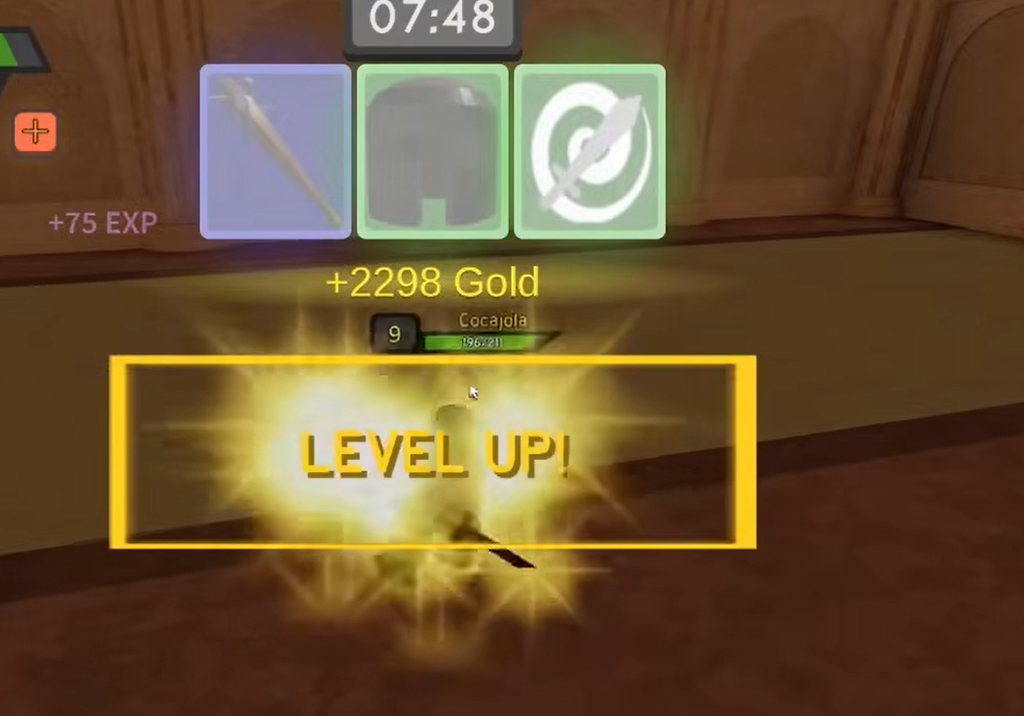
When the reward screen appears, compare each item only against the slot it could replace. Ask which useful stat actually changes, whether your current route can use it reliably, and which dungeon and difficulty produced it. A weapon that boosts theoretical damage but keeps getting you killed can slow you down, while armor that stabilizes a boss clear is often the better temporary upgrade. Newer-dungeon Epic gear can outperform an older Legendary.
Dungeon progression and difficulty
There are more than a dozen dungeons, and each has a minimum level requirement plus a time limit. The higher the requirement, the tougher the enemies, and if you enter below it your stats are likely too low to survive or beat the clock. Desert Temple is the starter route; Winter Outpost, Pirate Island, and King’s Castle come as your gear improves, with Enchanted Forest sitting at the endgame.
Every dungeon runs a difficulty ladder of Easy, Medium, Hard, Insane, and Nightmare, with a separate Hardcore Mode on top. Raise the difficulty only when your current clear is repeatable. If normal rooms eat most of your run, work on movement and area coverage. If only the boss kills you, keep the route and practice its cues. If a single hit ends the run, reduce risk before chasing a higher tier.
The strongest gear typically drops from the hardest dungeons, such as Enchanted Forest and Aquatic Temple, so those become your farming targets once your loadout can handle them.
Gold, upgrades, and cosmetics
Gold is the main currency. You earn it from Daily Rewards, dungeon completions, boss raid clears, and quests, and you spend it on equipment upgrades and skill point resets. Maxing out gear takes plenty of funds, and the most reliable way to build a balance is clearing challenging dungeons you can finish consistently.
Cosmetics are separate from all of this. They change how your avatar looks and have no effect on combat, so treat them as self-expression rather than power. You can earn them as quest rewards or buy them through premium purchases.
Solo or party of four
Solo play is fully supported, and it is the cleanest way to diagnose your own mistakes and set your own pace. Choose it when the difficulty is readable, and you want route practice.
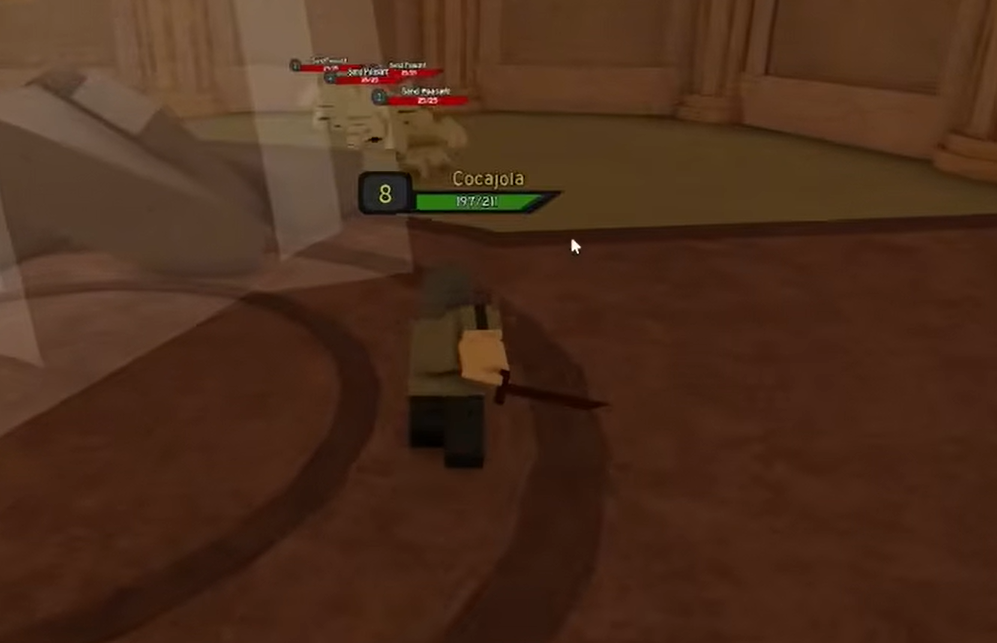
The game is an MMO, so you can take a party of up to four into any dungeon. Extra players split a boss’s attention, which gives everyone breathing room as you take turns pulling aggro and cut the damage any single player would otherwise absorb. Bosses are still tuned for a group, so multiplayer does not trivialize the endgame. Before you start a party run, confirm everyone is on the same dungeon and difficulty and finish your gear changes first.
Common beginner mistakes to avoid
- Buying gear on rarity alone — read the stat card, not the color, since same-name items roll differently.
- Spreading skill points — lean fully into one damage stat and add Stamina only after your damage plan is set.
- Selling a good drop by accident — check the required level and stat roll before opening the sell NPC.
- Skipping the Daily Reward NPC — with no codes available, the free daily item is consistent free progress.
- Jumping straight to a hard difficulty — clear Desert Temple on Easy first to learn the boss pattern before you climb.
Once you can clear your chosen route cleanly, banking gold and a keepable drop each time, you have the repeatable loop the whole game is built around. From there, it is a steady climb: focus one stat, upgrade selectively, and move to the next dungeon only when the previous one feels comfortable.