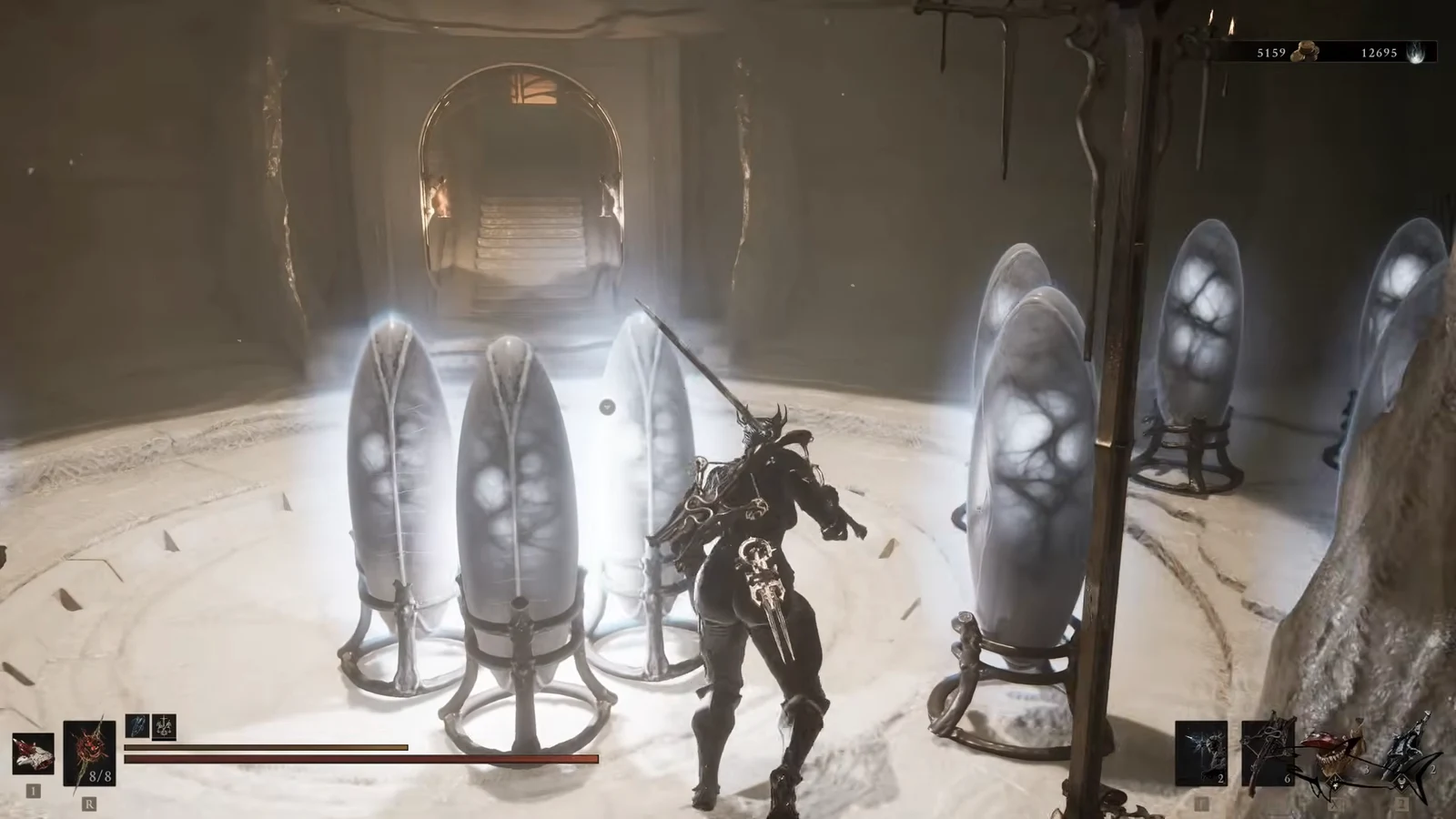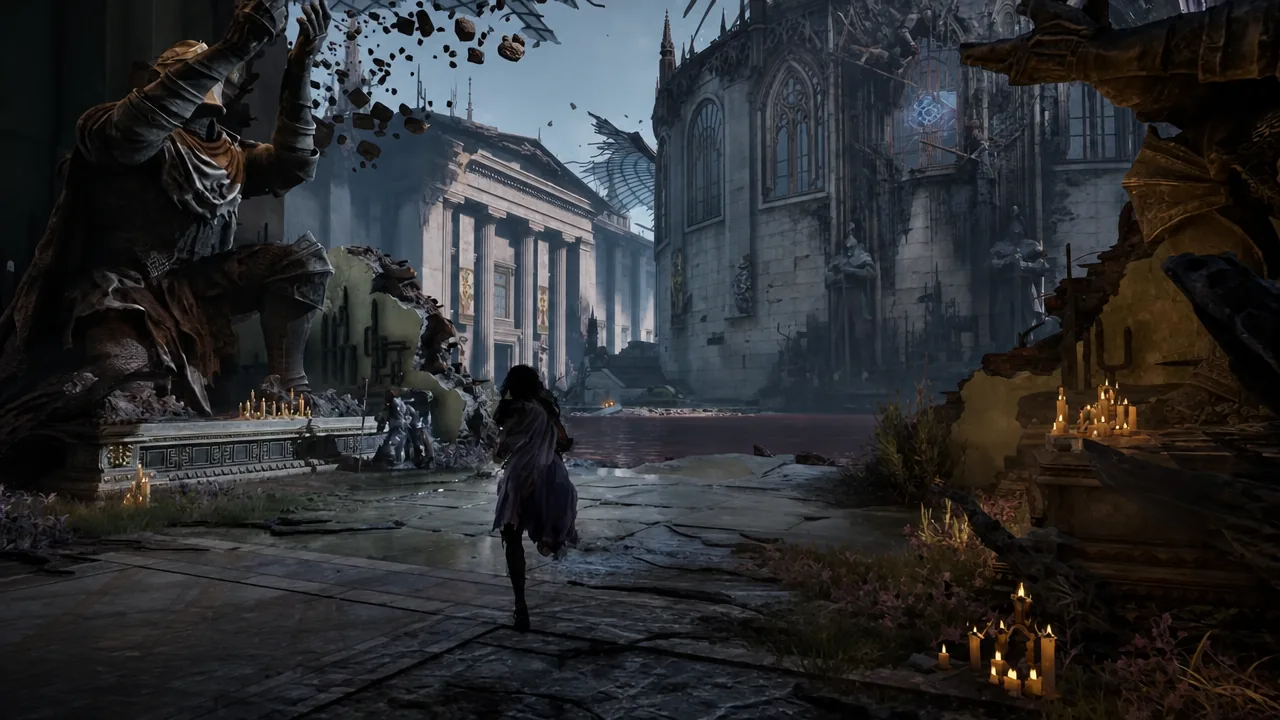
Tides of Annihilation drops Gwendolyn into a version of London that has been torn open by an invasion from another realm, and hands her a power that once belonged to King Arthur alone. She controls the Fog, and the Fog lets her call the Knights of the Round Table into a fight. That single mechanic shapes almost everything else in the game, from how combos are built to how puzzles are solved.
Quick answer: You equip two knight sets, each with one Main Knight and one Sub Knight, and swap between them mid-combo. Counter enemy attacks that flash red, and jump over the ones that flash yellow.
Tides of Annihilation basics: developer, platforms, and setting
It is a single-player, third-person action-adventure game and the debut title from Eclipse Glow Games, a Chengdu-based studio working in Unreal Engine 5 with investment from Tencent. The world splits between a fractured modern London and the mythical realm of Avalon, with landmarks rebuilt and then warped by the invasion. The developers ran on-site research trips in London with Tsinghua University’s Academy of Arts & Design, visiting the British Museum, Buckingham Palace, and Westminster Abbey, and that work shows up in locations such as the museum on Great Russell Street.
| Detail | Current status |
|---|---|
| Developer and publisher | Eclipse Glow Games |
| Engine | Unreal Engine 5 |
| Platforms | PlayStation 5, Xbox Series X/S, PC |
| Mode | Single-player, third-person |
| Estimated length | Around 30 hours |
| Boss count | Over 30 unique encounters |
| Weapon types | Four, including swords, bows, and fists |
| Release date | Not announced |
Main Knights and Sub Knights: how the two loadout slots differ
Gwendolyn can summon more than ten legendary knights, but only four are active at once. They are arranged as two sets, and each set holds one Main Knight and one Sub Knight. You switch between the two sets on the fly, including in the middle of a combo, which is how longer strings are chained together.
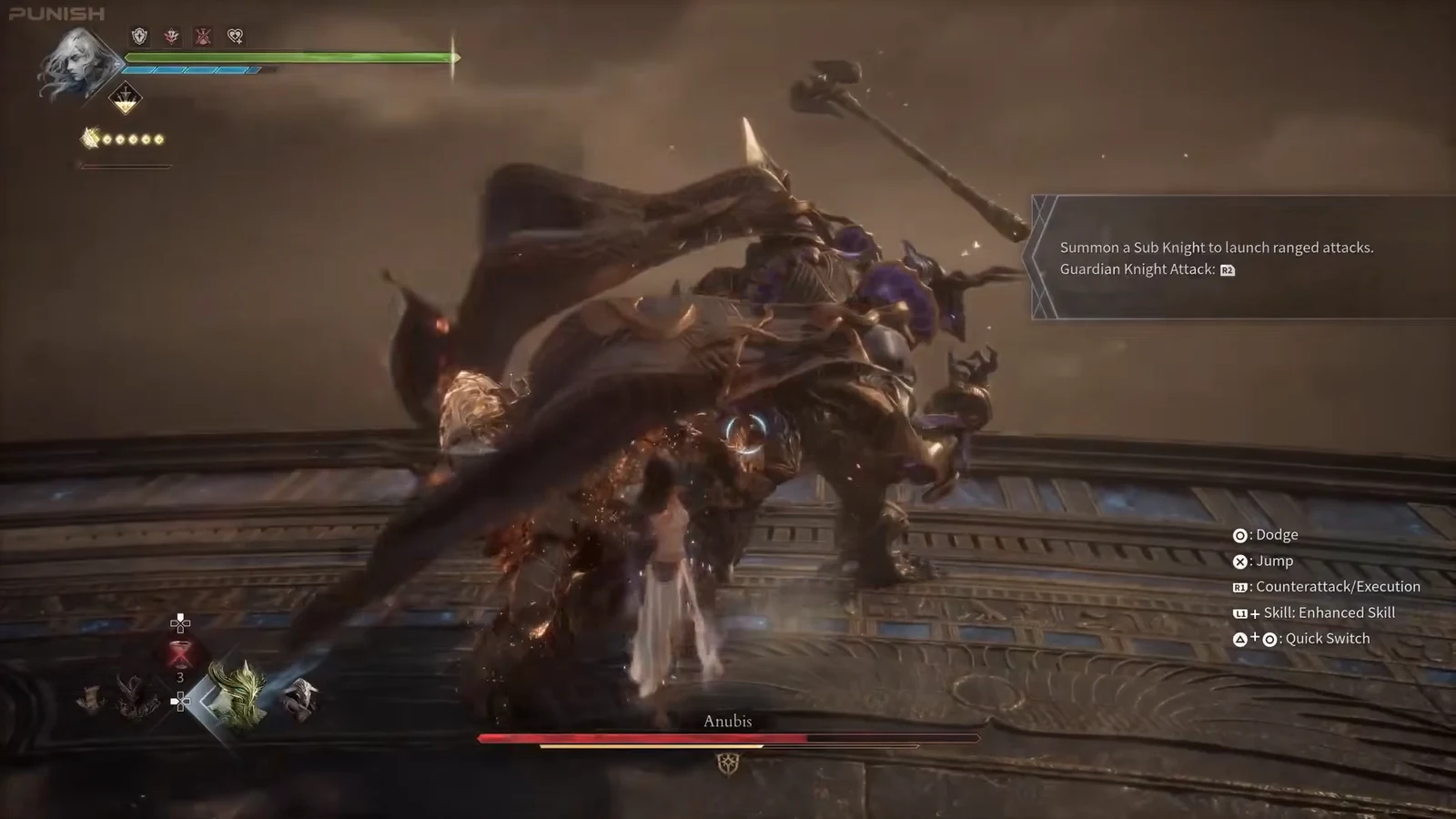
The two roles do different jobs. A Main Knight is a combat partner with its own combo-triggered attacks and an Enhanced Knight Skill that works as an ultimate. A Sub Knight is closer to a support tool, adding assist strikes, ranged pressure, and teleport-style repositioning. During the Anubis fight, the game explicitly asks for a Sub Knight ranged attack, mapped to Guardian Knight Attack on R2.
Individual knights carry signature kits. Lamorak fights with a spear, Bors fires rope arrows and cleaving bolts, and Palamedes smashes through walls and shifts heavy objects. Others named so far include Bedivere, Gawain, Kay, and Galleris. Each knight’s configuration and abilities can be customized, so the same roster supports different playstyles.
Defense rules: red flash, yellow flash, stagger, and executions
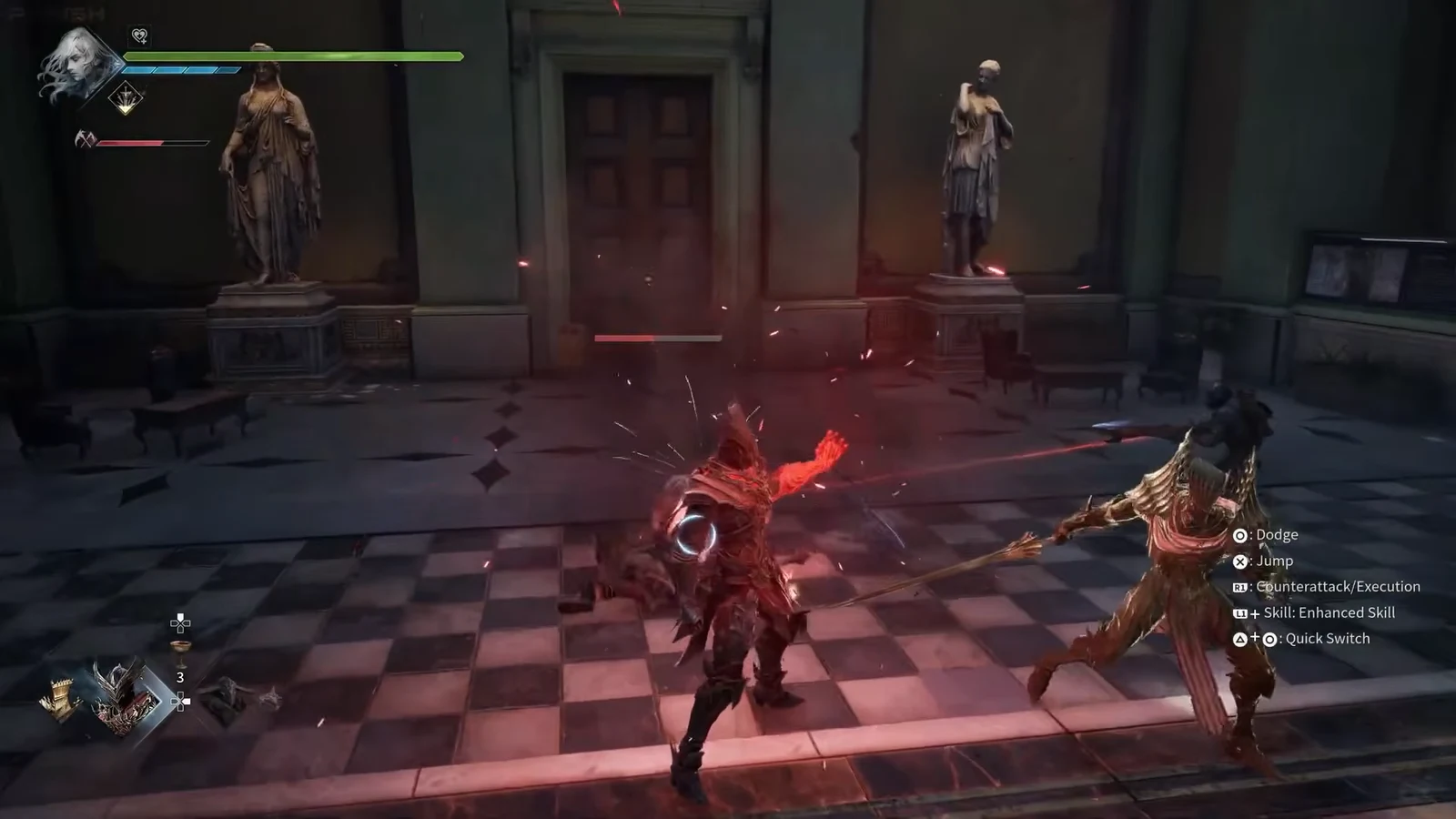
Gwendolyn has light and heavy attacks, jumps, dodges with invincibility frames, and a deflect. Aerial play matters too, with double jumps and mid-air juggling built into the combo system. The enemy tells are strict and color-coded, so reading them is the difference between a counter and a hit.
| Enemy tell | Correct response |
|---|---|
| Red flash | Counterattack |
| Yellow flash | Jump over it |
| Standard attack | Dodge or parry |
Sustained pressure fills a stagger bar. Break it and you open a window for critical hits and a scripted execution animation, which is the fastest way to remove chunks of a boss health bar. The on-screen control prompts cover Dodge, Jump, Counterattack/Execution, Enhanced Skill, and Quick Switch, which is a compact summary of everything the combat asks you to track.
Progression: levels, skill tree, and gear passives
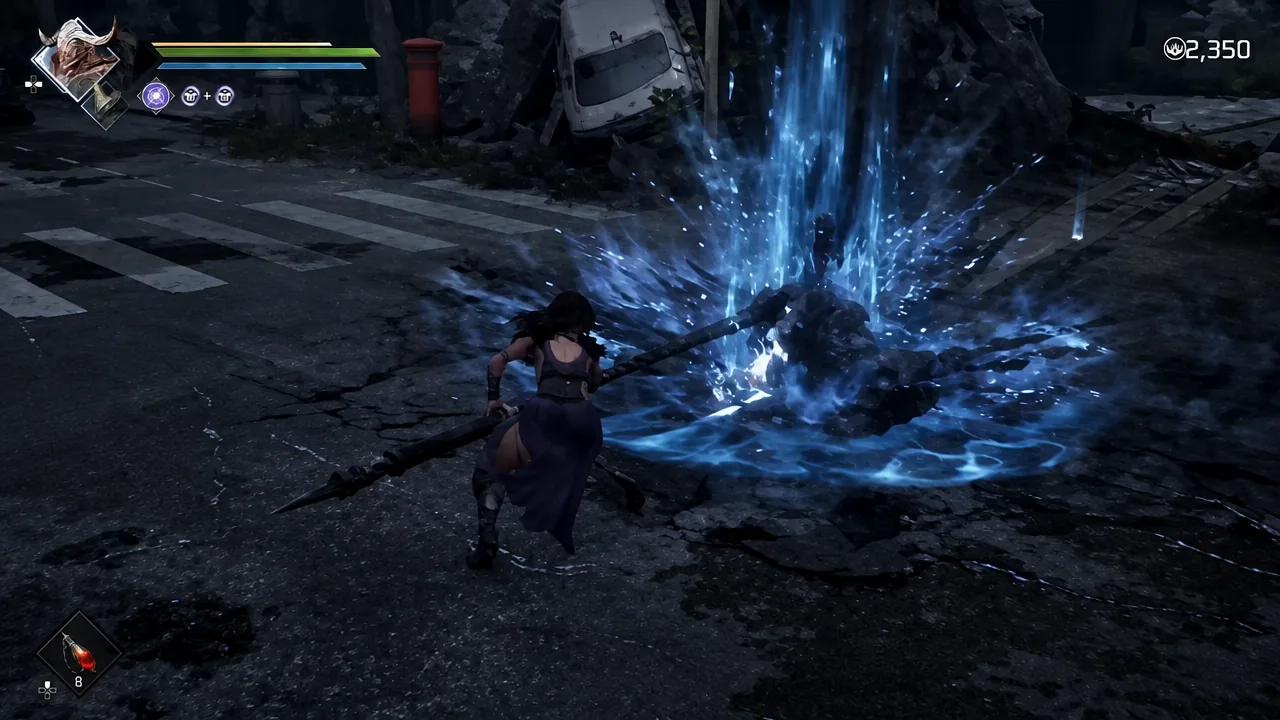
Progression is light RPG rather than full build-crafting. You level up, spend points in a skill tree, and manage equipment bought or found along the way. Gauntlets, shields, weapons, armor, and talismans all carry stats, and the interesting part is the passive line rather than the raw numbers.
| Equipment | What it does |
|---|---|
| Rebirth Gorget | Revives you once per rest |
| Curved Deathblade | Grants Life Siphon |
| Skyward Gauntlets | Gauntlet option with its own stat spread |
| Fogbound Gauntlets | Alternate gauntlet set |
| Arrowstorm / Echoing Arrow | Bow-side options |
| Talismans | Passive effects such as summoning meteors |
Note: a cheat-death passive like the Rebirth Gorget only refreshes when you rest, so treat it as one extra life per checkpoint rather than a permanent safety net.
Fogcrystals: resting, fast travel, and boss phase checkpoints
Checkpoints are called Fogcrystals. Activating one lets you rest and unlocks it as a fast travel point, and resting is what restores per-rest passives. There are multiple difficulty options, and on normal difficulty long boss fights place checkpoints between phases, so a wipe in a later phase does not send you back to the opening.
Boss fights: Mordred, Anubis, Tyronoe, and Colossal Knights
There are more than 30 bosses, each with its own ability set, and some are optional high-difficulty encounters rather than story gates. Several of them rewrite the rules of the arena partway through, which is where the knight-swapping matters most.
| Boss | What defines the fight |
|---|---|
| Mordred | Multi-phase duel that starts in a library and collapses into a chamber flooded with crimson water, with light-based projectiles and Pendragon attacks in phase two |
| Anubis | Spatial magic and mid-fight phase transitions |
| Tyronoe, The Ferryman | Fought partly inside a mirror fold realm, where only summoned knights can deal damage until the barrier shatters |
| Gareit | Lightning-based moveset |
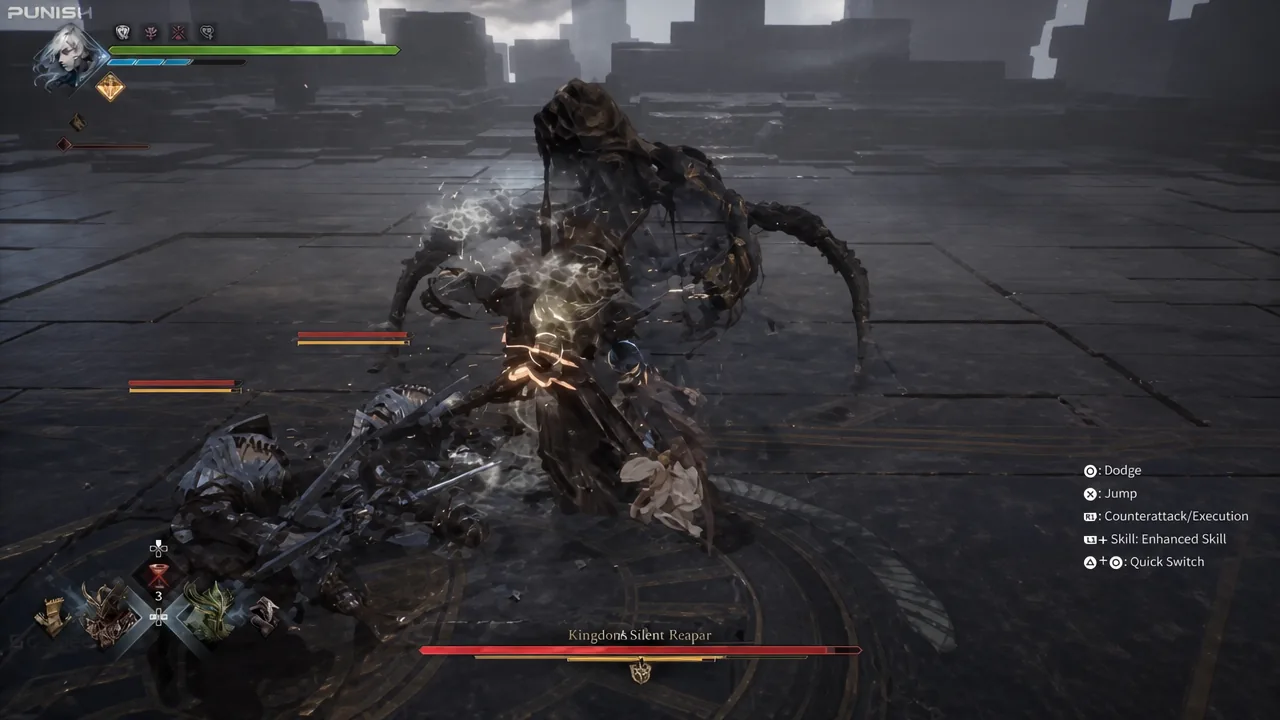
| Kingdom Silent Reaper | Large-scale encounter built around reading long wind-ups |
| Colossal Knights | Towering roaming giants you scale and explore as vertical levels before fighting them |
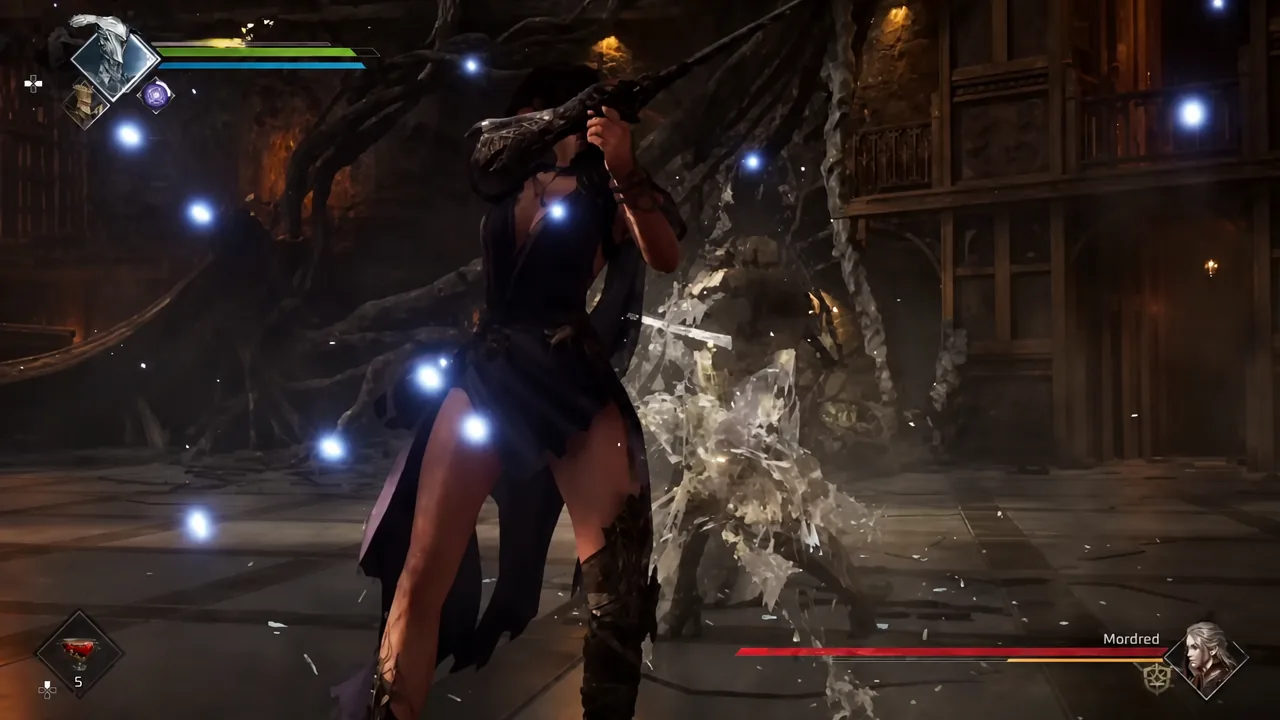
The Ferryman encounter is the clearest example of the knights being a requirement rather than a convenience. Gwendolyn cannot cross the fold realm barrier herself, so the damage has to come from a summon while she handles what is happening on her side of the mirror.
Exploration and knight-based puzzles
The story is relatively linear and split into levels, but each one contains open space to poke around in. Knights double as traversal tools outside combat. Bors creates ziplines with rope arrows and cuts suspended objects loose with cleaving bolts, while Palamedes breaks walls and shifts heavy obstacles. Puzzle rooms lean on that split, using things like Veilbreaker Crystals to expose platforms across pools of scarlet water.
Fold realms are the other exploration wrinkle. These are otherworldly spaces where geometry bends, streets run vertically, and the route forward is a chase across surfaces that should not be walkable.
Release status and the Gwendolyn recast
No release date has been announced. The game is confirmed for PlayStation 5, Xbox Series X/S, and PC, with PS5 Pro support including ray tracing and a 60fps mode, and you can follow it from the Tides of Annihilation Steam page.
Gwendolyn’s voice role changed hands from Jennifer English to Angela Sant’Albano, and the character received a visual redesign to match the new performer. Sant’Albano described Gwen as a heroine driven by love for her sister and her homeland, carrying self-doubt without letting it stop her.
If you are trying to work out whether the knight system is more than a gimmick, the answer is in how often the game makes it mandatory. Bosses that can only be damaged by a summon, walls only one knight can break, and combos that require a set swap mid-string all point the same direction. Gwendolyn is the character you control, but the Round Table is the mechanic you are learning.