Anime Dice is a Roblox roller built on one loop: cash buys Luck, Luck buys rarer anime units, and rarer units earn more cash. Everything else in the game — Towers, rebirths, the Index — exists to accelerate that loop. The mistake most new players make is spreading money across every upgrade node in the tree, which slows the entire cycle down.
Quick answer: Pour cash into Luck and Money upgrades first, buy the highest dice you can afford from the Dice Shop, then rebirth once you hit $500M — rebirthing wipes your cash but pushes your Luck and Cash multipliers from 2x to 2.5x.
Upgrade priority in the Anime Dice upgrade tree
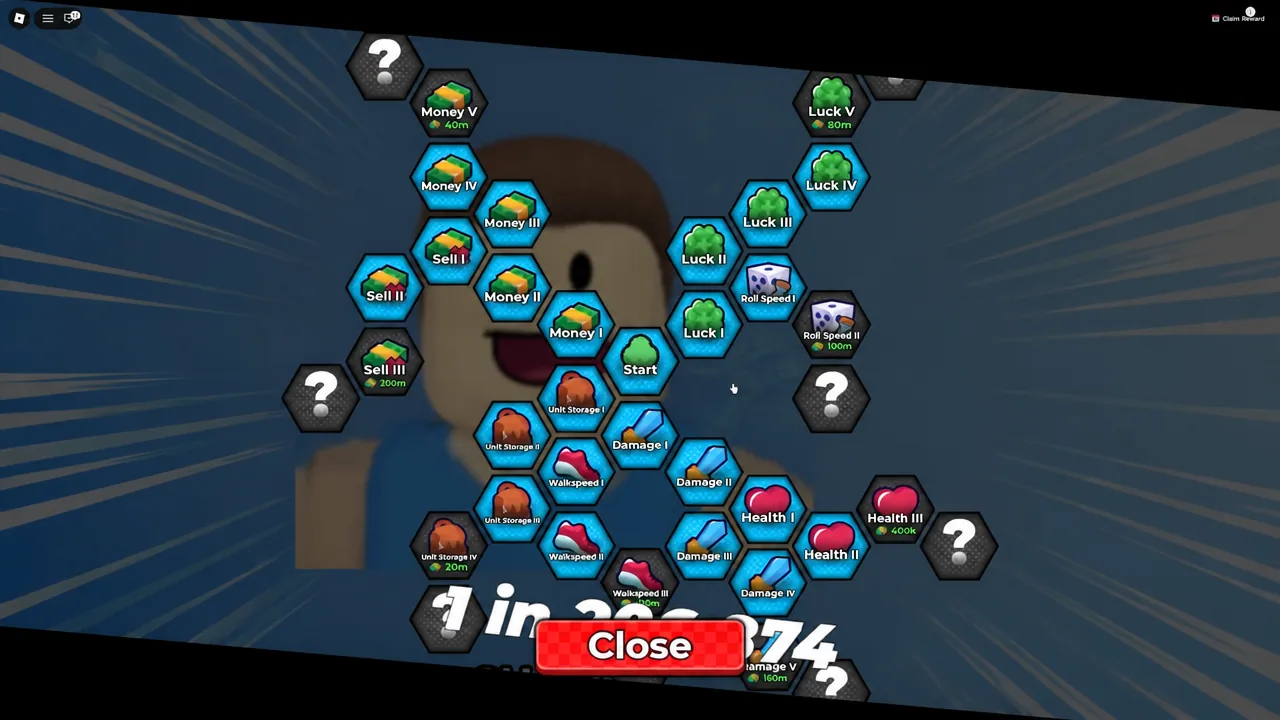
The upgrade tree offers seven categories, and they are not equally useful. Luck raises your odds of pulling rare units. Money raises how fast you earn, which funds more Luck. Those two feed each other, so they come first and stay first through every rebirth.
Roll Speed and Unit Storage come next. Faster rolls mean more chances per minute, and more storage means you are not forced to sell a unit before you have checked whether it is worth keeping. Damage and Health only matter inside Towers, so they sit at the bottom of the list until your economy is running well.
| Priority | Upgrade nodes | Why it matters |
|---|---|---|
| First | Luck I–VI, Money I–VI | Drives rarer pulls and faster income; the core loop |
| Second | Roll Speed I–II, Unit Storage I–IV | More rolls per session and room to hold what you pull |
| Third | Sell I–III, Walkspeed I–III | Better returns when clearing inventory; quicker movement |
| Last | Damage I–V, Health I–V | Only used in Tower combat, not in rolling |
Dice Shop prices and Luck multipliers
Dice are the single biggest Luck lever in the game, and each tier is a large jump over the last. The pricing curve gets steep quickly, so the practical approach is to buy the best dice you can comfortably afford, then rebuild your cash rather than saving indefinitely for a tier far above your income.
| Dice | Rarity | Luck | Cost |
|---|---|---|---|
| Nature | Rare | 20x | — |
| Lightning | Rare | 42x | $500k |
| Ice | Rare | 100x | $4m |
| Magma | Epic | 200x | $30m |
| Storm | Epic | 400x | $200m |
| Shadow | Epic | 750x | $1.5b |
| Light | Legendary | 1,500x | $12b |
| Blood Moon | Legendary | 3,000x | $100b |
| Void | Legendary | 5,000x | $1.5t |
Storm at $200m is the usual first big milestone, since 400x Luck changes what your rolls can realistically produce. Shadow and above are long-term goals that only become reachable after several rebirths have stacked your Cash multiplier.
Managing your inventory without losing good units
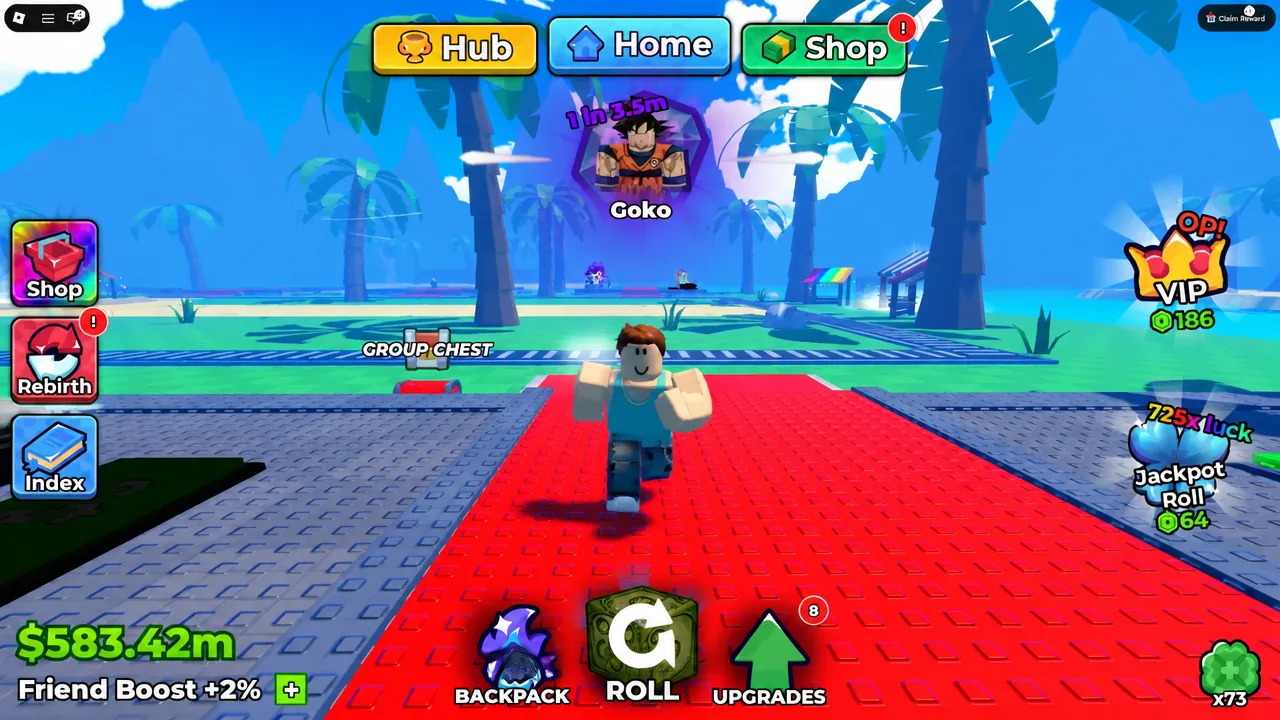
Storage fills fast once your Luck climbs, and selling in bulk is how you convert junk pulls into upgrade money. The order of operations here matters more than anything else, because a careless sell can wipe the unit you spent an hour chasing.
One exception: rare mutations are worth holding even if the base unit is not your strongest. Mutations are part of the collection layer, and pulling a replacement is not something you can plan around.
Note: Money keeps generating while you are logged out. Collect the offline earnings when you return and spend them immediately rather than letting them sit idle.
Rebirth at $500M: What resets and what carries over
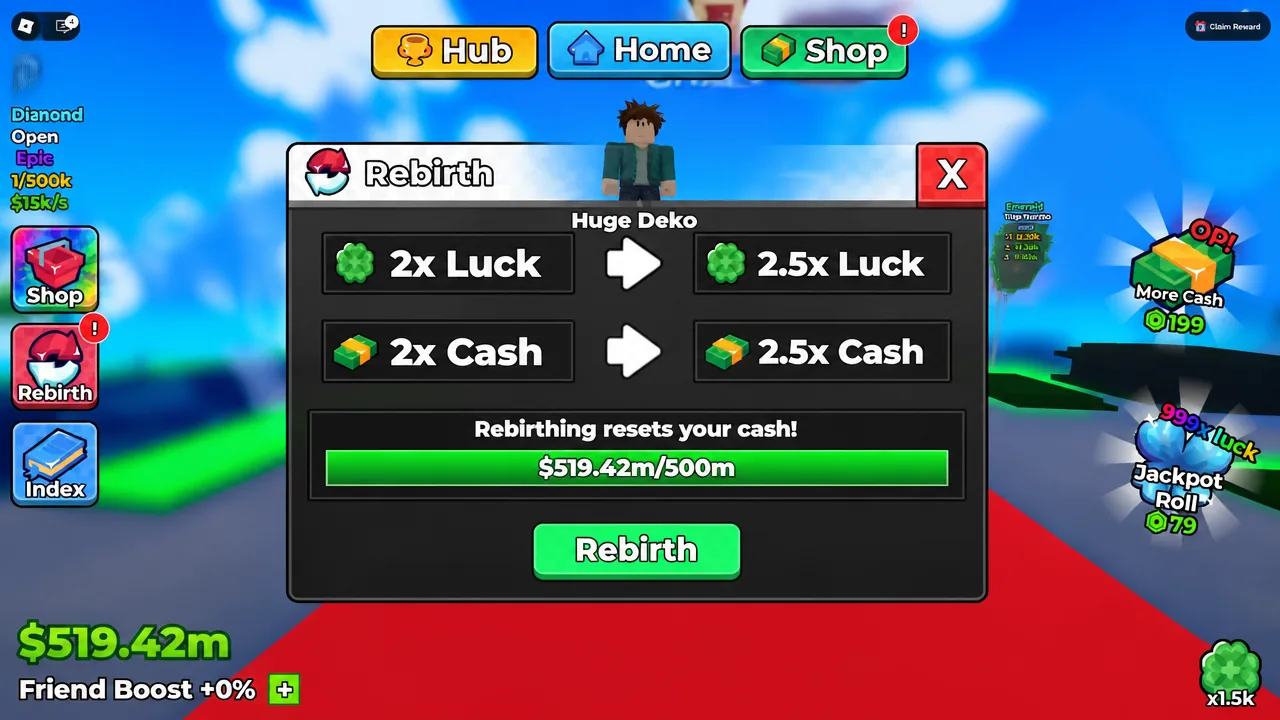
Rebirthing costs $500m and resets your cash. In exchange, your permanent multipliers move up — 2x Luck becomes 2.5x Luck, and 2x Cash becomes 2.5x Cash. That trade is worth taking as soon as you can afford it, because every future run earns and rolls faster.
Because the reset only touches cash, any money left in your wallet at the moment you rebirth is money thrown away. Spend down to as close to the threshold as you can manage, buying upgrade nodes and dice, then trigger the reset.
Free codes for Lucky Spins, Trait Rerolls, and Gems
Codes are the fastest way to get spins and rerolls without touching your cash reserves. Each one works once per account, and capitalization matters, so paste them exactly as written.
| Code | Reward |
|---|---|
| UPDATE2 | 2 Lucky Spins, 5 Trait Rerolls, 5 Gems |
| UPDATE1 | 2 Lucky Spins, 3 Trait Rerolls, 3 Gems |
| RELEASE | 1 Lucky Spin, 2 Trait Rerolls, 2 Gems |
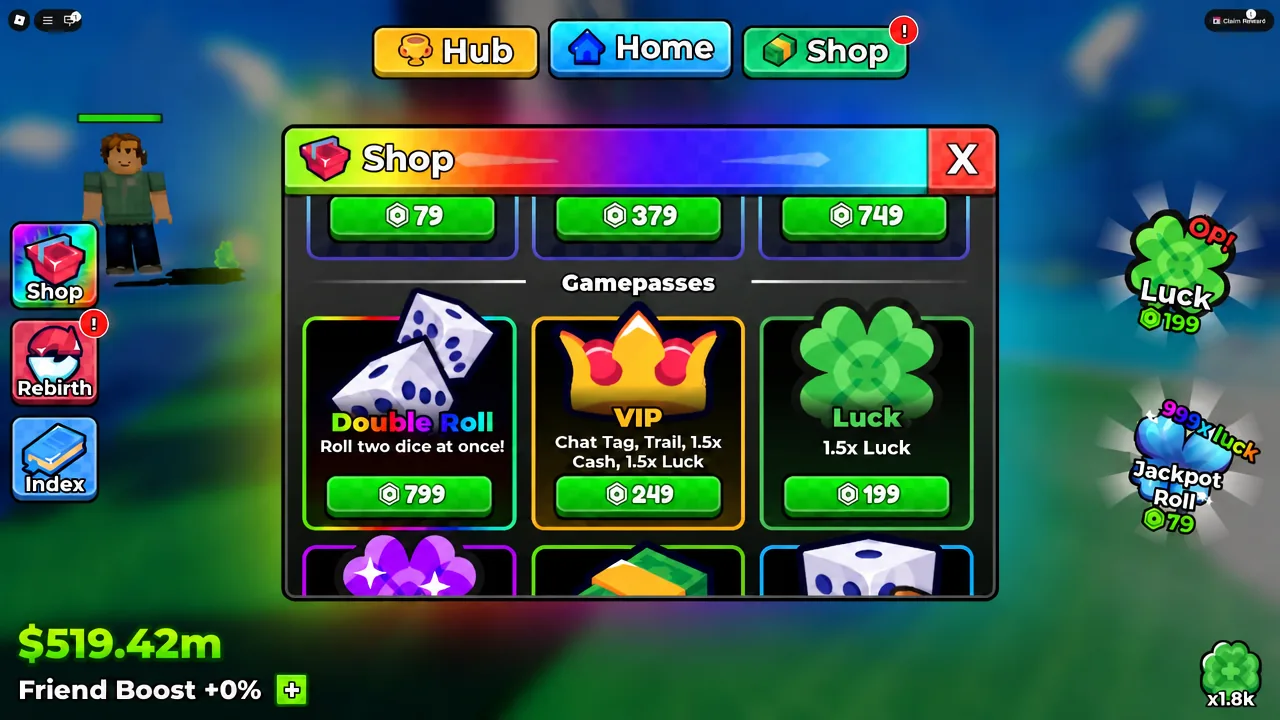
New codes tend to appear alongside updates and like or visit milestones. The developer’s Discord server is where they get posted first.
Towers: Where Damage and Health finally pay off
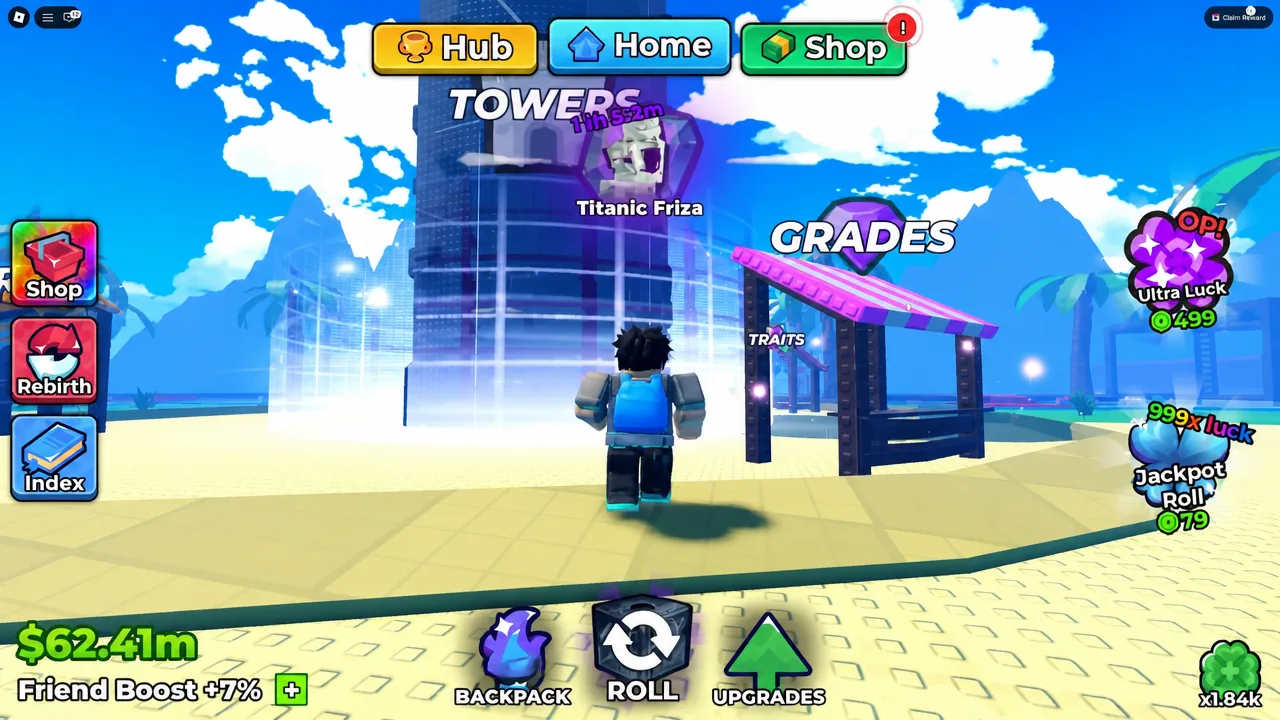
Three Towers are available, each at a fixed difficulty. Dragon Tower is Easy, Cursed Tower is Medium, and Pirate Tower is Hard. Runs award gems and luck boosts, which makes them a reasonable break from rolling once your team can survive a few floors.
Cursed Tower is the usual proving ground for a mid-game team, and clearing into the higher floors there is a decent signal that your Damage and Health nodes are worth investing in. Before that point, those nodes are money that could have been Luck.
Tracking progress with the Index and other players’ bases
The Index menu records what you have pulled, which is the cleanest way to see how far your current Luck setup has taken you and which rarities are still missing. It also stops you from selling something you have never obtained before.
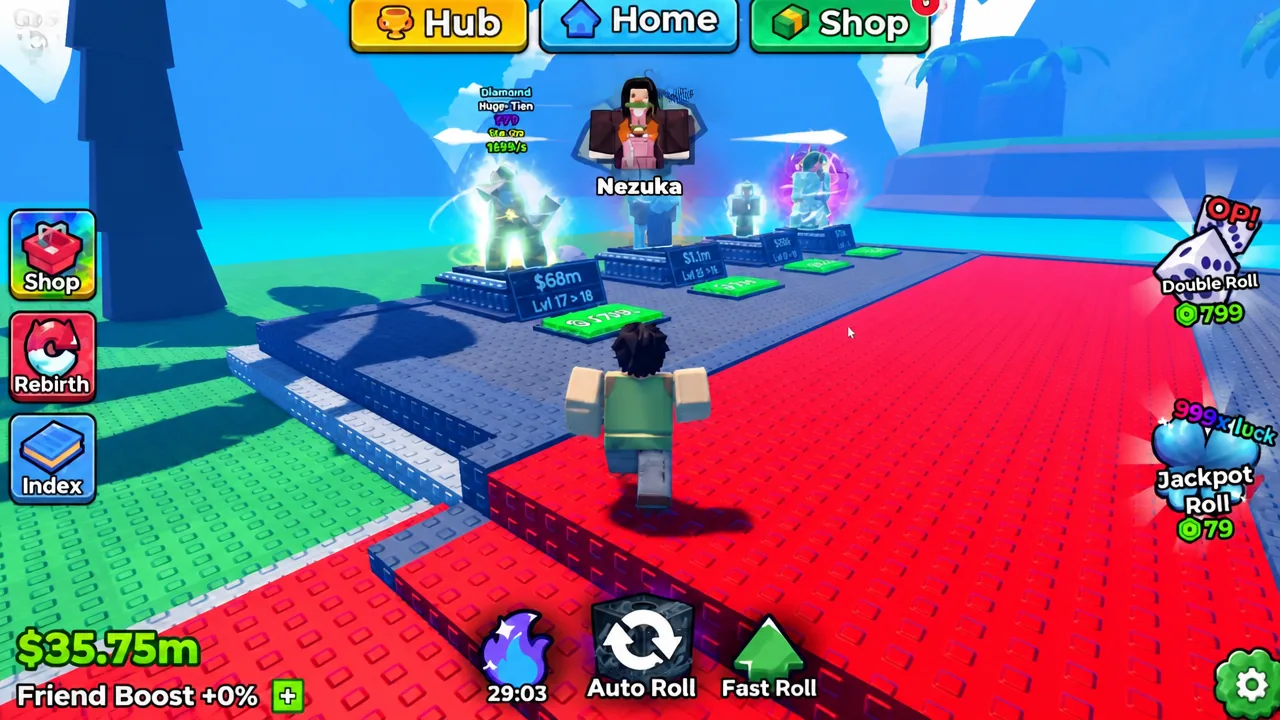
Walking through other players’ bases serves a practical purpose too. Their displays show which high-tier mythical units exist at the top end of the pool, giving you a concrete target rather than rolling blind.
The rhythm that works is short and repeatable. Roll until storage fills, equip your best, sell the rest, put everything into Luck and Money, upgrade dice when the next tier comes into range, and reset at $500m. Do that a few times and the numbers that once felt out of reach — Shadow, Light, eventually Void — start to look like ordinary purchases.