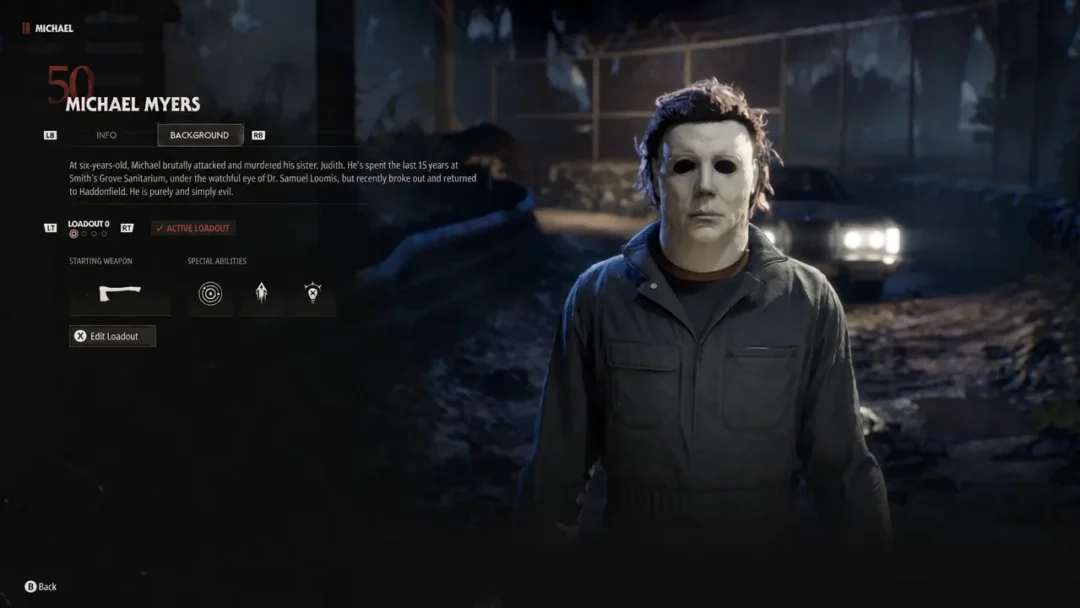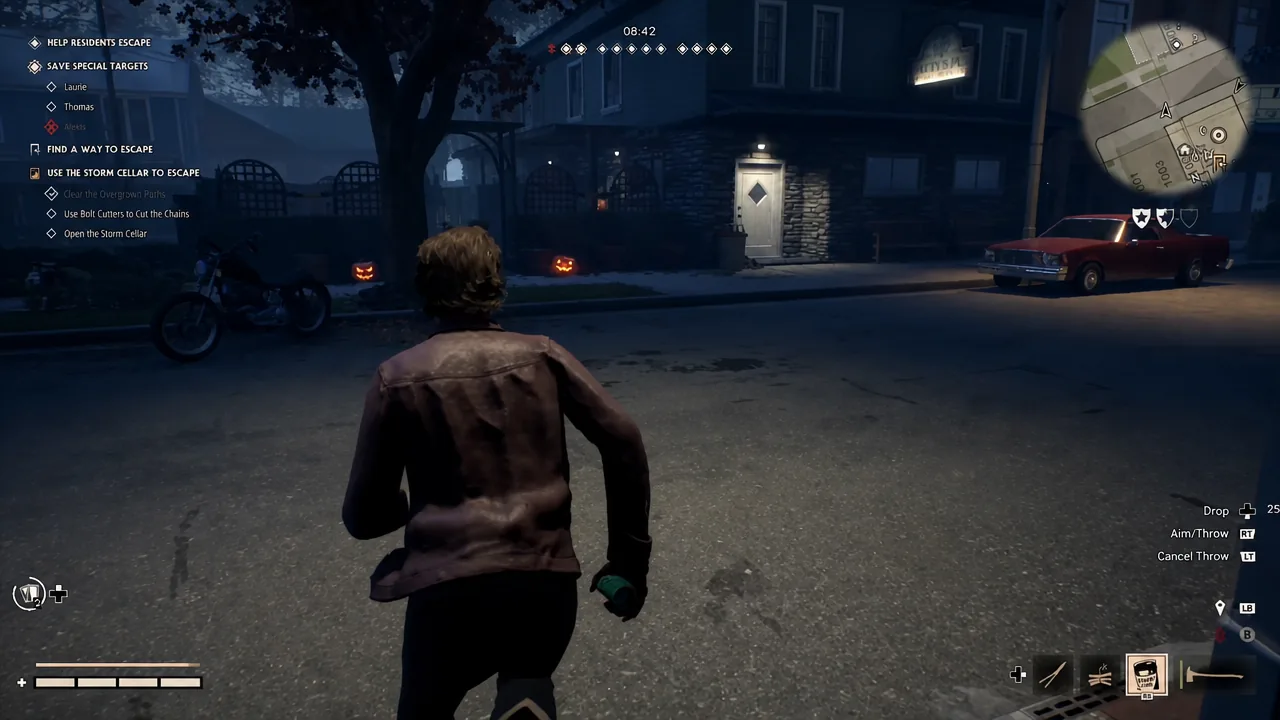
Civilians in Halloween: The Game are not built to win a fight. The 1v4 asymmetrical mode drops four of them into Haddonfield against Michael Myers, and almost everything a civilian does is logistics under pressure — finding an exit, getting a phone to work, and walking terrified neighbors to safety while the Shape closes in.
Quick answer: Loot for tools, call the police from a working phone, then move yourself and named residents to one of three exits — the storm cellar (needs bolt cutters), a repaired car (needs keys and parts), or a called police wagon. If you die with a police respawn perk in your deck, you come back as an armed officer and keep helping.
Civilian objectives in Halloween: The Game
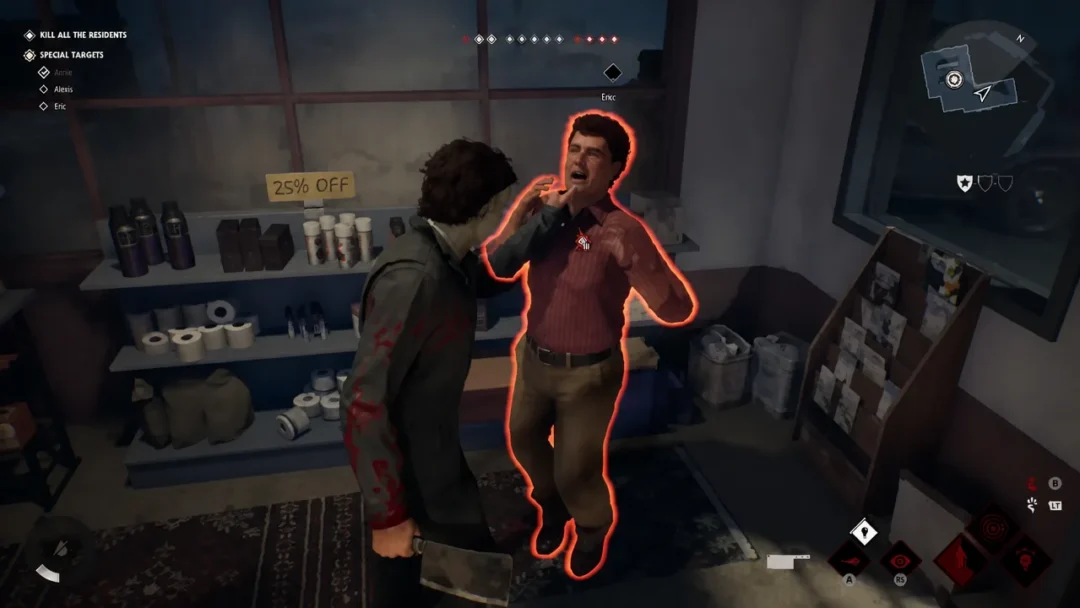
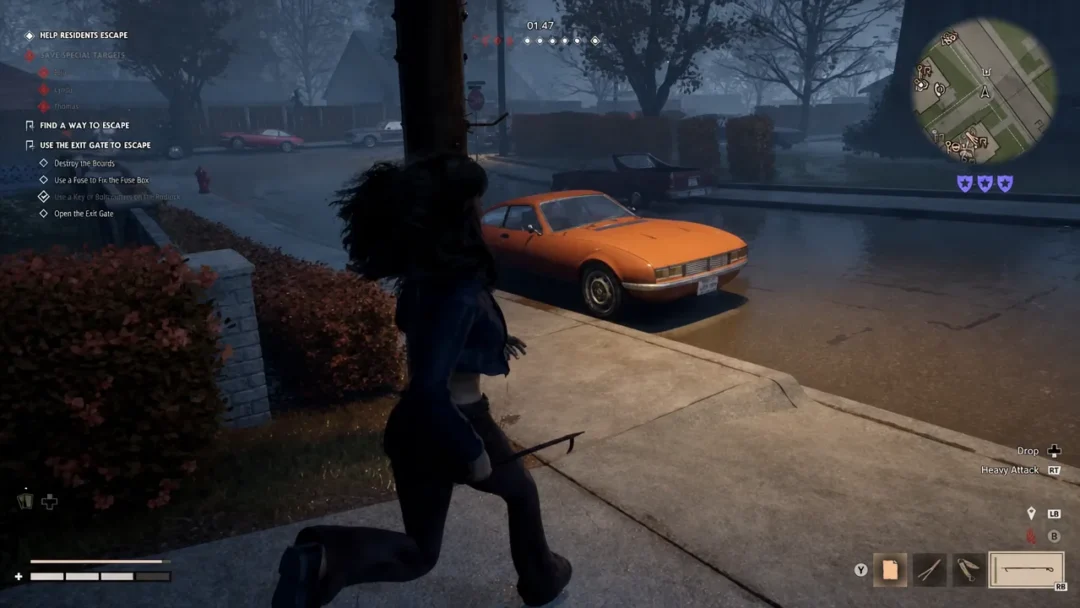
The objective tracker on the left of the screen tells you what the match wants from you at any moment. The prompts rotate between saving people and saving yourself, and they update live as residents die or get out.
| Objective prompt | What it asks for |
|---|---|
| SAVE HADDONFIELD RESIDENTS | Keep the town’s NPC population alive |
| HELP RESIDENTS ESCAPE | Escort NPCs to a working exit |
| SAVE SPECIAL TARGETS | Protect the named NPCs Michael is hunting |
| FIND A WAY TO ESCAPE | Locate an exit route for yourself |
| USE THE STORM CELLAR TO ESCAPE | A cellar exit has been found and is usable |
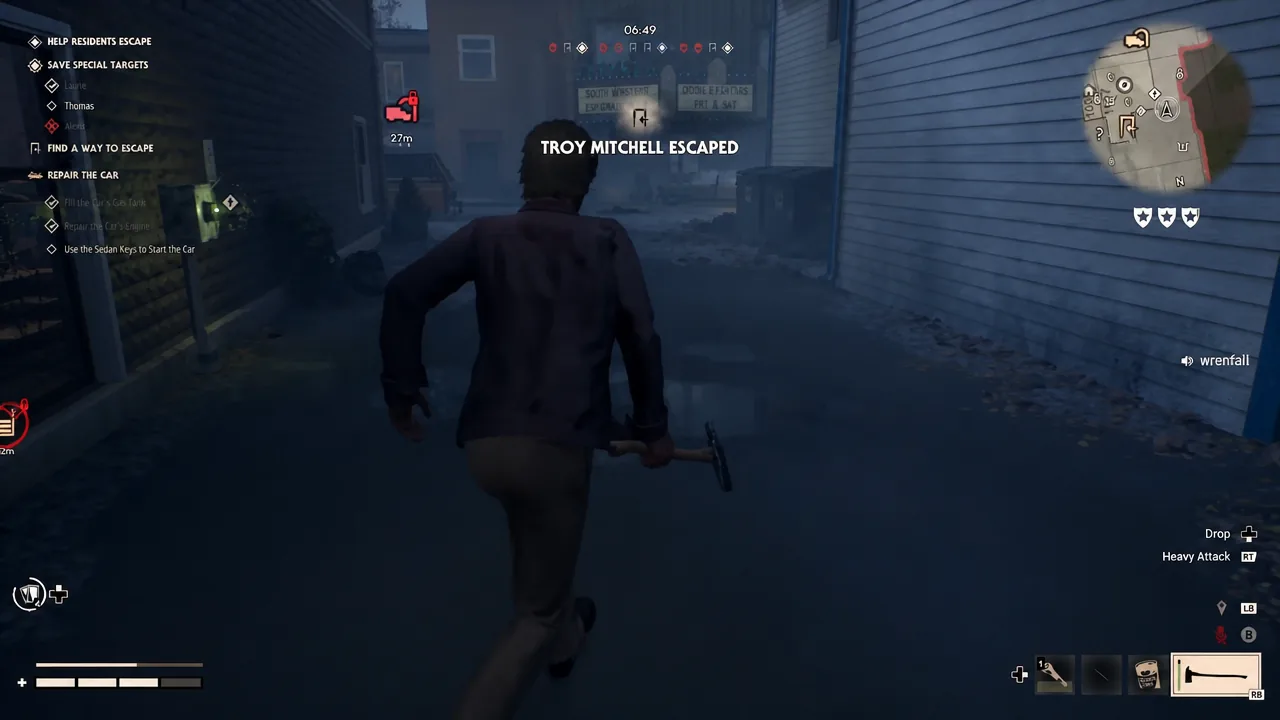
| REPAIR THE CAR | The vehicle exit needs parts and keys |
Special targets are the NPCs Michael fixates on. You will see their status called out by name, either as an escape (“SPECIAL TARGET LAURIE ESCAPED”) or a loss (“SPECIAL TARGET ALEXIS KILLED”). Those notifications are the scoreboard for how the night is actually going.
Escape routes: storm cellar, car, and police wagon
There is no single exit. Haddonfield Heights offers several, and each has its own gate to clear before anyone can use it. Scouting one early matters more than looting, because an escort with nowhere to go is a dead escort.
| Route | Requirement |
|---|---|
| Storm cellar | Bolt cutters to break the chains on the doors |
| Car | Repair parts plus the sedan keys to start it |
| Police wagon | Called in after enough police contact, then used as a pickup point |
Cars sit broken down until you find what they need, so a vehicle you sprint to early is often still useless. The HUD spells out the missing piece for you — for example, “Use the Sedan Keys to Start the Car” under the REPAIR THE CAR objective.
The storm cellar is the fastest of the three once you have bolt cutters. Cut the chains, open the doors, and the tracker flips to “FOUND CELLAR ESCAPE” — after that, anyone you bring there can get out.
How to call the police from a phone
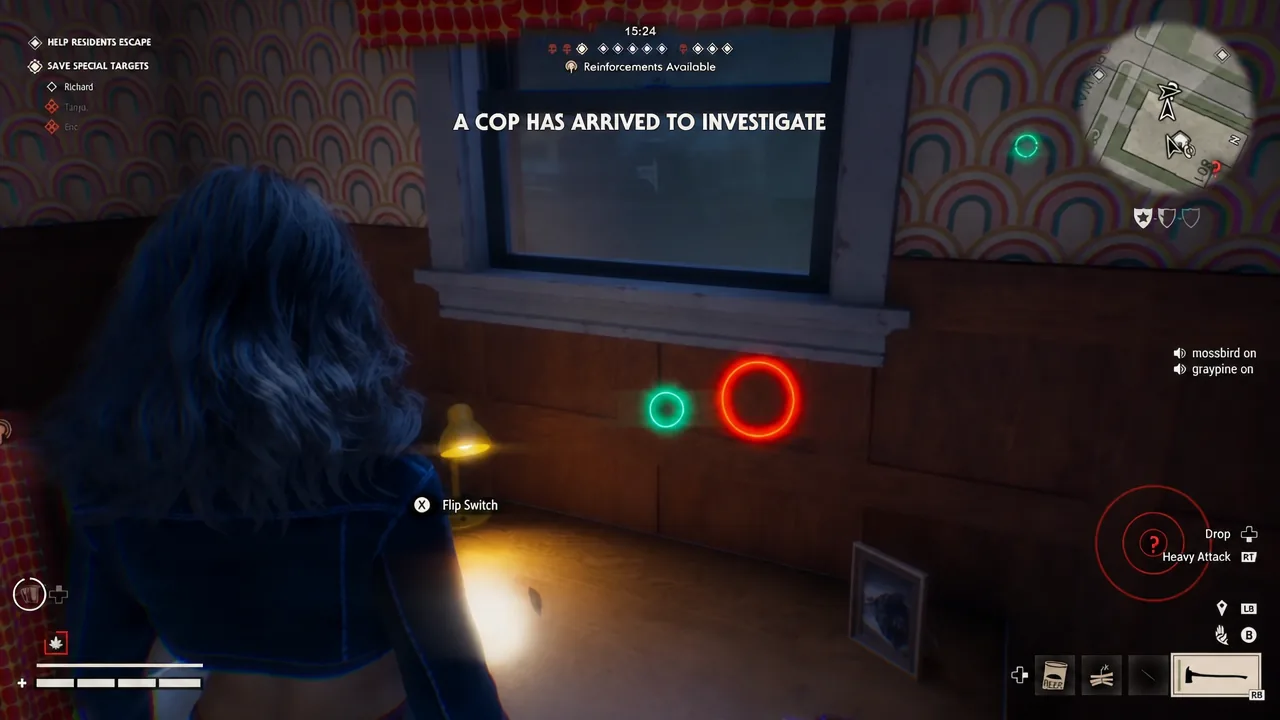
Rotary and touch-tone phones are scattered through shops and houses across the map, and each one is a chance to bring law enforcement into the match. Calling is not automatic — you have to pass quick-time skill checks while the call goes through, and standing still to do it is the most exposed you will ever be.
Escorting residents and special targets
Residents will not follow you because you asked nicely. Talking to an NPC opens a dialogue wheel, and you have to pick lines that pass the check before they agree to move. Some of them actively work against you — one resident, Vernon Parker, locked a door and left a player outside to find another way around.
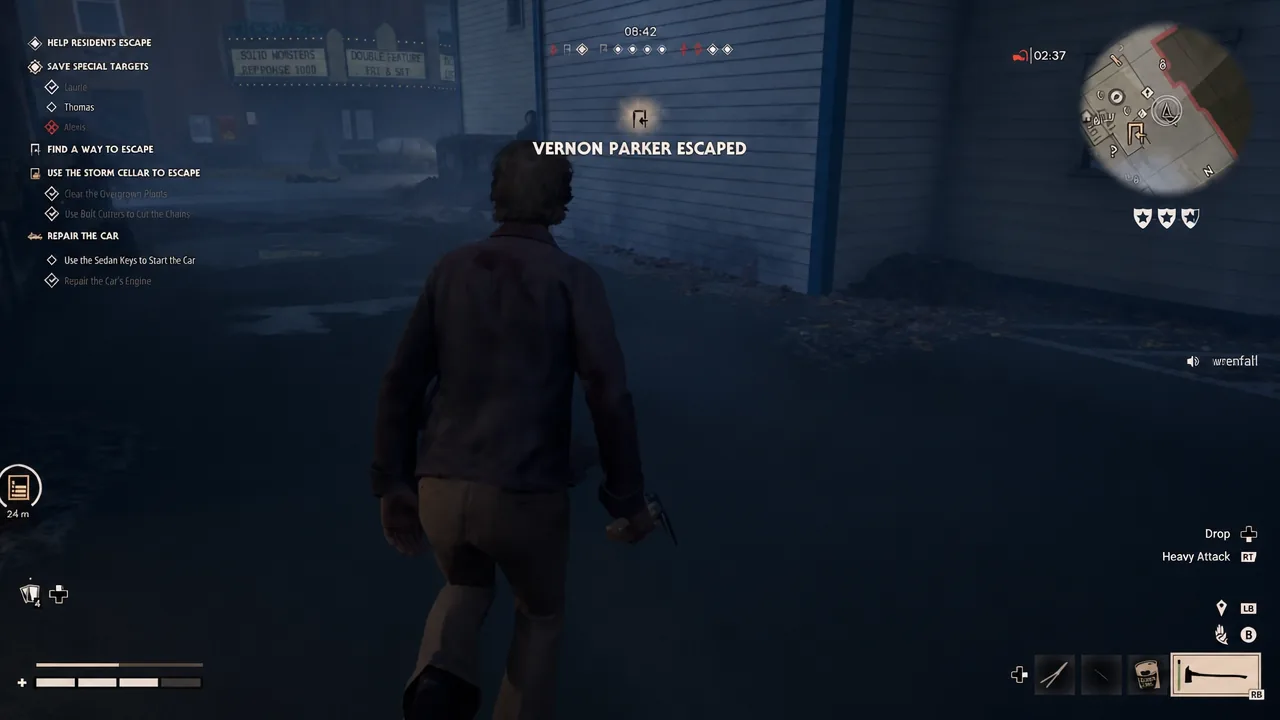
Once an NPC is following, treat the walk itself as the hard part. Michael targets escorts, and a resident caught in the open dies fast. Confirmation is unambiguous, though: the moment someone gets out, the game names them on screen, like “VERNON PARKER ESCAPED” or “TROY MITCHELL ESCAPED.”
Proximity chat runs alongside all of this, so coordinating a handoff with another civilian only works while you are close enough to be heard — which is also close enough to be found.
Loot, weapons, and consumables civilians can use
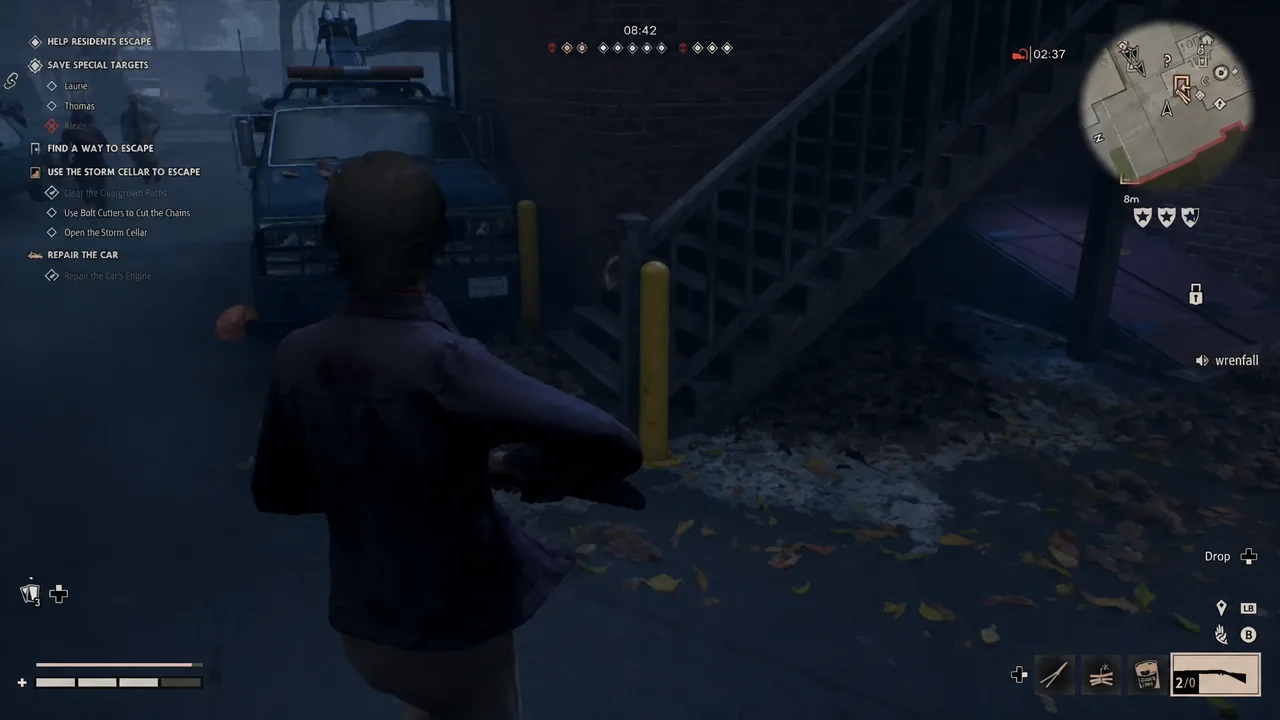
Searching interiors turns up the tools that make objectives possible and the weapons that buy you seconds. Shops and homes hide shotgun shells, rifle cartridges, a butterfly knife, a wood axe, firecrackers, and the bolt cutters the cellar route depends on.
Firecrackers are the panic button. They are a throwable distraction rather than damage, and they can create just enough space to break a chase or peel Michael off a resident.
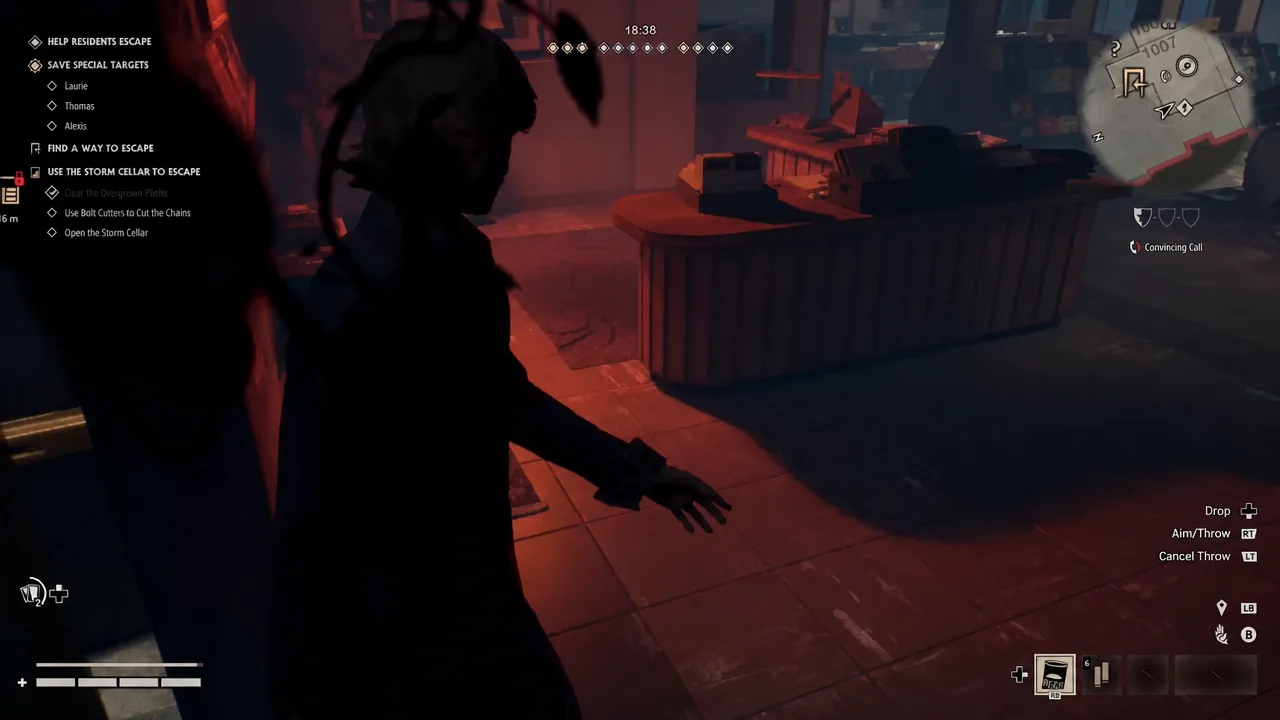
Consumables cover mobility. A beer or a joint grants a temporary stamina boost — effectively unlimited sprint for a short window — which is what turns a long escort across open streets into something survivable. Bicycles on the map serve the same purpose without burning an item.
Fighting Michael Myers and detaining him
Firearms can put Michael down temporarily. Shotguns and sniper rifles both stagger him into a downed state, but it is a delay, not a kill — he gets back up. Melee weapons like the wood axe are far less reliable, and swinging at him instead of running is usually how an escort ends badly.
Detaining him is a police-only option, and it is deliberately hard. After downing Michael, an officer has to pass a difficult skill check to restrain him. Miss it and he is simply up again, standing next to you.
Respawning as a police officer after you die
Dying does not have to end your match. A perk card called Police Reinforcements lets a dead civilian return as an armed police officer, complete with firearms and the ability to attempt a detain. You keep escorting residents, keep calling for backup, and keep pressuring Michael from a role that can actually shoot back.
The catch is that it has to be in your deck before the match starts, and perks roll randomly in-game from what you slotted. If you die without it, you are spectating.
Perk cards and the civilian loadout
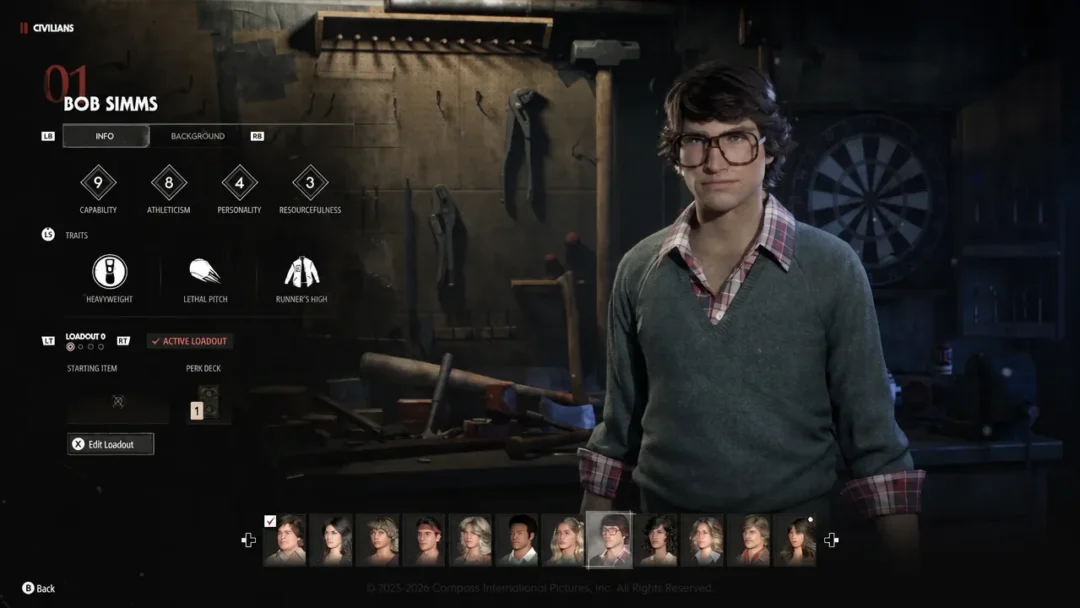
Each playable civilian carries their own stats and traits, plus a loadout you control: appearance, a starting item, and a perk deck. Finishing a match pays out perk points, which you spend to roll random perk cards. Spending extra points before a roll raises the odds of higher-quality cards, and quality directly determines how strong the buff is.
Cards carry names like Smooth Talker, Guardian Shadow, Grave Footing, Clotting, and Dying Breath. Once you own a spread of them you build a deck, and the game pulls from that deck at random during matches, so two runs with the same loadout will not play the same way. Spare points can also temporarily upgrade a specific card’s rarity for a limited number of matches.
Note: Civilian Level is tracked per character, not across the roster. Leveling one survivor unlocks their items and cosmetics, and progress does not carry to the next one.
How a match ends and how to confirm you survived
You do not need to escape to win. Matches run on a timer, and when it expires the game shows “TIME’S UP” followed by “GAME OVER.” If you are still standing — or still active as a respawned officer — you get “YOU SURVIVED THE NIGHT.”
Dying produces a plain “YOU DIED” screen, which is your cue to check whether a police respawn is available rather than assuming the round is finished. Escapes and deaths for named residents are logged separately, so a night where you personally died can still count as several people saved.
Halloween: The Game is developed by IllFonic with Gun Interactive and launches September 8, 2026 on PlayStation 5, Xbox Series X|S, and PC via Steam and the Epic Games Store, alongside offline bot matches and a single-player story mode.