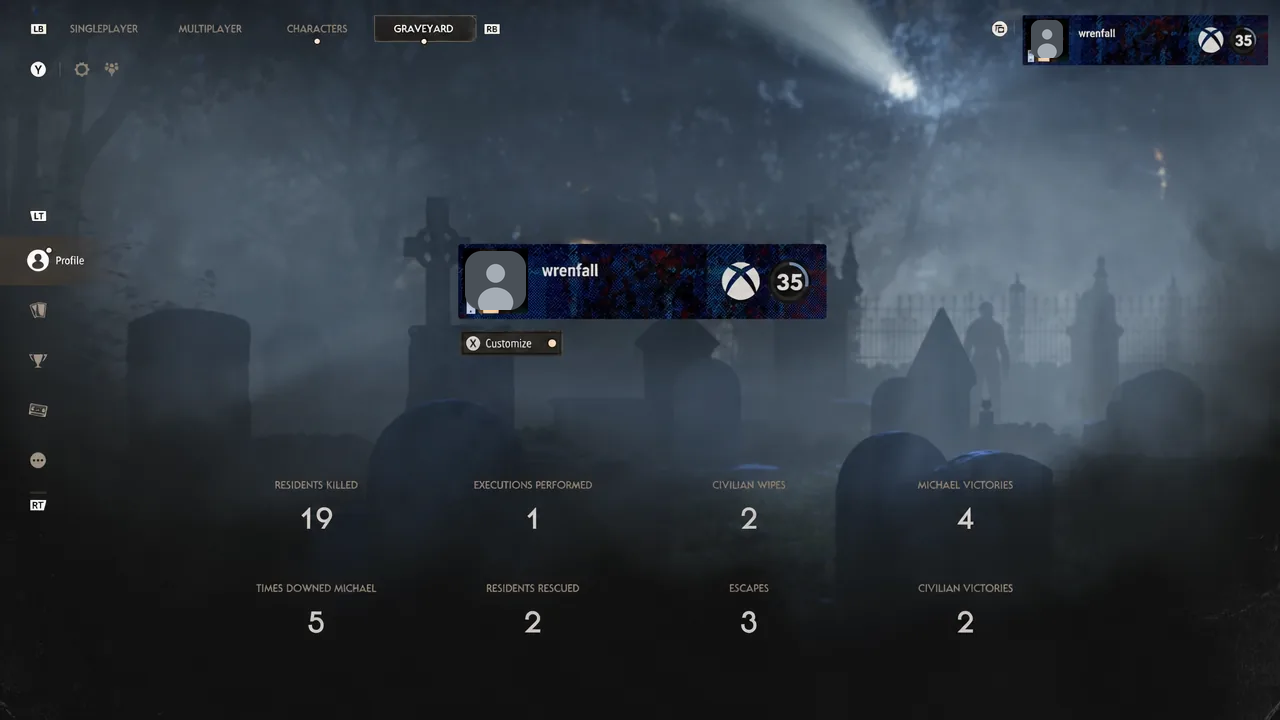
Almost every unlock in Halloween: The Game runs through one menu called the Graveyard. That’s where challenge tiers sit, where profile cards get built, and where Civilian perk cards are rolled, upgraded, scrapped, and slotted into decks. The important thing to grasp early is that Civilian perks aren’t picked freely — you buy random pulls with a separate currency, then the game hands you a random three of them mid-match.
Quick answer: Open Graveyard → Civilian Perks, spend Perk Points to roll cards (100, 500, or 1,000 per roll, with higher spends improving rarity odds), build a deck, equip it to a Civilian loadout, and then choose one of the three cards the game offers you when you hit an XP threshold in a match.
Perk Cards and Perk Points: How rolling works
Perk Points are earned by finishing matches, and they’re their own economy. They don’t raise your levels, and XP doesn’t buy cards. Points do three jobs, and that’s it — rolling for new cards, temporarily upgrading cards you already own, and being refunded when you scrap something.
A roll starts at 100 Perk Points. You can push that to 500 or 1,000, and the larger stake raises the chance of a higher-rarity card. It does not guarantee one. The trade is simple maths: one 1,000-point pull is ten 100-point pulls you didn’t make, which matters a lot when your collection is still thin and you’re short on usable options rather than short on rare ones.
Rarity only describes where a card sits in the system, not whether it belongs in your loadout. Delicate, for example, shows up as an Uncommon that cuts the visibility of the noise pings you generate by 30% at its displayed level. Barricade makes locked doors 35% tougher. Cards like Brimstone Fuse, Iron Ankles, Pacing, Hardened, Bullet Belt, and Sharpshooter all solve different problems, so the useful comparison is the card against the job that Civilian actually does in your matches.
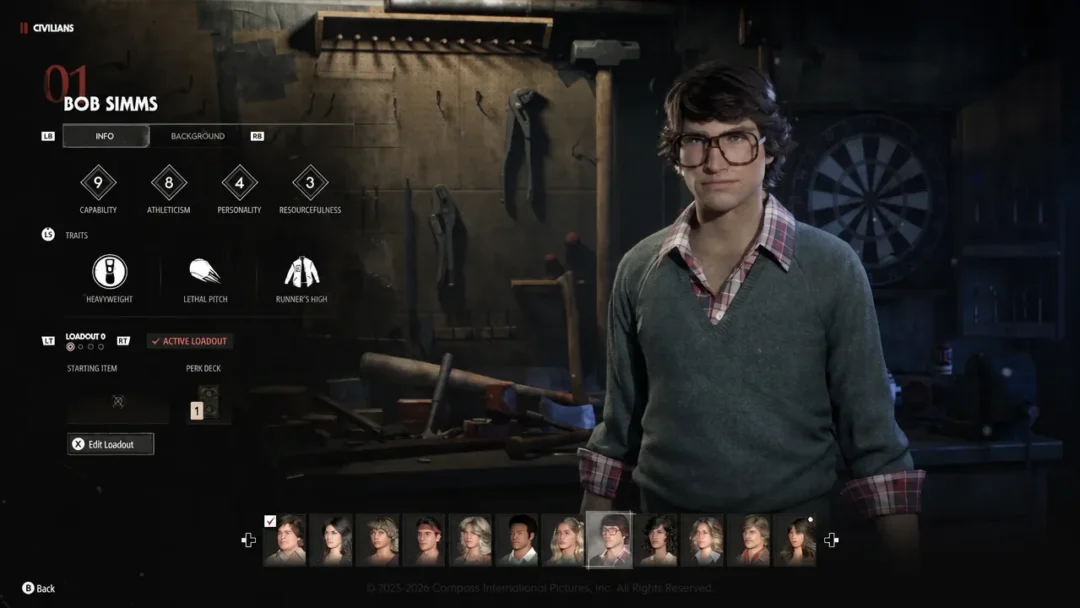
That job is partly set before any perk is equipped. Every Civilian has four attributes — Athleticism, Personality, Resourcefulness, and Capability — covering movement on foot and by bike, social and fear-related interactions, repairs and vehicles and firearms, and melee or thrown-item effectiveness. Perks modify that base rather than replacing it.
Deck slots, equipping, and the six-deck cap
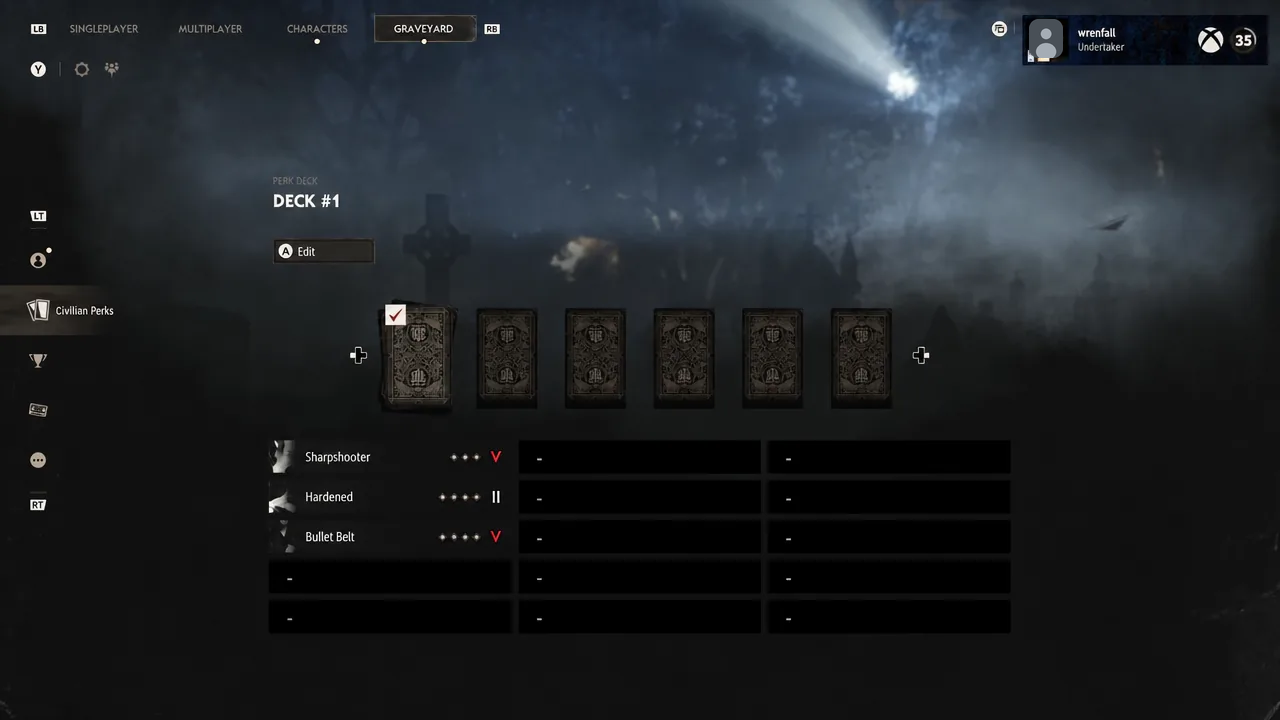
Cards live in your collection; decks are the containers you equip. Deck #1 is available from the start, and Deck #2 through Deck #6 are bought with in-game currency, priced from 5,000 up to 15,000 as you work down the list. Extra decks don’t make you stronger. They save you from rebuilding the same deck by hand every time you switch Civilians.
Editing happens from the Civilian Perks screen, where you select a deck and hit Edit to add or swap cards. A deck only does something once it’s attached to a Civilian loadout, so a freshly built deck sitting unequipped will never appear in a round.
How perks trigger during a match
You don’t walk into a round with your whole deck active. As you earn XP during the match and cross a threshold, the game pulls three cards at random from your equipped deck and asks you to activate one. Cross another threshold and it happens again. How many perks you end up running therefore depends on how much XP you generate, which is why the same deck can play out differently from one night in Haddonfield to the next.
The practical consequence is that deck size cuts both ways. Stuffing a deck with situational cards dilutes the odds of being offered the one you actually wanted, so a tight deck of cards you’d happily take at any point is usually the stronger build.
Temporary card upgrades and scrapping
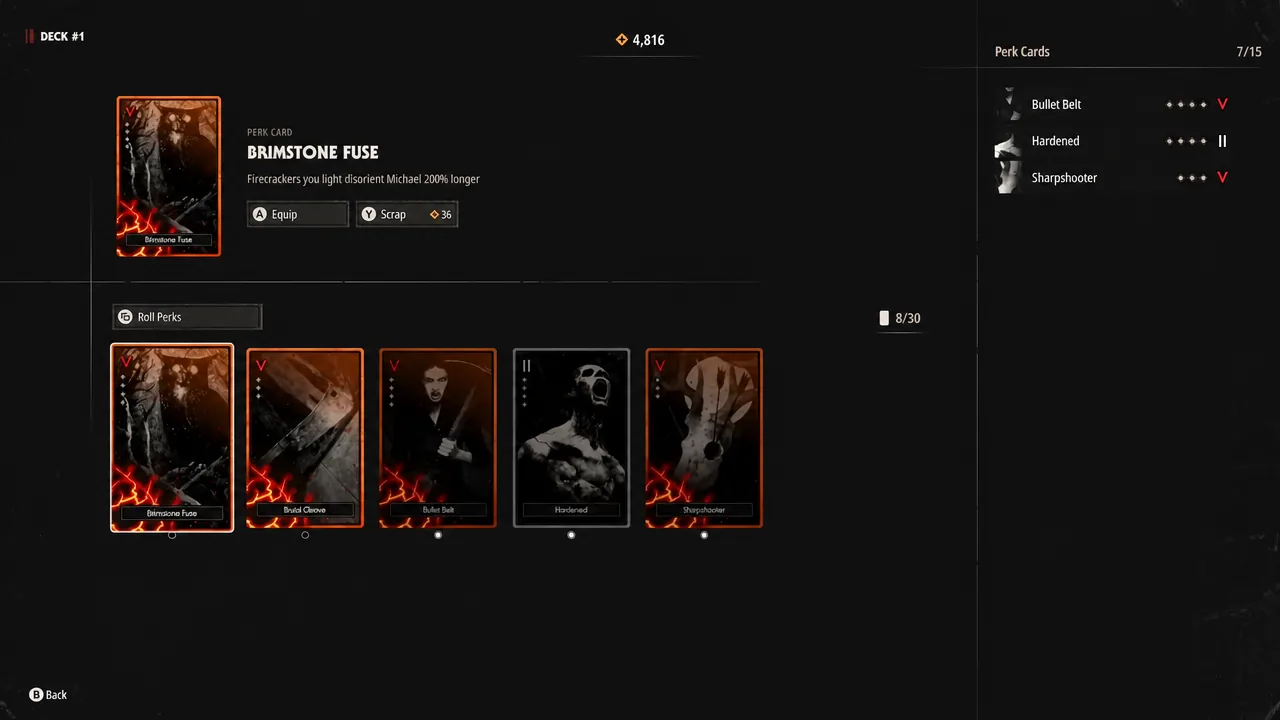
Upgrades are rentals, not permanent buffs. Spending points on an owned card raises its level for a set number of matches and then it drops back. A level 3 card can be lifted to level 5 for as little as 100 points in some cases, while a specific card and level combination can run far higher — Barricade shows an upgrade cost of 2,839 Perk Points on its own screen. Because the boost expires, it’s worth paying for when you already know the next few rounds will use that Civilian and that card.
Scrapping runs the other way. Any owned card can be converted back into Perk Points from the same inventory screen — that same Barricade card returns 904 points if you scrap it. Duplicates and cards that no longer fit any loadout are the obvious candidates. Clearing out everything below your favourite rarity is not, since a small collection needs variety more than it needs polish.
Passive challenges: What tracks automatically
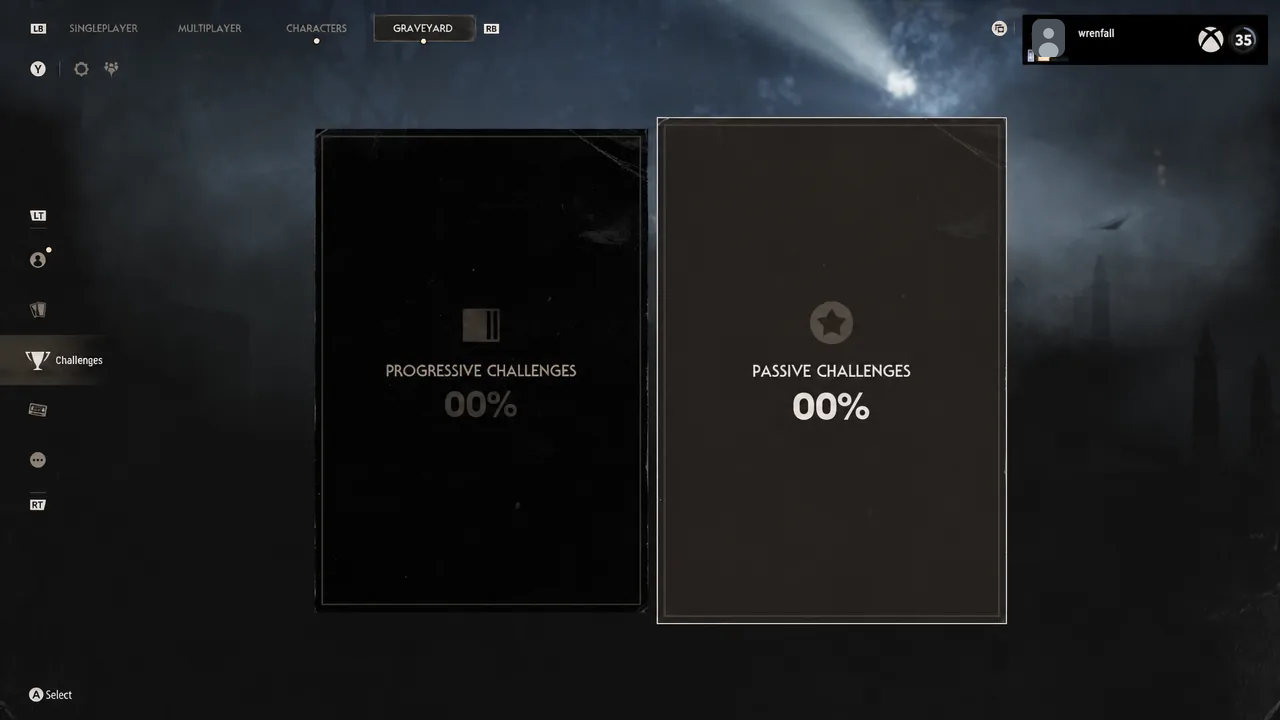
Passive challenges tick over in the background no matter which character you pick, so there’s nothing to select or activate. They’re split by role and grouped into categories, and they mostly pay out profile items rather than character cosmetics.
| Role | Categories |
|---|---|
| Killer | Killer Basic, Stalking, Executions, Violence, Shape Mastery |
| Civilian | The Basics, Hero of Haddonfield, Survival, Resourcefulness, Mastery Challenge |
These are lifetime totals, the kind that ask for hundreds of a single action. There’s no reason to warp a match around them if your normal play already performs the action.
Progressive challenges for Michael skins, Civilians, and weapons
Progressive challenges are the opposite. They’re locked to one specific Michael skin, one Civilian, or one weapon, and they must be completed in order — the fifth objective in a chain won’t move until the four before it are done. Rewards here are cosmetic, covering outfit tints, hair, headwear, eyewear, makeup, and weapon skins.
| Track | Chains available |
|---|---|
| Killer skins | Scorched, Clown, Ghost Sheet, Stitched, Samhain, 1978, and Inmate Michael |
| Civilians | Eric, Rachel, Tanya, Marcus, Jennifer, Thomas |
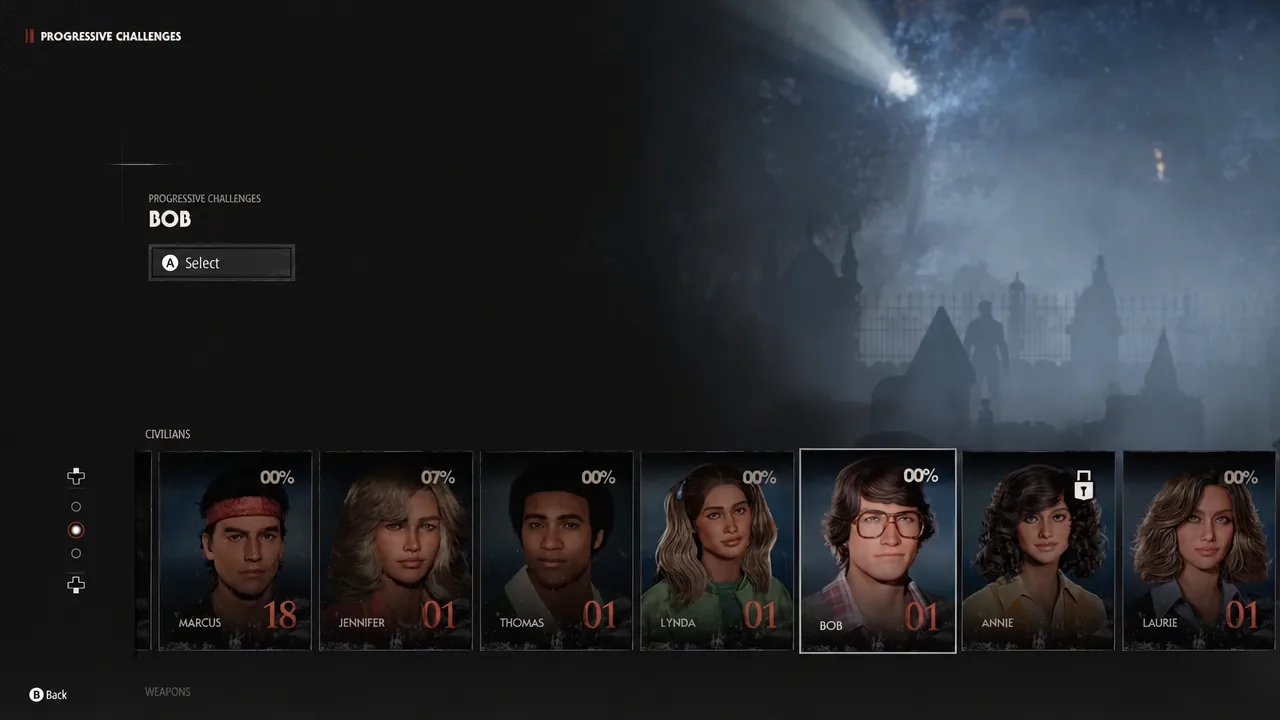
| Legacy Civilians | Lynda, Bob, Annie, Laurie |
| Weapons | Kitchen Knife, Hatchet, Wood-Axe, Pick-Axe, Pitchfork |
You pick the track by picking the character. Selecting Eric on the Progressive Challenges screen shows his own chain and nobody else’s, and playing a different Civilian that night does nothing for it.
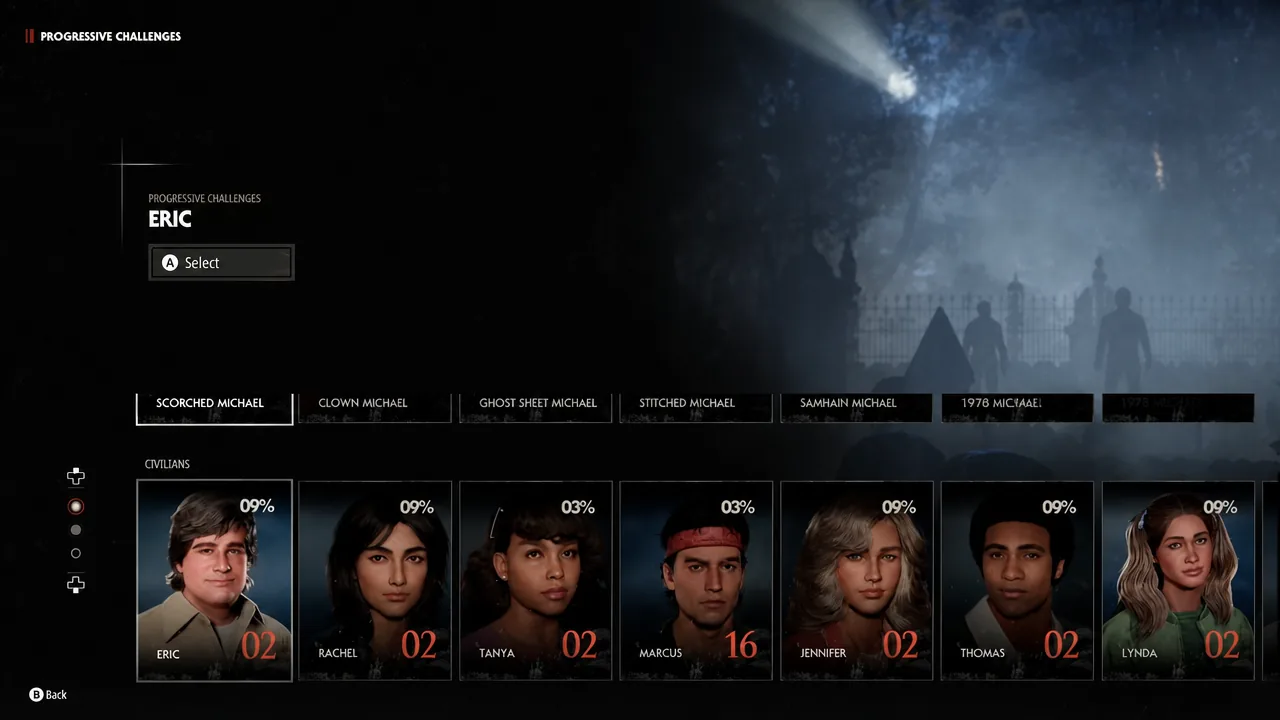
The legacy cast sits in the same list and works identically, so Lynda, Bob, Annie, and Laurie each carry a separate chain of their own.
The singleplayer story mode carries its own optional objectives across all six playable chapters. Those unlock alternate outfits and unique cosmetic items, including a legendary Michael look reserved for clearing every singleplayer challenge.
Profile cards: Icons, backgrounds, titles, and stats
The Profile tab is where passive challenge rewards land. You mix a Profile Icon, a Profile Background, and a Profile Title — options like Mental Patient or Undertaker — into a card other players see in online lobbies. There are dozens of pieces to collect, and none of them change how a match plays.
The same tab keeps a running record of what you’ve done on both sides of the 1v4, split across Residents Killed, Executions Performed, Civilian Wipes, Michael Victories, Times Downed Michael, Residents Rescued, Escapes, and Civilian Victories.
Recordings and Extras in the Graveyard
Collectible audio sits under Recordings and can be played back from the menu once unlocked. The set runs from Loomis Log #1 through Loomis Log #11, plus Laurie’s Recording, Nurse Chambers’s Recording, and Sheriff Brackett’s Recording. The Extras tab alongside it is also where a redeem code can be entered.
Four XP tracks behind every unlock
Challenges and perks sit on top of four separate experience bars, and knowing which one gates the thing you want saves a lot of wasted play. A single match can move more than one of them at once.
| Track | What feeds it |
|---|---|
| Profile Level | All XP from story mode, Civilian matches, and Michael matches |
| Killer Level | Playing as Michael Myers |
| Civilian Level | The individual Civilian you selected — progress does not carry to the rest of the roster |
| Weapon Level | The specific equipable Michael weapon you kill with |
Levels release additional playable Civilians, new Michael abilities such as Reality Tear, Blackout, and Detection Pulse, extra Civilian starting items, executions, higher challenge tiers, and cosmetics. Michael always keeps his two base traits, Killer Sense and Shape Jump, with three selectable ability slots on top. A rising Profile Level won’t substitute for a Civilian-specific or weapon-specific requirement.
Prestige is available once a track hits its ceiling. Profile Prestige 1 requires Level 100, and reaching the level is only the first half — there’s a timed challenge attached to the attempt, so it’s worth holding a reserve of Perk Points in case you need another run at it.
How to confirm a perk or challenge registered
A roll worked when the new card appears in your Civilian Perks collection with its rarity and effect text. An upgrade worked when the card’s displayed level rises and shows the number of matches it lasts. A deck is live when it’s listed on that Civilian’s loadout, and it’s confirmed in-game the moment the three-card selection prompt appears after an XP threshold.
When something doesn’t move, it’s usually one of a few narrow causes. A progressive chain stalls the moment you switch to a different Civilian, Michael skin, or weapon than the chain belongs to. Perks never appear in a match if the deck wasn’t equipped to the loadout you took in. And an upgraded card quietly returns to its base level once its match count runs out, which reads as a nerf if you weren’t tracking it.
Tip: Decide what you’re grinding before you spend. Perk Points fix Civilian loadouts, XP fixes access, and the two never trade places — pushing a Civilian’s level won’t fill your deck, and hoarding points won’t unlock a new character.
The whole structure rewards commitment to a lane. Passive challenges and Profile Level will look after themselves while you play whatever you enjoy, but cosmetics, perk decks, and weapon chains all want you to stick with one Civilian, one skin, or one weapon long enough to finish what you started.