Helicopters in WARDOGS are the fastest way to move a squad into a contested Control Zone, and the fastest way to lose one. The flight model gives you almost no stabilization help, climb and tilt live on separate inputs, and a single rocket ends the trip. Here is how the system works, what each airframe costs, and what a pilot actually gets paid for.
Quick answer: Set vehicle sensitivity in its own settings section (not your infantry slider), check the Flight Assist toggle under the Controls tab, then hold a stable hover in the free practice range before flying in a live match. Climb sits on separate keys from tilt, and nothing corrects an over-tilt for you.
WARDOGS helicopter unlock costs and levels
Helicopters are bought from the Vehicle Vendor with in-match cash, and most are gated behind a class level as well as a price. The MH-6 is the entry point; the AH-6M Littlebird is the first armed airframe you are likely to touch.
| Helicopter | Unlock level | Cost |
|---|---|---|
| MH-6 | — | $5,000 |
| AH-6M | Level 5 | $6,250 |
| UH-1Y | Level 15 | $7,000 |
| UH-1Y (Minigun) | Level 25 | $8,000 |
| AH-6R | Level 40 | $7,000 |
| Havoc | Level 50 | $7,500 |
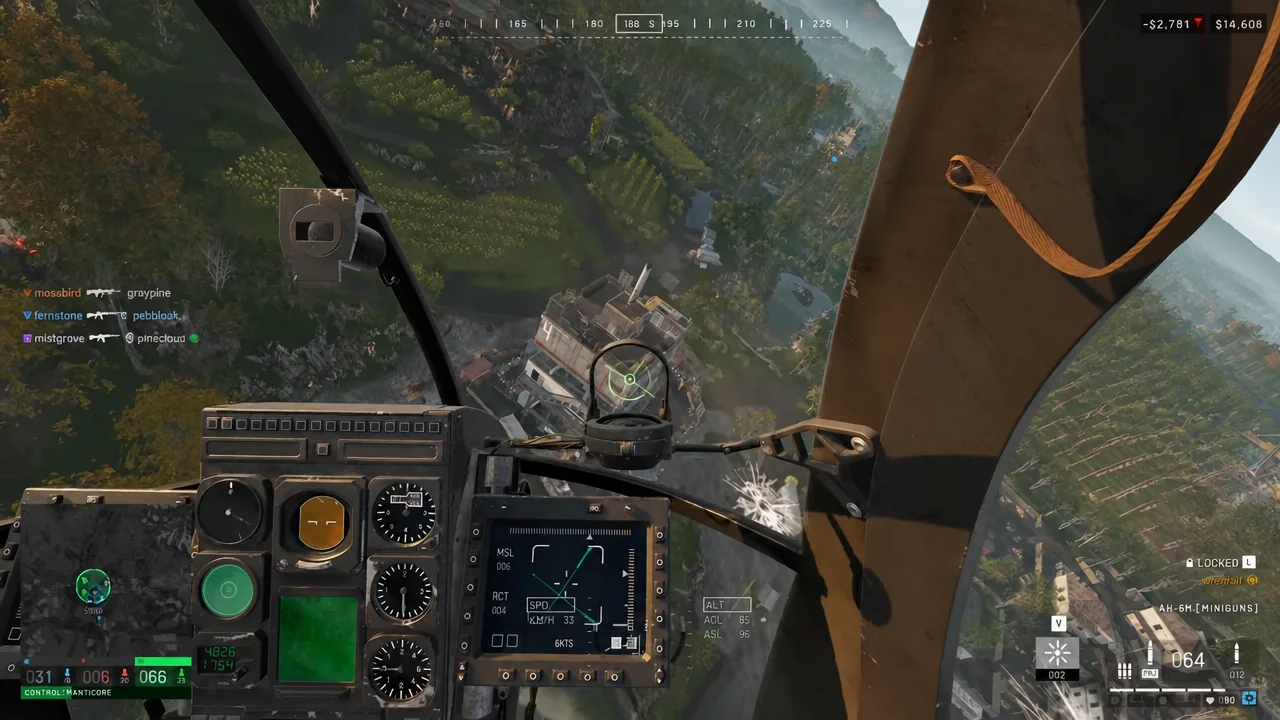
The UH-1Y seats nine, which makes it the airframe that moves an entire squad plus stragglers in one run. The AH-6M carries miniguns and is the better trainer, because it responds quickly to tilt and yaw and fits into landing zones that a heavier airframe cannot. That responsiveness cuts both ways, since it reacts to a bad input just as fast as a good one.
Note: beta builds have run discounted vendor pricing, so the number on the purchase screen in a given match may not match the standard unlock cost. Beta lobbies have also included airframes outside the list above, including the Z20 Lakota (Miniguns) and the MI-8. Skins such as Taxi, Two Tone Desert, and Digital Wood are equipped from the main menu customization screen and change nothing about handling.
Helicopter controls, vehicle sensitivity, and the Flight Assist toggle
The split that catches new pilots is that vertical movement and tilt are bound to different inputs entirely. You climb on one key and lean the airframe with something else, and pressing both hard at the same time is how a helicopter ends up inverted three seconds off the pad. A workable keyboard-and-mouse layout looks like this.
| Input | Result |
|---|---|
| W | Collective up (climb) |
| S | Collective down (descend) |
| A / D | Yaw left and right |
| Arrow keys | Cyclic tilt (pitch and roll) |
| Mouse | Cyclic tilt, analogue alternative |
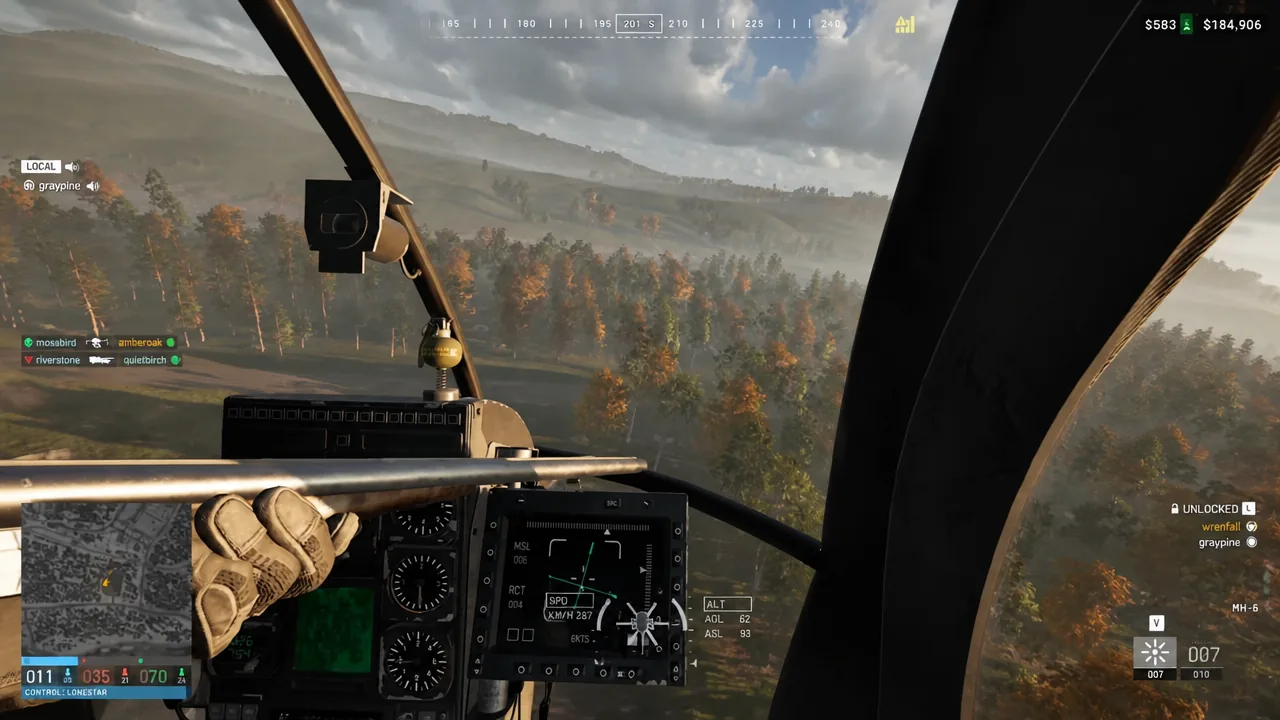
Use the mouse for tilt if the arrow keys feel like an on/off switch. Keys give you full deflection or nothing; the mouse lets you ask for a few degrees and then stop asking. The camera is tied to the airframe in normal flight, so the helicopter follows where you look. That is fine while cruising and a problem in a hover, where glancing at your landing spot starts a drift toward it.
Vehicle sensitivity has its own slider, separate from your infantry setting, and it is the single change most worth making before your first flight. A sensitivity tuned for snapping onto a torso at 30 meters turns every small hover correction into an over-correction. Flight Assist sits under the Controls tab in the settings menu and can be toggled on or off there.
Gamepad support is confirmed by Bulkhead. A full joystick setup also works, though it takes noticeably longer to dial in and involves a lot of setting adjustments before it clicks. Learn the flight model on one input device first, or you will not be able to tell whether the hardware or the helicopter is fighting you.
Practice range drills before you fly in a match
The practice range costs nothing, so every crash there is free. A crash in a live match costs the helicopter and everyone strapped into it. Work through these in order and do not advance until the current drill is dull.
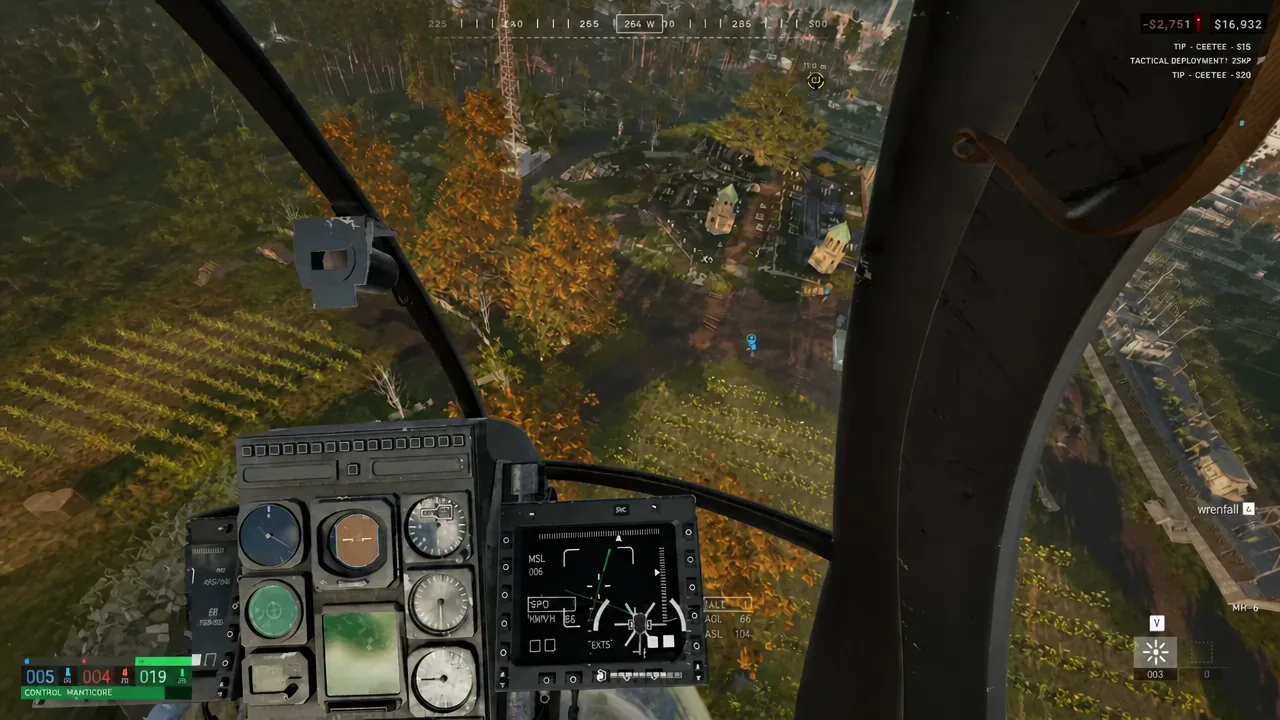
How helicopter pilots earn cash in WARDOGS
Loadouts and vehicles are bought with in-match cash, and transport flying is a legitimate income stream rather than a favour you do for your squad. Both landings and parachute drops pay, which means you are never forced to touch down to collect. If the ground looks contested, gain height and let your passengers jump instead of committing to a landing you cannot fly away from.
What matters more than the delivery itself is whether the people you carried are still alive shortly after they leave the aircraft. That survival bonus is worth several times the drop, so the correct release point is usually short of the fight rather than inside it. Pick it before you take off.
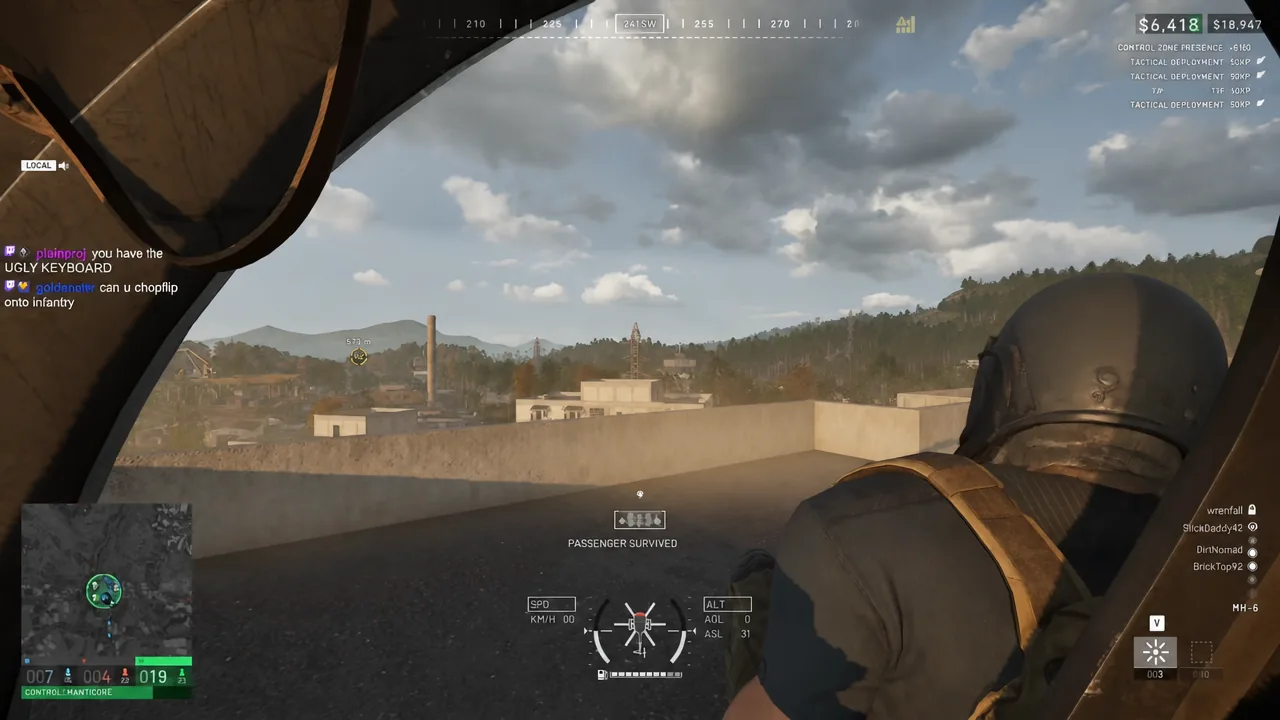
You will know a drop registered when the PASSENGER SURVIVED prompt appears on screen. If a passenger fails to disembark on a rooftop, reposition and try a flatter part of the roof rather than holding the hover under fire. Objective-adjacent income stacks on top of transport work.
| Action | Reward |
|---|---|
| Enter Control Zone | $100 |
| Control Zone Presence | $150 |
| Hot Zone Presence | $600 |
| Drill Tower Presence | $700 |
| Capture neutral / hostile tower | $1,000 |
| Drill Tower activation | $5,000 |
| Team Contribution (1st / 2nd / 3rd) | $10,000 / $5,000 / $2,500 |
The numbers add up quickly for a pilot who keeps running supply and squad drops. One beta match ended in a defeat with a second-place contribution of $16,400, $35,270 spent, $82,693 earned, and $70,085 in total profit. Losing the round did not stop the flying from paying.
What destroys helicopters in WARDOGS
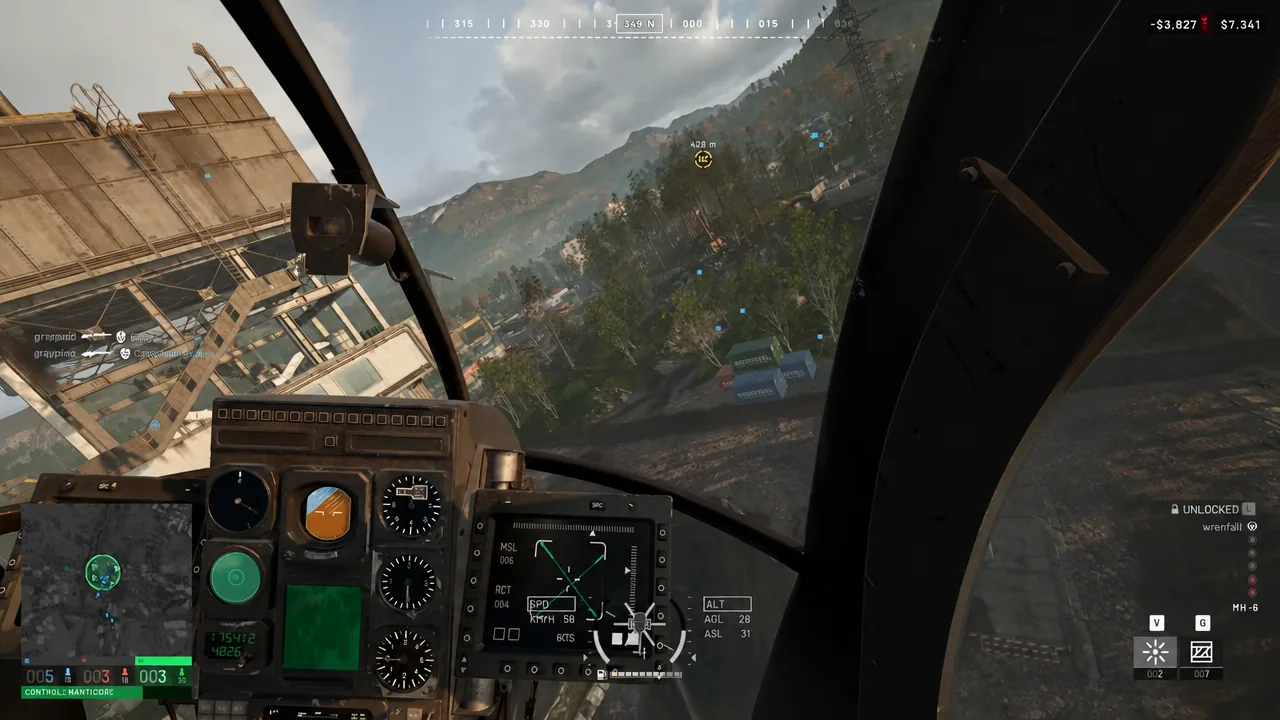
The mix of threats shifts as a match runs. In the opening minutes, your own inputs and the terrain account for more wrecks than the enemy does. Later, the lobby has money, and money buys launchers.
| Cause | What to do about it |
|---|---|
| Your own over-correction | Ease off the input instead of adding more; nothing in the flight model catches it for you |
| Trees, wires, and buildings | Plan tight landing zones in advance; rotor strikes end the aircraft outright |
| RPG-7 and similar launchers | A single hit typically kills a helicopter — never hover over open ground inside launcher range |
| Anti-air later in the match | Vary your approach corridors as the round matures instead of reusing the same line |
Launchers are cheap enough that plenty of players carry one. An RPG-7 runs $2,000, the MAAWS and SRAW sit at $1,950 each, and the 9K333 Verba costs $600. Beta footage regularly shows infantry taking helicopters down from tower balconies and doorways, and locking onto airframes with launchers near objective buildings.
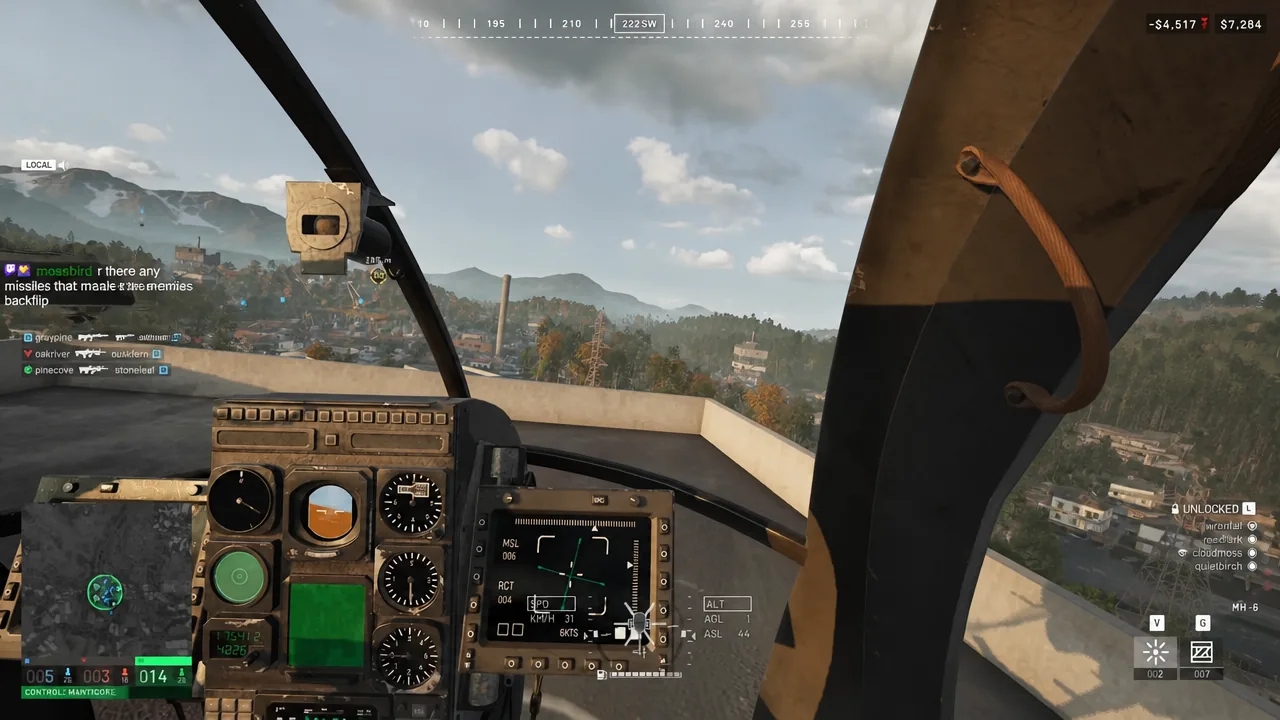
Prices, unlock levels, and handling behaviour described here come from beta builds, and Bulkhead has room to adjust any of it once WARDOGS opens in Steam Early Access on September 10th, 2026. The underlying flight model is unlikely to change shape, though. Climb and tilt stay separate, hovering stays the skill everything else is built on, and the pilots who get paid are the ones putting people down somewhere they can survive.