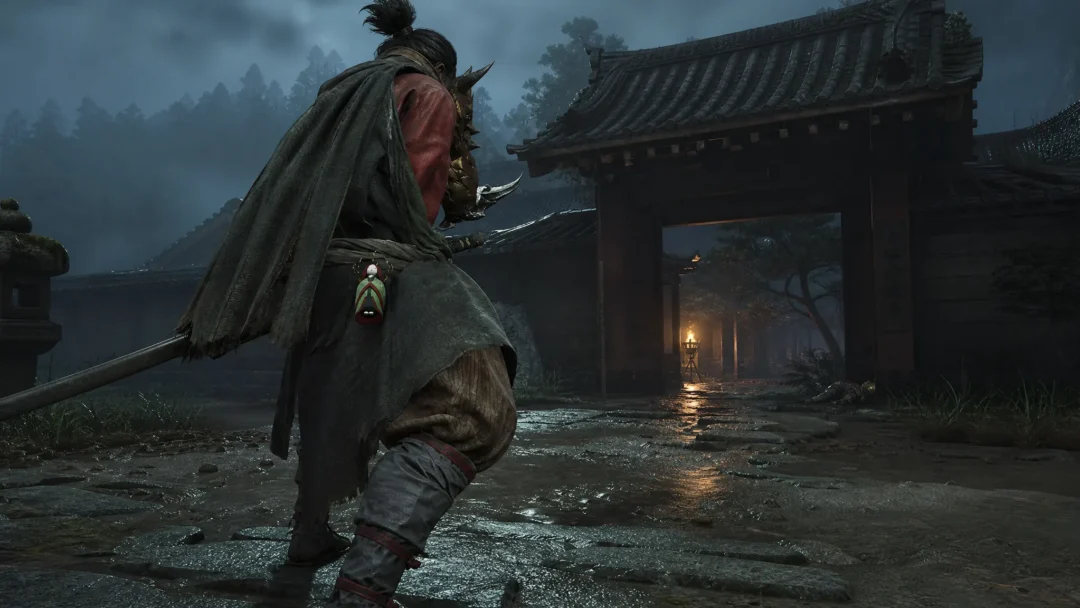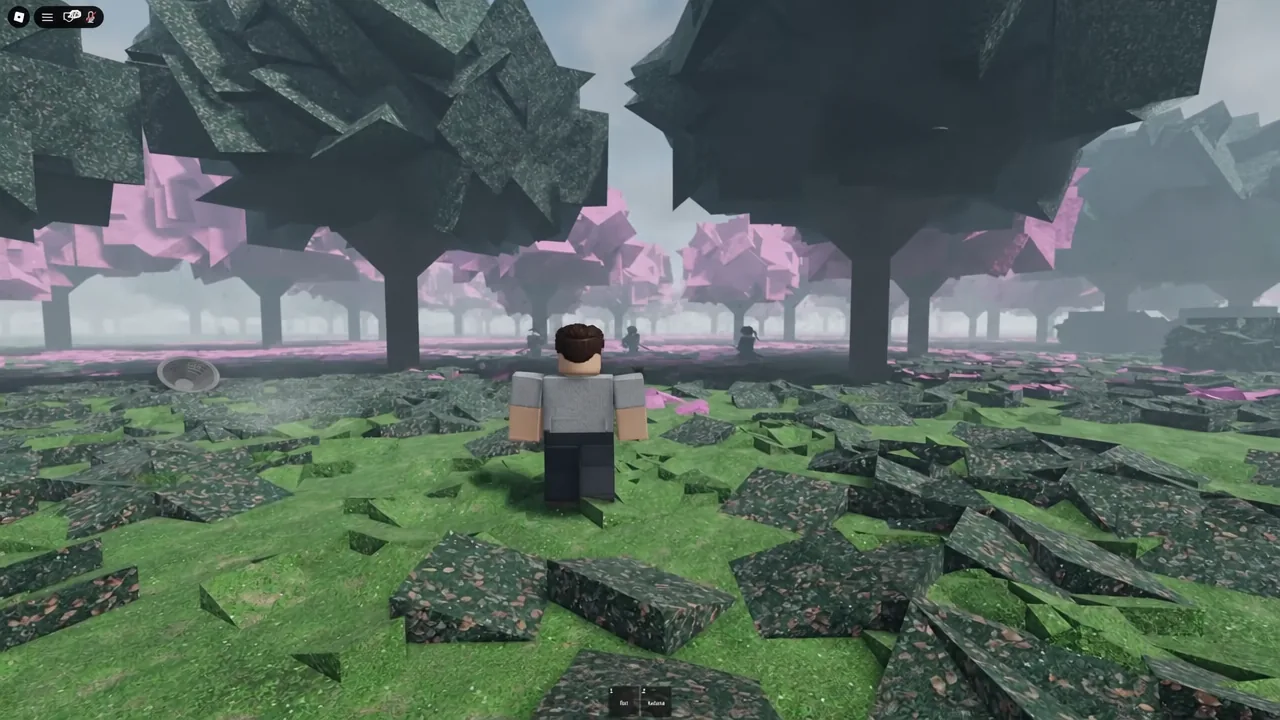
Bug Fixes drops you into a foggy field with a katana, a fist, and no tutorial prompt. There is no ability bar and no ultimate meter. Every fight is decided by which direction you cut, when you change stance, and whether you can read the player in front of you.
Quick answer: Press X to draw or sheath the katana, then attack with E (cut right), Q (cut left) and F (slash or finisher). Tap R to switch stance, G to displace, B to pray, and = to drop your hat. Blocking uses the same E and Q keys, timed against the incoming cut.
Bug Fixes keybinds: full control list
Eight inputs cover everything the game currently asks of you. Nothing is remapped per class, because there are no classes to pick from — samurai, ronin, ninja and shinobi are names the community uses for playstyles, not roles you unlock.
| Input | What it does |
|---|---|
| X | Bow, draw the sword, or sheath it |
| E | Directional cut to the right; also blocks |
| Q | Directional cut to the left; also blocks |
| F | Slash or finishing blow |
| R | Change stance |
| G | Displace, stepping off the attack line |
| B | Pray |
| = | Remove your hat |
Type kurosawa in chat | Cinematic camera mode |
Note: full mobile and console layouts are not finished. The experience is built for PC, and a keyboard attachment is the only workaround on other hardware. It is free to join, with 50-player servers.
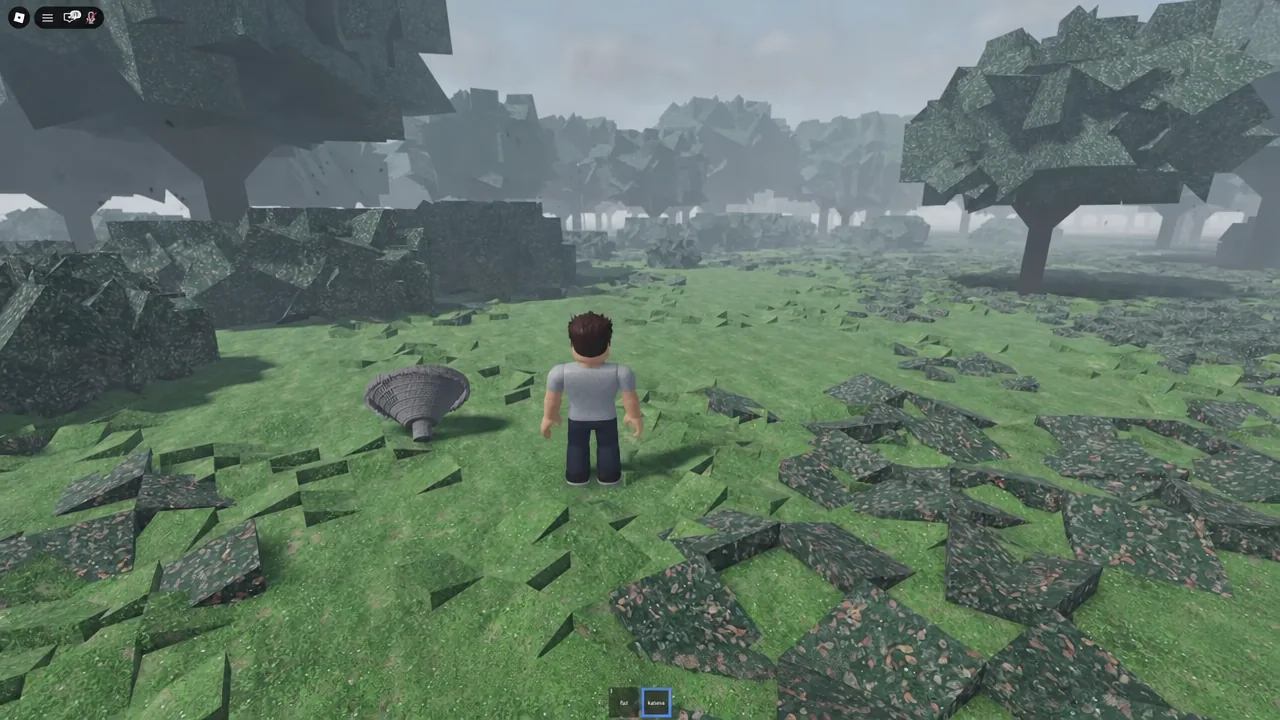
Drawing the katana from the hotbar
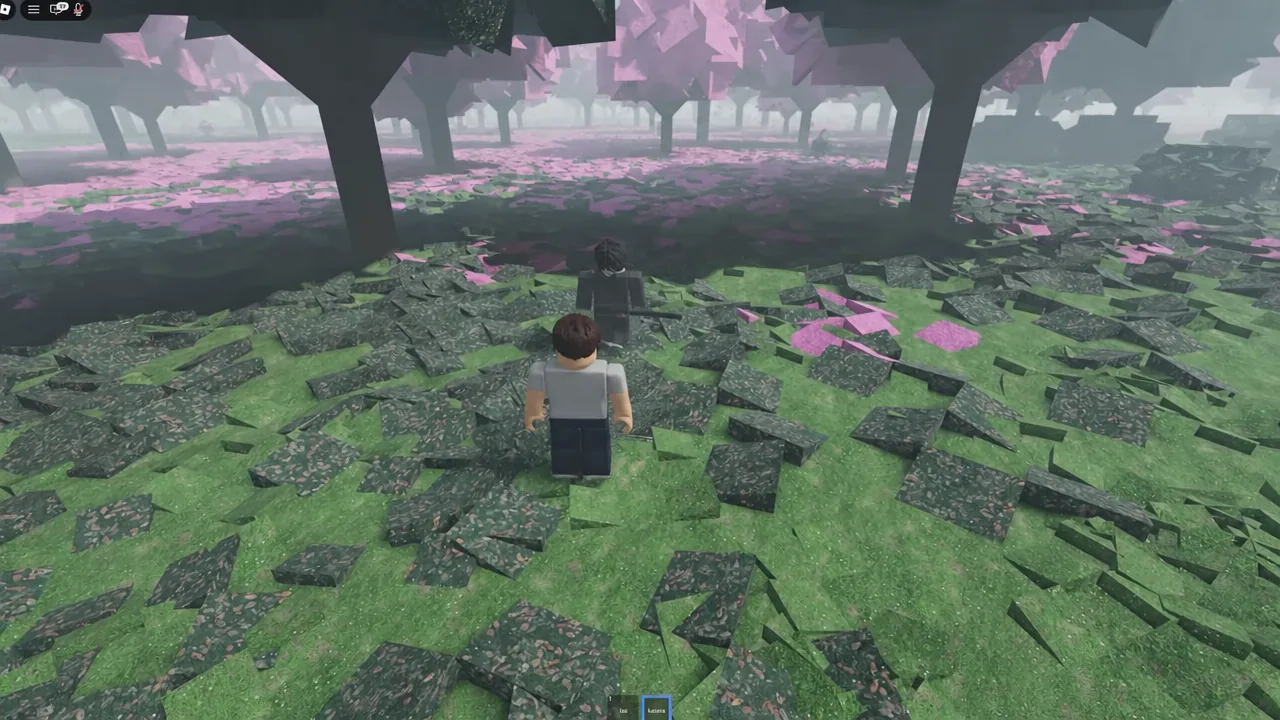
X to draw. The same key sheaths the blade again, so avoid touching it mid-exchange — sheathing at the wrong moment leaves you standing there with a sword on your back while a cut lands.G, so position matters before the first swing rather than after it.Directional cuts and blocking on E, Q and F
E cuts to the right, Q cuts to the left, and F is the slash used to finish an opponent. These are directions, not damage tiers, so treating F as the “strong” button is the fastest way to become predictable. A player who only presses one key can be read by the third exchange.
Blocking runs through the same two side keys. Pressing E or Q at the moment an attack arrives counters the incoming cut instead of trading with it. The timing is the skill — early presses whiff, late presses eat the hit.
Tip: mix a test cut, a cut after a stance change, and a cut into their recovery after a whiff. If all three miss, the answer is space, not another key.
Stance changes on R and displacement on G
R switches stance and changes how your next cut behaves. Treat it as a commitment: swap before you step in, or swap after you see the other player begin to turn. Pressing it repeatedly out of nerves means your character is still rotating when their directional hit lands.
G displaces you, moving you off the line of an attack. It is a defensive reset for bad angles and a way to punish a whiff, not a sprint button for crossing the map. The strongest pattern is displace, bait a reaction, then throw the cut that matches their recovery.
Bowing, praying and the hat toggle
Bowing on X before a duel is etiquette rather than a mechanic, but it is a useful one. Many players return the bow, and that pause gives you a free read on their stance. If they ignore it and charge, you already know how the fight will go.
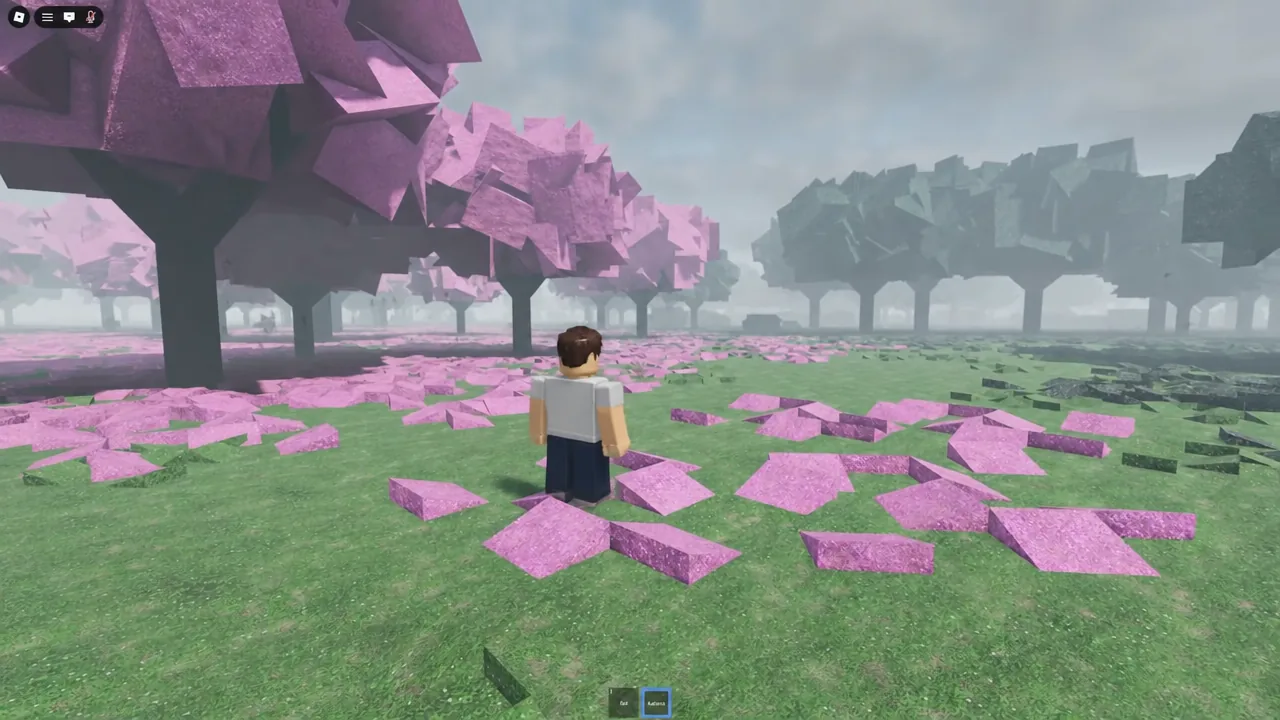
B is the prayer input, and it does double duty. Players use it to pay respects over a defeated opponent, and repeated praying is also how samurai armour is earned — kabuto helmets and red plates come from that grind, not from a shop or a redeemable code. There are no working promo codes at present.
= removes your hat. It is purely cosmetic, though it has a practical side effect in a duel: if you were tracking an opponent by their headgear and they drop it, recentre your camera rather than chasing the outline you lost.
Kurosawa cinematic camera
Typing kurosawa into the chat box switches on a cinematic camera. It is an easter egg worth seeing once, but it costs you situational awareness. Players running it are noticeably worse at tracking a moving opponent, which makes them easy to punish and makes it a bad choice to leave on during duels.
What beats the most common opponents
Most players on a 50-player server fall into a handful of recognisable habits, and each has a clean answer.
| Opponent habit | How to answer it |
|---|---|
| Recycles one of E, Q or F | Change stance with R into the gap, then displace past their recovery |
| Standing still on B, farming armour | They are grinding, not duelling; walking away costs you nothing |
| Running the kurosawa camera | Move laterally — they cannot track you, so punish the camera |
| Wearing kabuto or red plates | Armour changes the silhouette, not the hitbox; directional reads still win |
| Ranged musket lines | Break the angle instead of trading in the lane; this is a formation fight, not a duel |
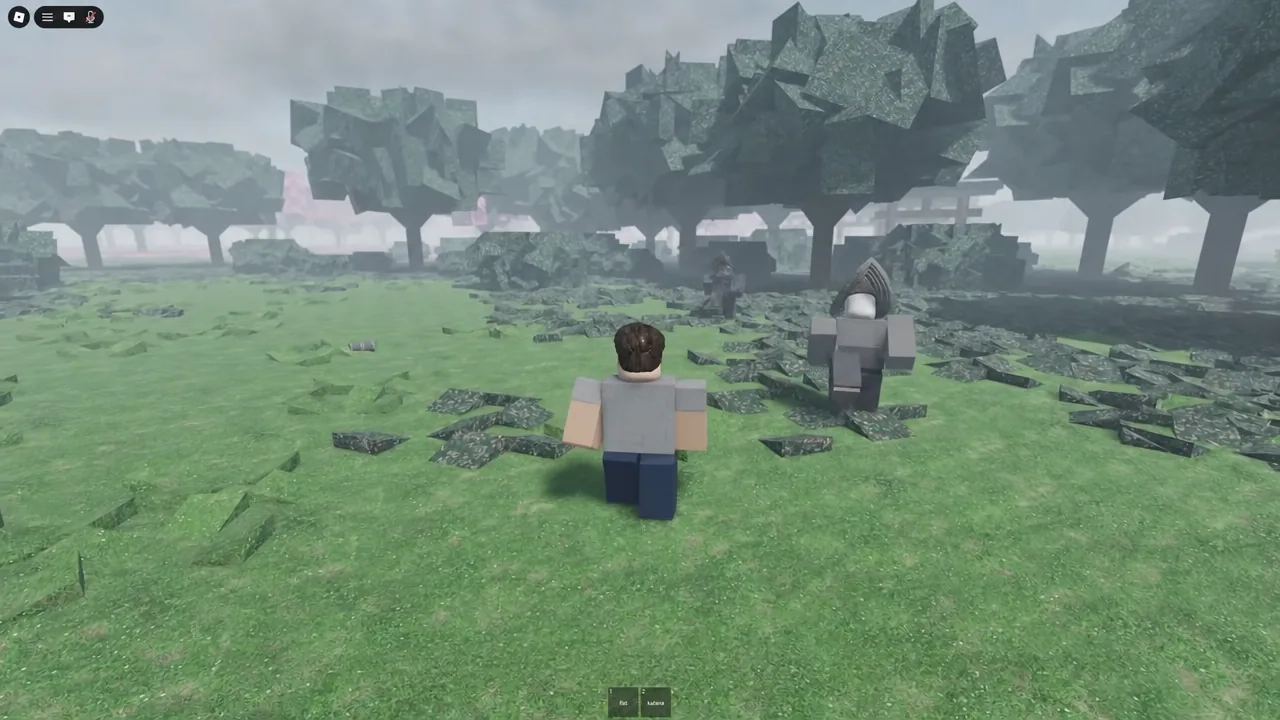
A workable duel loop is short. Decide whether to bow before you draw, draw the katana, step until their camera is uncomfortable, throw one test cut, then respond with R if they gave you a punishable stance or G if they charged. Reset instead of trying to string attacks together — the animations are the point of the system.
Group fights and temple raids
The same eight keys carry over into group play. Players regularly assemble impromptu militias in chat and push objectives together, most often an assault on the temple held by monks and samurai. Coordination happens entirely through chat, since there is no party system or objective marker.
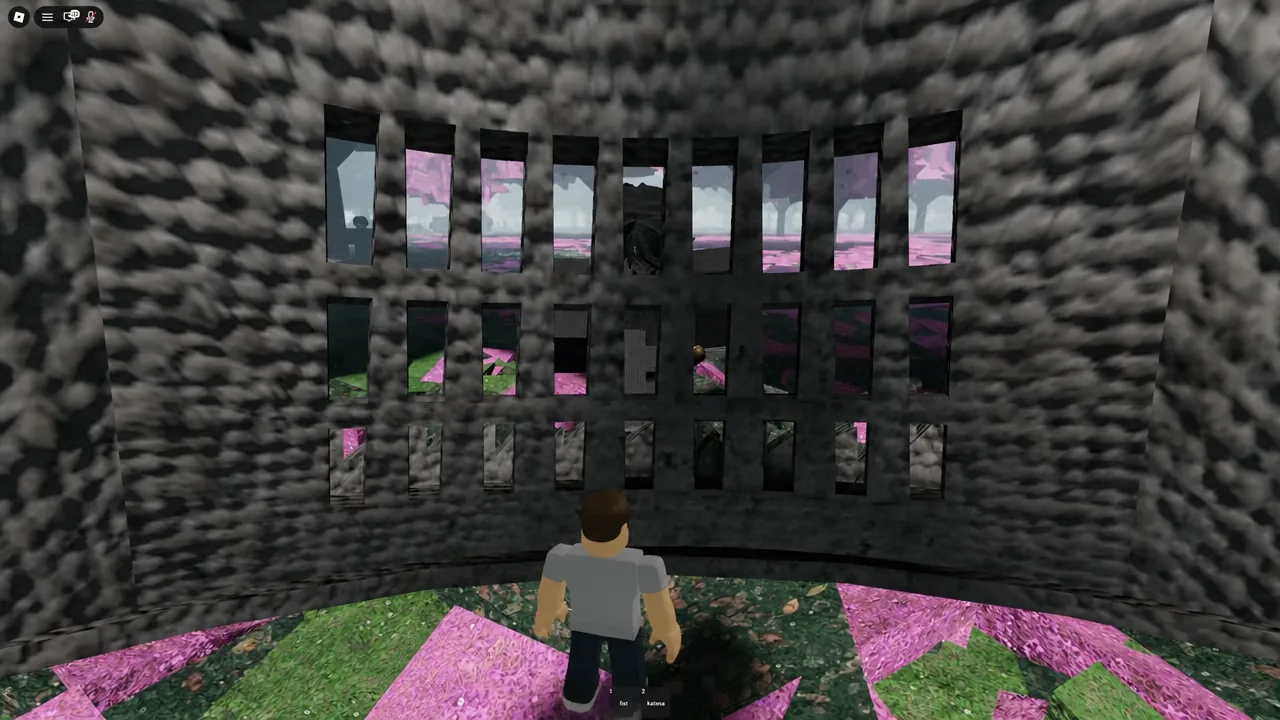
Tight interiors change how the controls feel. Displacement on G has less room to work with, and side cuts on E and Q matter more than the F slash when several players are crowding the same doorway.
How to confirm an input registered
Every input has a visible tell. Drawing with X plays a draw animation and the blade appears in hand; sheathing plays the reverse. Selecting the katana highlights its hotbar slot. Praying on B puts your character into a held prayer pose, and = visibly drops the hat off your head.
When an input seems to do nothing, the cause is usually one of a small number of things.
- You are on mobile or console without a keyboard attached, so the layout is incomplete
- The chat box has focus after typing, which swallows keystrokes until you click back into the game
- Your sword is sheathed, so cuts have nothing to swing
- You pressed
Rduring your own cut, and the stance change queues behind the animation
None of this needs unlocking. The binds are identical for every player on the server, whether they are wearing gold kabuto or nothing at all, so the only real progression is how quickly you can read a stance and pick the matching direction.