Anime Origins has spent most of its life as a straightforward anime tower defense game on Roblox: summon units, place them on a lane, upgrade, evolve, repeat. Update 2.0 is the first release that meaningfully changes what you do between battles, leaning hard into a Fate-flavored theme with two brand new modes, a wave of new units, and a fresh set of stages to grind.
Quick answer: Redeem HolyGrail, Update2, and Labyrinth first, then head into Endless Labyrinth and Holy Grail War — the two new modes Update 2.0 is built around.
What Update 2.0 adds to Anime Origins
The in-game Update Log lays out everything in one screen, and it is a larger drop than the usual unit-and-code patch. Two new modes sit alongside new stages, new evolutions, alternate shiny models, artifacts, and a reset battlepass.
| Addition | What it is |
|---|---|
| New units | Gilgamesh, Arturia, Ishtar, Scathy, Sunji, Psychy, Clown Guy |
| Endless Labyrinth | Branching node runs with floor progression |
| Holy Grail War | Act-based defense built on Class Contracts |
| New stages | Uruk, Uruk – Dusk, Ryuudou-Ji |
| Evolutions | New evolution paths for existing units |
| Shiny models | Alternate visual versions of units |
| Artifacts | Rewards tied to the new stage content |
| Battlepass | New track, with a Premium Pass tier |
Everything on that list is reachable from the lobby without paying, though the Premium Pass upgrade normally sits behind the shop. One of the Update 2 codes hands it out for free, which is the main reason to start with codes before anything else.
Update 2 codes and how to redeem them
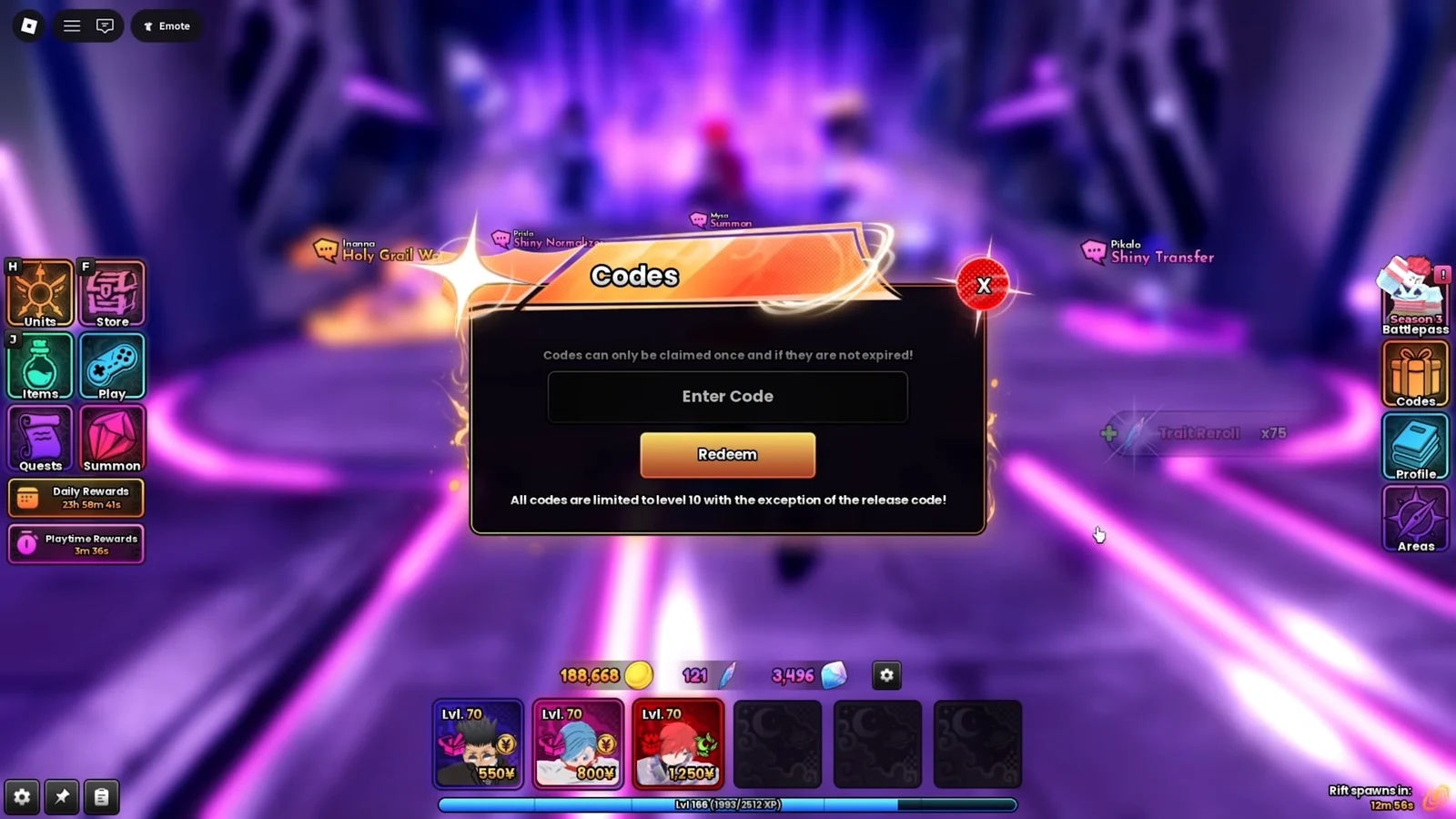
Three codes shipped with the update, and between them they cover gems, stat prisms, trait rerolls, and a Premium Pass. Type them exactly as written — the redemption box is case-sensitive and rejects stray spaces.
HolyGrailUpdate2Labyrinth
The lobby Daily Spin is separate from codes and can be claimed once per day for extra materials, so spin it before you queue into anything.
Endless Labyrinth: node runs, floors, and King’s Tokens
Endless Labyrinth is the more structurally interesting of the two new modes. Instead of picking a stage, you open a board in the lobby that shows a branching map of rooms, then choose which path to take one node at a time. Runs start by picking a single starting unit from a limited selection, so the first decision is made before any enemies appear.
- Pick a starting unit, then select your first room on the node map.
- Normal rooms are standard wave defenses played on the new Uruk layouts.
- Some nodes are unit pick nodes that add a new unit to the run instead of a fight.
- Clearing rooms fills milestone markers that gate progression to the next floor.
- Victories pay out Gems and King’s Tokens, the mode’s own currency.
Combat itself works the way it always has. You place your starting unit, turn on auto-upgrade so cash converts into levels without manual clicking, and hold the lane until the wave counter runs out. Room fights cap at a boss encounter — the wave 10 boss is Lancer — and beating it closes the node and returns you to the map with your rewards.
Holy Grail War: Class Contracts, Acts, and Grail Fragments
Holy Grail War is run through an NPC named Inanna in the lobby. Talking to her opens the mode window, which holds the rules, the Class Contract cards, and the mode’s own shop. The mode is split into Acts, and Act 1 is where new players start.
Before a match you build a loadout as normal, then pick one Class Contract card for the run. Seven are available: Saber, Archer, Lancer, Rider, Caster, Assassin, and Berserker. The card is chosen at the start of the match and shapes that attempt, so it functions as a modifier on top of your usual team rather than a replacement for it.
An Act runs to Wave 15 and ends with a stage boss. Clearing it pays out Grail Fragments, which are spent in the Holy Grail Shop on mode-exclusive items such as Gilgamesh’s Tome. If you want to know what a banner is actually paying out before you commit gems, the summon rates menu is accessible from the same area.
New units and the Standard Banner
Standard Banner 1 is where the update’s headline units live, currently featuring Scathy, Sunji, and Emmy. Mass summoning is the practical approach if you are sitting on code gems, since duplicates feed upgrade tiers rather than being wasted.
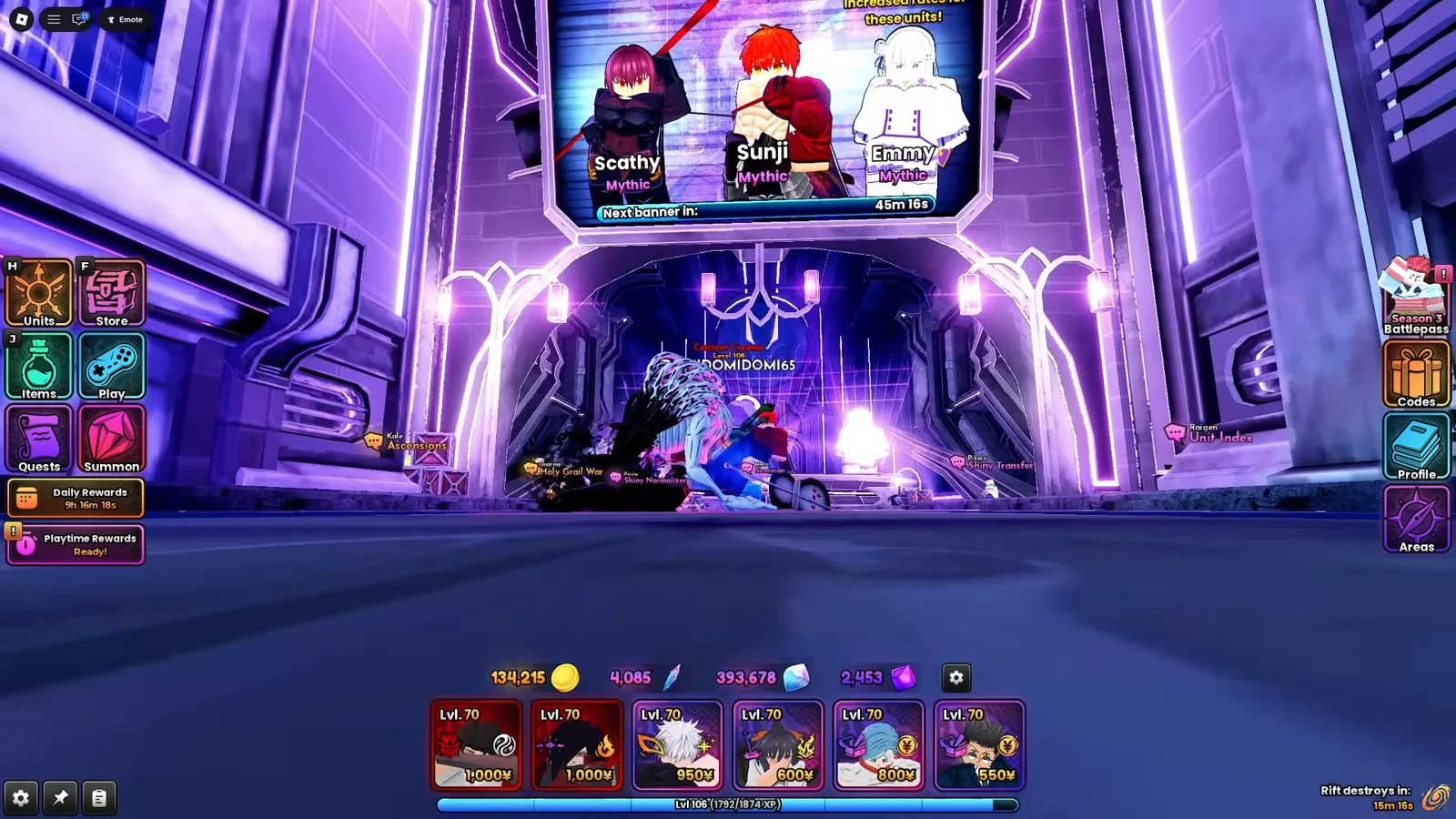
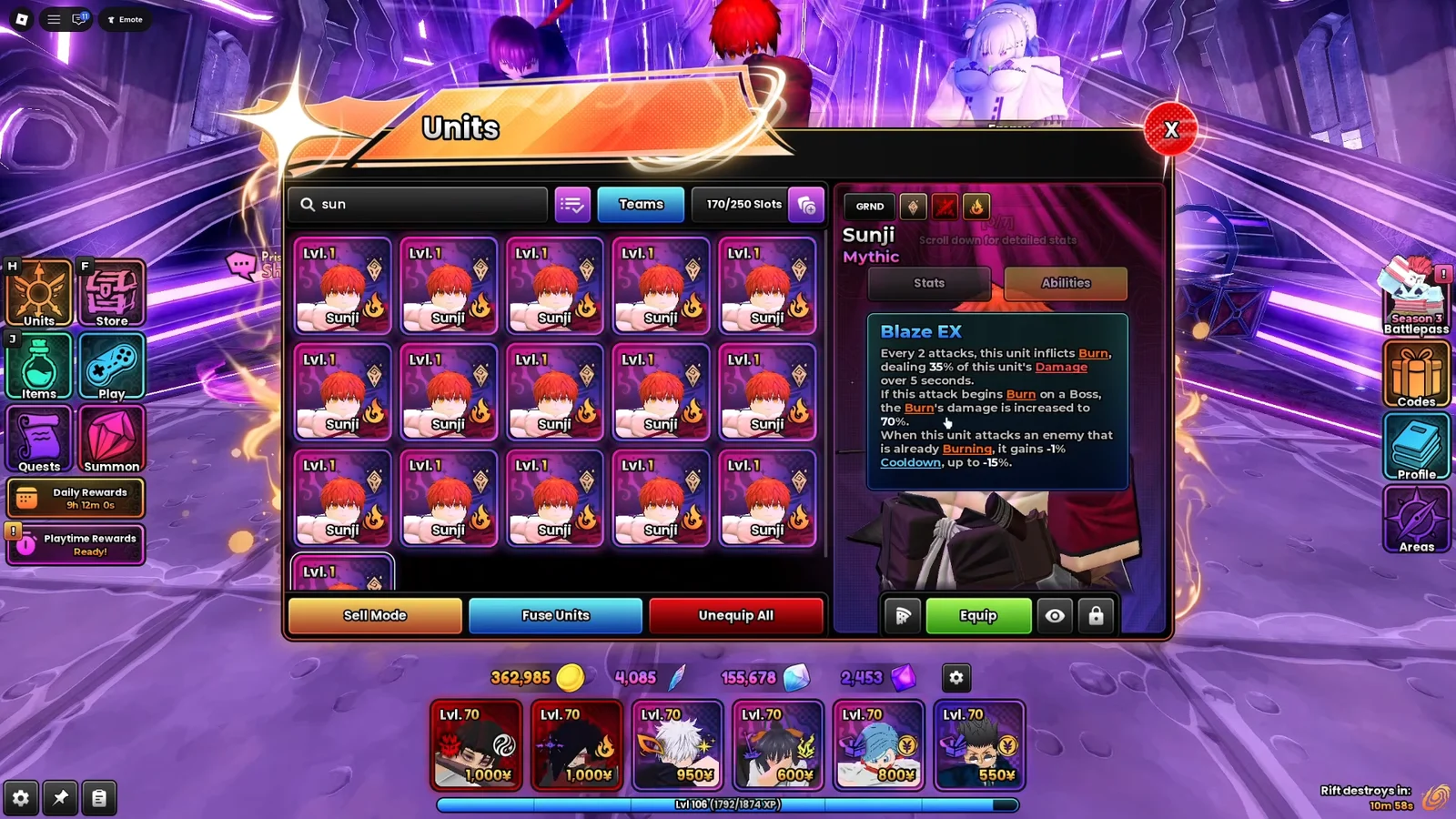
Sunji is a mythic and the most common pull worth keeping from the banner, with Blaze EX as his active. Scathy brings Dun Scaith. Both are worth opening in the inventory straight after a summon session so you can check their stats, upgrade tier, passives, and abilities before deciding which one gets your stat prisms.
New stages, artifacts, and the lobby shops
Three stages came with the update: Uruk, Uruk – Dusk, and Ryuudou-Ji. Uruk and its Dusk variant double as the maps used inside Endless Labyrinth rooms, while Ryuudou-Ji shows up on the Story and Legend mode maps. Legend runs of Ryuudou-Ji are the ones to note, because that is where artifact rewards drop.
The lobby itself got attention too. Pleiadys Tower is worth a visit for the Gold Merchant, who sells upgrade items including the Fusion Chip for gold rather than gems — useful if you are short on premium currency after summoning.
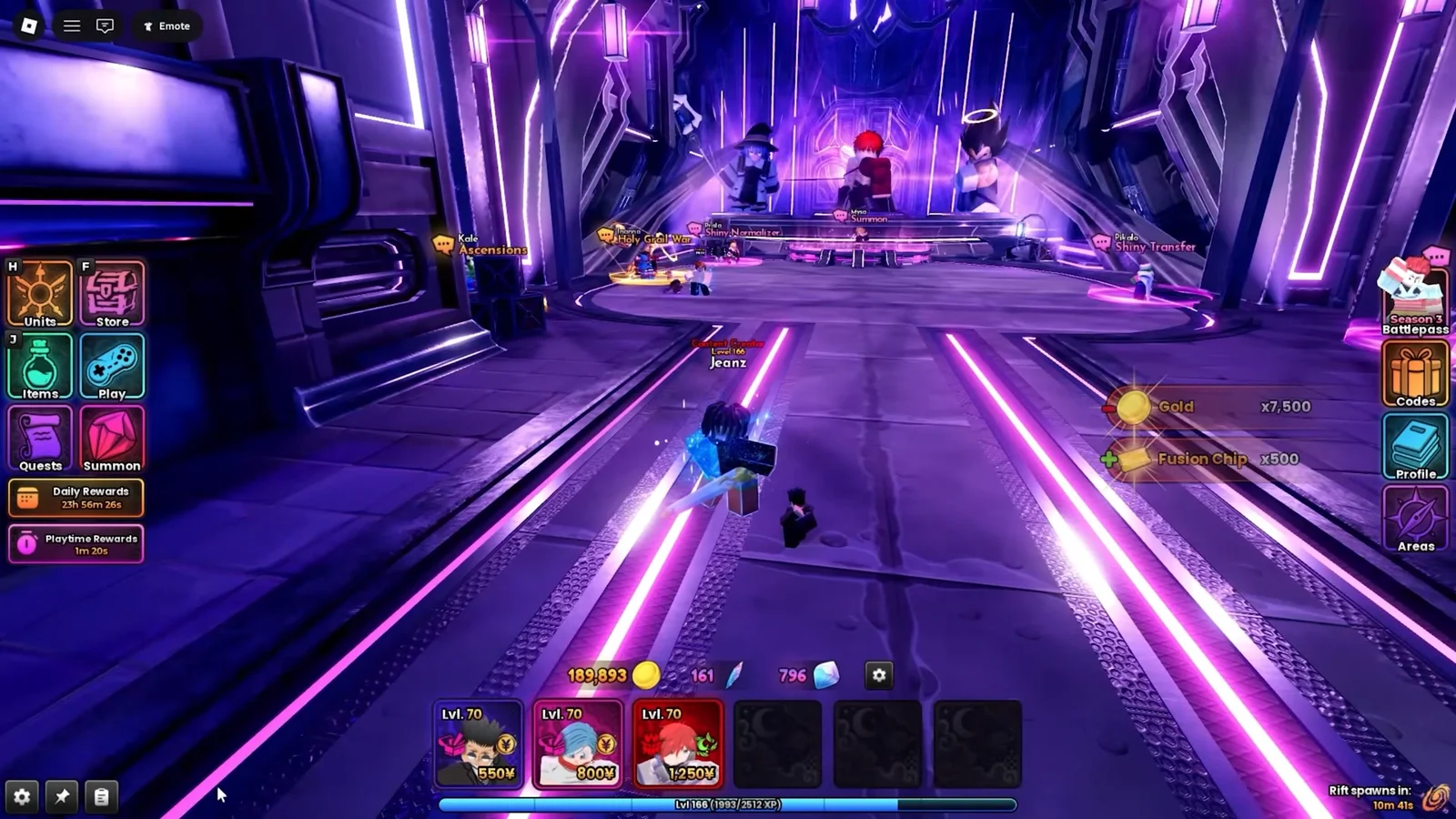
Which units still carry teams in the new modes
The new Fate units are too fresh to have settled placements, and the pre-update top tier is still doing the heavy lifting in both Endless Labyrinth and Holy Grail War. A team of Valcrad, Aneko, and Madara clears Act 1 comfortably, which tells you most of what you need to know about where the ceiling currently sits.
| Unit | Rarity / type | Role |
|---|---|---|
| Madaro (Edo Tensei) | Secret Hybrid | All-purpose carry |
| Cursed Lover (Pure Love) | Secret Ground | Flexible carry |
| Valcrad (Unleashed) | Secret Ground | Boss control |
| Goju (Honored One) | Mythic Support | Crowd control |
| Bon (Purgatory) | Mythic Support | Buffs and income |
| Bluma (Data Analyst) | Mythic Farm | Economy |
| Tango (Star of Festivals) | Mythic Ground | Damage and stun |
Valcrad is the pick that translates best into the new content, because both modes end their rooms and Acts on a boss and his kit is built around crit pressure and boss stuns. Bluma matters more in Endless Labyrinth than anywhere else, since long runs turn her income bonus into earlier maxed carries. Goju’s slow and time-stop style control buys the damage windows that make Wave 15 manageable.
Is Update 2.0 worth your time?
The strongest argument for Anime Origins has always been the trait system, and Update 2.0 does not disturb it. Traits are rerolled at the hub with Cryla, can be stored rather than lost, and you can only equip one Immortal trait per team despite its 0.1% roll rate. That single restriction does a lot of work, because it stops a lucky roll from trivializing the whole roster, and the spread of alternatives — Decay, Rupture, Ascendant, Stride, Joker, Hustler, Overseer — keeps builds from converging on one answer.
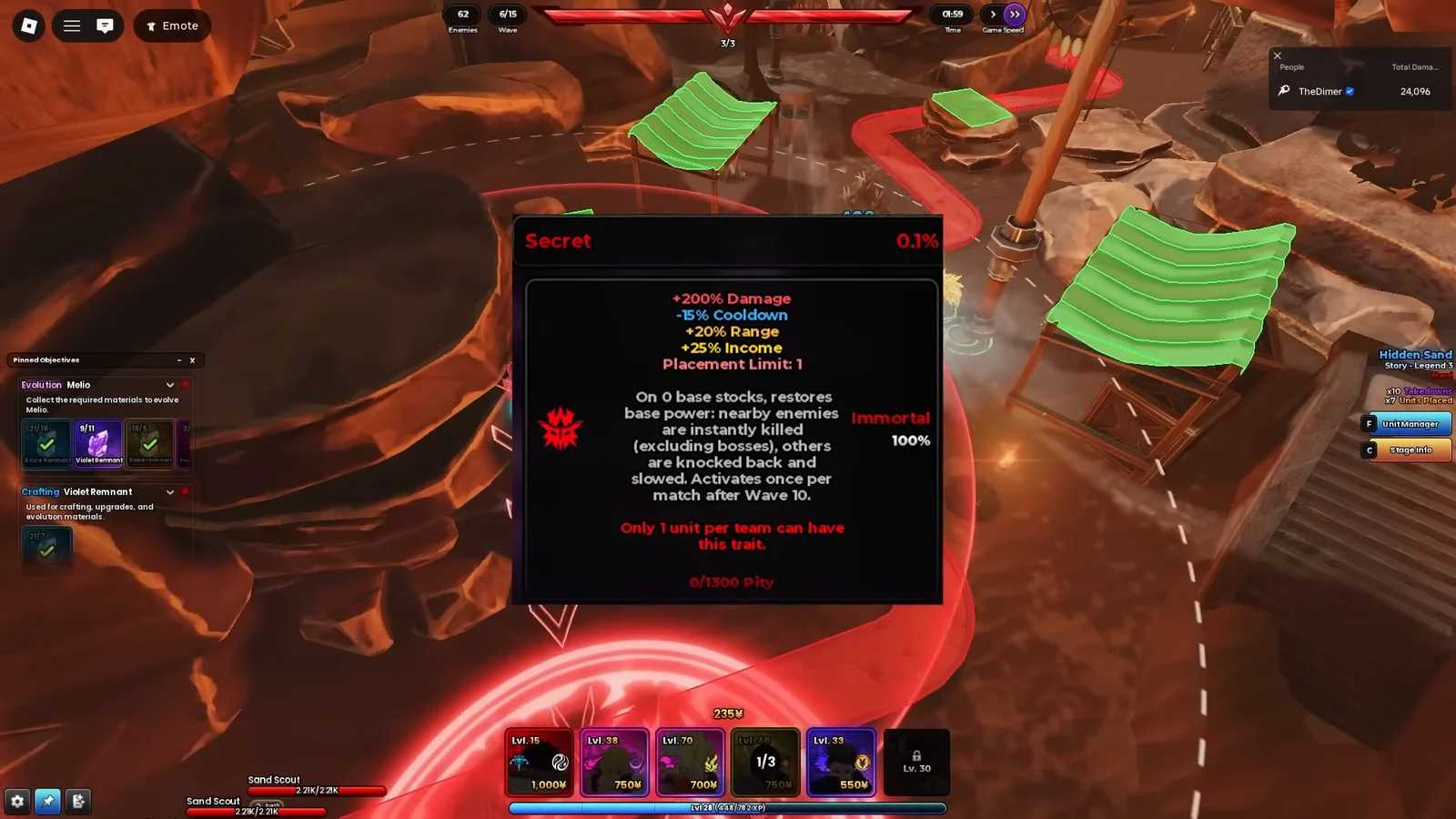
The breadth of available content is another major draw. In addition to Story Mode and Legend Stages, the game has Raids, Challenges, Infinity Castle, and Rifts, as well as Endless Labyrinth and Holy Grail War—an extensive lineup for a tower defense game. Evolutions provide a goal beyond rerolling stats: obtaining a unit and evolving it changes its gameplay, rather than only improving its numbers.
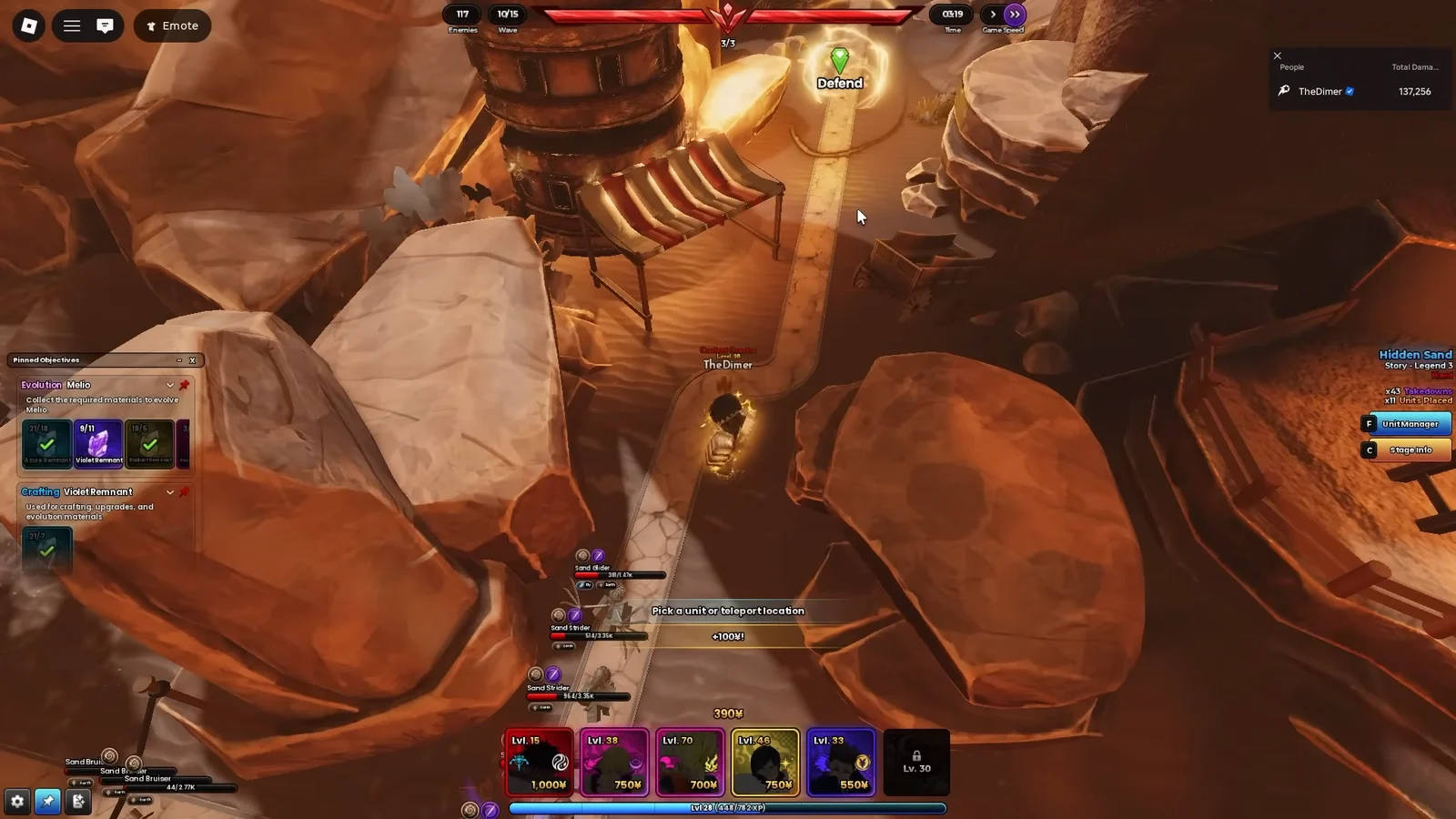
The friction is real, though. Evolution materials are farmed on Legend Stages with heavy RNG attached, which makes the grind tedious and has pushed a chunk of the player base toward macroing. Hard Mode is not open from the start of the story campaign, so early progression is slower than it needs to be. And the lobby’s generic Neo Tokyo look does the game no favors on first impression, even if what sits behind it is more thought out than the aesthetic suggests. There is also the standing risk that comes with 1:1 anime character models and the copyright exposure they carry.
Update 2.0 does not fix the grind, but it does give you two new reasons to log in that are not another Legend Stage rerun. If you already have an S-tier carry built, redeem the three codes, roll the Standard Banner with the gems, and take Endless Labyrinth first — it is the mode that best rewards the roster you have already invested in.