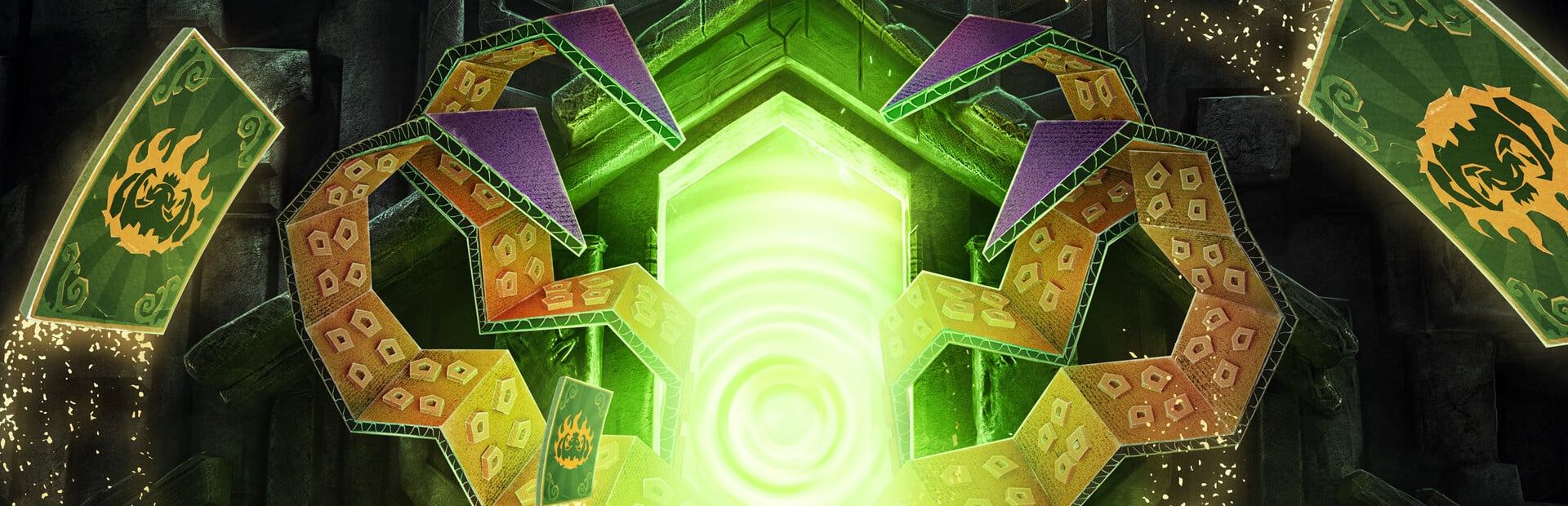
HELLCARD II is a cooperative roguelike deckbuilder set in the same paper dungeons as HELLCARD and Book of Demons, built by Thing Trunk and published by Skystone Games. Recent gameplay footage fills in how a run actually plays out, from the circular battle zones and card rewards to the gear that rewrites your deck between runs.
Quick answer: HELLCARD II is a one-to-four-player co-op deckbuilder where monsters sit at melee or ranged distance and placement drives your combos. The Steam listing currently shows a Q1 2027 release.
Monster placement in HELLCARD II combat
The feature that separates HELLCARD II from most card battlers is spatial. Every fight plays out across circular papercraft zones, and each monster occupies either a melee or ranged distance slot, split between the heroes in your party. Where an enemy stands decides which cards can reach it and which combos line up.
Combat footage shows the practical side of that system. A warrior swings into a ring of skeleton soldiers with area-of-effect strikes, while spellcasters throw fire at armored enemies further out. Cards such as Lacerate do double duty, damaging enemies while shielding allies, which only pays off when the right hero is standing in the right ring.
Cards, traits, and attribute choices
Deckbuilding follows the structure fans of the first game will recognize, with card rewards appearing between fights. What is new is that those reward screens now sit alongside character stats. A single screen can offer a power card next to a choice of DEX, INT, or STR, so you are shaping both your deck and your hero’s numbers at the same decision point.
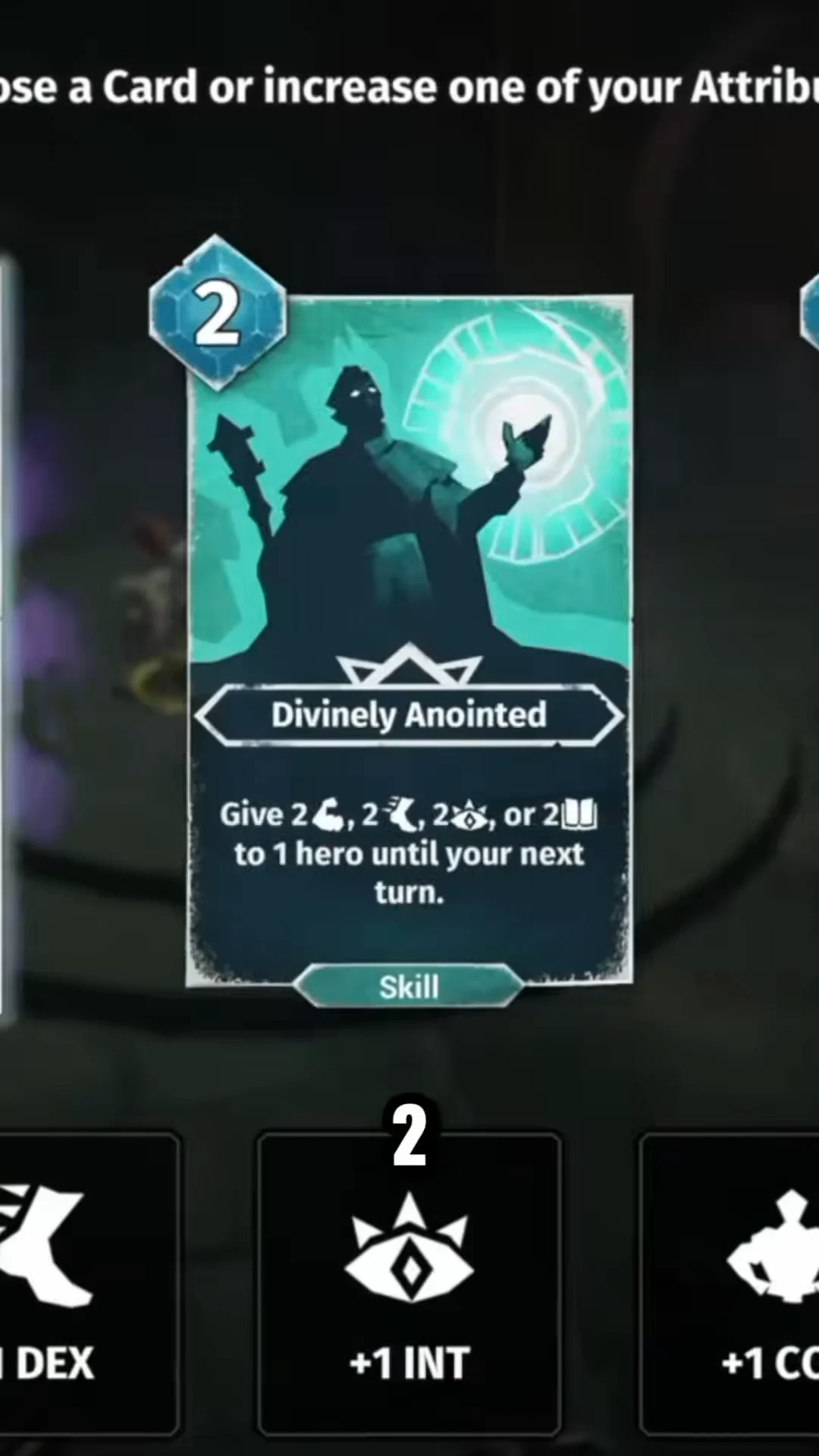
Several named cards have appeared in gameplay so far:
| Card | Seen doing |
|---|---|
| Exhale Embers | Played from hand in circular combat |
| Pants on Fire | Power card offered as a run reward |
| Steamroll | Targeted at enemies in a tactical zone |
| Insatiable | Targeted at enemies in a tactical zone |
| Lacerate | Damages enemies and shields allies |
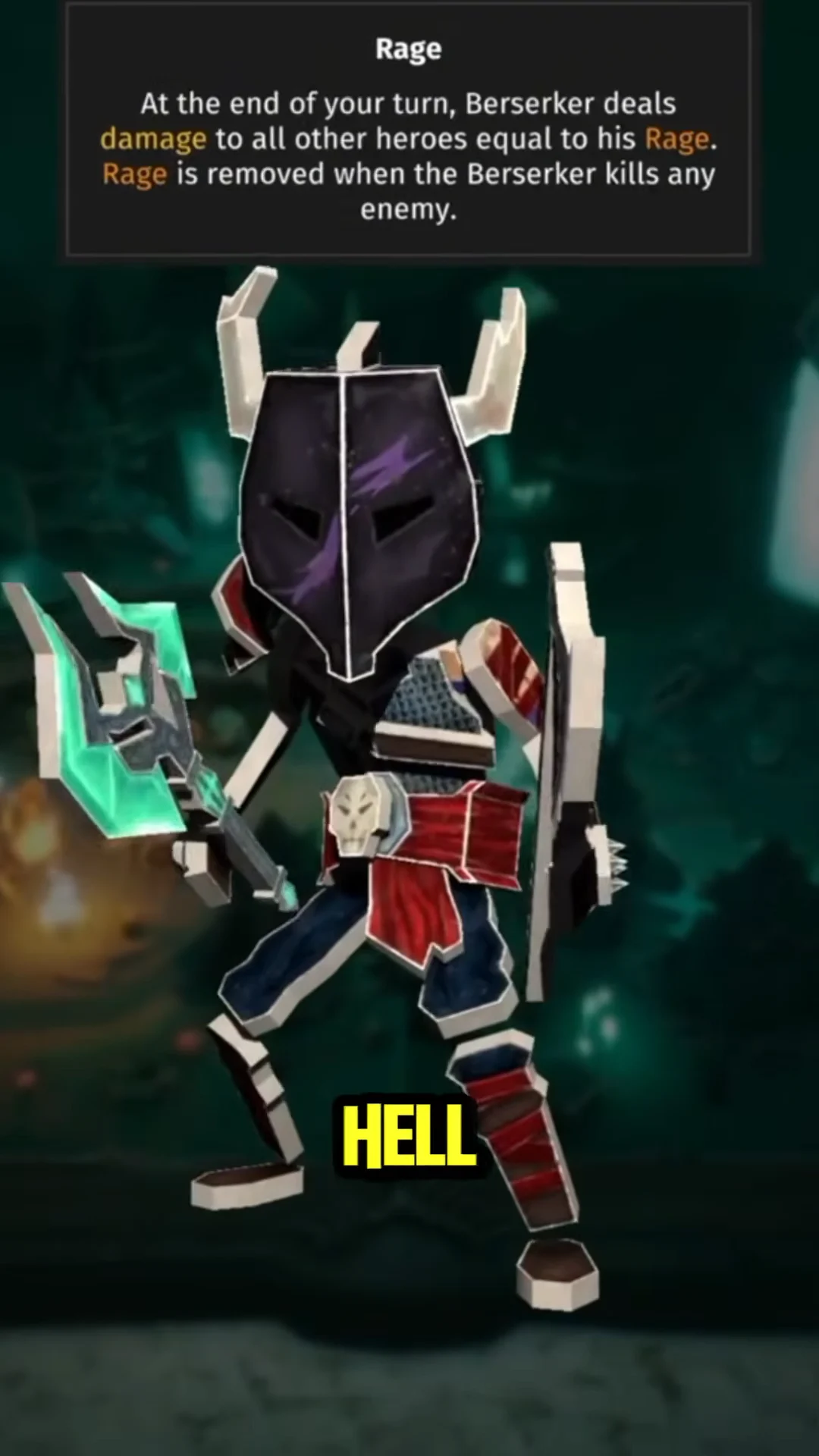
Heroes also carry traits. The Berserker, shown as a papercraft model in armor and a horned helmet, comes with the Rage trait card, which sits in the tooltip beside the character. Expect class identity to be expressed through those trait cards as much as through the cards you pick up mid-run.
Equipment changes your deck, not just your look
Gear is the sequel’s persistent layer, and nothing in it is purely cosmetic. Unlocked equipment changes how your hero looks while also modifying deck composition, stats, and buffs. One gameplay moment shows a golden chestplate lowering onto a pedestal above a row of skeletal sentries, which is the visual language the game uses for an upgrade.
Achievements are the unlock path. Clearing them adds gear you can equip in later runs, which means progress in one attempt carries into the next in a concrete, mechanical way rather than as a cosmetic reward.
Because equipment alters deck composition, two players using the same class can walk into a co-op run with meaningfully different starting decks.
Solo play versus four-player co-op
The game supports up to four heroes in a party, and the party size does not change whether you play alone. In single-player, you control every character and every decision yourself, which turns each fight into a full tactical puzzle across all the combat zones. In multiplayer, each player runs one hero and the coordination burden shifts to the group.
Co-op is online, and the appeal is stacking deck archetypes against each other. One player building around raw melee damage while another feeds shields and buffs is exactly the kind of combination the positioning system is designed to reward.
The game captures tabletop dungeon-crawling by letting every run become its own tale; you shape characters, choose side quests as a group, and piece together the plot.
Konstanty Kalicki, Thing Trunk
Pop-up book runs and the dragon storyline
HELLCARD II drops the plain dungeon layout of the original in favor of a pop-up book structure. A run opens with a book unfolding into a three-dimensional castle hallway where the heroes stand in front of portrait-lined walls, and each new location folds up out of the page the same way.
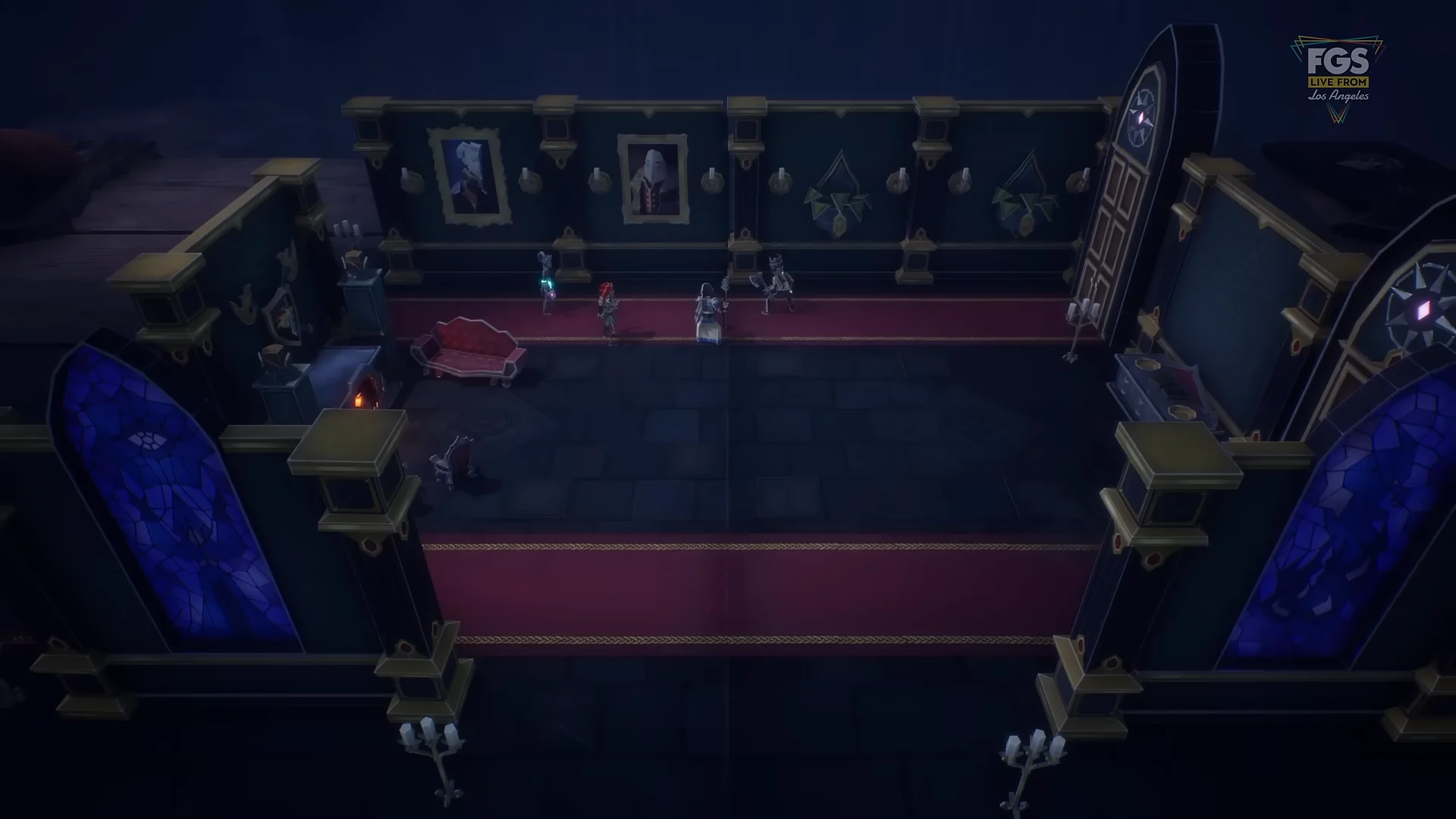
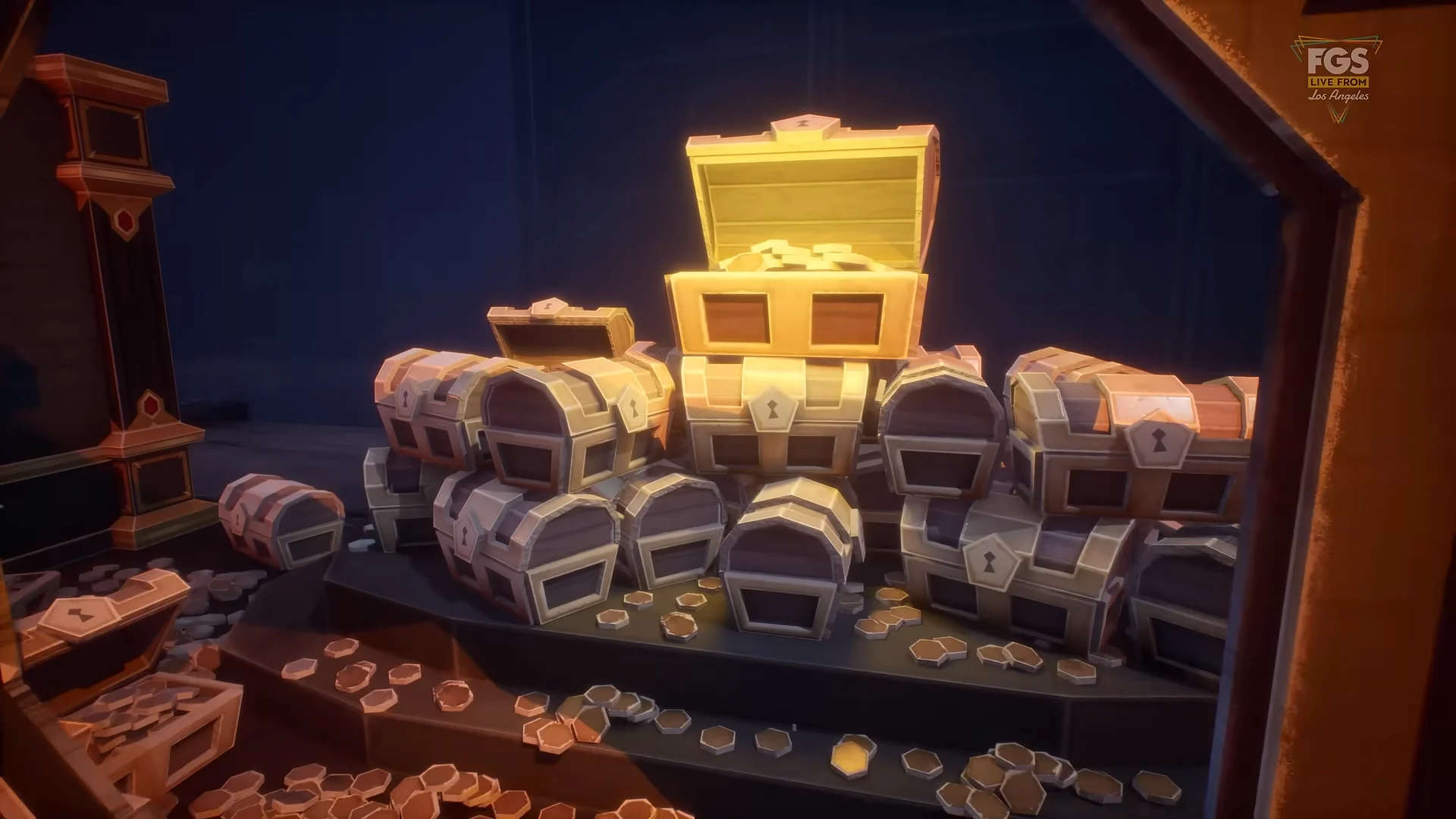
The framing story follows a lord whose wealth curdles into hubris and then into rebellion, with the queen sending her champions to deal with him. Sequences move from a vault of overflowing gold chests to a tactical war map, then to an iron gate opening onto a glowing purple portal.
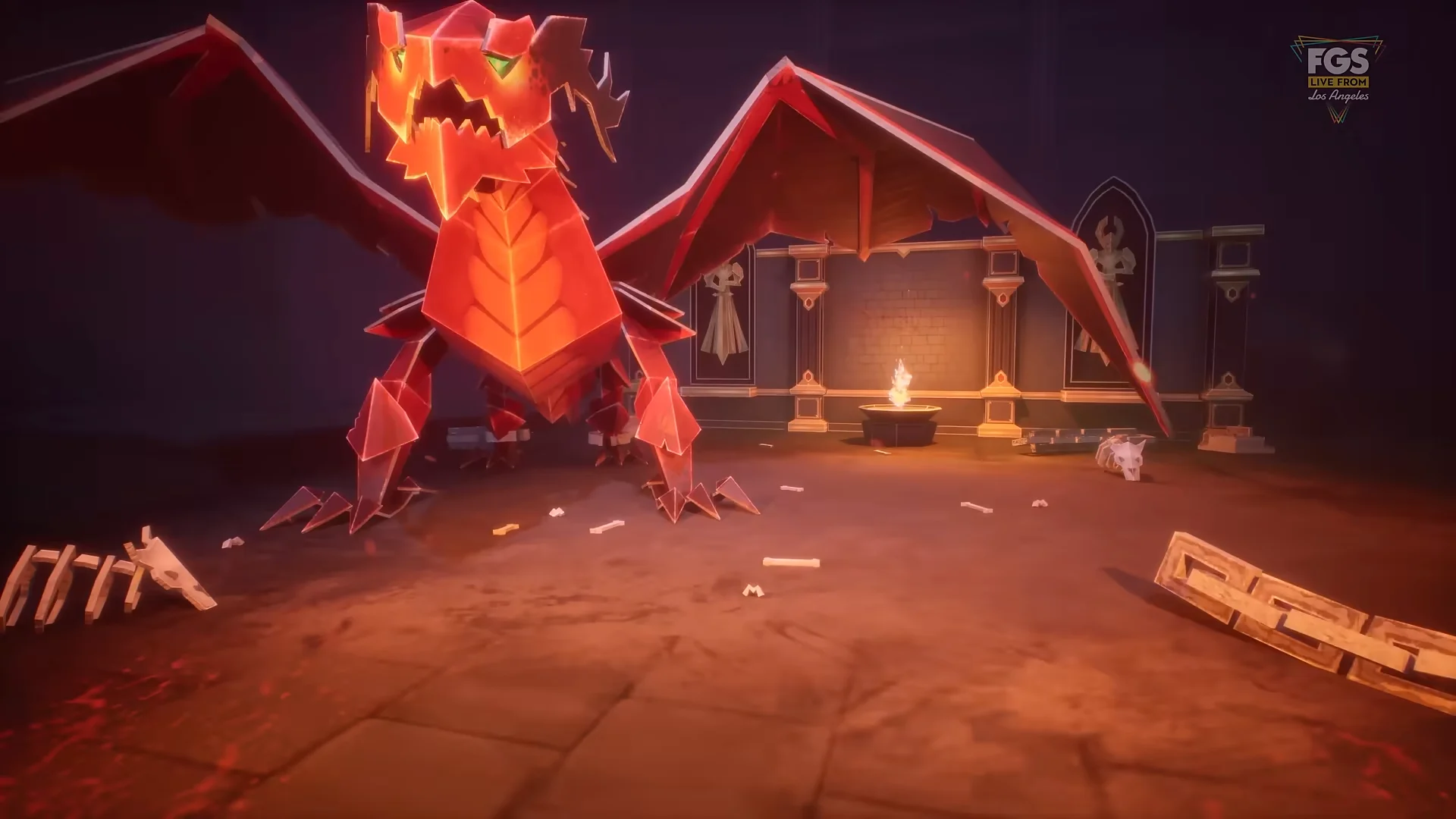
Dragons are the headline threat, and the payoff shot is a chamber door swinging open onto a huge red papercraft dragon rearing up in front of the party. Between fights, heroes rest at a campfire in an origami forest, the sequel’s version of the usual roguelike downtime beat.
Story is meant to evolve across playthroughs rather than reset, with side quests decided as a group and runs feeding into what comes next. New biomes and storylines extend the paper world beyond what the first game covered.
HELLCARD II release window, platforms, and PC requirements
Skystone Games and Thing Trunk announced the sequel in February 2026 with a PC and console launch targeted for later that year. The Steam store page now lists a planned release of Q1 2027, and no narrower date has been confirmed. A demo download entry exists on the store page, though the game is not yet available there.
On PC, the listed minimum specs are modest:
| Component | Minimum |
|---|---|
| OS | Windows 10, 11 |
| Processor | Quad-core CPU or better |
| Memory | 8 GB RAM |
| Graphics | DirectX 11/12 GPU |
| Network | Broadband internet connection |
The game supports single-player, online co-op, Steam Achievements, and Family Sharing, with interface and subtitle support in 13 languages and full audio in English. On release it will also be part of Thing Trunk’s Return 2 Games supporter series.
Everything shown so far points in one direction: the deckbuilding core of the original is intact, and the new systems all feed the same tactical question of where your heroes and the monsters are standing when you commit a card.