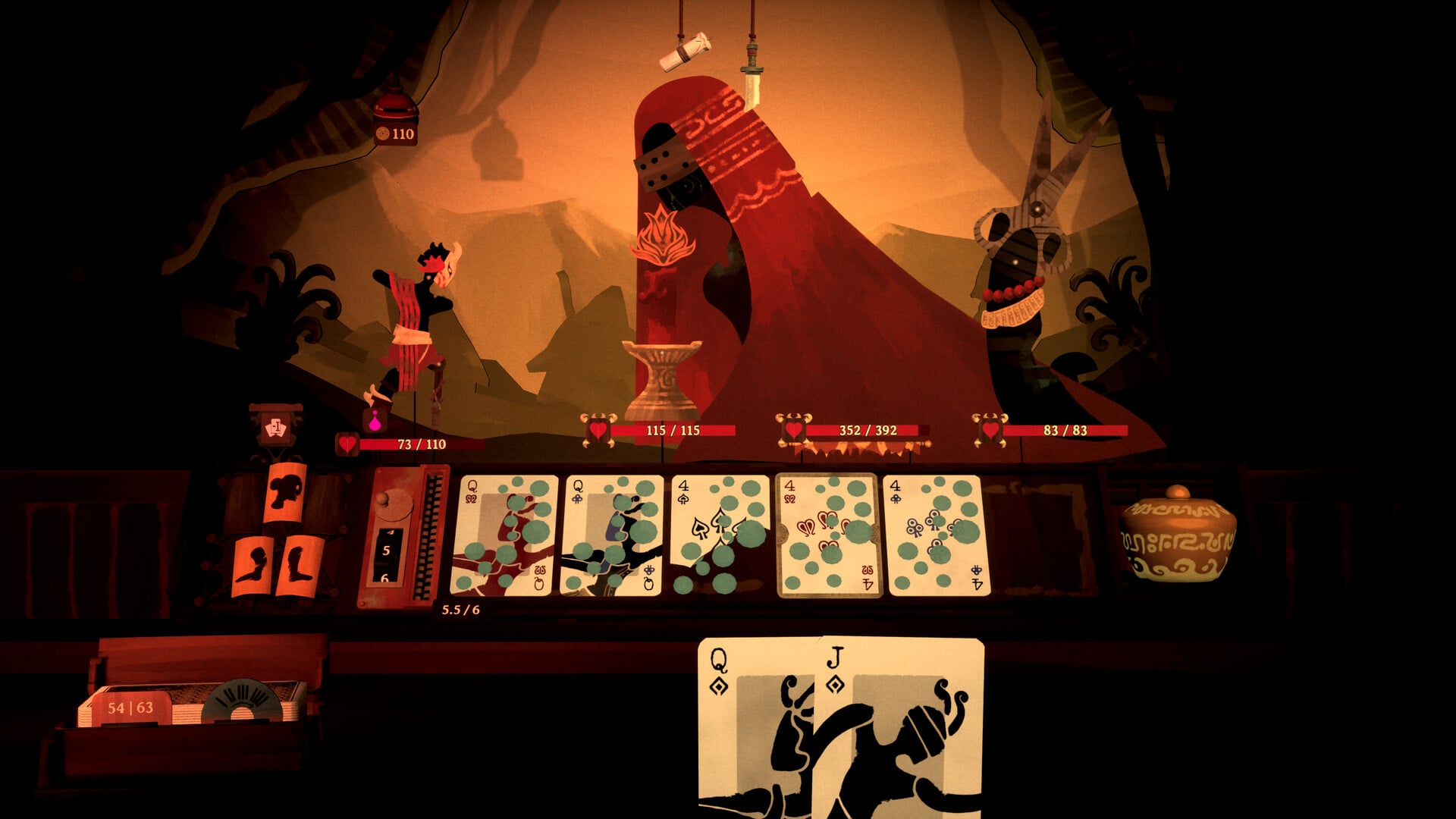
Deadhand Theater is a roguelike deckbuilder from Bag Track Games where you fight as a shadow puppet on a lamplit stage. Instead of a standard deck of attack cards, combat runs on playing cards, and you win exchanges by forming poker hands from the cards in your hand. The look is pure silhouette theater, with marionette props, hanging ropes, and grotesque puppet enemies that shamble in from the wings.
Quick answer: It is a shadow-puppet roguelike deckbuilder that turns poker hands into attacks, and you can wishlist it on Steam now.
Poker-based combat on a puppet stage
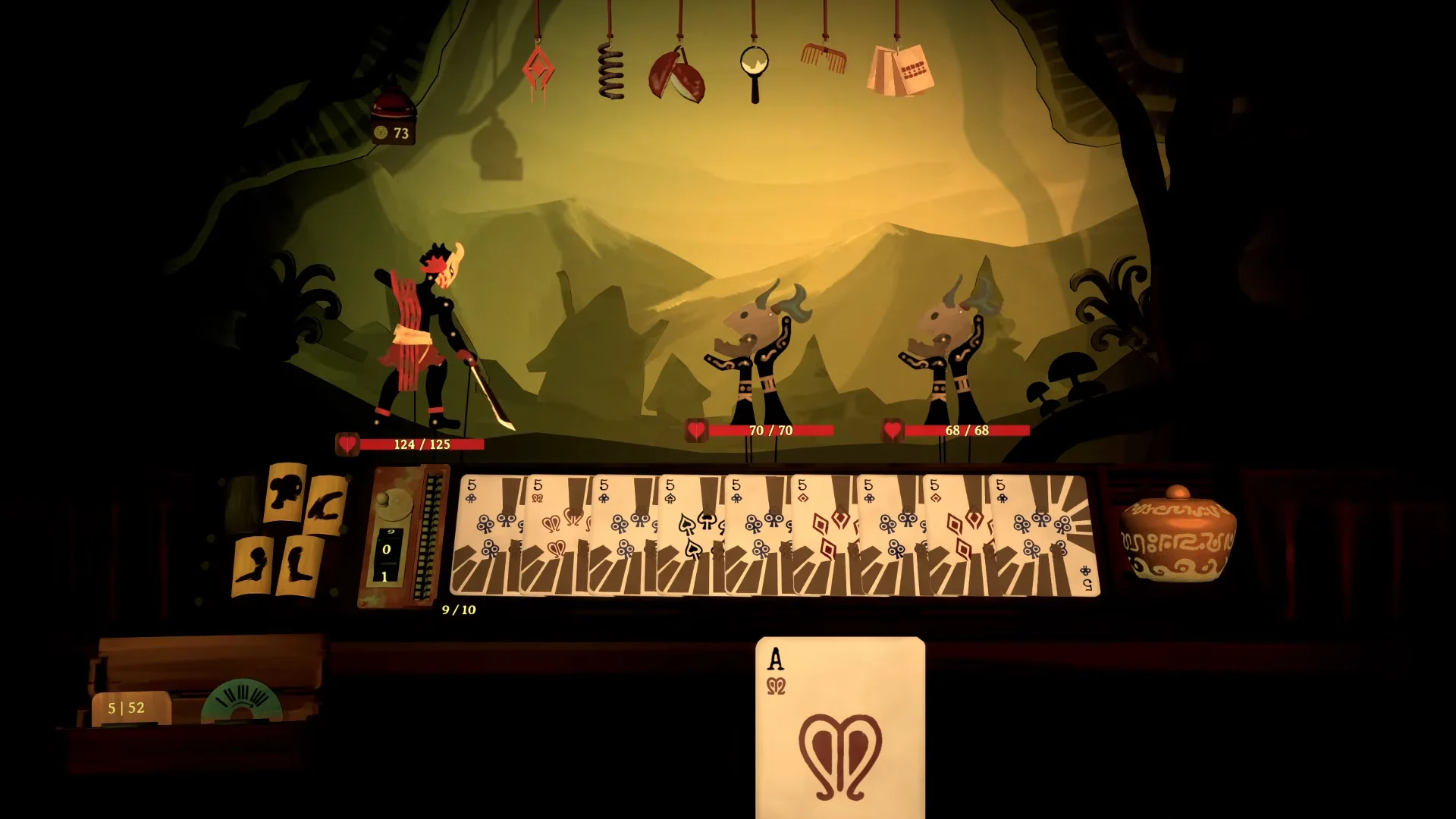
You play a silhouette warrior with a topknot and a curved blade, positioned on a stage against one or more shadow enemies. Your attacks come from a hand of standard playing cards that use the four suits (Hearts, Spades, Clubs, Diamonds) and normal ranks. Selecting cards that form poker combinations executes the puppet’s attacks, so building a strong hand matters more than clicking a single move.
Stacking matching ranks scales the damage. Combining several 5s, for example, sets off an explosive fire attack against a pair of enemies. Enemies carry visible health bars overhead, and the puppet manages card slots and resource dials while it fights.
Card modifiers change how hands work
Cards can be drafted and then altered with special traits that shift the poker math. These modifiers appear on the card itself and change either its rank or the way it fits into a hand.
| Modifier | Effect |
|---|---|
| Encased Card | Rank is doubled, but the card takes up 2 slots |
| Stitched Card | Rank grows by 1 per attack, but it can’t form poker hands |
The trade-offs are the point. An Encased Card pushes a single card’s value up sharply while eating extra room in your hand, so it rewards focused builds. A Stitched Card keeps climbing in rank the longer a fight runs, yet it sits outside your poker combinations entirely, making it a slow-building brute rather than a combo piece.
Relics, shops, and card sacrifice
Between fights you visit stage events that spend gold and reshape your run. Merchant shops hang their goods from the rafters, selling potions and cards out of wooden crates. A candle-lit vendor deals in relics such as the Jester’s Head, an equipment piece that raises your maximum selectable cards by 1, giving you more room to build bigger hands.
There is also a sacrifice option that destroys all selected cards, letting you thin or reshape your deck on purpose. Trimming weak cards is how deckbuilders keep your best combinations coming up more often, and this game folds that idea into a dedicated stage event.
Rest sites and furnace upgrades
Downtime comes in two flavors. A mechanical furnace event lets you spend currency, shown at a cost of 30, to upgrade something in your loadout. Campfire rest sites appear beside a totem and tent, giving the familiar deckbuilder pause between encounters. These stops are where you recover and prepare before the next puppet fight.
Enemies and boss fights
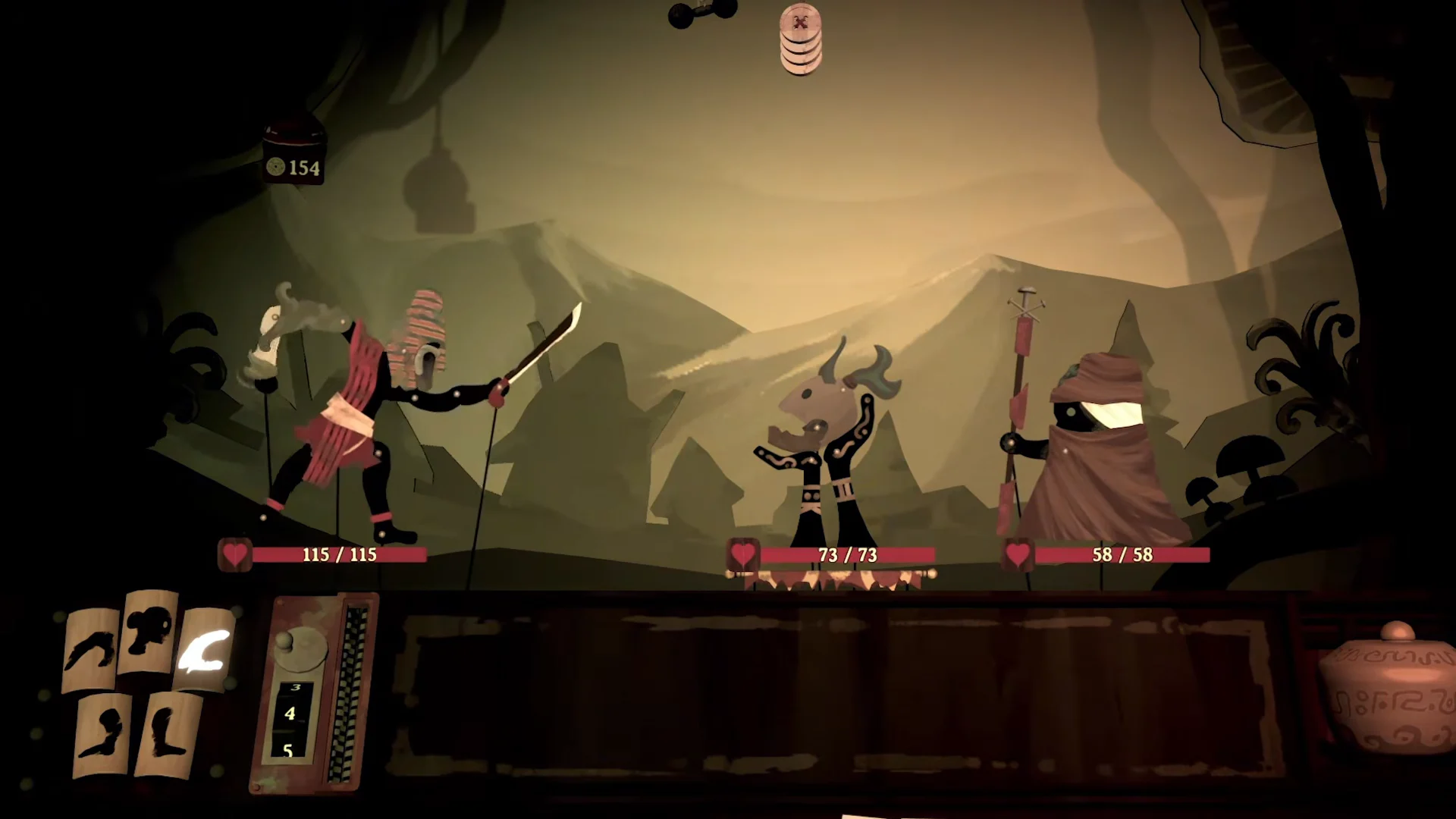
The cast leans into unsettling puppet designs. Early fights pit you against a pale-masked shadow creature and pairs of horned humanoids. Later encounters bring a horned club-bearer alongside a robed staff-bearer, forcing you to manage more than one threat at once.
The finale pits you against boss-sized foes: a barrel-shaped walker and a huge shadow whose teeth spread like a fan. No enemies on screen have larger health pools, making these battles the ultimate check of whether your hand-building can deal enough damage quickly enough.
Where to find it
At the Game Devs of Color Expo, the Southeast Asia Game Showcase featured Deadhand Theater, a title that brings together poker, sacrifice, and paper-puppet performance. You can add it to your Steam wishlist now. No release date has been announced publicly; wishlist it to get notified when a release window is revealed.