
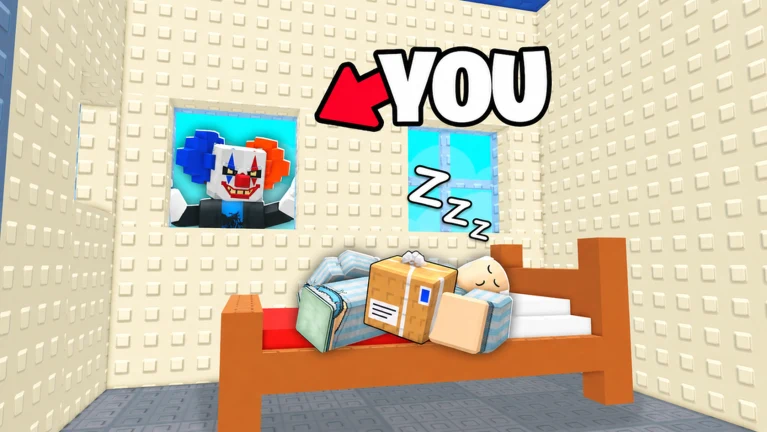
Scare Your Neighbor rewards repetition more than risk. Every upgrade, costume and aura is paid for with cash that comes from furniture, and furniture comes out of packages you steal from neighborhood houses. The fastest way up is a tight loop.
Quick answer: Run a tight loop: train Speed and Scare, steal packages from houses your stats can handle, let minions break them, place good items for income, and spend the cash on minions, base slots and station upgrades.
How the Scare Your Neighbor progression loop works
Your plot is the engine. It holds a treadmill that raises Speed, a Scare Trainer that raises Scare, a minion area that breaks packages, and item slots where unboxed furniture sits and earns money every second.
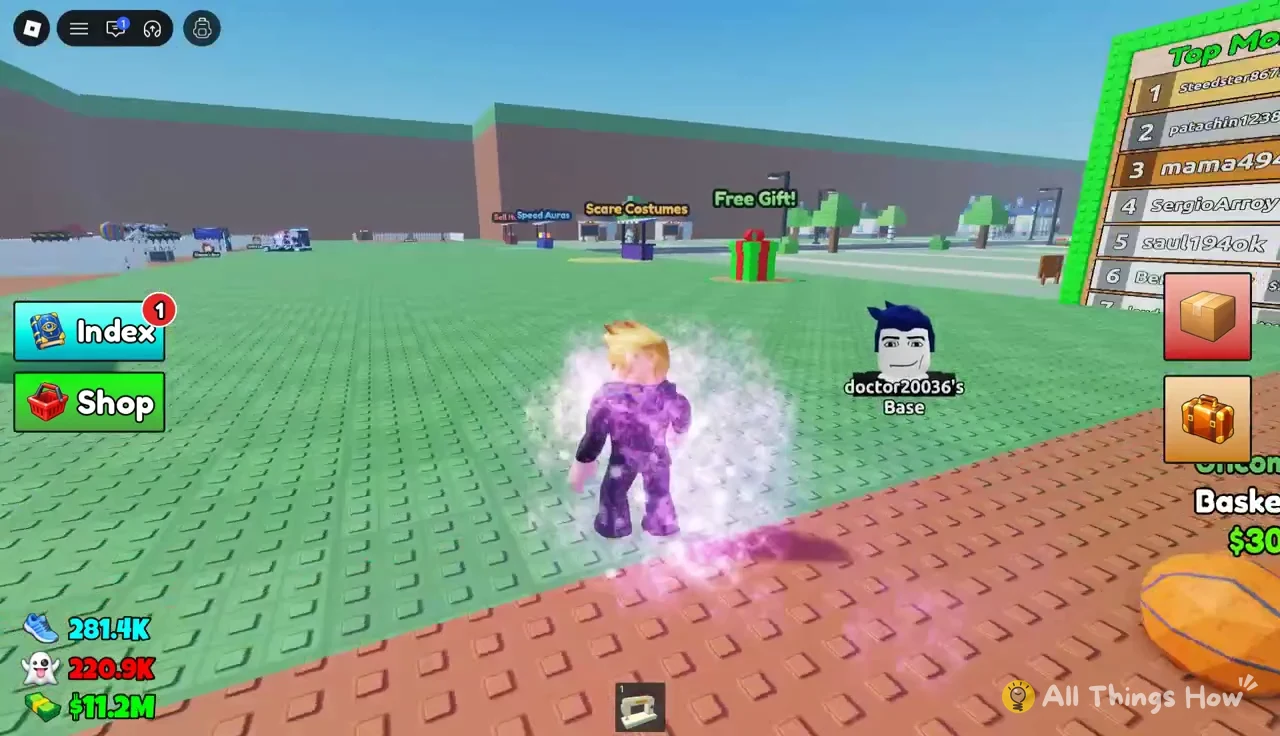
Each lap through the loop goes like this:
- Use the treadmill to train Speed, then the Scare Trainer to train Scare.
- Equip the best aura (Speed multiplier) and costume (Scare multiplier) you own.
- Steal a package from a house your stats can handle and carry it home.
- Let minions break the package, then open it for an item.
- Place good items for income, sell weak or duplicate ones to free slots.
- Spend the cash on minions, base slots and station upgrades.
The key to going fast is overlap.
Which house to farm: reading the billboard
Every house has a floating billboard with its rarity, your current scare chance, and the recommended Scare and Speed levels. The scare chance is personal and updates as your Scare stat climbs, so it is the number to watch.
Running a Legendary package back to your base
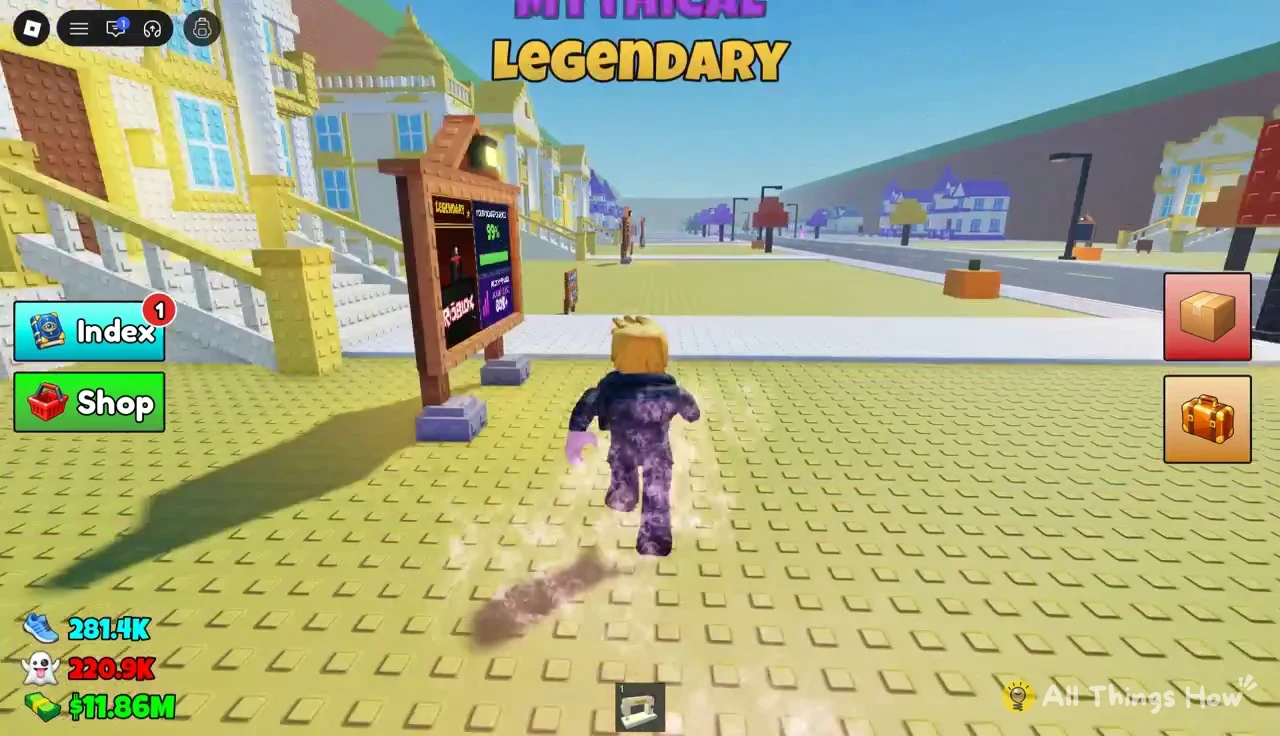
SCARE! [E] prompt to frighten the resident. On a successful scare, the resident drops a package at the door.[E] Steal on the dropped package to pick it up. Your avatar now carries it, and the package item appears in your hotbar.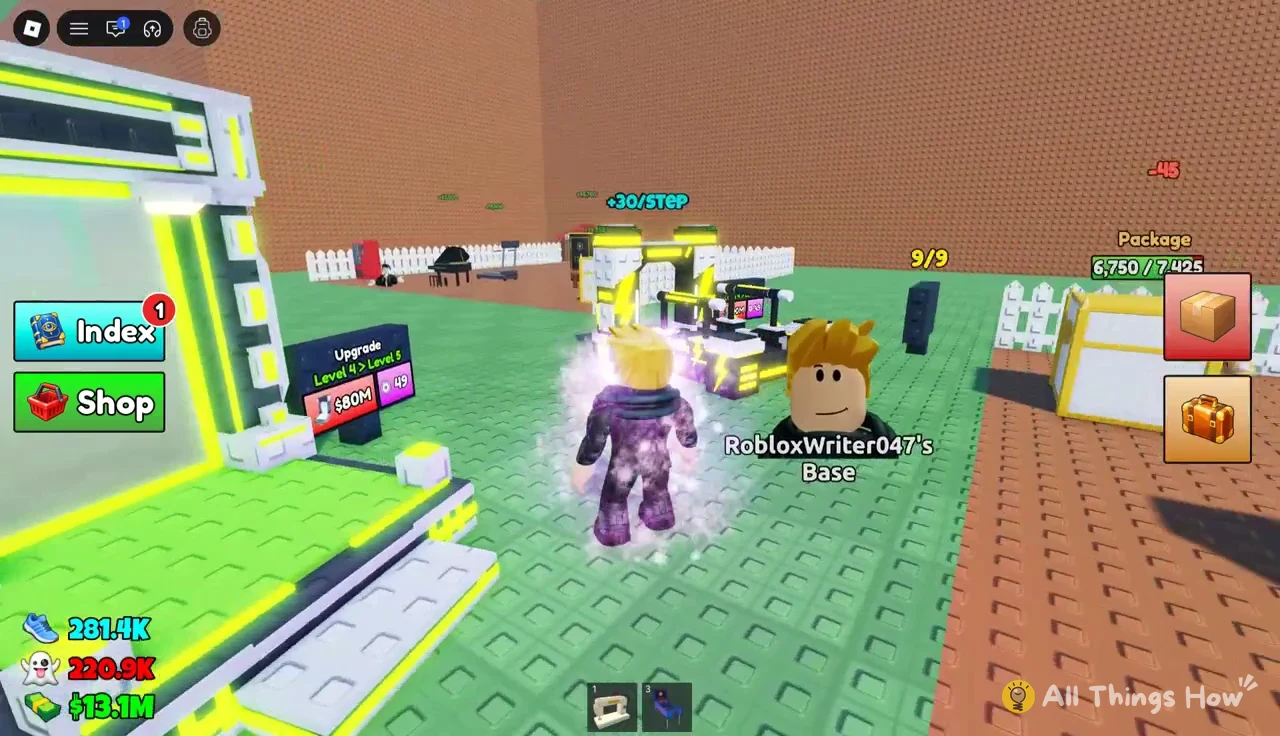
Minion upgrades decide how fast packages open
Minions chip away at the package’s health automatically. Each minion level change swaps them for a new creature with much higher damage per hit, and that directly shortens the wait between laps.
You can also hit the package yourself to speed things up, but the efficient play is to leave it to the minions and spend that time on a trainer.
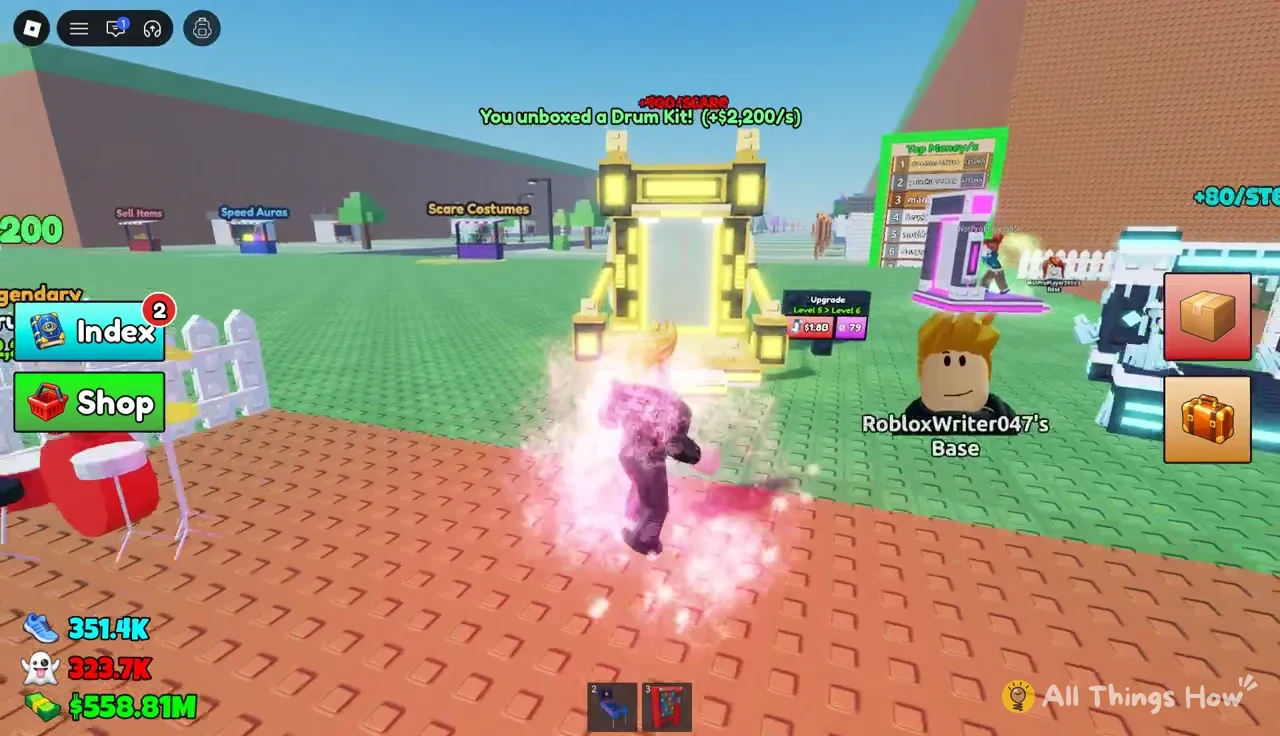
Managing item slots, selling, and offline money
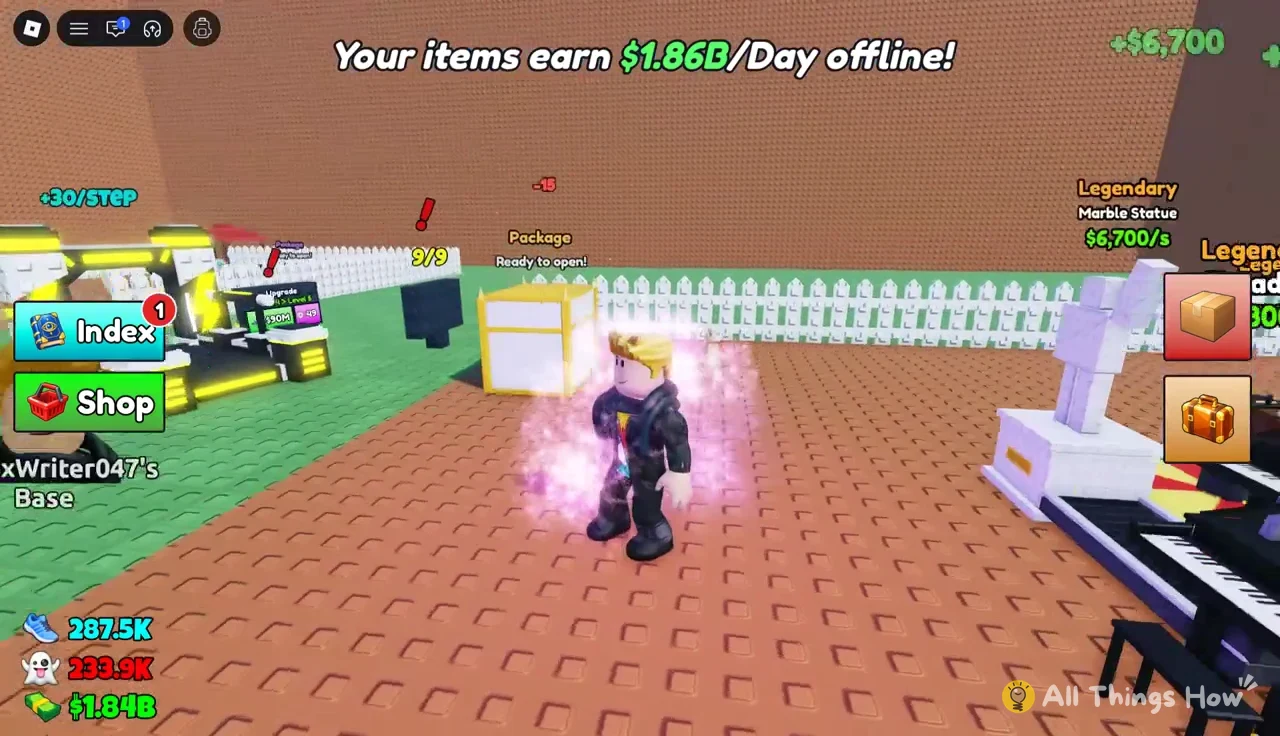
Placed items are your income, but your base only holds a fixed number of them. When every slot is full, new pulls have nowhere to go, so the slot count quietly caps your earnings. The game helps by placing your best item for you, confirmed with a “Placed your best item!” message.
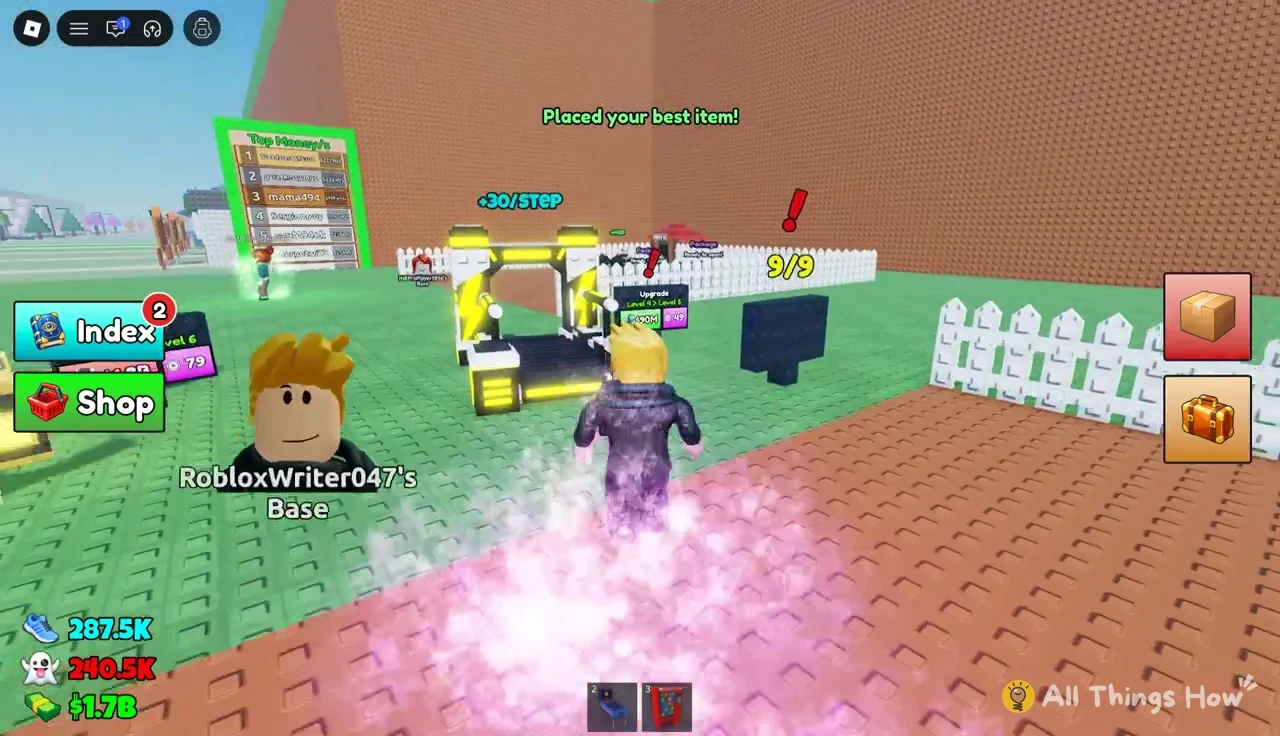
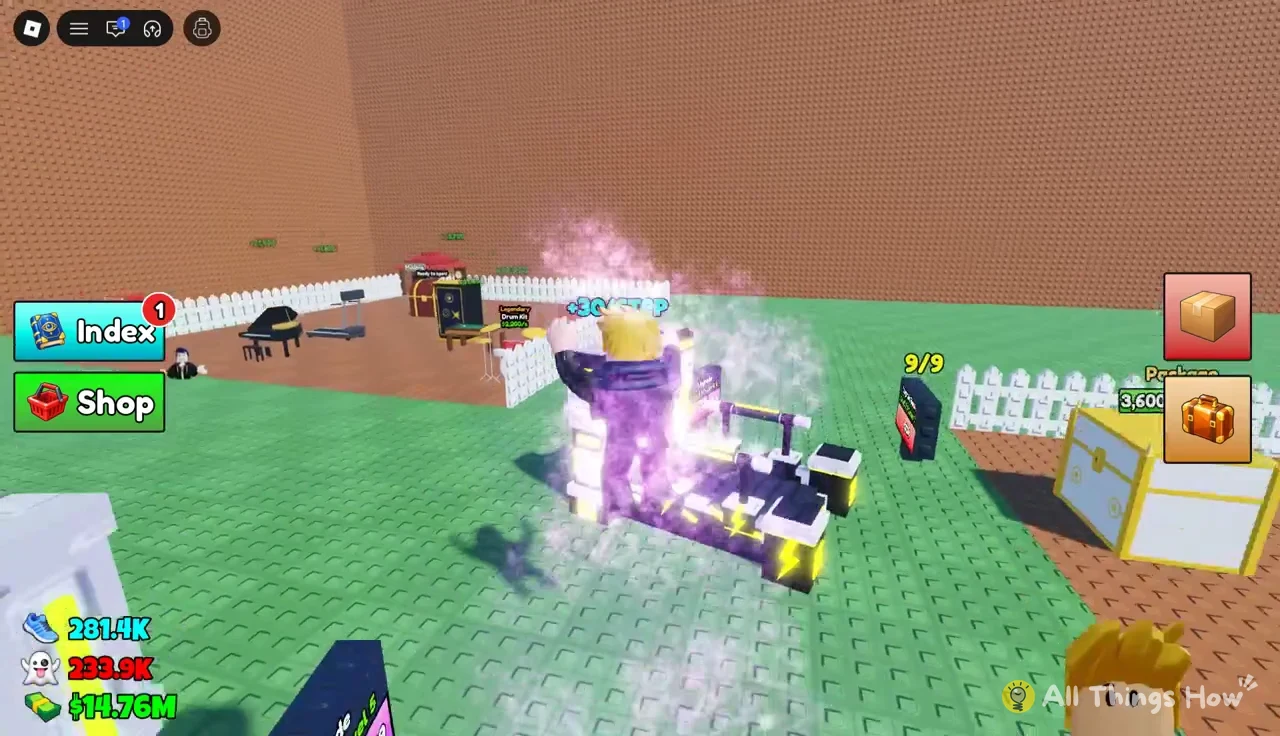
Your items also earn while you are logged out. On return, an “OFFLINE MONEY!” notice shows the collected amount, and a line underneath states your daily offline rate. Collect it before you start spending, because it often covers several upgrades at once.
Base and station upgrade costs
Each station on your plot has its own upgrade prompt. Station upgrades raise the base gain per hit or per step, and base upgrades add item slots.
A sensible spending order when cash is tight runs from cheapest impact to biggest. Every one of these pays back on the next few laps, which is what keeps the loop accelerating.
Scare costumes and speed auras: prices and multipliers
Costumes multiply Scare training and auras multiply Speed training. They stack on top of station upgrades, which makes them the largest single jump in progression. Tiers you already own show Equip or Unequip instead of a price.
Scare Costumes
| Costume | Rarity | Multiplier | Price |
|---|---|---|---|
| Skeleton | Uncommon | x2 Scare | — |
| Zombie | Rare | x2.5 Scare | — |
| Vampire | Epic | x3 Scare | — |
Speed Auras
| Aura | Rarity | Multiplier | Price |
|---|---|---|---|
| Green Aura | Uncommon | x2 Speed | — |
| Blue Aura | Rare | x2.5 Speed | — |
| Purple Aura | Epic | x3 Speed | — |
Multiplier math: what the Clown and Mystic Aura change
Multipliers apply to the station’s base gain, so a costume or aura is worth more the higher your stations are. That is why the station upgrades come before the expensive cosmetics in the spending order.
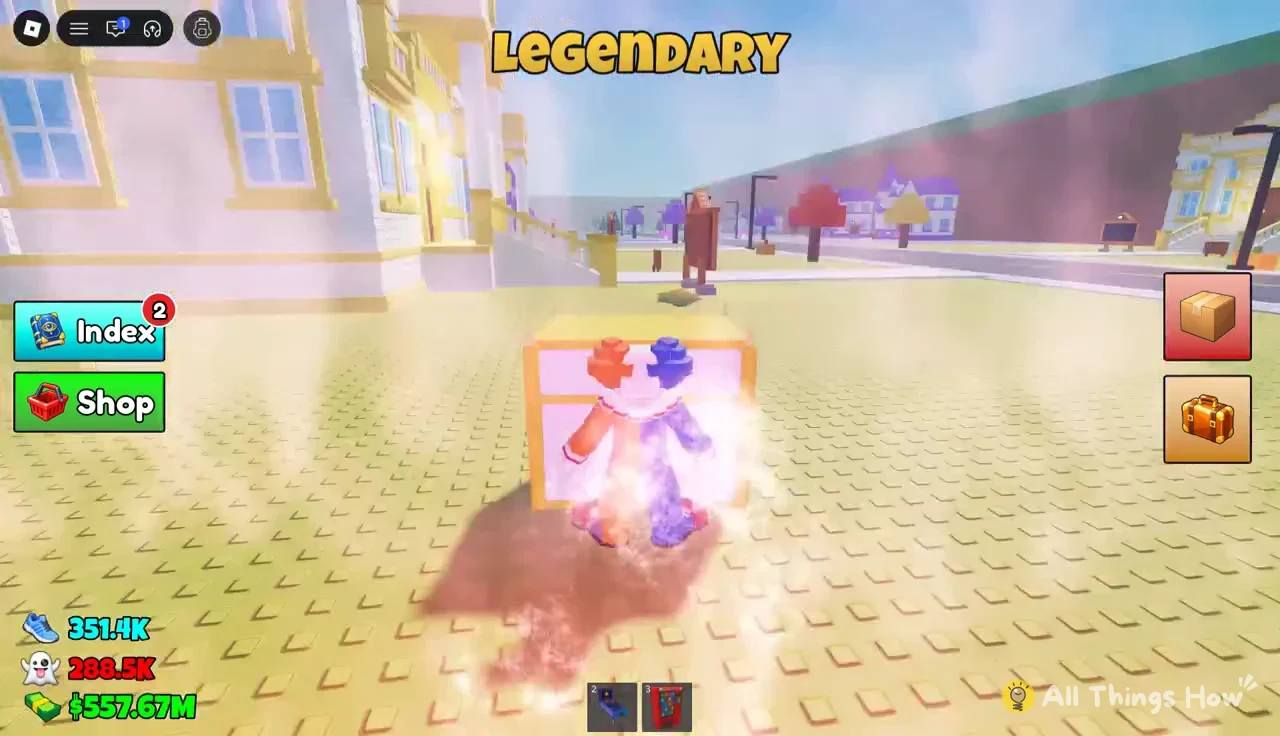
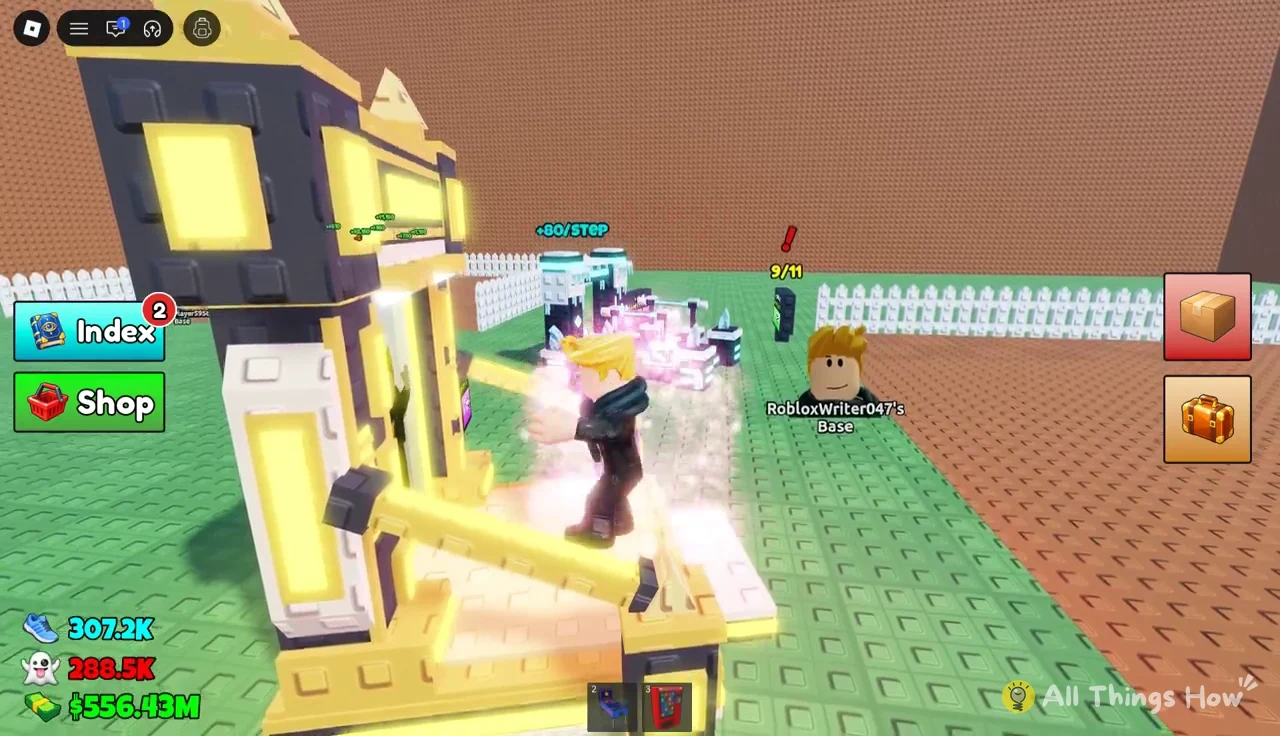
You can confirm the multiplier is active by the floating number above the station. Your avatar also changes, wearing the Clown suit and trailing pink and white sparkles from the aura.
Higher Speed shows up immediately on the street. Laps to the Legendary house get noticeably shorter, which means more packages per hour from the same house.
Keeping the loop running after the multiplier jump
Once the Clown and Mystic Aura are equipped, the routine stays the same, it just moves faster. Training between runs is what eventually turns the Mythical house’s billboard from a gamble into a safe bet. A Legendary-tier base is far from that, but every upgrade in the loop above pushes your per-second and offline numbers in the same direction, and the cash for the next tier comes faster each time.