

A fully maxed Pal in Palworld is never something you pull straight out of the wild. It is the product of four separate systems layered on top of each other, and each one multiplies the others. The hidden talent values a Pal is born with, the passive skills it carries, how many times you condense it, and how far you push it with Pal Souls all compound together. Miss one layer and even a strong species underperforms. Get all four right and the same Pal hits far harder than its base stats suggest.
Quick answer: Catch or breed a Pal with high Attack/Defense IVs (check with Ability Glasses), chain-breed three or four attack passives onto it, condense it to 4 stars for +20% base stats, then finish with Pal Soul enhancement for up to +30% on one stat. Do it in that order so the bonuses stack and the expensive steps only happen once.
The four systems that decide a Pal’s real power
Each layer works differently, and only one of them can never be changed. Knowing which is permanent and which is flexible tells you where to spend effort and where to just screen and move on. Exact percentages can shift between patches, since Pocketpair tunes balance across updates, so treat the numbers as the current baseline rather than fixed forever.
| System | What it adds | Changeable? |
|---|---|---|
| IVs (talent values) | Up to +30% each to HP, Attack, Defense | No, locked at capture or hatch |
| Passive skills | Up to 4 multiplicative buffs (and downsides) | Yes, through breeding |
| Condensing | +5% per star to base stats, +20% at 4 stars | Yes, one-way with fodder |
| Pal Souls | +3% per rank to one stat, +30% at rank 10 | Yes, refundable with Gold Coins |
IVs: the permanent foundation you screen for
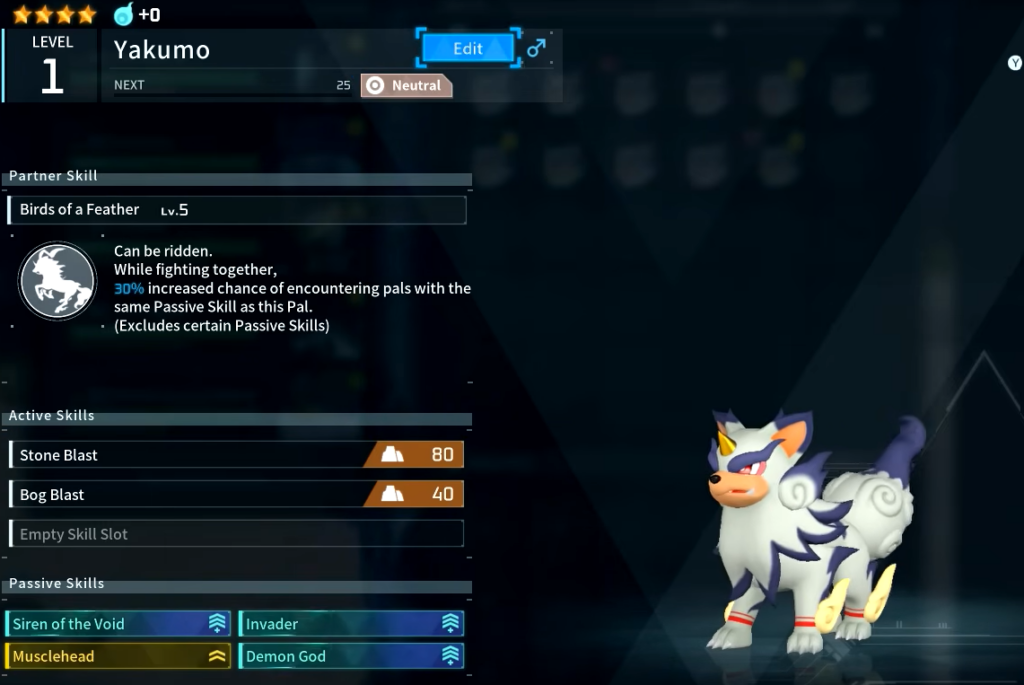
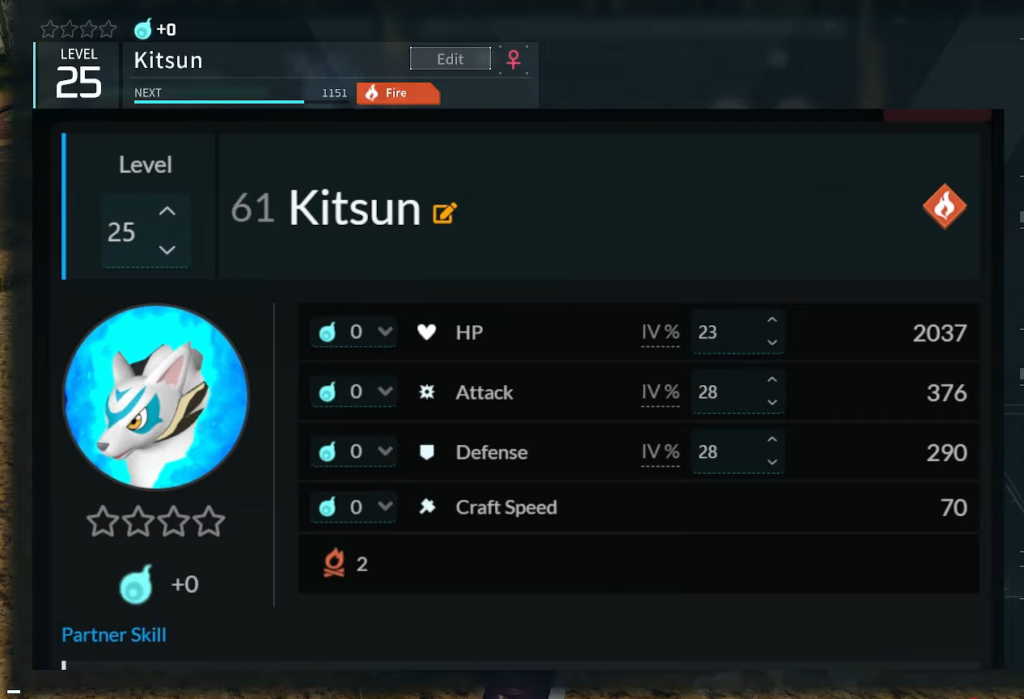
Every Pal has three hidden Individual Values, one each for HP, Attack, and Defense. They are rolled the instant you catch or hatch the Pal and stay fixed for its entire life. Each IV sits on a 0 to 100 scale, where 0 gives no bonus, and 100 gives the full +30% to that stat. So a Pal with 100 Attack talent permanently deals roughly 30% more damage than the same species rolled at 0, before any other layer is applied.
Because you cannot fix a bad roll after the fact, the winning move is to check before you invest. The Ability Glasses accessory reveals a Pal’s HP, Attack, and Defense talent values on both wild and owned Pals, and it highlights any value of 70 or higher in green so good catches stand out. The Glasses are a tier 34 Ancient Technology unlock, needing level 34 and 4 Ancient Technology Points from the purple side of the tech tree. If you have the points to spare, they pay off quickly by letting you skip low-roll captures instead of grinding them for nothing.
IVs cannot be improved, transferred, or edited on an existing Pal. The only way to raise a stat’s talent is to breed or catch a fresh one that rolls higher, which is exactly what the Glasses help you spot.

Passive skills and how breeding locks them in
A Pal can hold up to 4 passive skills at once, and this is where you get the biggest swings you actually control. Combat passives stack multiplicatively with IVs and condensing, so a fighter carrying three strong attack passives beats a higher-IV Pal that rolled junk skills. For a combat Pal the usual goal is three or four attack-boosting passives on a single specimen. For base workers you chase work-speed and stamina passives instead, and you avoid anything with a work-speed penalty.
| Passive | Effect | Notes |
|---|---|---|
| Legend | Attack, Defense, and movement speed up | Legendary Pals only; well-rounded |
| Ferocious | Attack up, no downside | Reliable on any fighter |
| Musclehead | Bigger Attack boost, heavy work-speed penalty | Pure combat Pals only |
| Lucky | Attack up and work speed up | Hybrid pick, no downside |
You do not farm these passives in the wild. You breed for them. When two Pals produce an egg, the child can inherit up to 4 passives drawn from the combined pool of both parents. The game picks how many to inherit, then selects that many at random from the shared list, or takes all of them if the list is small. The child can also roll brand-new passives, but only ones neither parent already passed down.
That rule is why chain breeding works. Keep both parents loaded with only the passives you want, and the random selection has fewer bad options to choose from. Reports indicate passives come from the male parent more often, so carry the skill you most want to lock on the male side for better odds. Even with clean parents, the exact four-passive combination can take many eggs, so expect the roll to take patience.
Condensing to 4 stars at the Pal Essence Condenser
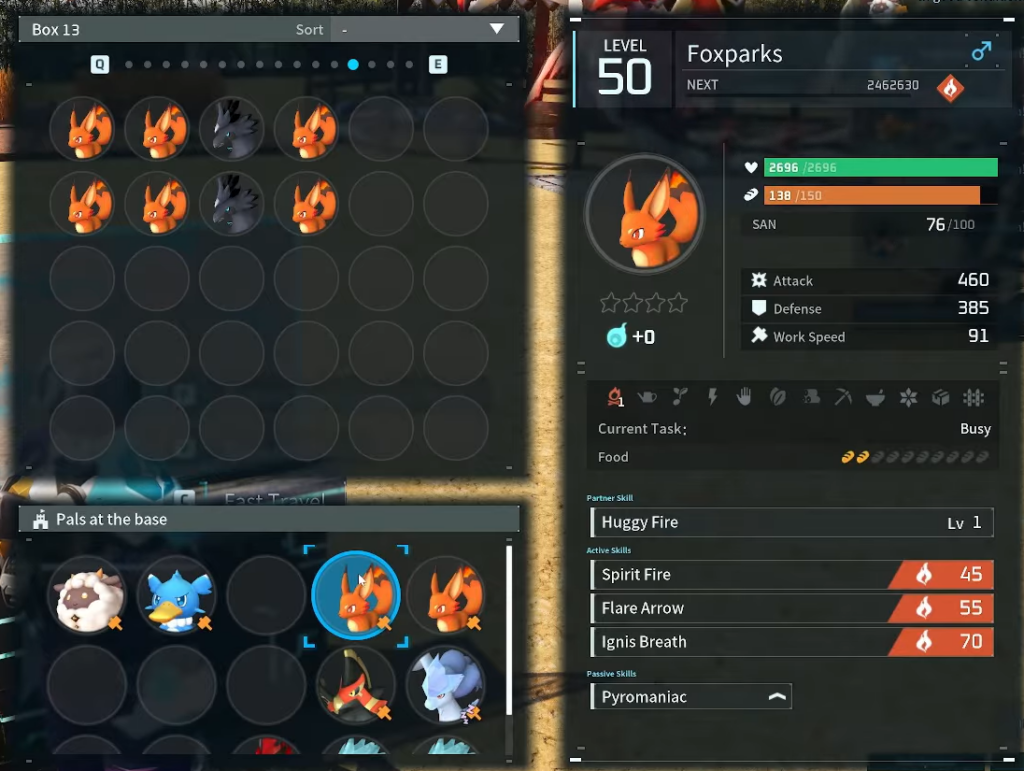
Once a Pal has the species, IVs, and passives you want, you make it permanently stronger at the Pal Essence Condenser. A Pal can be condensed up to 4 stars. Each star adds +5% to its max HP, Attack, and Defense, reaching +20% at 4 stars. Condensing also raises the potency of the Pal’s Partner Skill at every level, and at 4 stars specifically, every one of its Work Suitabilities goes up by 1, which makes it a better base worker on top of a stronger fighter.
The cost is fodder. You sacrifice Pals of the same species, and the requirement climbs fast at each star.
| Star | Same-species Pals needed | Bonus at this level |
|---|---|---|
| 1 star | 4 | +5% base stats |
| 2 stars | 16 | +10% base stats |
| 3 stars | 32 | +15% base stats |
| 4 stars | 64 | +20% base stats, all Work Suitabilities +1 |
| Total to 4 stars | ~116 | — |
Because roughly 116 same-species Pals go into one 4-star build, condensing is a one-way commitment. Only ever condense your best specimen, the one with good IVs and the passives you locked in. Setting up a breeding farm or repeatedly capturing the same species is the standard way to produce that much fodder without stalling everything else.
Pal Souls and the Statue of Power finish
The last layer is Pal Enhancement at the Statue of Power, paid for with Pal Souls that come in Small, Medium, Large, and Giant rarities. Each rank you buy adds +3% to a chosen stat, HP, Attack, Defense, or Work Speed, up to 10 ranks for a maximum of +30% in that one stat. Ranks must be bought in order. A full 30% upgrade reportedly costs around 10 Small, 6 Medium, and 6 Large souls per stat.
The big advantage here is that these enhancements are refundable at any time with Gold Coins. That makes souls far more forgiving than condensing, so you can pump Attack now and reshuffle into Defense later without losing your investment. The same Statue of Power separately raises your catch power through Lifmunk Effigies, but that is a different track from stat enhancement.
The build order that makes the bonuses compound
Order matters because the two permanent steps, IVs and condensing, are the ones you cannot undo cheaply. Handle everything flexible first, verify the Pal is the keeper, then spend the expensive fodder and souls last.
You know it worked when the Pal’s stat panel reflects the star count and the enhancement ranks, and when the same species catches or eggs no longer beat it on the numbers you built for. If your Pal still feels weak, the usual cause is skipping a layer, most often chasing IVs while ignoring passives, or condensing a random specimen instead of the one you actually bred. Line up all four systems on one Pal, and the total gain is far larger than any single step delivers on its own.