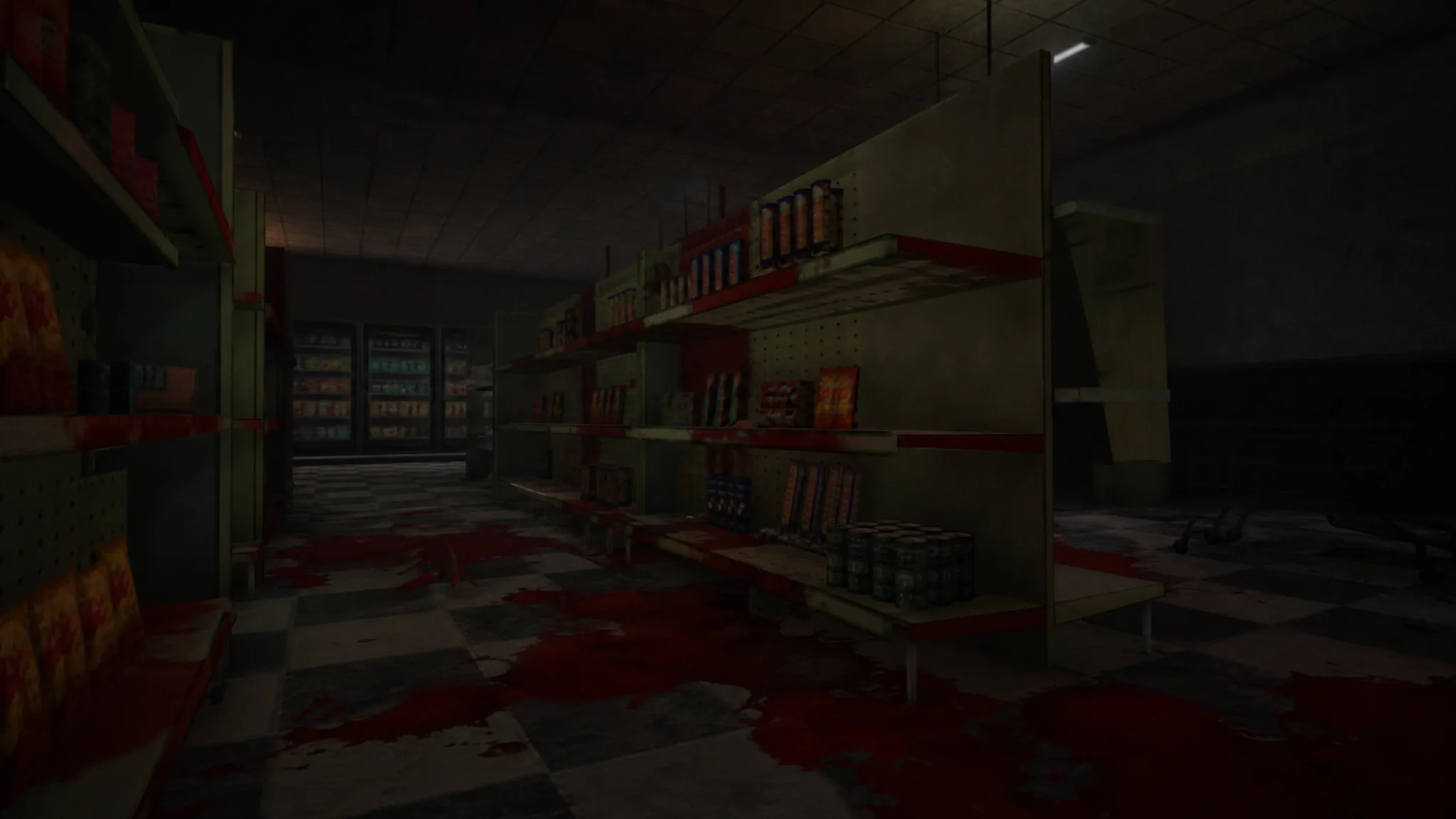
Your pet is the whole reason you take the night shift at the Midnight Mart. You adopt one at the very start of Shift At Midnight, it gets sick, and the vet bills push you into a dangerous gas-station job to pay for its care. Keeping it alive comes down to money management across the campaign, not combat or clever tricks.
Quick answer: Save enough personal funds to pay the $20 first treatment, the $40 medicine, and the $250 surgery. That is $310 total. You earn $130 in guaranteed wages across 13 nights, so you must sell about $1,800 of store goods to cover the rest through commission, then avoid calling Sheriff Clyde on night 12 to save both the pet and Clyde.
Every pet you can choose in Shift At Midnight
The adoption screen appears during the opening moments of the story, and you can swap your choice before the first night truly begins. None of the animals grants a bonus to income, cleaning, combat, or survival, so the pick is purely personal. Your selected pet and its name still show up later in the story text.
| Pet | Variants |
|---|---|
| Dog | Two options, a large dog and a small dog |
| Cat | One orange cat |
| Goose | One goose for players who want something unusual |
Because the costs and outcomes are identical no matter which you keep, there is no “best” pet to chase. Choose the one you want to look at for the whole run.
The three medical bills and when they hit
The pet stays healthy at first, then falls ill and needs treatment in stages. Every payment comes out of your personal funds, and none of it is reimbursed. The surgery notice is the big one, and you are warned about it after completing the tenth shift.
| Timing | Cost | Result |
|---|---|---|
| First day / tutorial | $20 | First treatment done, but more care is needed |
| End of the third night | $40 | Pet recovers and can join you at work; surgery still required |
| Night 13 | $250 | Surgery that decides whether the pet lives |
Paying the $40 bill lets the pet come to the store on later shifts, which is genuinely helpful when you are working alone. Do not pay for every optional bit of care, though, or you will not have enough left for the $250 surgery.
How much money you actually need
Add the three bills together and the target is $310. The base wage covers only part of that. You collect $10 in personal funds at the end of each night, and with 13 nights in the campaign that adds up to $130. The remaining $180 has to come from store commission.
Commission pays 10 percent of what you sell once you clear the store’s daily quota. To bank the extra $180, you need roughly $1,800 in total sales before the surgery deadline arrives. In practice that means treating customers as your main income and keeping the checkout moving.
| Source | Amount |
|---|---|
| Base wage ($10 × 13 nights) | $130 |
| 10% commission on ~$1,800 of sales | $180 |
| Total available | $310 |
| Total needed for all bills | $310 |
Note: shooting a real human customer docks your pay at the end of the shift, which directly eats into the surgery fund. When you are unsure whether someone is a doppelganger, it is safer to let them leave than to lose the money on a wrong call.
Personal funds and store money are separate
The game runs two wallets, and mixing them up is the most common way people fall short. Your personal funds pay the pet’s bills. The store balance pays for everything else you buy on the computer.
| Personal funds | Store balance |
|---|---|
| $20 medicine | Traps and weapons |
| $40 medicine | Ammunition and healing |
| $250 surgery | Stock, boards, and decorations |
Buying a shock trap or a firearm does not touch the surgery money, so there is no reason to skip essential defense to protect the pet fund. Skimping on gear only raises the odds of a failed shift, lost customers, and a smaller payout, which hurts the pet fund instead of helping it. Clearing the daily quota also does not guarantee your personal funds have reached the next bill, so track that balance separately.
What the pet does once it comes to work
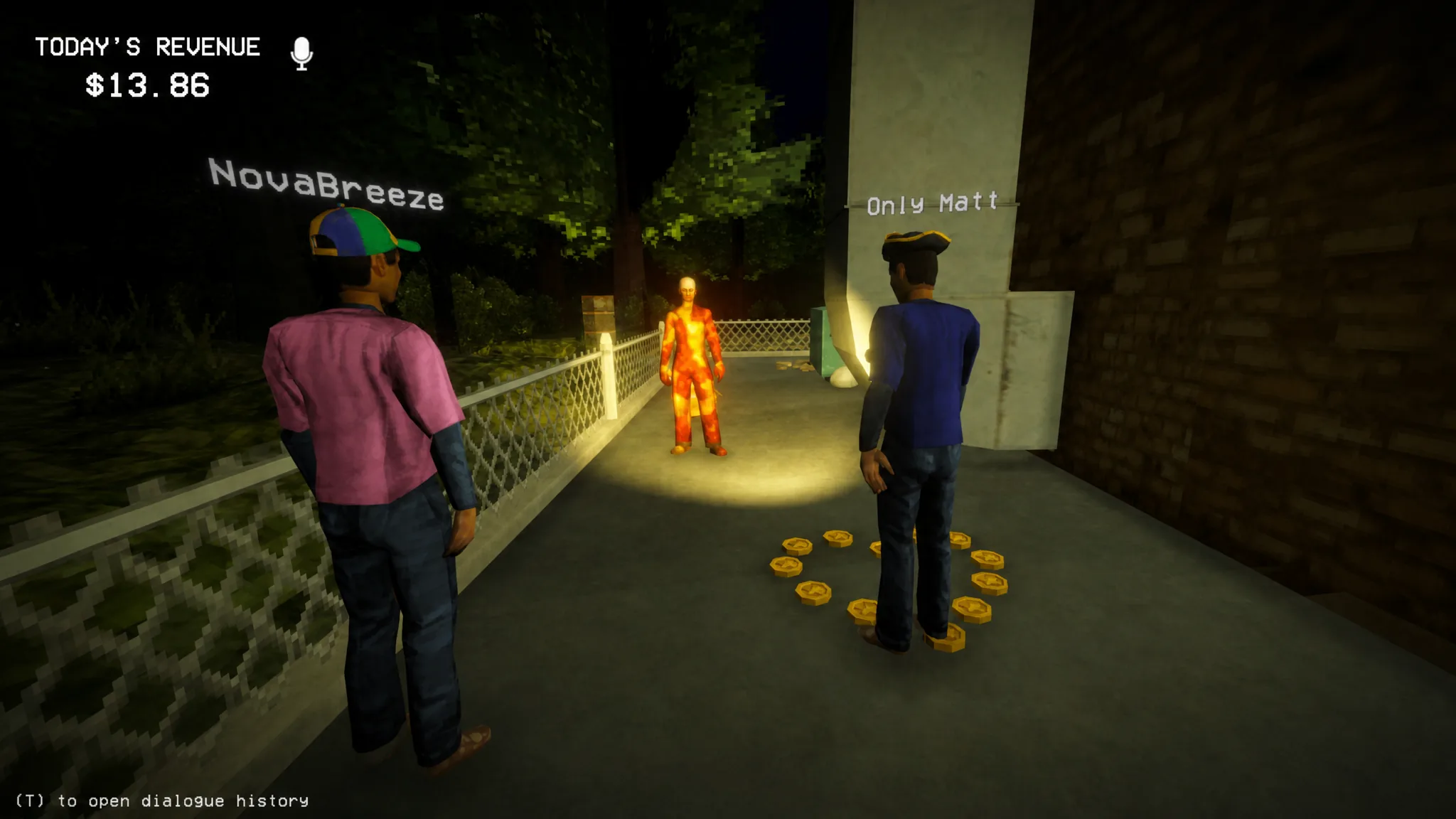
After the $40 treatment improves its condition, the pet can accompany you on later shifts. It wanders the store floor while you handle customers, and during quiet hours it will come over to help tidy up. In one run the goose approached and interacted with meat left on the floor, which lines up with the pet assisting with cleanup.
Do not rely on the pet as a worker, though. It does not clean on command, and it is not confirmed to fight entities, flag doppelgangers, or detect any of the special threats. Keep your trap lanes and retreat paths clear and handle any mess that blocks the till yourself.
How the money ties into the ending
Whether the pet survives depends on the surgery money and a single choice. On the twelfth night you can call Sheriff Clyde after the shift. The interaction between that call and your $250 balance produces three outcomes.
| Ending | Condition | Pet result |
|---|---|---|
| True Ending | Don’t call Clyde and finish with $250 or more | Pet and Clyde both survive |
| Grave Decision | Call Clyde | Pet survives, Clyde dies |
| Empty Home | Don’t call Clyde and finish below $250 | Pet dies, Clyde survives |
Skipping the call is not enough on its own. If you refuse to call Clyde but never reach $250, the vet cannot operate and you land in Empty Home. You also do not need the full amount the moment the choice appears, because the night 13 payout can still close a small gap before the vet checks your balance.
One warning for the best result. If Clyde visits and you accidentally kill him, you lose the option to call him beforehand and get locked out of the endings, so treat him carefully when he arrives. Play it safe with your money and your customers, keep the surgery fund topped up, and your companion walks out of the store with you.