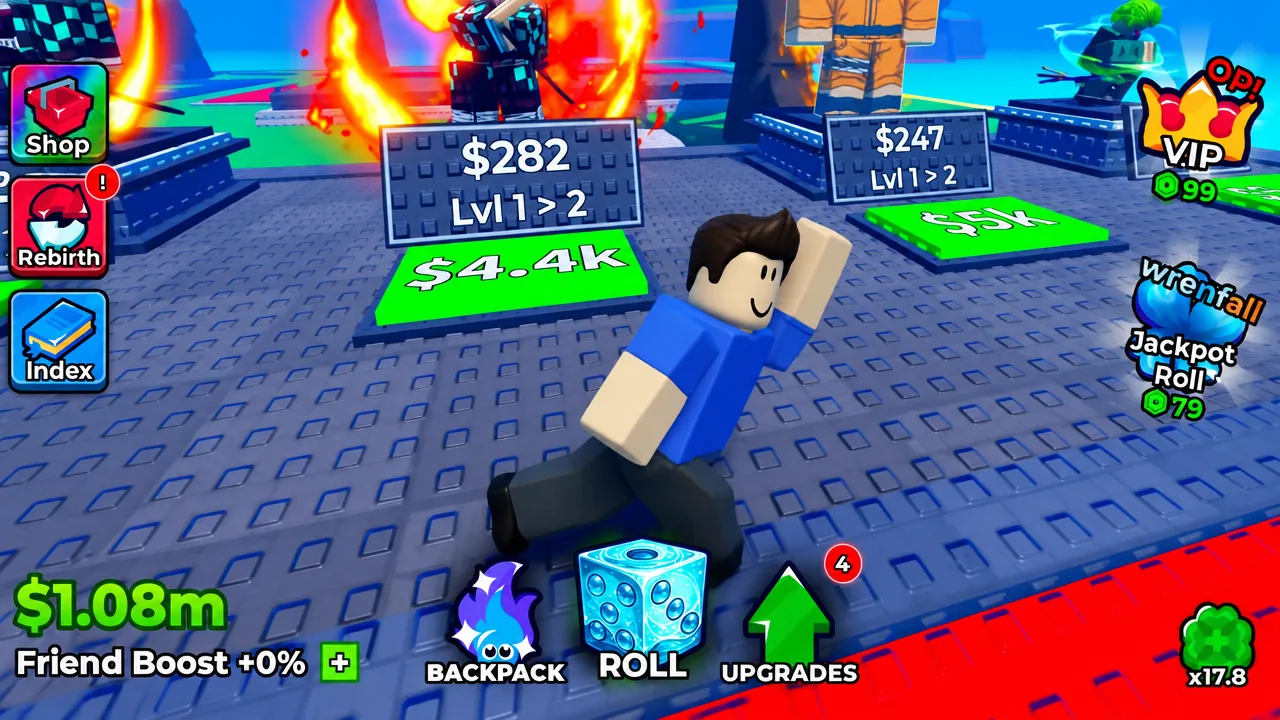
Anime Dice is an incremental simulator on Roblox from More & More Games, and its economy is simpler than the menus suggest. You roll dice for anime-style units, park those units on pedestals, and collect cash that keeps accumulating while you are logged out. Everything that feels slow in the early hours comes down to spending order, not luck.
Quick answer: Fill every pedestal on your plot, then put all early cash into Money and Luck upgrades and better dice before you level individual units, spend Trait Rerolls, or press Rebirth.
The roll, place, earn loop
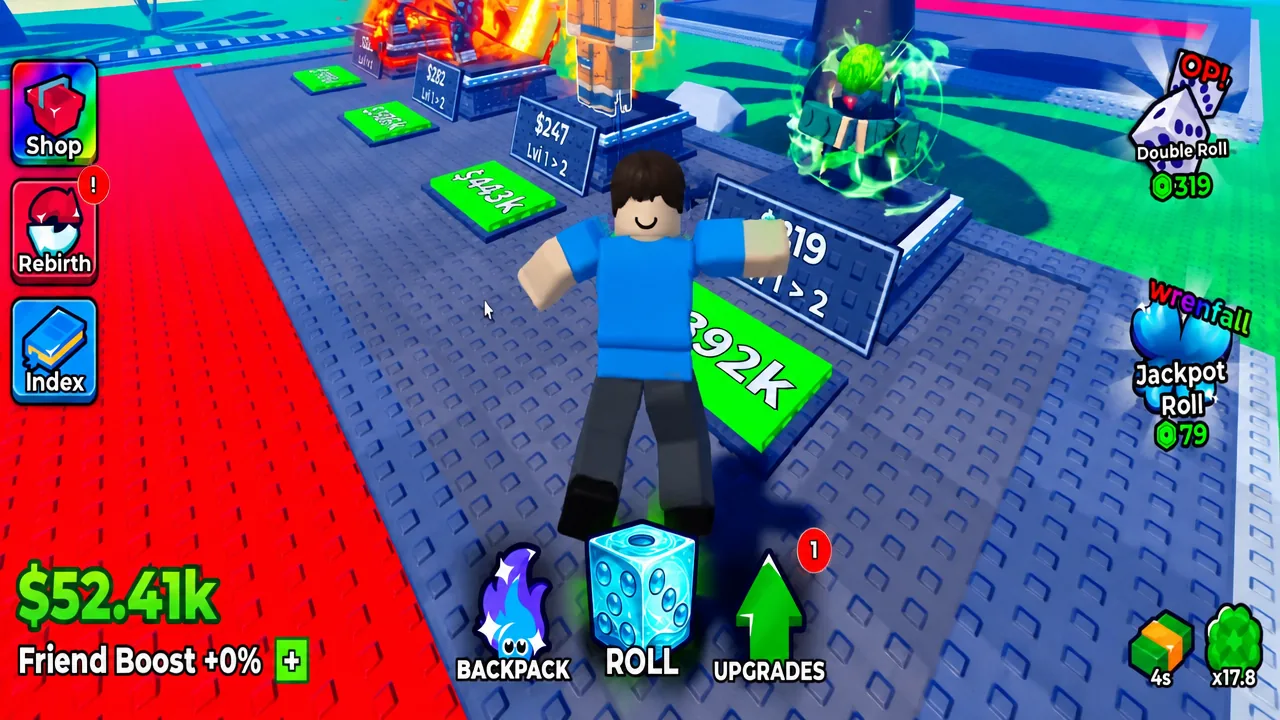
Each roll spends your die and reveals a unit. Rarity determines how much cash that unit prints once it is standing on a pedestal, and cash pays for dice upgrades that raise your luck. That is the whole engine.
The most common early mistake is leaving pedestals empty. An empty pad earns nothing, so place every unit you pull, including commons, until you have better ones to swap in. Income continues while you are offline, which makes a full plot at logout worth more than one showcase unit and four empty slots.
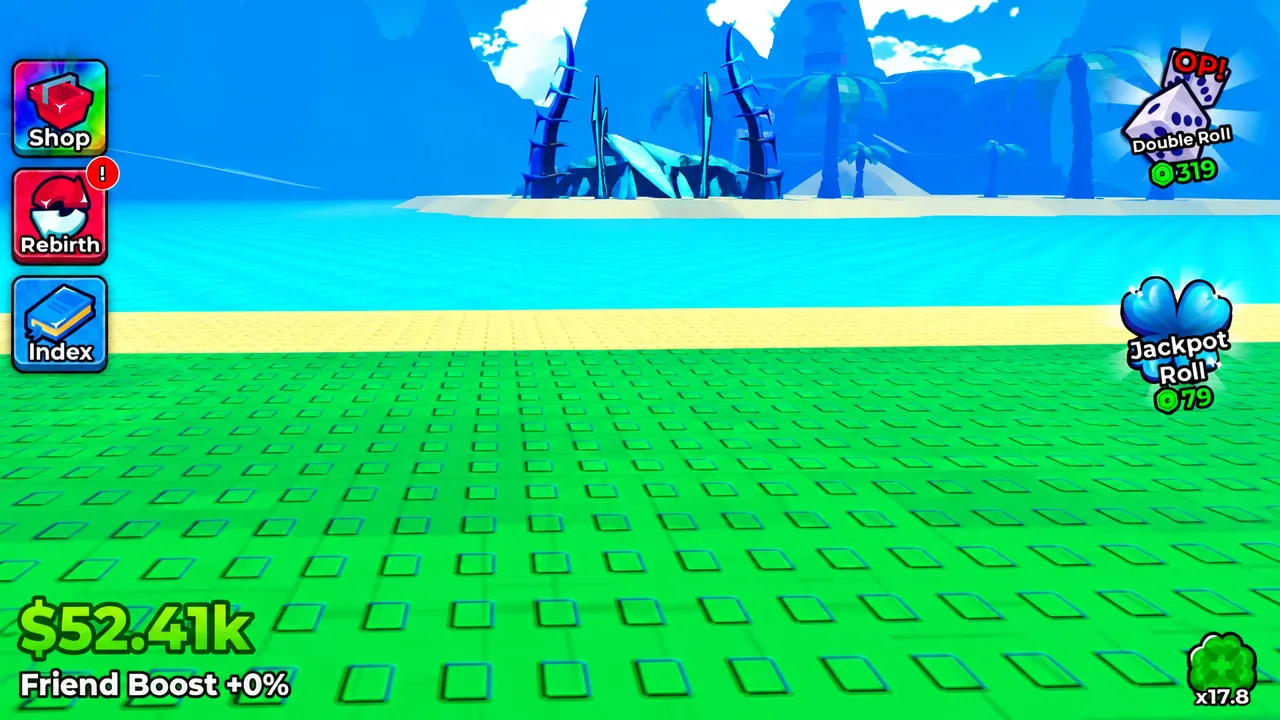
If your cash counter is frozen, it is almost always an unfilled pedestal or a plot that has not finished loading. Check the lower-left HUD after placing units to confirm the number is ticking up.
Upgrade priority: money and luck first
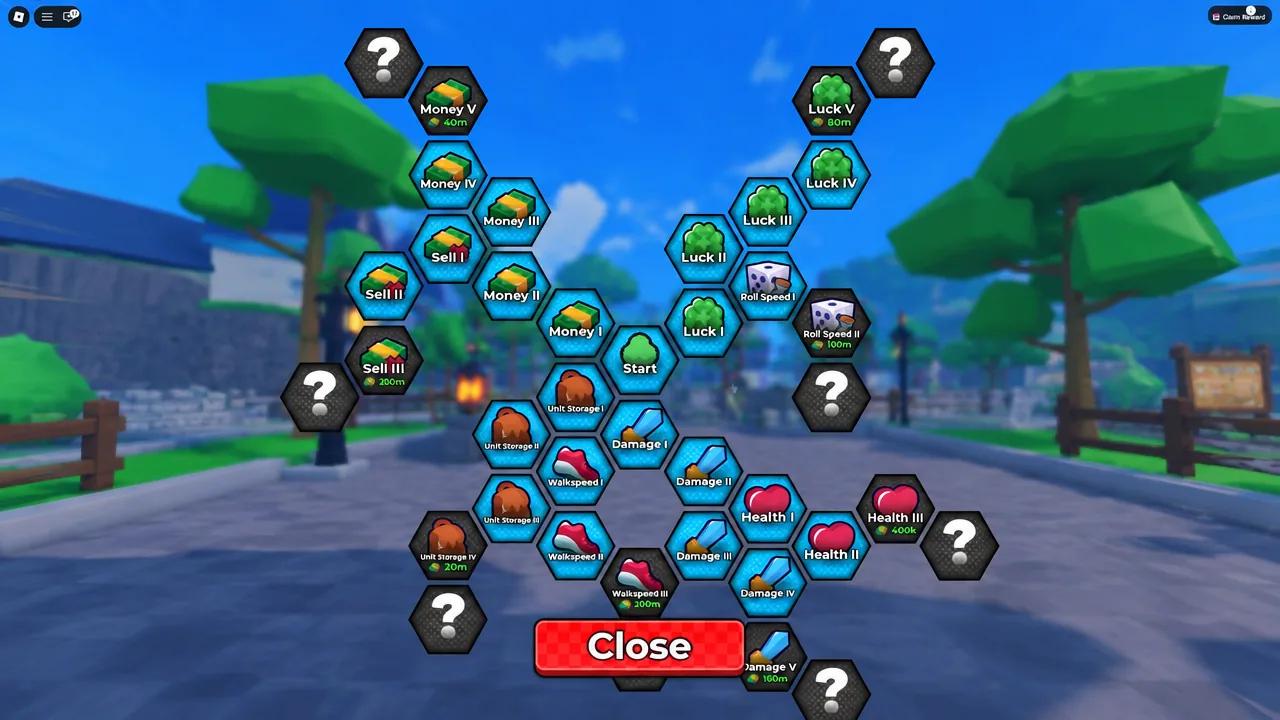
The upgrade tree offers several stat branches, and they are not equally useful at the start. Money raises what every placed unit earns, and Luck shifts the odds toward rarer pulls. Those two compound into each other, so they deserve nearly all of your early cash.
| Upgrade | When to buy it |
|---|---|
| Money | Immediately and continuously — it multiplies income you already have. |
| Luck | Alongside Money — it improves every roll you make from that point on. |
| Roll Speed | After Money and Luck are several levels deep. |
| Unit Storage | After Roll Speed, once selling trips interrupt your farming. |
| Damage and Health | Last, and only when you intend to push the Tower. |
Resist the urge to pour cash into leveling a weak starter unit. Money spent leveling a common you will replace in an hour is money that never reached a dice upgrade.
Dice tiers and luck multipliers
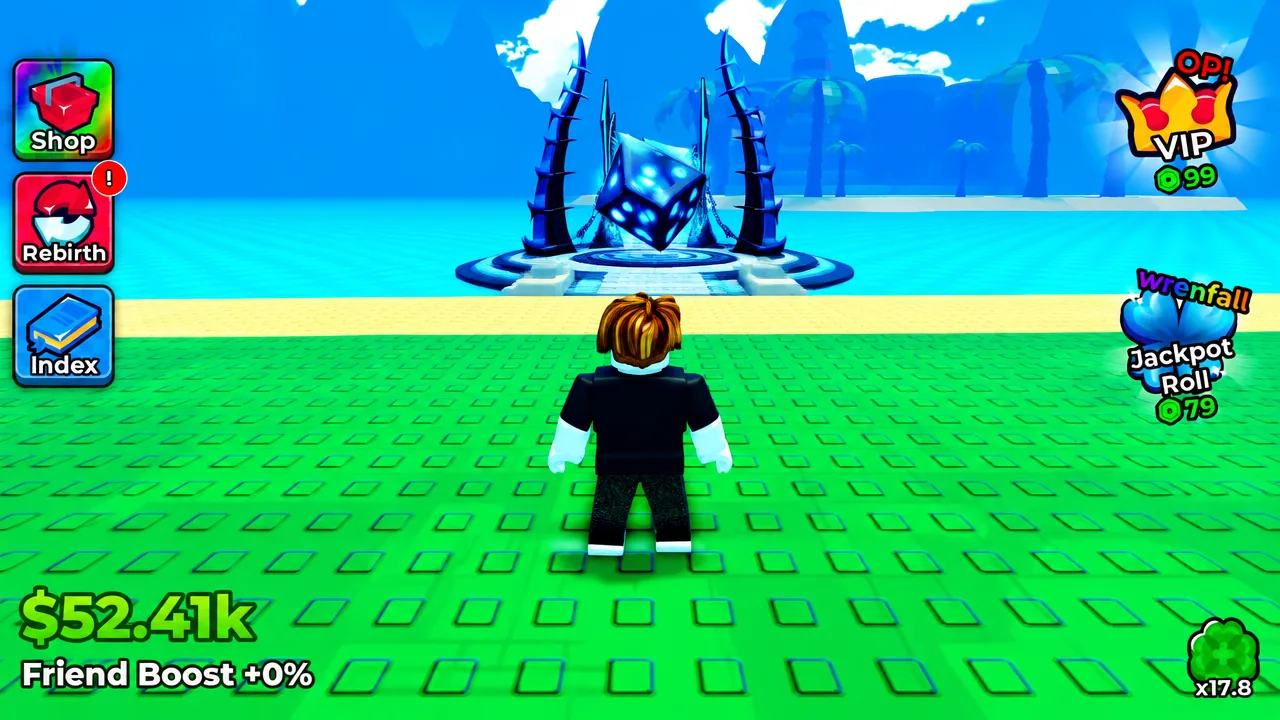
The Dice Shop sells progressively stronger dice, and each one carries a flat luck multiplier. Buying the next die up is the single biggest jump in pull quality available to you, which is why income upgrades come first — they are what pay for the die.
| Die | Luck |
|---|---|
| Nature | 20x |
| Lightning | 42x |
| Ice | 100x |
| Magma | 200x |
| Storm | 400x |
Storm, the 400x Epic die, costs 200M cash. Higher tiers including Shadow, Light, and Blood Moon sit above it, so once Storm is in hand you are saving for the next rung rather than spending cash on cosmetics or filler levels.
Save Lucky Spins until at least one or two luck nodes are bought and a better die is equipped. Spending them on a base die wastes the best rolls you get for free.
Unit grades and income multipliers
Grade is a separate multiplier layered on top of a unit’s rarity, and it is bought with Gems. The gap between the bottom and top of the scale is large enough that a mid-rarity unit at a high grade out-earns a rarer unit sitting at grade zero.
| Grade | Income multiplier |
|---|---|
| D | 1.1x |
| C | 1.2x |
| B | 1.6x |
| A | 3x |
| A+ | 4.5x |
| S | 7x |
| S+ | 10x |
| Z | 15x |
| Z+ | 25x |
Pick one keeper — your highest-earning unit — and pour Gems into its Grade rather than spreading them thin. Because Gems are slow to accumulate, splitting them across four units leaves you with four mediocre multipliers instead of one that matters.
Traits and mutations: what to reroll, what to keep
Traits and mutations are different systems and behave differently. A trait is a rollable modifier that a Trait Reroll will overwrite, so rerolling is only worth doing on a unit you plan to keep long term. A mutation is baked into the unit you pulled.
Mutations appear as variants such as Silver, Gold, Emerald, Diamond, Ruby, and Rainbow, along with the larger Huge and Titanic forms. Always open a unit before selling it. A low-rarity pull with a strong grade or a mutation can beat a plain higher-rarity unit, and selling it by reflex is the most expensive mistake in the game.
Hold Trait Rerolls until you have a unit you would still place after your next dice upgrade. Rerolling a common you will sell in twenty minutes burns a resource you cannot farm quickly.
Rebirth requirements and timing
Rebirth wipes your cash and hands back a permanent multiplier to both cash and luck. The requirements climb steeply, and each tier raises the multiplier by half a step.
| Tier | Cash required | Cash and luck multiplier |
|---|---|---|
| Rebirth 1 | $500k | 1x to 1.5x |
| Rebirth 2 | $5M | 1.5x to 2x |
| Rebirth 3 | $500M | 2x to 2.5x |
The timing rule is simple. Only rebirth when your current units can rebuild the lost cash quickly, which in practice means full pedestals, at least one strong earner, and upgrades that have started to feel expensive. Resetting before your plot is producing steadily just drops you into a slower version of the same first hour. Spend loose cash on upgrades before you press the button, since anything still in your wallet is gone.
Tower runs and when to buy damage and health
The Tower is the only part of Anime Dice that tests combat rather than income. You assemble a team and clear floors one at a time, and progress is gated by the Damage and Health upgrades you skipped earlier. Cursed Tower on Medium is a reasonable checkpoint once your economy is stable, with mid floors marking where an underleveled team stalls.
Treat the Tower as a side loop, not a replacement for farming. Farm until upgrades feel expensive, make an attempt, then put whatever you earn straight back into Money and Luck. Come back when your team has visibly grown rather than retrying the same floor.
Roll odds for notable units
Rarity is expressed as a one-in-X chance, and those numbers are what your dice luck is working against. A few common reference points from the roster:
| Unit | Odds |
|---|---|
| Zenitsa | 1 in 15 |
| Nezuka | 1 in 28 |
| Ichiga | 1 in 30 |
| Aizan | 1 in 60 |
| Krillan | 1 in 110 |
| Titanic Naruto | 1 in 200 |
The Index tracks what you have collected across the rarity bands. It is worth opening once so you know it exists, but completing entries is a long-run goal rather than something to chase in your first sessions.
A fast progression route from new plot to stable income
Codes
| Code | Rewards |
|---|---|
| 20KCCU | 2 Lucky Spins, 10 Trait Rerolls, 10 Gems |
| 10KCCU | 2 Lucky Spins, 10 Trait Rerolls, 7 Gems |
| UPDATE4 | 2 Lucky Spins, 10 Trait Rerolls, 10 Tickets, 3 Gems |
| UPDATE3 | 2 Lucky Spins, 7 Trait Rerolls, 7 Gems |
| 5KCCU | 2 Lucky Spins, 5 Trait Rerolls, 5 Gems |
| 1KCCU | 2 Lucky Spins, 5 Trait Rerolls, 5 Gems |
| UPDATE2 | 2 Lucky Spins, 5 Trait Rerolls, 5 Gems |
| UPDATE1 | 2 Lucky Spins, 3 Trait Rerolls, 3 Gems |
| RELEASE | 1 Lucky Spin, 2 Trait Rerolls, 2 Gems |
To redeem, launch Anime Dice, open the Shop on the left of the screen, scroll to the Codes box at the bottom, type the code exactly as written, and press Redeem.
Once your plot is full, your die is a tier or two above the starter, and one keeper is carrying a real Grade multiplier, the game stops being a grind and starts snowballing on its own. From there the decisions get narrower — which unit to grade next, and when the next rebirth pays for itself.