BloomKeeper is a real-time tactical adventure from Montpellier-based studio Resonance Interactive, and its launch trailer lays out the whole pitch in about 80 seconds. You play a horned, moss-draped Guardian leading a colony of tiny plant creatures called Pouics across Hedera, an island that has burned down to ash. Grass spreads where they walk, water returns to dry basins, and corruption pushes back the entire time.
Quick answer: BloomKeeper launches on Steam on September 16, 2026. You play the Guardian, guiding fragile Pouics across the ruined island of Hedera, either solo or in co-op with up to four players.
BloomKeeper release date and platform
Resonance Interactive confirmed the date back in May, and it has not moved. The game arrives on Steam on September 16, 2026, developed and published by the studio itself, with support credited to the CNC and the Région Occitanie.
| Detail | Information |
|---|---|
| Release date | September 16, 2026 |
| Platform | Steam (PC) |
| Developer and publisher | Resonance Interactive |
| Players | Solo, or co-op up to 4 |
| Genre | Real-time tactical adventure |
| ESRB rating | Everyone |
What the launch trailer shows
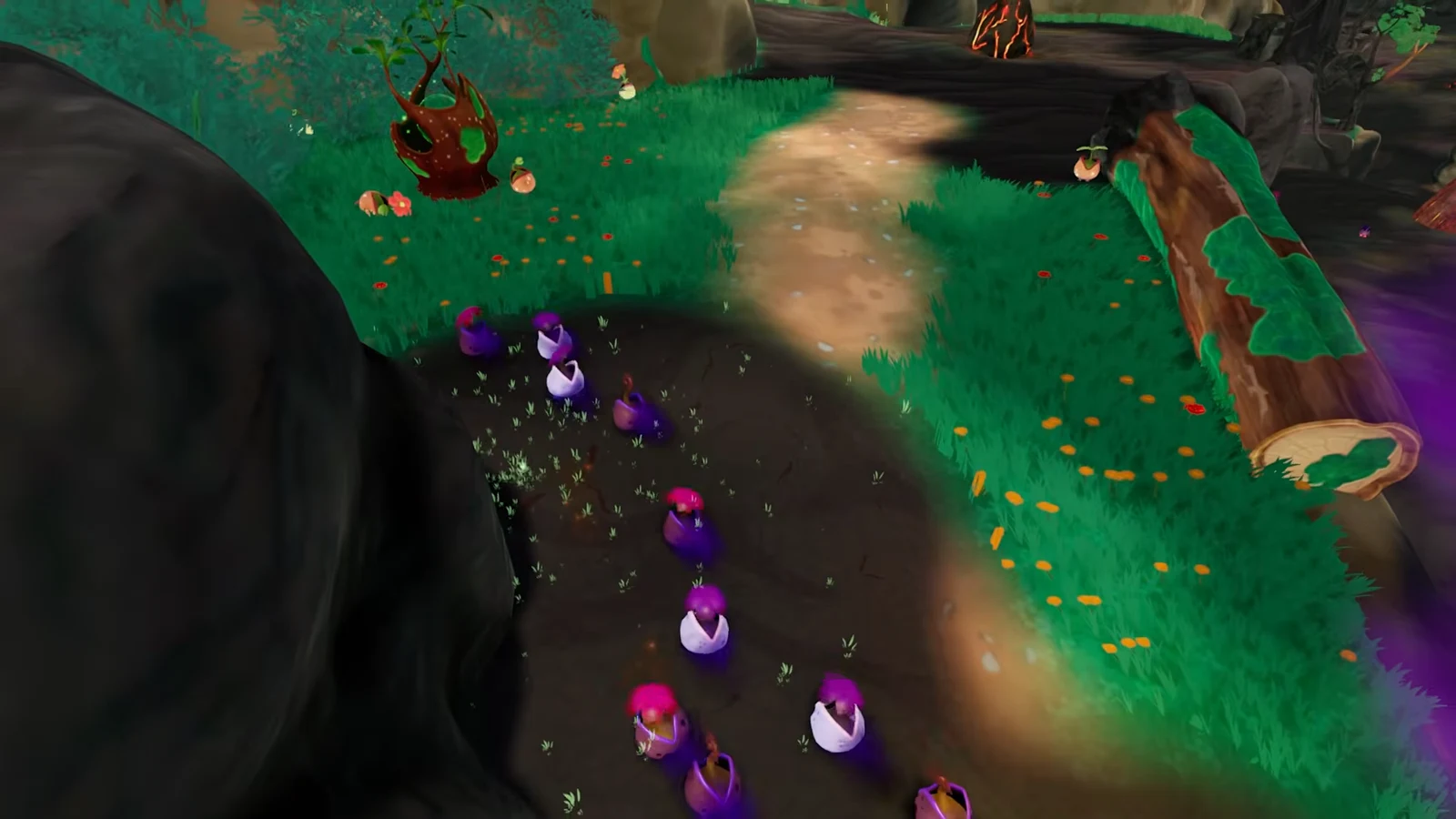
The trailer opens on the Guardian leading a swarm of plant creatures through a green forest before cutting straight to combat in a lava-lit area. From there it moves fast: Pouics are herded down dark slopes, sent to scrub purple rot off a corrupted bulb until it turns green again, and pointed at orange slime coating a rocky canyon until white flowers push through.
Smaller beats fill in the moment-to-moment loop. The Guardian shakes a glowing tree to knock items loose, digs at a marked dirt patch, rolls through a cavern to cover ground quickly, and stands on a stone pedestal ringed by green fireflies. The closing stretch stacks combat clips together before a giant blue flower blooms on a pedestal, and the final card reads “AVAILABLE NOW ON STEAM.”
How the Pouics work
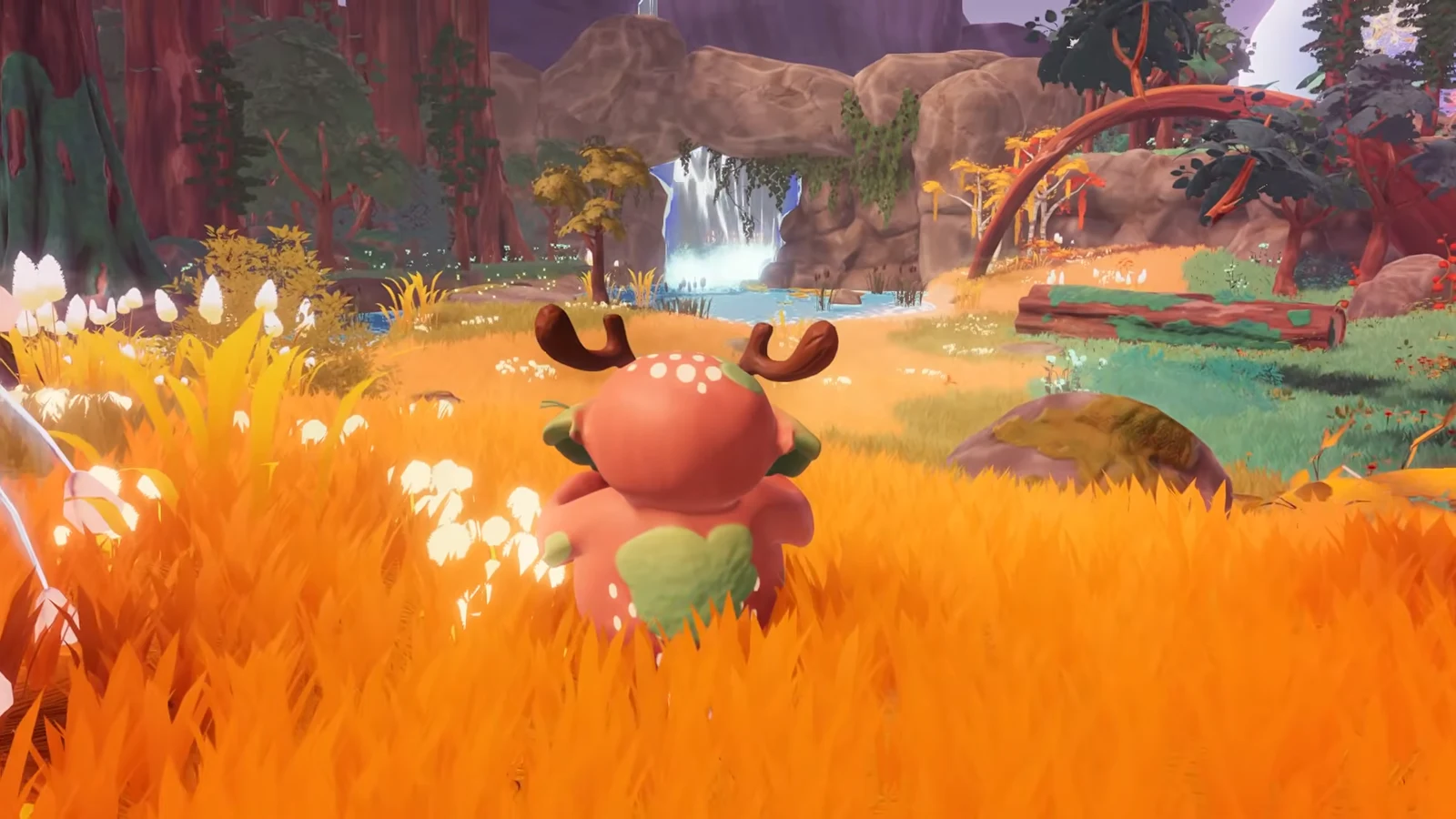
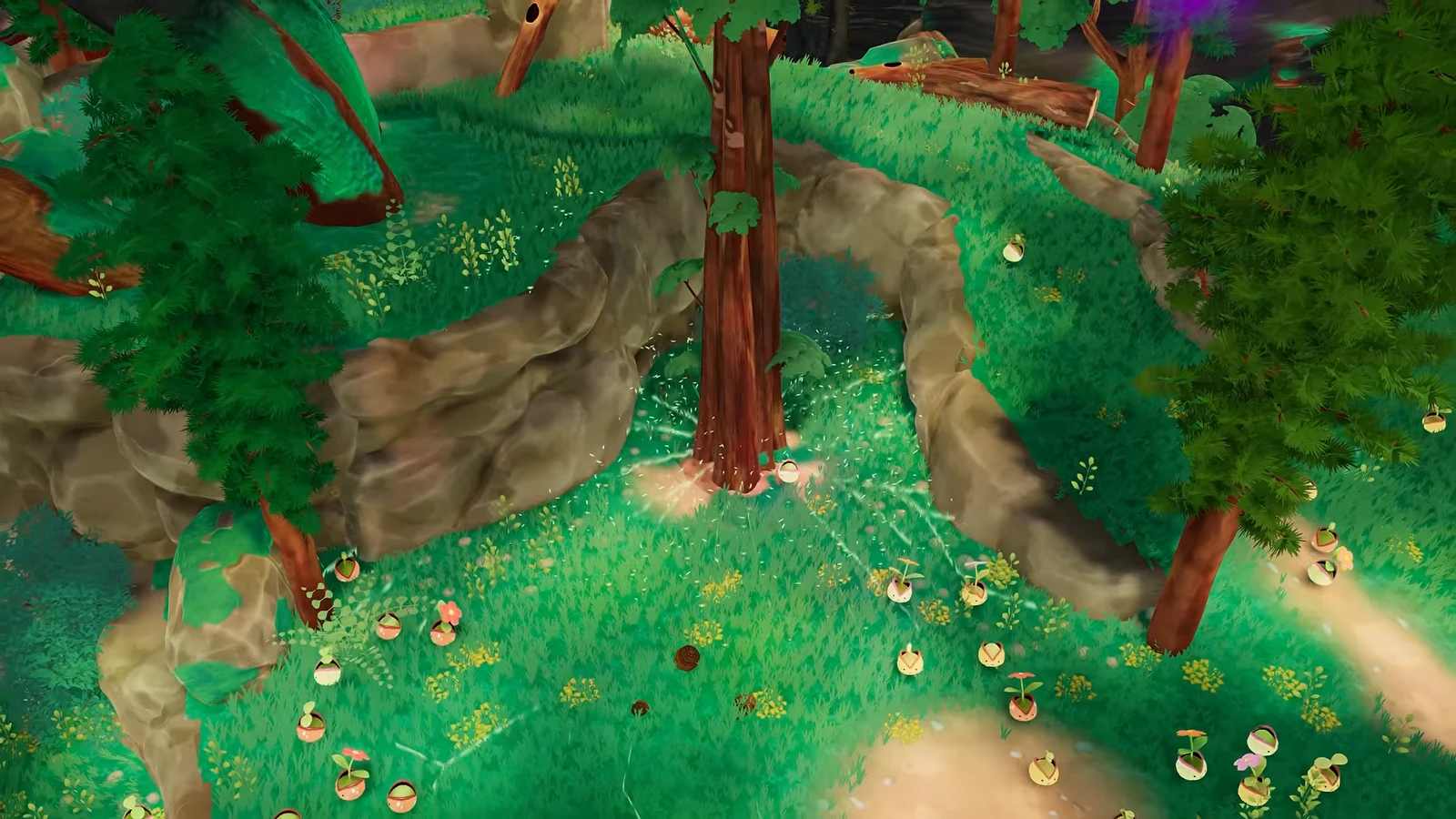
The Pouics are the engine of everything. They are small, naive, flower-topped creatures that come in several colors, and they do the actual work of restoring the land. Sending them into a stone basin sets off a geyser that refills a dried lake. Pointing them at a barren trunk makes them channel light into it until the tree shoots up and spreads grass across the valley. Routing them into plant receptacles unlocks sprout nodes that widen your green territory.
They are also fragile and easy to scatter. Gathering them, keeping the group together, and steering them past cliffs, lakes, and hazards is the core skill. One Pouic can be enough to open a path forward; a large colony speeds everything up but goes sideways the moment you stop paying attention.
Scorched zones, corruption, and Malpouics
Hedera does not sit still while you fix it. Scorched zones keep spreading through every level, and the pressure ramps up the closer you get to the source of the blight. That forces a running decision in each region: push ahead with a big colony and risk losing control of it, or secure ground piece by piece so the ash cannot take back what you already restored.
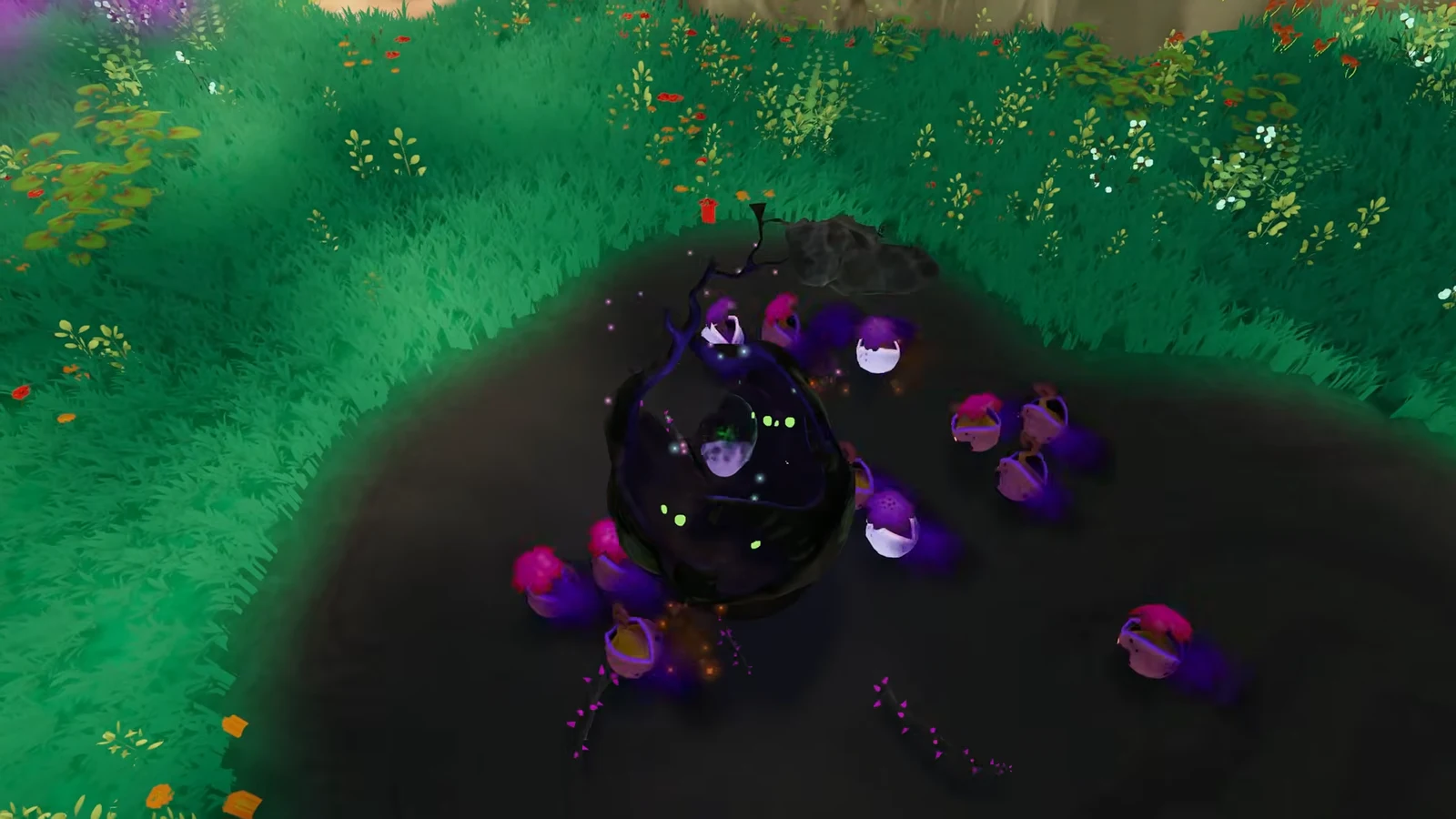
Losing Pouics costs you more than progress. Corrupted ones turn into Malpouics, hostile creatures that widen the scorched zones and raise the threat level across the map. The further the world decays, the harder the rest of the run becomes, which ties colony safety, protecting life sources, and containing corruption into one problem rather than three.
- Scorched zones expand continuously and intensify near the heart of the corruption.
- Burning magma rocks undo foliage coverage until Pouics neutralize them.
- Purple corrupted creatures reclaim cleansed soil and revert sprout nodes.
- Terrain itself can slow the spread and turn restored areas into lasting sanctuaries.
Because the spread reacts to how you progress, the same level does not play out identically twice. Route choice and how aggressively you reclaim ground change the shape of the run.
Solo play and four-player co-op
BloomKeeper supports solo play or co-op for up to four players. Alone, it reads as a quieter, more deliberate run where every movement of the colony is on you. With others, it becomes a coordination problem, with players splitting attention across fronts and agreeing on what to secure next.
The trailer’s multiplayer beat shows several Guardians hopping across glowing mushroom platforms in a cavern under the text “Play solo or with Friends.” In the hub area, portals labeled “Open Game to Friends” and “Join a Friend’s Game” handle the session setup, with a dandelion flower nearby marked “World Map” for picking your next island.
Hedera’s biomes and traversal
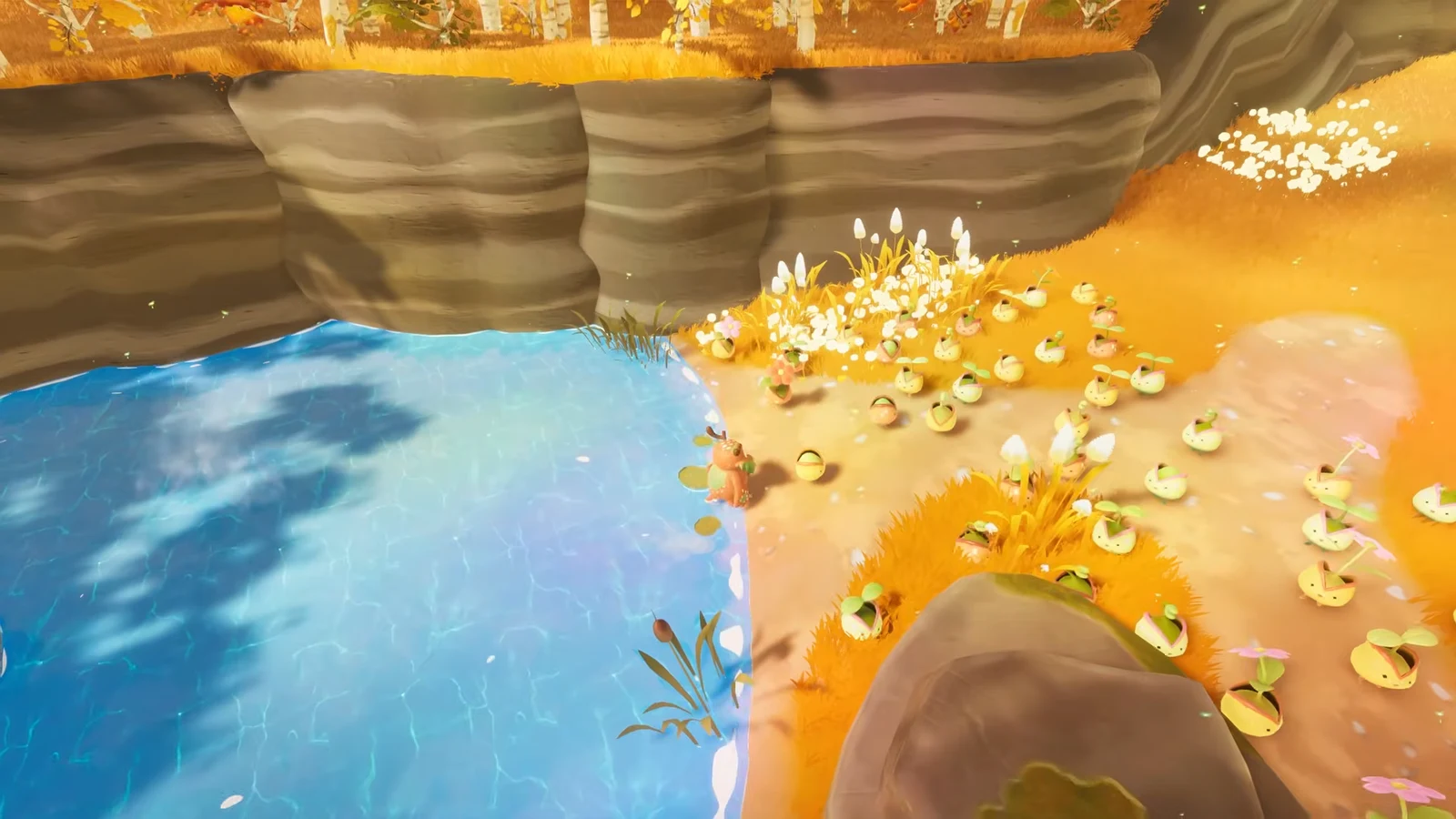
Hedera is split into distinct regions rather than one continuous map, and you fly between islands on a floating dandelion seed selected from a world map. The trailer’s panoramic stretch runs through a thick forest canopy, autumn valleys and canyons, and caves lit by glowing mushrooms, alongside the blue swamp and lava-touched zones seen earlier.
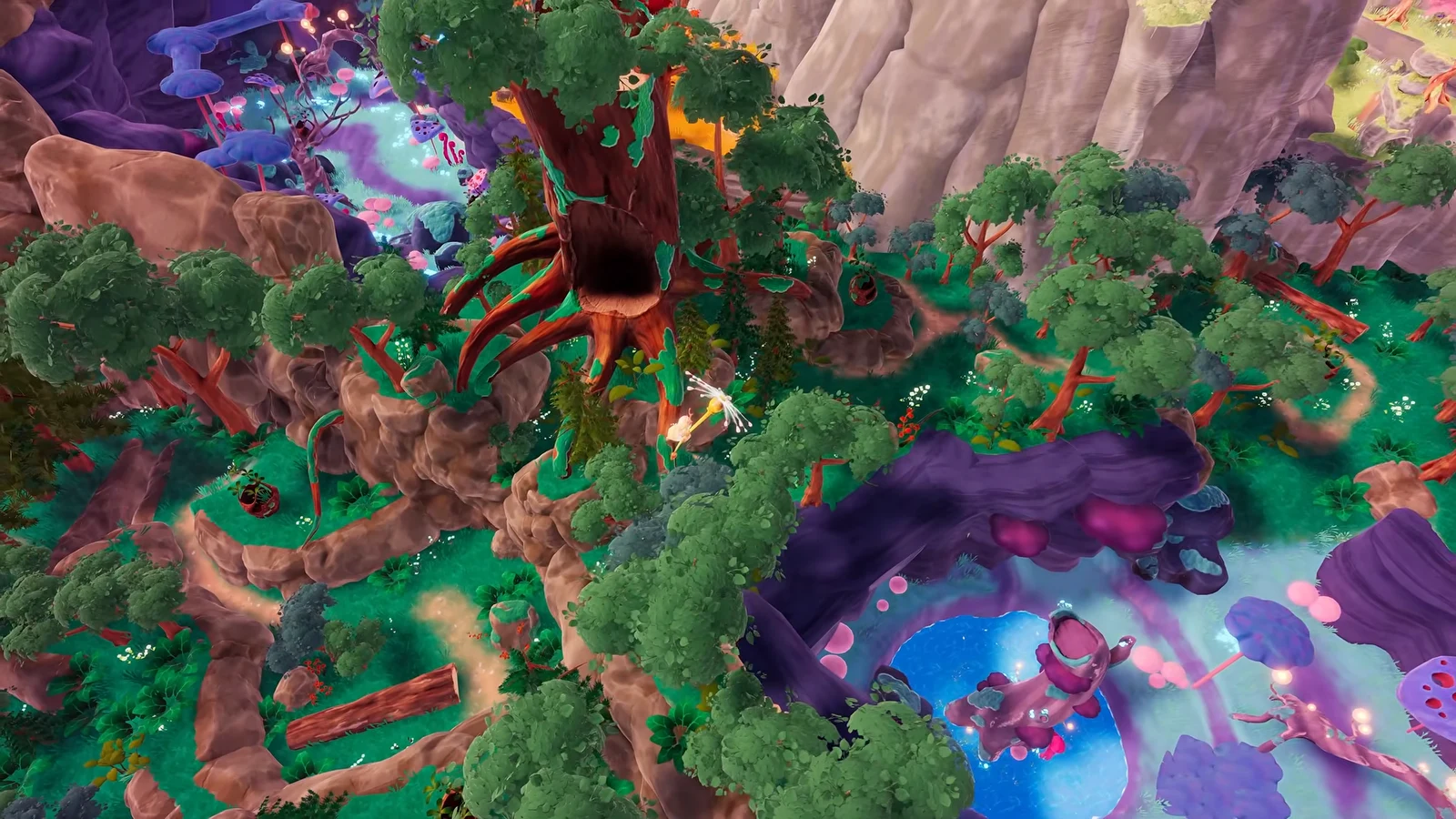
Movement is simple by design. You walk with WASD, roll to cover slopes and cavern floors quickly, and push Pouics around with a click to herd them. Interactive objects are marked with glowing green rings, minion movement leaves green particle trails, and purple smoke flags corrupted ground, so the screen tells you what is safe and what is not without a menu.
How to know a level is finished
Each stage ends at a central corrupted stone. You surround it with Pouics, cleanse the blight off it, then press Space to interact. The confirmation is unmistakable: a giant glowing flower blooms out of the pedestal, the surrounding ground finishes turning green, and the stage completes, returning you to the world map to pick the next island.
Try the BloomKeeper demo on Steam
A demo has been available on Steam since the release date announcement, covering the opening glade plus a couple of forest stages with progressively heavier corruption. It is the fastest way to see whether the herding and territory-defense loop clicks for you before the full game arrives.
Creative director Valentin Livi framed the studio’s goal as making restoration something you have to work for rather than something that just happens around you. That tension is the whole game: every step forward greens a little more of Hedera, and every slip hands some of it back to the ash.