
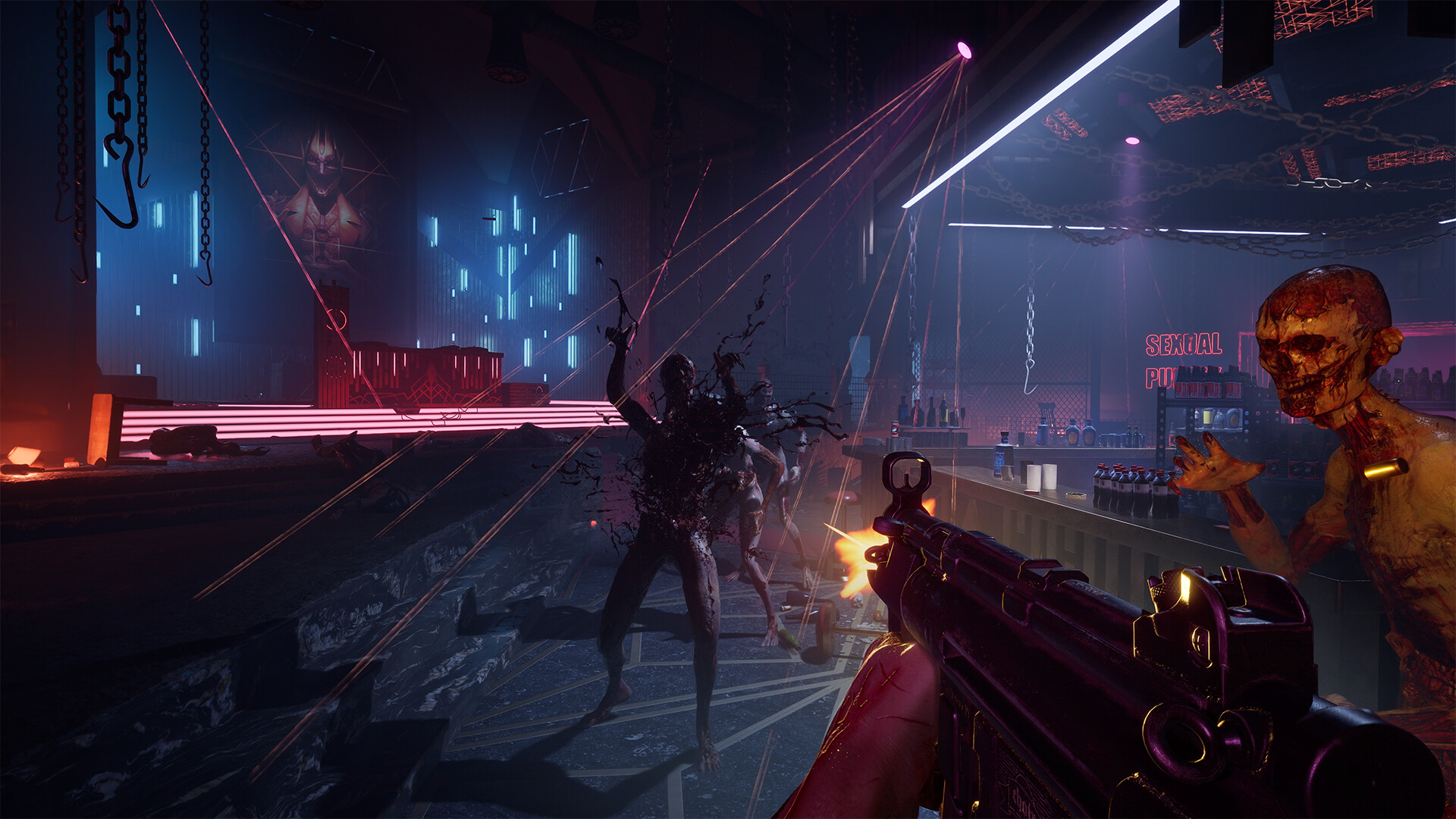
Clive Barker’s Hellraiser: Revival is a single-player, first-person survival horror game with one linear campaign and no multiplayer. You play Aidan Lynch, a former biker fighting through a cult to pull his girlfriend Sunny out of the Cenobites’ Labyrinth, and your total playtime comes down to how much you explore, how fast you solve puzzles, and whether you chase every collectible and achievement.
Quick answer: A normal-difficulty run to the credits takes about 8 to 15 hours, most players landing near 8 to 10. A full 100% run on the hardest setting, with every achievement and collectible, runs 30 to 35 hours.
Hellraiser: Revival completion times by playstyle
Your finish time is driven chiefly by room-search habits and the time puzzles or bosses consume. The quickest route through the campaign is to follow its main objectives. Optional searches for crafting materials, ammo, and lore substantially extend the run; a player who checks everything may spend close to twice as long as one taking a direct route.
| Playstyle | Estimated time |
|---|---|
| Main story, light exploration | 8–10 hours |
| Main story, thorough exploration | 12–15 hours |
| Rushed replay (known routes, skipped cutscenes) | 5–6 hours |
| Collectibles, upgrades, and safes | ~15–20 hours |
| Full 100% (hardest difficulty + all achievements) | 30–35 hours |
Treat these as estimates, not promises. Higher difficulty stretches every figure: resources get tighter, bosses hit harder and may need repeated attempts, and running dry on ammo in the Labyrinth forces you into stealth.
Standard run on normal difficulty
Playing on normal with the single goal of reaching the credits, most people finish in roughly 8 to 10 hours. Spend a lot of time investigating every area and that can climb toward 15. The estimate assumes you give puzzles a reasonable amount of thought and don’t stall out on a boss.
A substantial share of the duration goes toward finding your way through each setting, tracking down special keys and concealed mechanisms, and figuring out what opens unusual doors. Fights add further delays; at tougher difficulty levels, tight supplies can force repeated attempts at an encounter before a viable tactic emerges.
You know the run is over when the epilogue hands you the final decision and the credits roll.
Rushed replay time
Knowing the routes and puzzle solutions cuts a second run down hard. A focused replay takes 5 to 6 hours, and skipping cutscenes and optional fights trims it further.
To keep it short, stick to mandatory objectives, skip side rooms, and slip past optional encounters. This only works well after you’ve cleared the game once. Rushing a first playthrough risks missing ammo and upgrades that make later sections much easier.
All chapters and main objectives
Numbered chapter titles never appear on screen. Instead, the narrative carries Aidan through successive objectives and locations. To track campaign progress, divide it into a prologue, a series of chapters focused on securing hearts for Sunny, and an epilogue. The objectives reveal plot developments, so read on only if minor spoilers are acceptable.
| Stage | Main objectives |
|---|---|
| Prologue | Find Sunny |
| Chapter 1 | Escape the cult |
| Chapter 2 | Take back the Genesis Configuration; escape Charlotte |
| Chapter 3 | Free Sunny’s soul; exit the Labyrinth |
| Chapter 4 | Hunt Charlotte, open the gate, claim her heart, give it to Sunny |
| Chapter 5 | Claim the Sister of Mercy’s heart and give it to Sunny |
| Chapter 6 | Hunt Marlow, claim his heart, and give it to Sunny |
| Epilogue | Return to Sunny and make your choice |
Time is not spread evenly. The early stretches are tight and puzzle-driven, while the later hunts for Charlotte, the Sister of Mercy, and Marlow open into larger combat arenas with more room to explore. That pacing is why a careful player can almost double a straight run.
Difficulty settings and their effect on playtime
Four difficulty settings are available from the start of a new playthrough. None of the achievements require finishing on a specific setting, so the choice is purely about challenge and how long you want the run to take.
- Easy — story-focused, with enemies that offer little resistance and no heavy resource management.
- Normal — the balanced setting, best for newcomers.
- Hard — tougher enemies, limited save locations, and autosaves disabled entirely.
- Hellraiser — merciless enemies, more of them, and fewer resources. Saving is locked behind Save Tokens, and the setting cannot be changed once the playthrough begins.
Hellraiser takes substantially longer than the other difficulty settings: without autosaves and with manual saves in short supply, it requires a slower, more cautious approach.
What a 100% run requires
A completionist run means clearing everything and beating the game on its highest difficulty. There are 69 achievements, and nearly all are obtainable in a single playthrough, since none require a timed challenge or the secret difficulty that unlocks after your first clear. To earn the full set, you need to:
- Collect every lore document and voice recording across the chapters.
- Identify every code needed to unlock the safes and lockers.
- Collect all weapon upgrades and tool blueprints, even the ones hidden especially well.
- In the Labyrinth sections, find all pillars that raise maximum health as well as every Suffering pillar.
- Finish the game on its highest difficulty setting.
Most achievements are uncomplicated, though a few require specific combat feats—for instance, eliminating three enemies with one telekinetically thrown object—or completing an area undetected. Expect these to take several attempts. Lore pages and voice recordings are the only true collectibles; gathering the complete set grants nothing beyond the entries themselves.
If you skip the hardest difficulty, a run that opens every safe and locker, upgrades weapons with found parts, and gathers the collectibles sits closer to 15 to 20 hours. The jump to 30 to 35 comes almost entirely from the hardest-difficulty requirement and the combat achievements.
Review the achievement requirements before beginning. Some are much easier to arrange during your initial run than to pursue later.
Endings and replay value
There are two endings, decided by one choice in the epilogue when you either accept or deny the Cenobites’ offer. Stay with the Merchant to keep Aidan human and earn Human After All. Side with the Cenobites by choosing Deep Throat to earn Experience Beyond Limits.
You can view both endings without completing the campaign again. Load a save from immediately before the decision, and the alternate ending takes only minutes to reach. No earlier events branch into different paths, so every playthrough follows the same course until that choice.
Beyond raising the difficulty, replaying offers little incentive. There is no New Game Plus or additional mode once the credits roll. The Digital Deluxe edition includes an extensive art book and a complete 300-page novella; both are exclusive to Deluxe owners and do not alter the campaign or add playtime. Most players will make one run, with the completionist checklist providing the main reason to spend longer in the game.