Maximizing your screen real estate can greatly enhance your productivity and viewing experience by reducing distractions and focusing on the content at hand. Whether you’re surfing the internet, organizing files, or immersing yourself in multimedia, knowing how to enter full-screen mode is essential.
Using the F11 key to enter full-screen mode
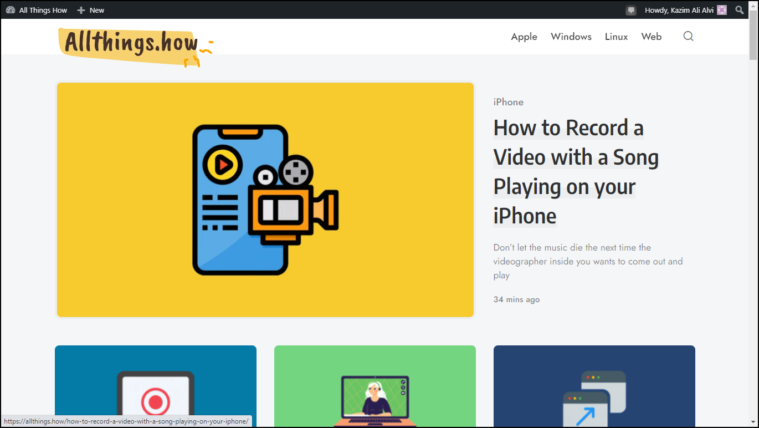
One of the simplest ways to switch to full-screen mode in many applications is by pressing the F11 key. This universal shortcut works in most web browsers like Google Chrome, Microsoft Edge, Firefox, and Opera, as well as in Windows Explorer.
When you press F11 in a browser, the current tab expands to fill the entire screen, hiding the toolbar, address bar, and taskbar, allowing you to focus solely on the web content.
In Windows Explorer, pressing F11 expands the file window to full screen, hiding the address bar and taskbar, providing a clearer view of your files and folders.
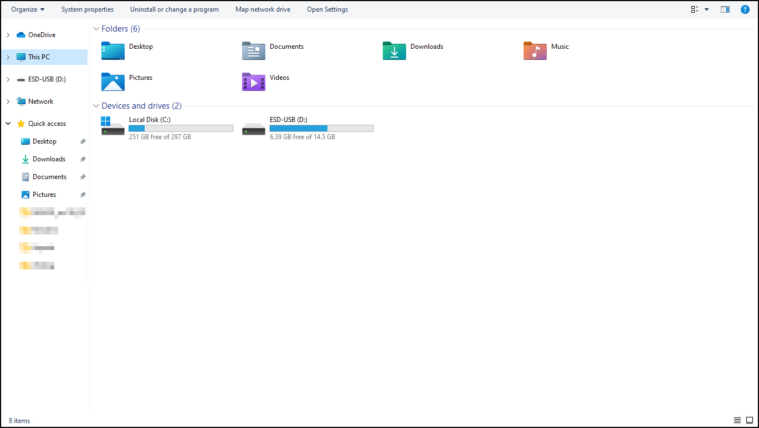
To exit the full-screen mode in both browsers and Windows Explorer, simply press the F11 key again.
Entering full screen through browser menus
If you prefer using mouse clicks over keyboard shortcuts, you can enter full-screen mode via the browser’s menu. We’ll use Google Chrome as an example.
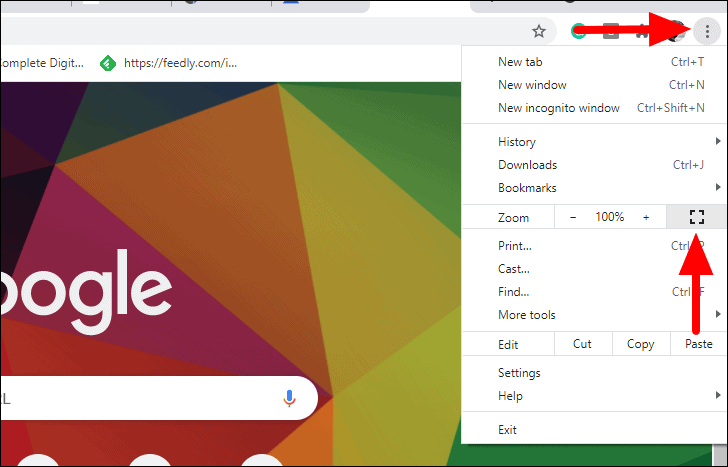
To exit full-screen mode, you can move your cursor to the top of the screen to reveal the browser’s toolbar and click the ‘Restore’ icon, or simply press the F11 key.
Using Windows + Shift + Enter for video streaming apps
For certain applications like Amazon Prime Video and Netflix, you can enter full-screen mode even while browsing through the app, not just when playing videos.
This keyboard shortcut toggles full-screen mode, hiding the title bar and taskbar, and providing an immersive browsing experience.
To exit full-screen mode, press Windows + Shift + Enter again.
Full-screen mode in Microsoft Office
In Microsoft Office applications like Word and Excel, full-screen mode allows you to focus on your document by hiding the ribbon and taskbar. Here’s how to enter full-screen mode.
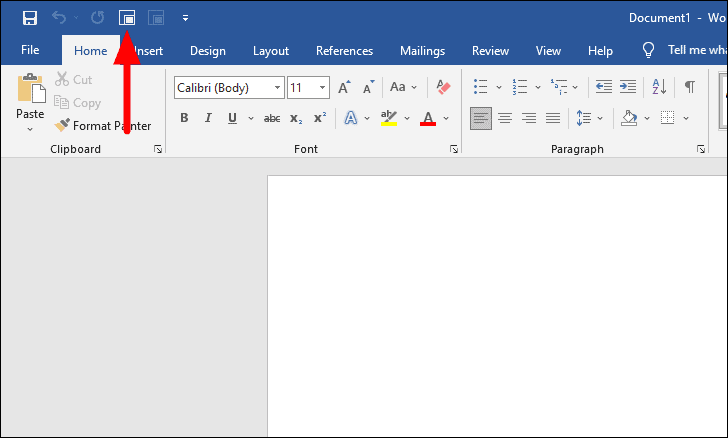
If this shortcut doesn’t work, you may need to add the ‘Toggle Full Screen View’ command to the Quick Access Toolbar.
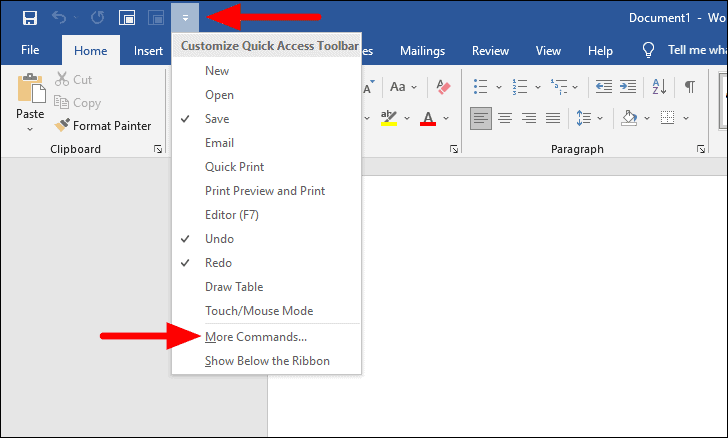
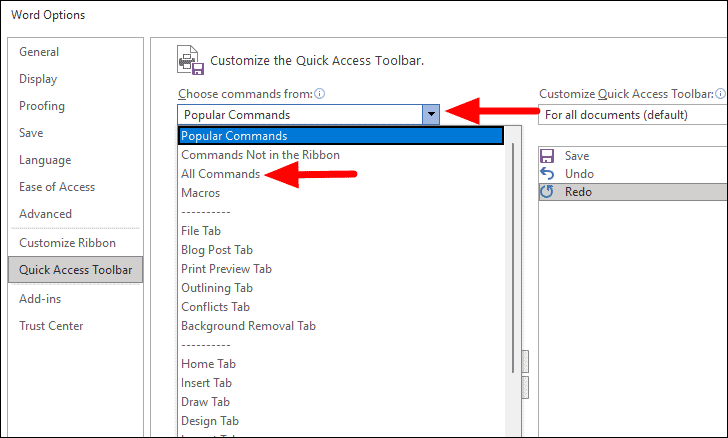
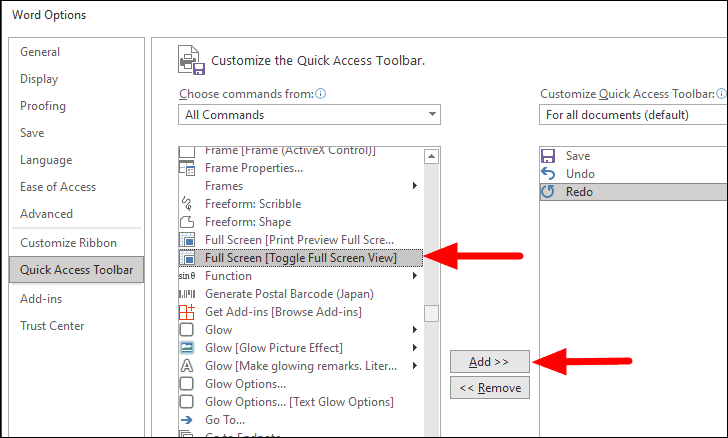
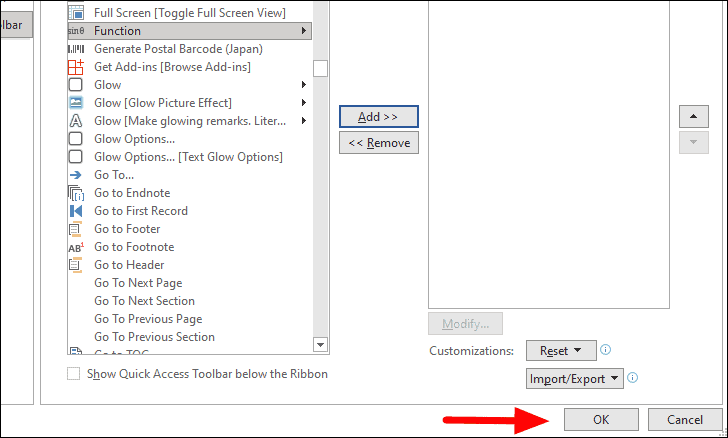
Now, you can click the ‘Toggle Full Screen View’ icon in the Quick Access Toolbar to enter full-screen mode.
Note that in Microsoft Office, the Windows taskbar may still be visible. To hide it for a complete full-screen experience, you can adjust the taskbar settings.
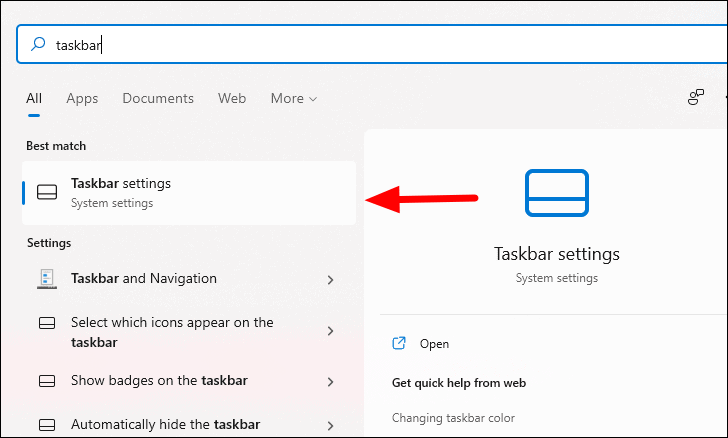
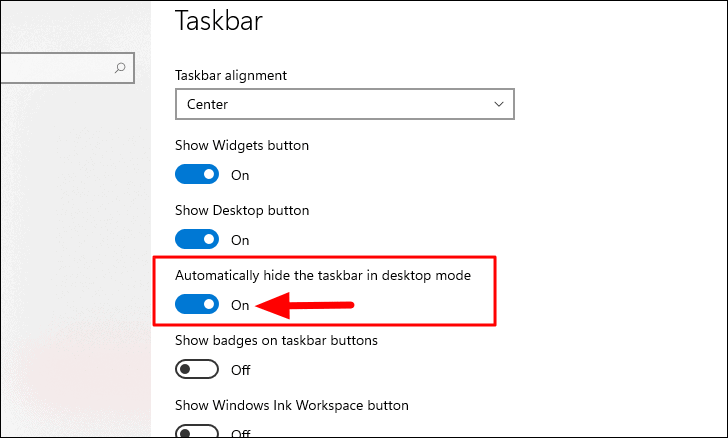
This will hide the taskbar, giving you an unobstructed full-screen view. You can reveal the taskbar again by moving your cursor to the bottom of the screen.
For PowerPoint, you can enter full-screen mode by pressing F5 to start the slideshow.
Full screen in networking and chat apps
Applications like Twitter and Google Chat also support full-screen mode using the F11 key. Pressing F11 will expand the app to fill the entire screen, hiding toolbars and the taskbar.
You can also enter full-screen mode through the app’s settings:
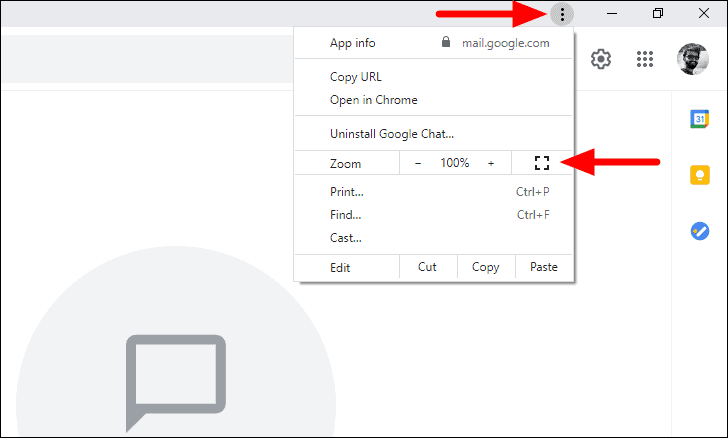
By utilizing these methods, you can enter full-screen mode across various applications in Windows 11, enhancing your focus and making the most of your screen space. If a specific keyboard shortcut doesn’t work, check the application’s settings for a full-screen option.