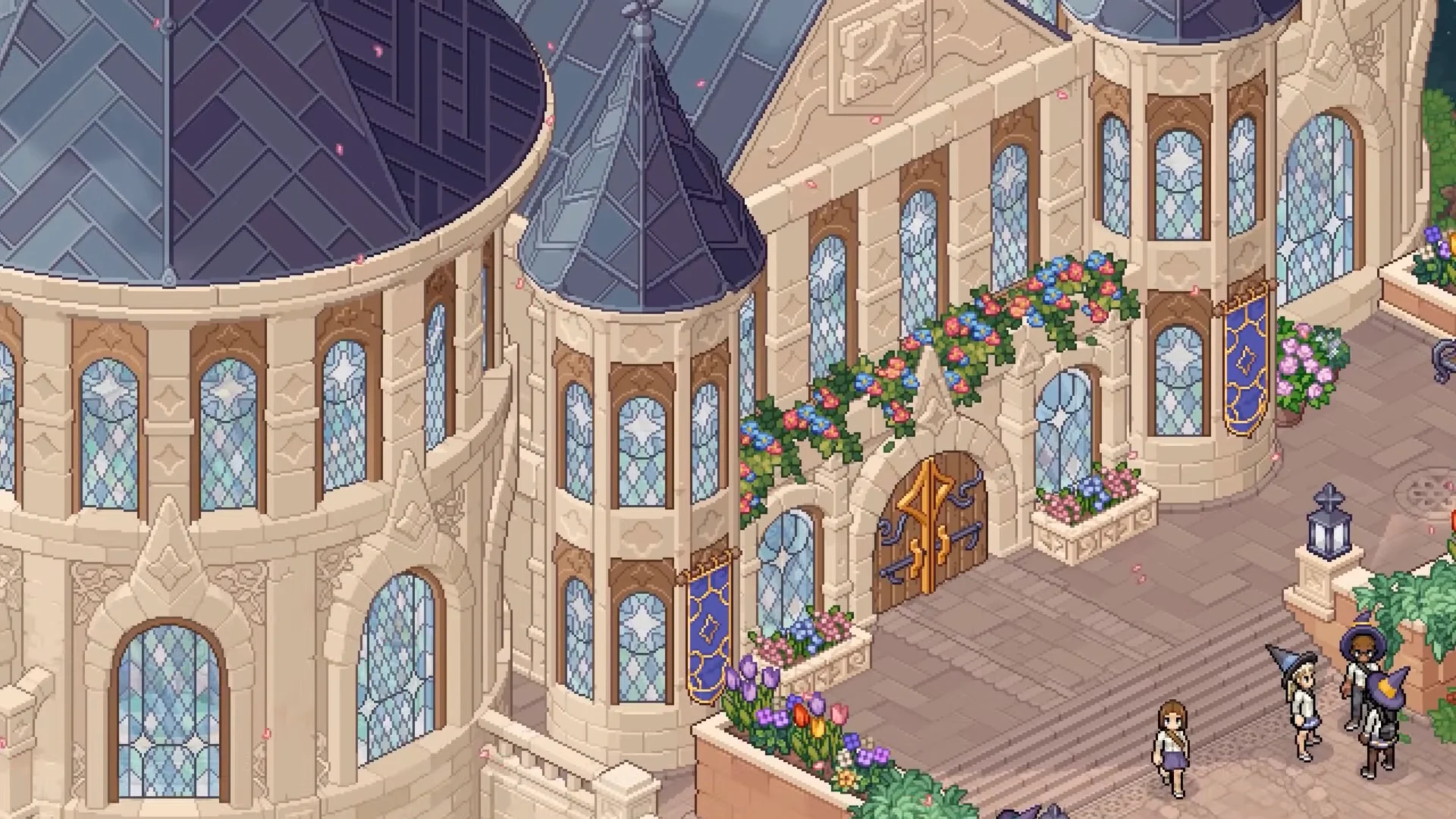
Witchbrook College is the beating heart of Chucklefish’s magical life sim, and it works less like a fantasy spell menu and more like an actual school. You enroll, attend lectures, sit exams, and slowly earn the right to cast. Everything the player does in the seaside town of Mossport feeds back into a single question: can you graduate as a fully fledged witch?
Quick answer: Magic in Witchbrook is learned through school. You fund tuition with a witch business, complete field assignments to earn Merits, build a Knowledge compendium by foraging and researching, pass exams to unlock private spell tutorials, and climb from Apprentice to Journeyman to Master.
Starting life in Mossport
The player character arrives in Mossport and moves into a cottage left behind by a late aunt, sharing the space with a crow familiar named Fable. That inheritance sets up the game’s central tension. College classes are not free, and tuition has to come from somewhere.
That somewhere is a witch business run under the banner “Fable and Co.” You fill delivery requests posted around town, sell products at the Sunday Market, and unlock business perks as your reputation grows. Sample requests seen on the board include Uplifting Incense, Peppermint Tea, and a Wreath of Solace, each with its own delivery address, deadline, and payout. Perks that arrive later let you rename the business, collect customer tips, take an extra daily request, and earn more at the Sunday Market.
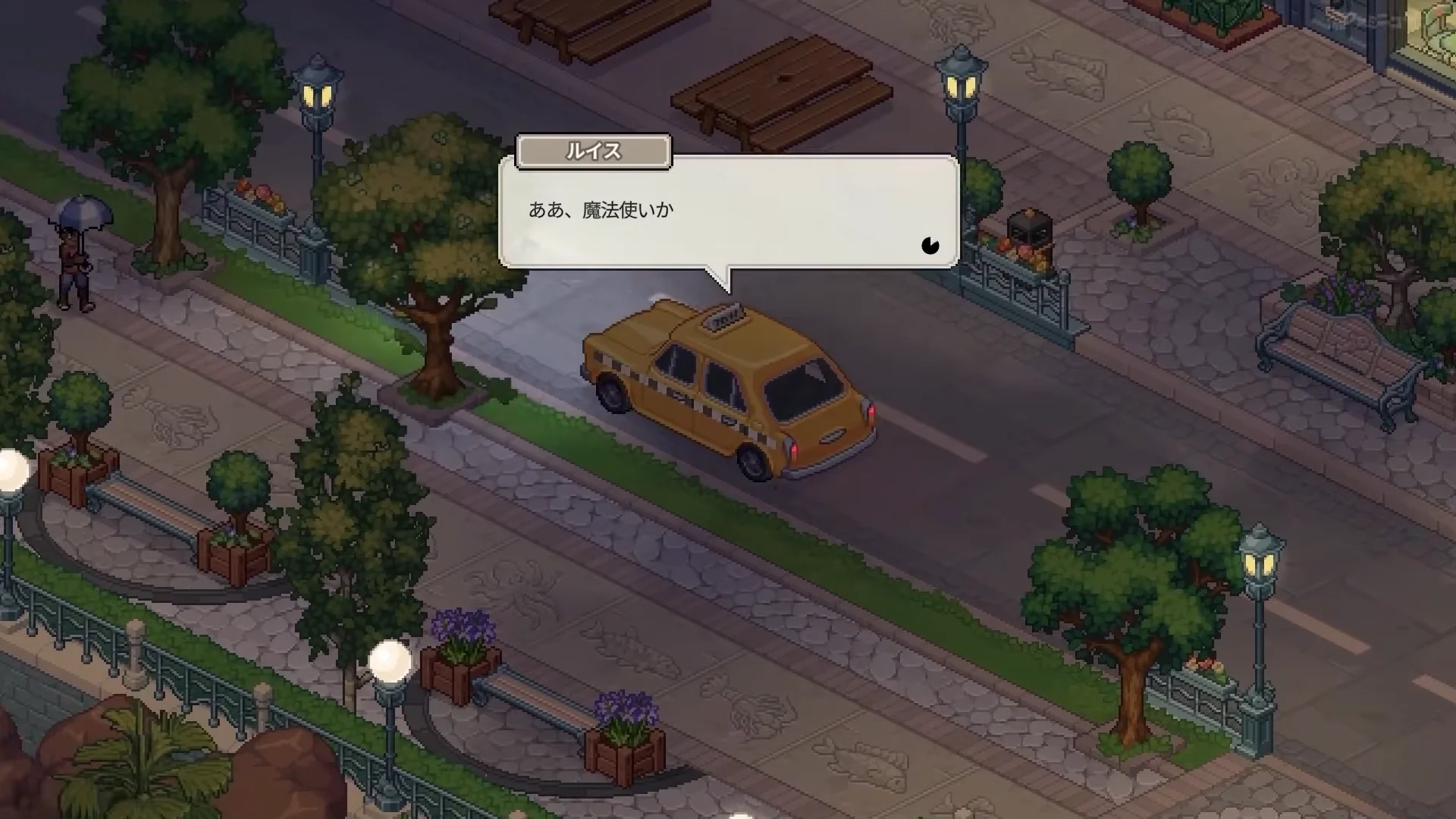
If you want a broader sense of the tone before the systems come into focus, the reveal footage sets the scene.
Your coven and Professor Carlisle
Every student belongs to a coven, and yours is led by Professor Carlisle, who mentors the group and tracks your progress. The coven is also your social circle, and each covenmate has a distinct life outside class. Chucklefish has since confirmed that eleven characters are romanceable, though friendship-only story arcs are available for anyone who would rather skip dating entirely.
| Covenmate | Focus |
|---|---|
| Hana | Fashion consultant, works part-time at the boutique Calico |
| Eli | Postgraduate, school shop cashier, writes the Witchbrook Oracle |
| Cormac | Gifted artist with irregular attendance |
| Pip | Mechanic blending engineering with spellwork |
| Leif | Agricultural and botanical witch |
| Evadne | Potion making and brewing specialist |
You can meet several of these covenmates ahead of launch through Chucklefish’s own character introductions.
Classes and the curriculum
The college runs on a schedule you check against noticeboards and lecture halls, with day classes, night classes, and optional summer sessions. The subjects map cleanly onto the game’s crafting and exploration systems, so what you study directly shapes what you can do in town.
- Herbology and chemistry covers salves, incenses, and teas, along with growing magical crops.
- Alchemy takes place in the Alchemy Lab, brewing everything from simple remedies to complex cures.
- Divination runs as daytime tarot reading and night classes using the observatory telescope for star-reading, which triggers a mana-consuming mini-game.
- Arcane Arts is the darker end of the curriculum, dealing in rituals and demons, and only opens after you clear the first two semesters of exams.
Chucklefish has framed magical growth as something you develop across these disciplines rather than pick from a shopping list.
Learning outside the classroom
Lectures are only half of the education. Much of your progress comes from field assignments pinned to the college noticeboard, where townsfolk ask a witch to solve real problems. One example follows a request to consult the stars for a resident, while another walks through curing a bus driver named Bob of chronic exhaustion.
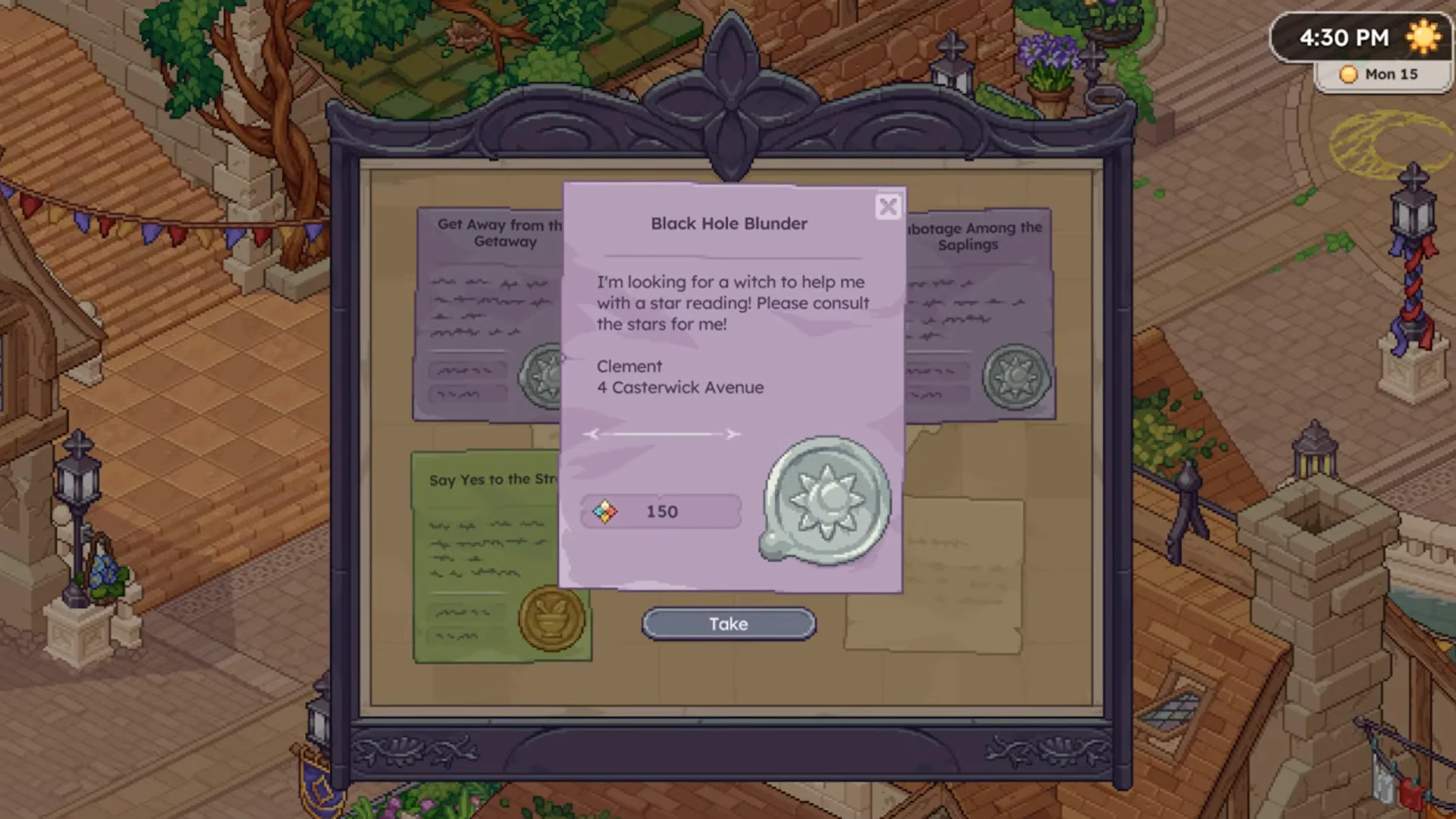
Bob’s quest shows the full loop in miniature. You diagnose the problem by talking to the client, look up a remedy in the library, learn which herbs the recipe needs, forage or harvest those herbs, brew the tea in the Alchemy Lab, and deliver the finished cure. Completing the job pays out in Merits, the currency of academic advancement.
The Knowledge compendium
Nothing is handed to you at the start. Information about plants, creatures, and recipes is locked until you earn it through repeated foraging, harvesting, and library study. A Daffodil entry, for instance, requires foraging ten of the flower to reveal its habitat data and harvesting three to unlock gardening details.
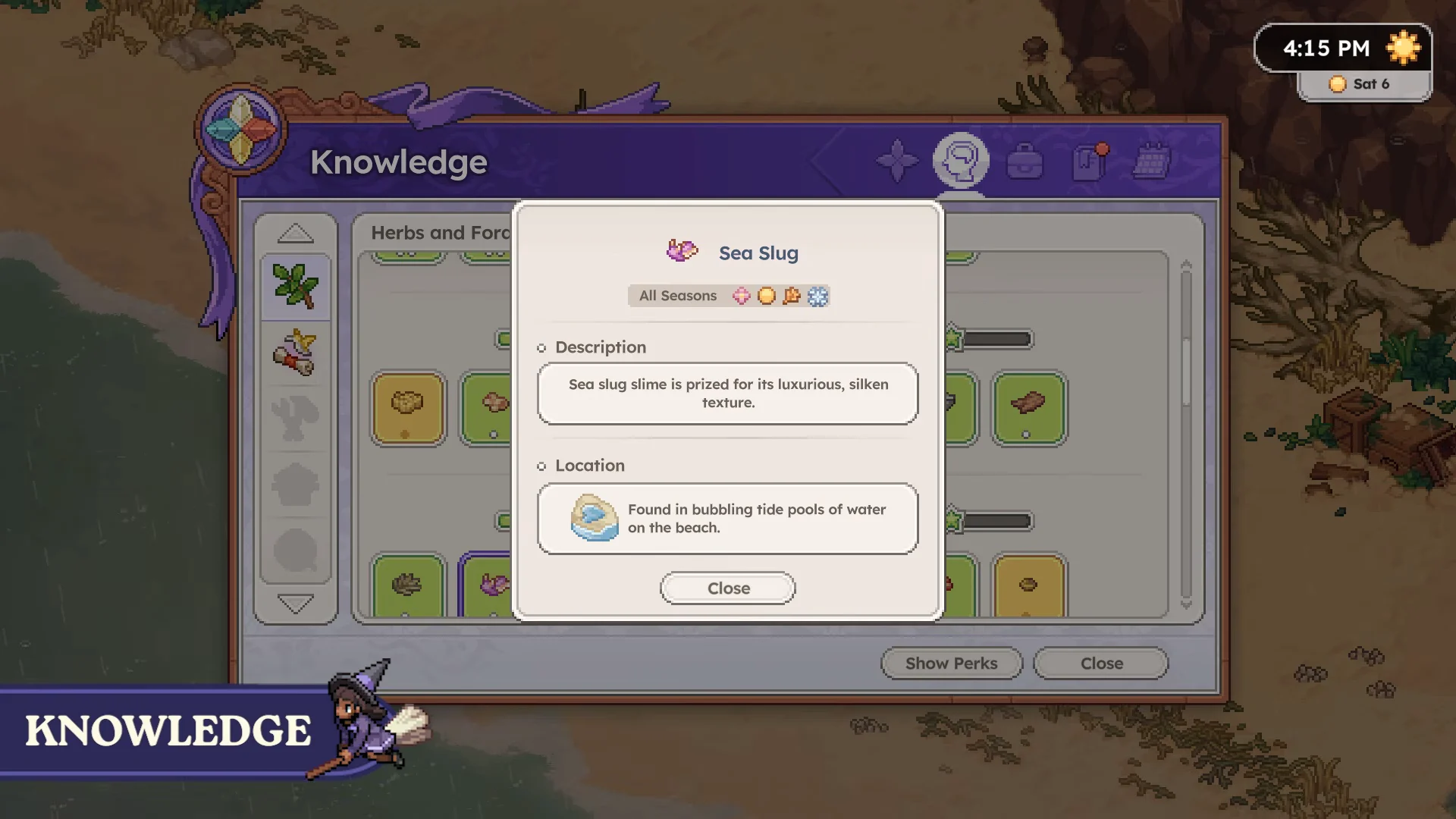
This matters because exam questions are drawn from the Knowledge you have gathered. A thin compendium means a thin exam performance, so filling it out is not optional busywork.
The college library and research
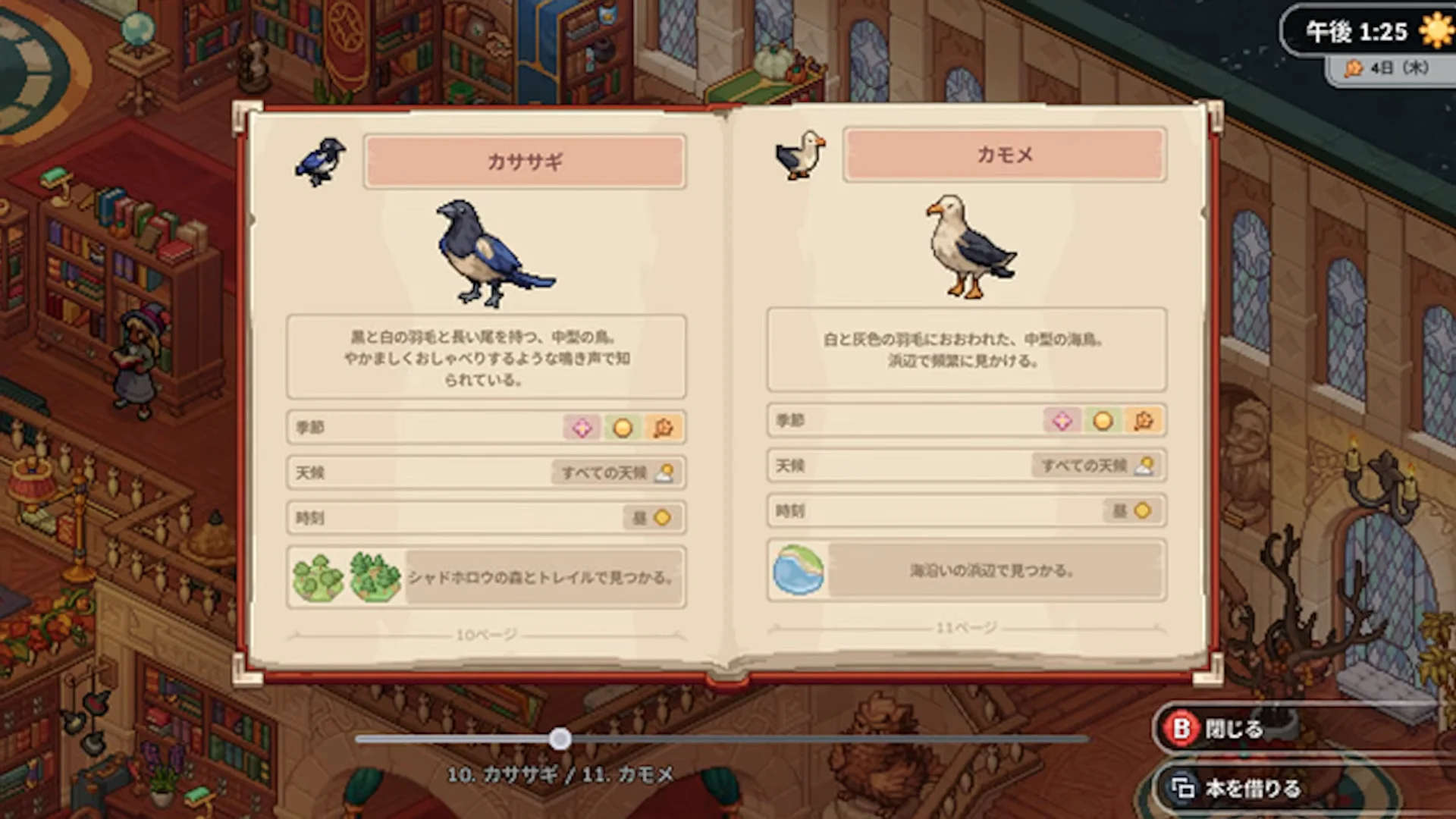
The library is where unlearned recipes and lore live before they enter your Knowledge. To carry reference material into the field, you borrow books and keep them in your inventory. Those books come with due dates, so research is something you actively manage rather than a permanent unlock.
Merits and college exams
Assignments award Merits that let you take standardized exams, with a separate Merit fee for each test. Passing typically requires a score of about 60 percent on questions based on the Knowledge you have collected. Covens offer practice tests and group study sessions to prepare.
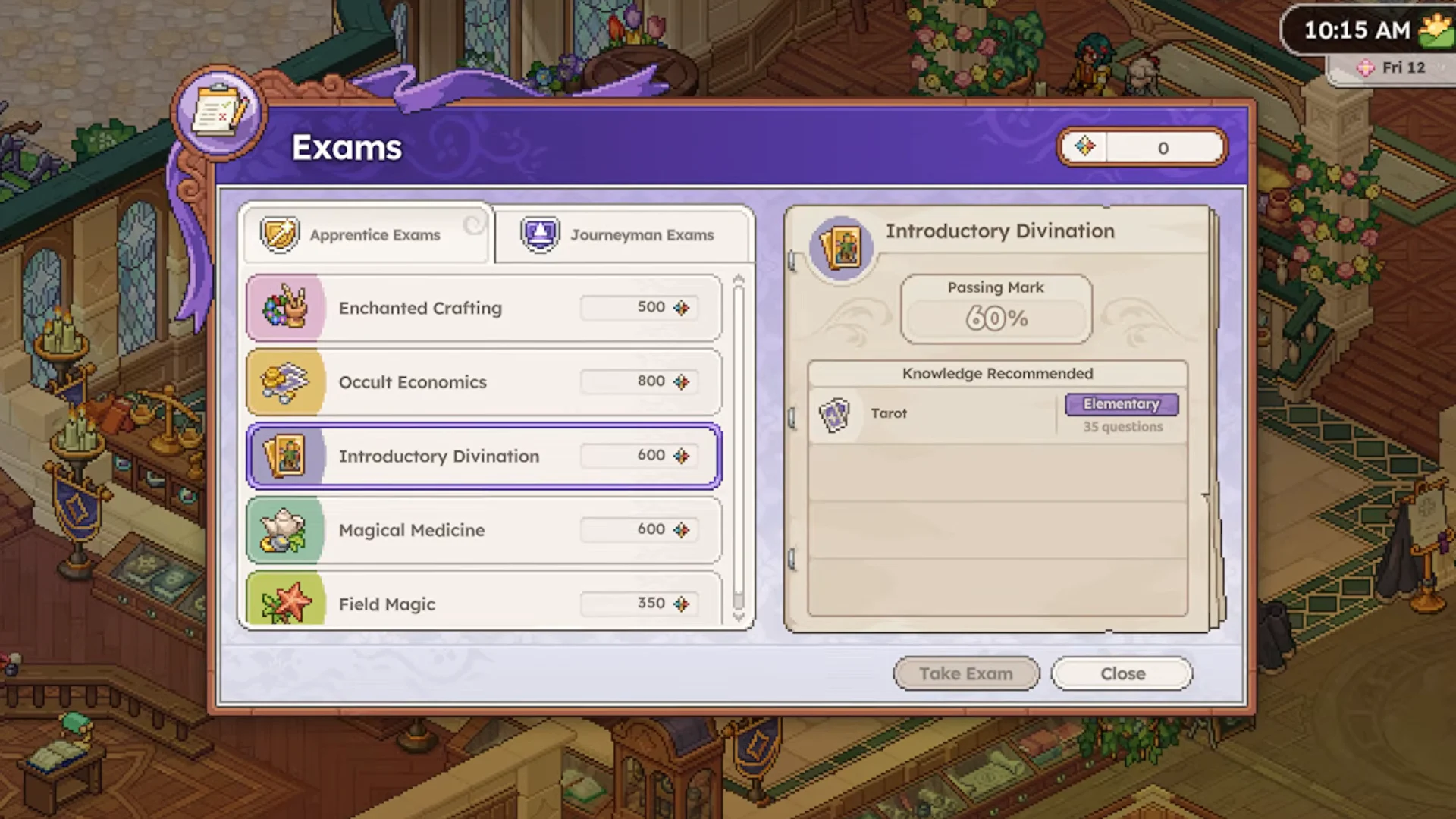
| Exam | Merit cost | Notes |
|---|---|---|
| Field Magic | 350 | Covers herb, beach, and forest foraging questions |
| Enchanted Crafting | 500 | Apprentice tier |
| Introductory Divination | 600 | 60% passing mark; recommends elementary Tarot |
| Magical Medicine | 600 | Apprentice tier |
| Occult Economics | 800 | Apprentice tier |
A failed exam shows a clear “FAILED F” result card, and the tally of correct answers per topic makes it obvious where your Knowledge fell short.
Spells and the broom license
Passing an exam is what actually unlocks magic. Each success grants a one-on-one spell tutorial with Professor Carlisle, and casting itself uses a wand to trace geometric runes on screen. This is the payoff for all the foraging, research, and studying.
- Raincloud conjures a small cloud to water garden plots.
- Floating Light Orb lights dark areas and follows you.
- Guidance Magic reveals paths leading to uncommon ingredients.
- Object Levitation moves and rearranges furniture with the wand.
- Broom Flight requires a municipal Broom License before you can take to the skies over Mossport.
Ranks, pacing, and graduation
Academic progression runs across three tiers: Apprentice, Journeyman, and Master. Pacing is flexible and rewards performance rather than locking you strictly to a calendar, so strong students can accelerate. The estimated base run to graduation is roughly 1.5 in-game years, with postgraduate study waiting on the other side.
The through-line across all of it is what Chucklefish calls civic witchcraft. Magic in Mossport is a public service, learned in class and proven in the community, and every system in the college feeds that loop. Witchbrook is confirmed for PC, Nintendo Switch, Switch 2, and Xbox, and you can follow its progress or wishlist it on its Steam page. No firm release date has been confirmed yet.