Becoming a station director in No Man’s Sky Cosmos unlocks a build menu for the outside of your space station, and most of those decoration modules are simply bought with nanites. A handful are not. The showpieces — a whale skull the size of a hangar, a clockwork timepiece, a glowing hyperspace beacon — only come from purple anomalous points of interest drifting in deep space, and each one hands out its blueprint exactly once.
Quick answer: Open the star system map from the Quick Menu, fly to a purple anomalous signal, and then either shoot the object or answer the incoming starship communicator message — whichever the anomaly prompts. That interaction grants one rare exterior decoration blueprint per player.
What you need before hunting rare blueprints
Deep-space points of interest only populate the star system map once your save has reached the Space Anomaly. Until then the map is effectively empty of the signals you are looking for. The short Signals tutorial mission introduces the map and the navigation prompts if you have not seen them yet.
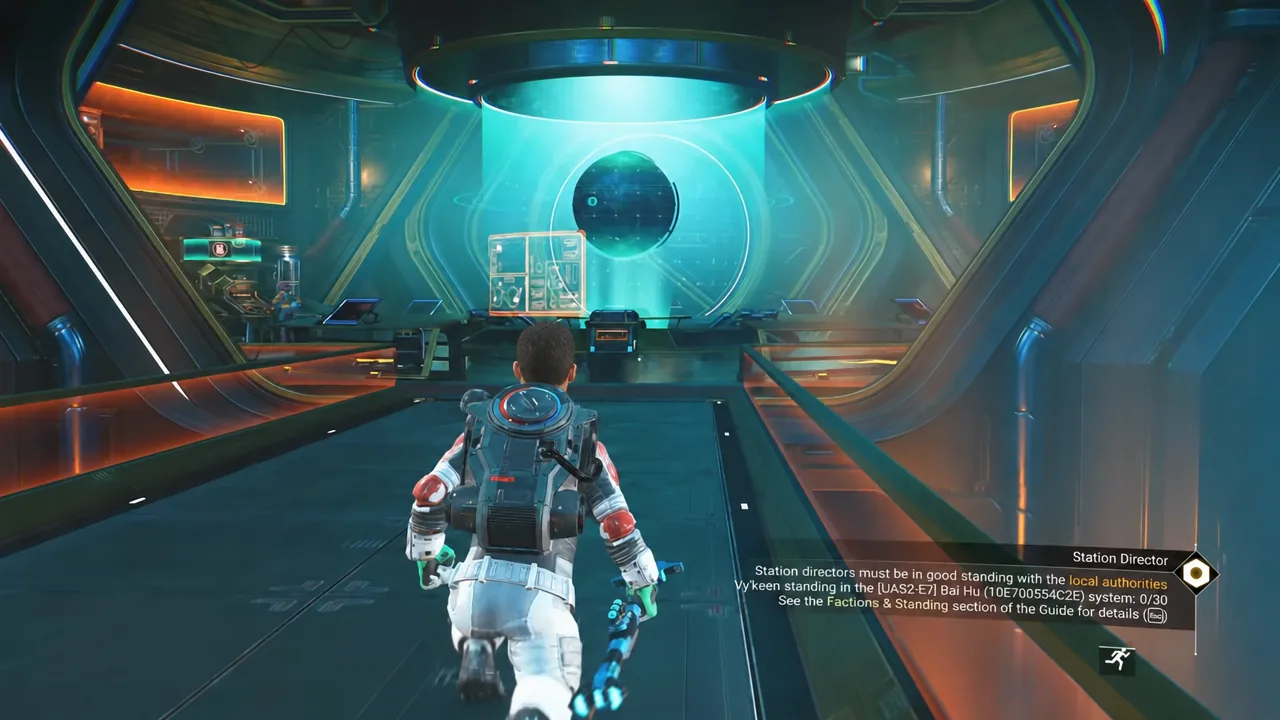
You also want a station of your own before the blueprints mean anything. Directorship is granted at a Station Core once the local requirements are met, which can include faction standing, guild standing, completed salvage contracts, and a units donation. A blueprint collected before that still sticks in your catalogue — it just has nowhere to be placed yet.
Turn multiplayer off in your network settings before you set out. Anomalous points of interest can be consumed by whoever gets there first, and a visitor in your instance can take the blueprint out from under you.
Buy the standard station decorations first (2,245 nanites)
The bulk of the exterior kit lives at the Construction Research Station aboard the Space Anomaly, under the Station Decorations category. Clearing all three pages of station decoration unlocks costs 2,245 nanites in total. Doing this first is worth it, because it tells you at a glance which pieces you already own and which ones can only come from deep space.
These purchased modules are unlocks, not finished objects. Each still has a build cost when you place it on the station exterior, paid mostly in deep-space salvage.
| Anomaly decoration | Build cost |
|---|---|
| Data Tower | 120 Contaminated Metal, 2 Industrial Salvage |
| Ornate Pyramid | 80 Contaminated Metal, 3 Industrial Salvage |
| Angled Tower | 7 Industrial Salvage |
| Plasma Display | 90 Chromatic Metal |
Find purple anomalous signals on the star system map
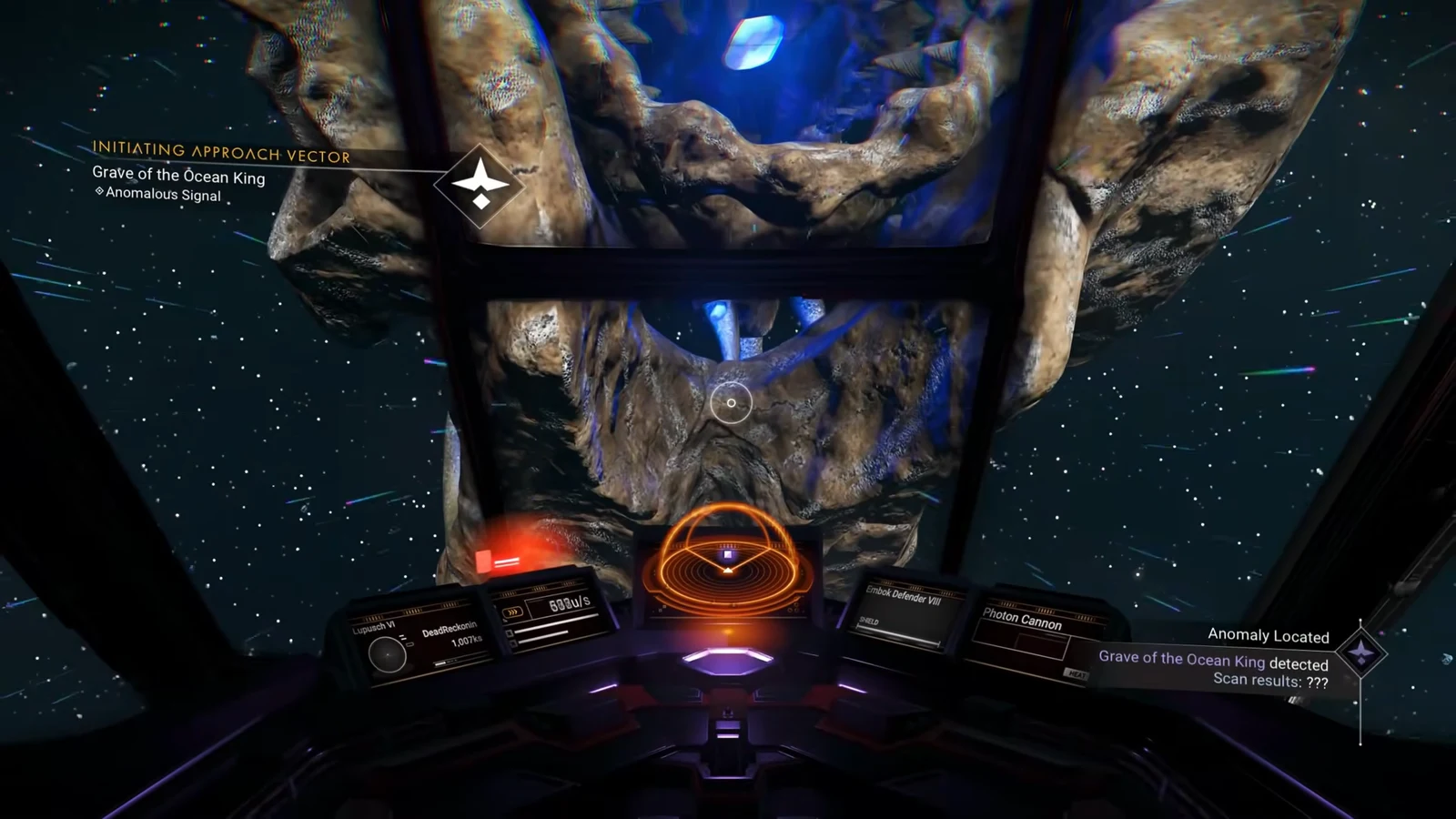
Purple anomalies show up across yellow, red, green and blue star systems, so you do not need a specific star class to farm them. Uncharted systems have not been seen producing them, so skip those when you are hunting.
The two triggers that release a blueprint
Arriving at the anomaly is not enough on its own. Some of these objects have to be shot before they give anything up, so line the anomaly in your ship’s weapons and fire until it reacts. The drop follows immediately.
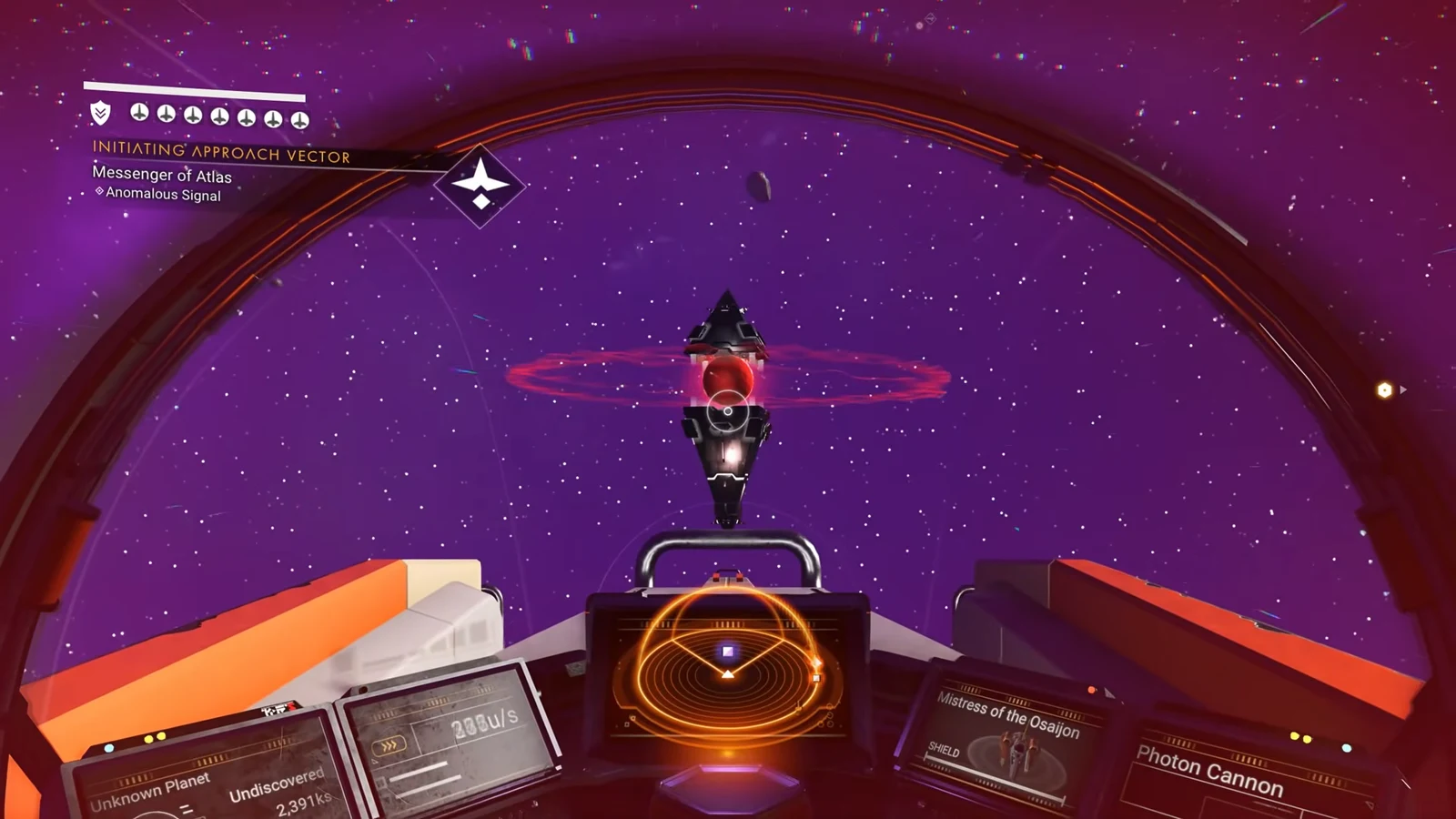
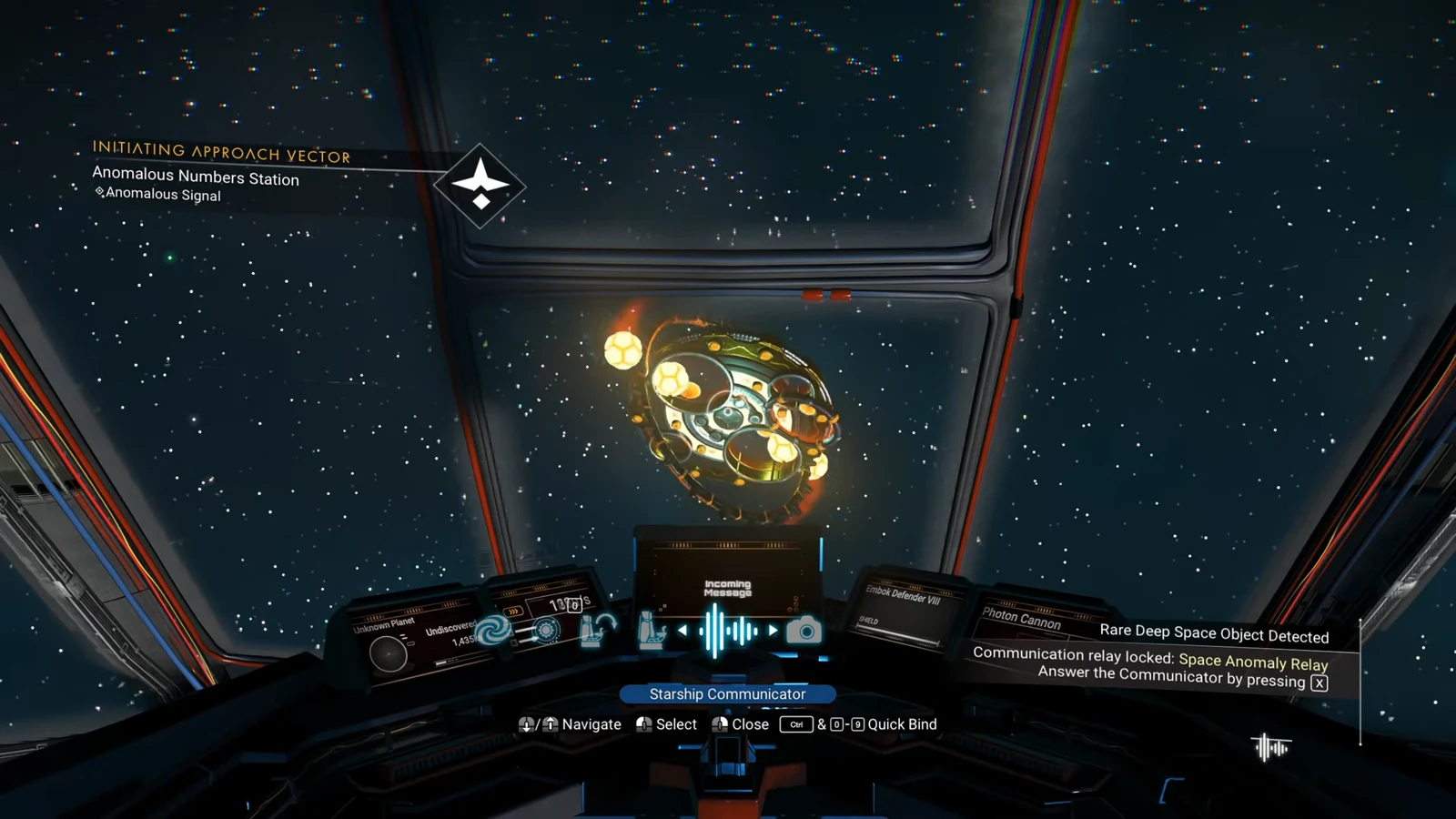
The rest hail you instead. When the starship communicator lights up with an incoming message, answer it with the on-screen prompt rather than flying off, because ignoring the call leaves the anomaly unresolved.
Five anomalous points of interest and the blueprints they drop
An anomaly’s blueprint is tied to the anomaly type, not to chance. Visit the same named point of interest in a system and you get the same reward every other player gets there.
| Anomalous point of interest | Blueprint |
|---|---|
| Grave of the Ocean King | Titanic Skull, a colossal space whale skull |
| Anomalous Numbers Station | Anomalous Timepiece, a steampunk-styled clock |
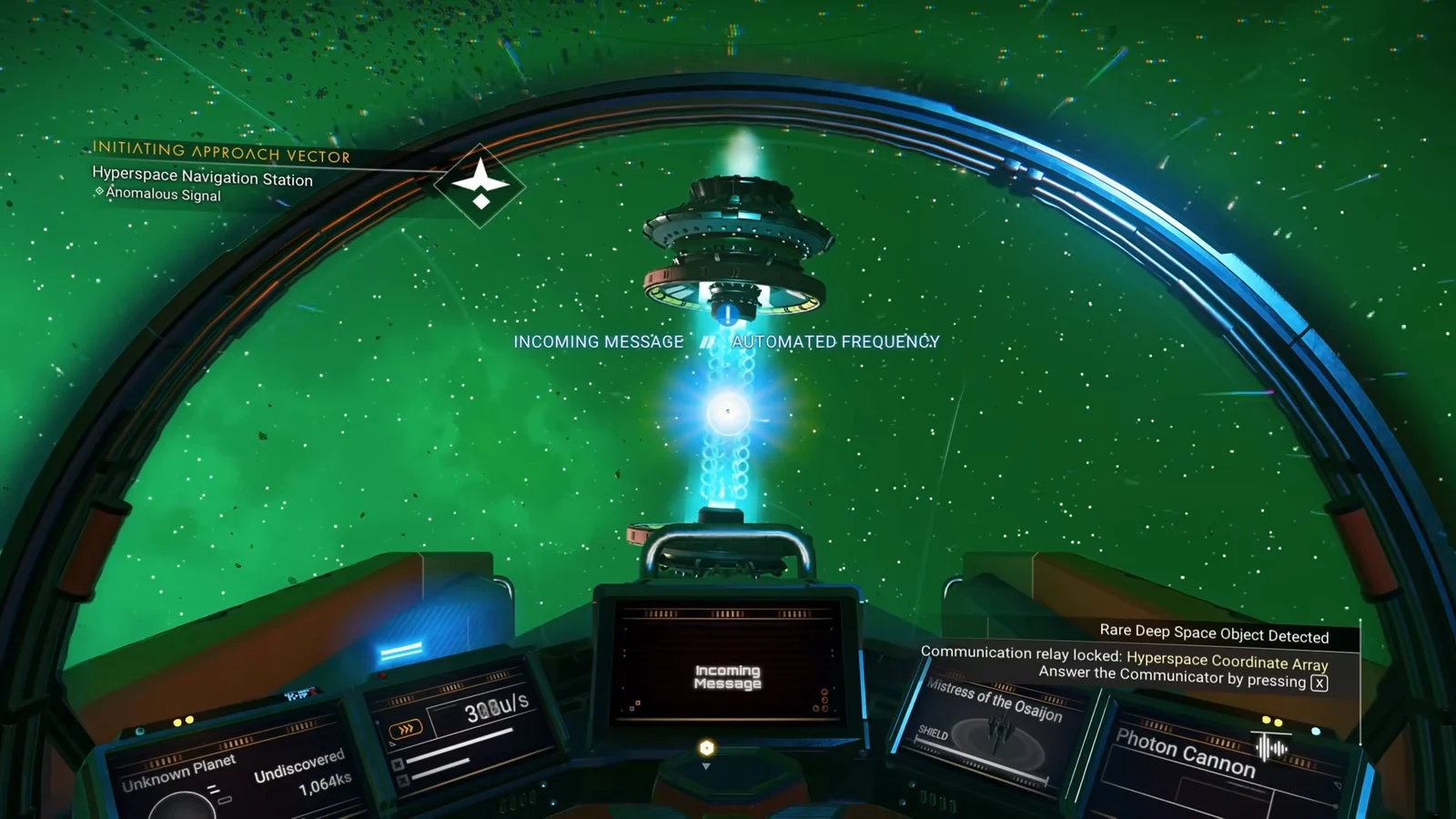
| Hyperspace Navigation Station | Hyperspace Beacon |
| Plasmic Accident | Plasmic Accident, an organic-looking mass |
| Emergency Civilization Shelter Pod | Shelter harness pod, an alien life raft |
The Hyperspace Navigation Station is one of the anomalies that calls you. Its message arrives on an automated frequency, and answering it is what hands over the beacon.
One blueprint per anomaly type, per player
This is the rule that trips people up. Each anomalous point of interest type pays out its blueprint a single time for your save. Find a second Grave of the Ocean King in another system and it still rewards you, but with nanites or resources rather than a duplicate Titanic Skull.
Because the pairing is fixed and shared, portal or warp coordinates for a known anomaly work for anyone. Travel there, trigger it once, and move on to a different anomaly type rather than farming the same one.
You will know it worked when the decoration becomes selectable in the station exterior build menu with its material cost attached. If the anomaly instead spits out nanites or raw materials, you have already claimed that type somewhere else.
Materials you need to actually build the rare decorations
Unlocking the blueprint is the cheap part. Placing these modules on your station eats deep-space salvage, most of which comes from hulks, infested outposts and asteroid work in the same systems you are already flying through.
| Rare decoration | Build cost |
|---|---|
| Titanic Skull | 300 Condensed Carbon, 100 Gelatinous Fibres, 70 Polished Stone |
| Anomalous Timepiece | 3 Industrial Salvage, 3 Fuel Rod, 80 Contaminated Metal |
| Hyperspace Beacon | 3 CPU Harness, 2 Auxiliary Core, 1 Industrial Salvage |
Gelatinous Fibres are the awkward one, since they come from infested outposts and are needed for both the Titanic Skull and the Plasmic Accident. Stock up while you are clearing viral mass with the Gravitino Coil, and haul the rest of your salvage back to a deep-space outpost for processing rather than selling everything on sight.
Work the anomalies into your normal routine rather than treating them as a separate errand. Every system you warp into gets a map check, every purple marker gets one visit, and within a few jumps you will have the pieces that make a station look like nobody else’s.