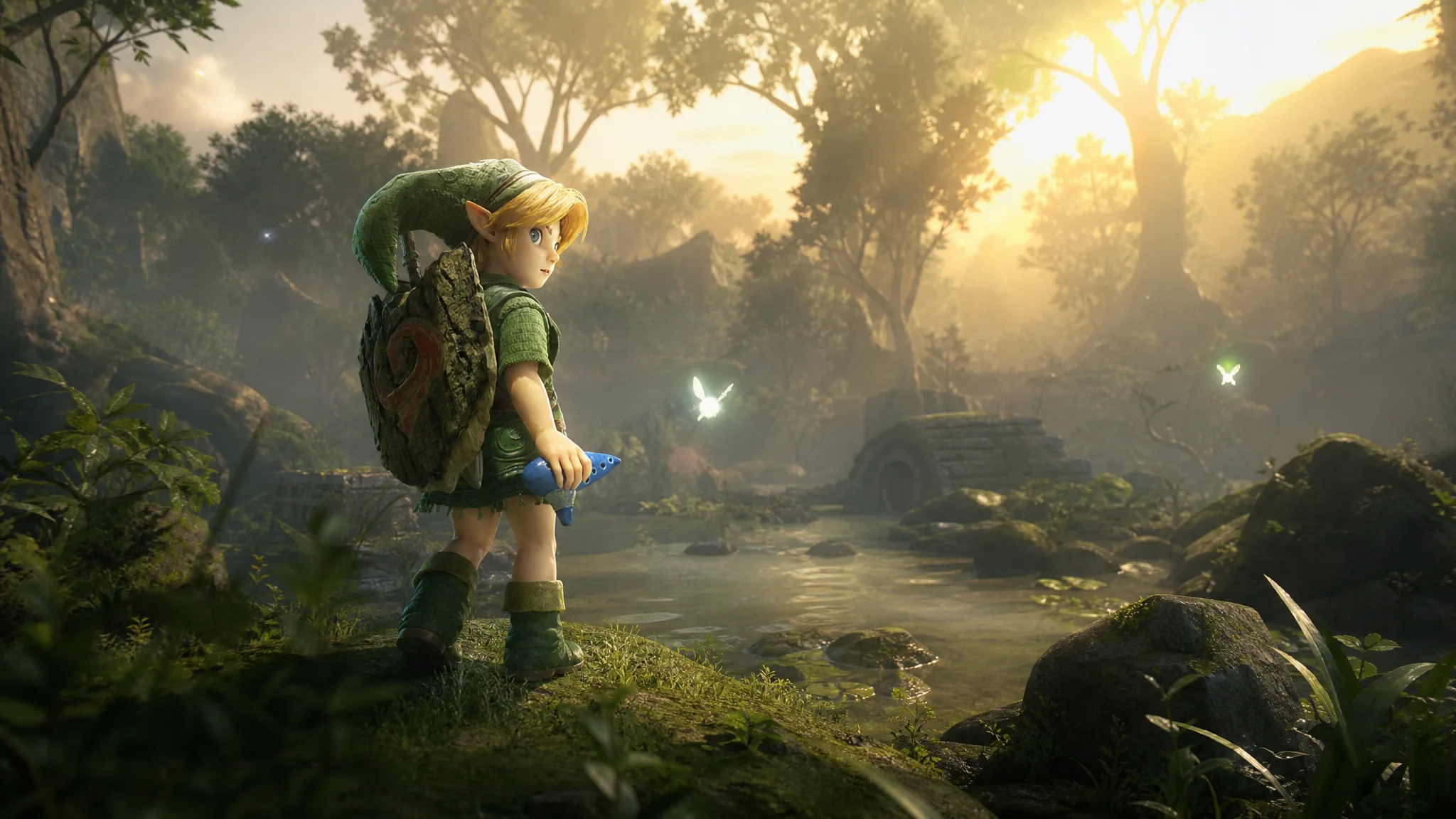
The Legend of Zelda: Ocarina of Time Remake rebuilds the 1998 classic for Nintendo Switch 2 with new movement options, quality-of-life changes to combat and menus, expanded areas, and full voice acting in cutscenes. It launches November 5, 2026, as a Switch 2 exclusive.
Quick answer: Link can now jump manually (X), swim and dive underwater (hold A), and dash after rolling (hold A). You can hot-swap items without pausing, play the Ocarina by humming into the Switch 2 microphone, and explore new parts of Hyrule Castle Town. Loading screens between major regions remain by design.
New movement: manual jump, swimming, and a dash
The biggest change is control over Link’s movement. In the original, Link jumped automatically when he reached a ledge. In the remake, you press X to jump on command, so platforming no longer depends on edge detection.
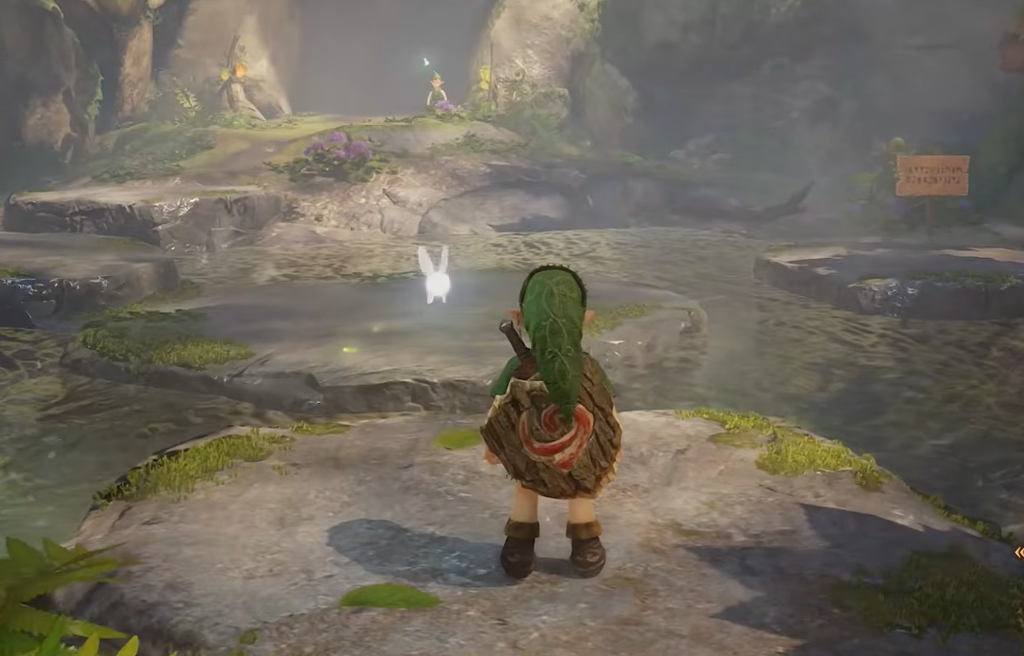
Swimming is also more flexible. Hold A to dive underwater and pick up items, such as a blue Rupee retrieved from a pond in the reveal. Press X while swimming to move faster. The original required the Silver or Golden Scale to stay under for more than a few seconds, and those upgrades are expected to appear here as well.
Traversal on foot is faster too. Press A to roll, then keep it held to break into a sprint. That dash replaces the old habit of chaining rolls to cross large spaces quickly, and it matters most for young Link, who cannot ride across Hyrule.
Combat and menu changes: item swapping and slingshot aiming
You can switch between items with a single button press without opening a pause menu, matching the flow of more recent entries like Tears of the Kingdom. The original mapped items to the three C-buttons on the Nintendo 64 controller.
Aiming is tighter as well. With the Fairy Slingshot, pressing the target button while aiming locks on more precisely, which speeds up hitting enemies like a Skulltula clinging to a wall.
Playing the Ocarina with the Switch 2 microphone
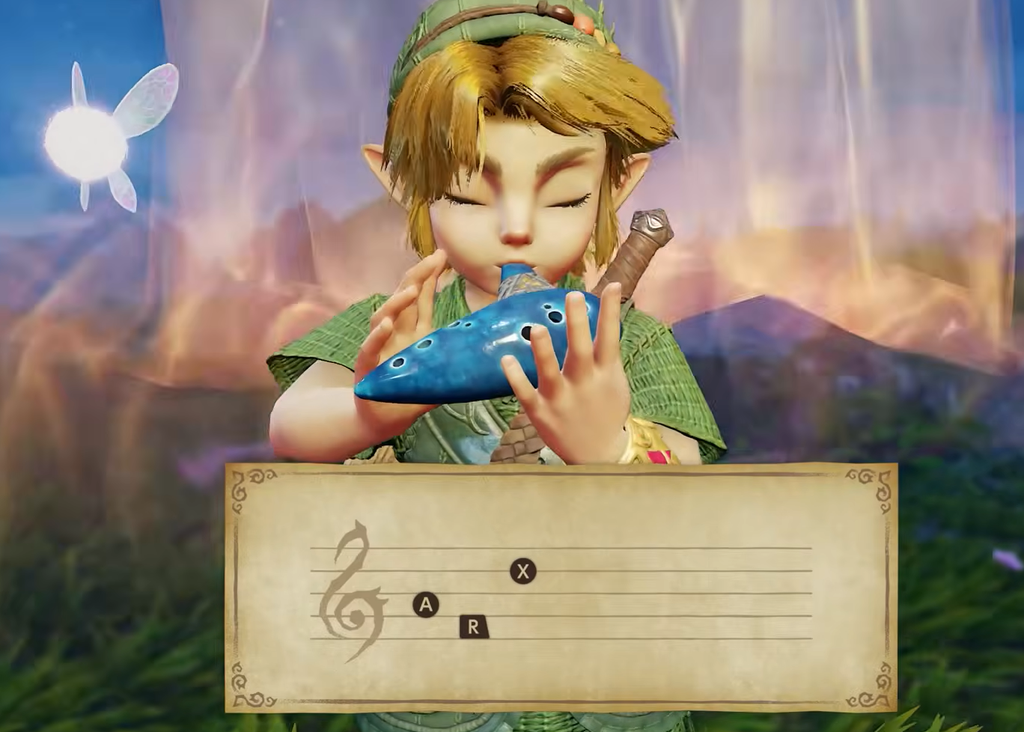
The Ocarina remains central, and the remake adds a new way to use it. You can hum a tune from the in-game songbook into the Switch 2’s built-in microphone, and the game recognizes the melody and triggers the matching effect. Button inputs still work for anyone who prefers them.
Nintendo is also selling a physical Ocarina accessory through the Nintendo Store. Playing melodies on it triggers the same in-game effects, limited to songs Link has already learned based on your progress.
Threads of Time: quest log and progress tracker
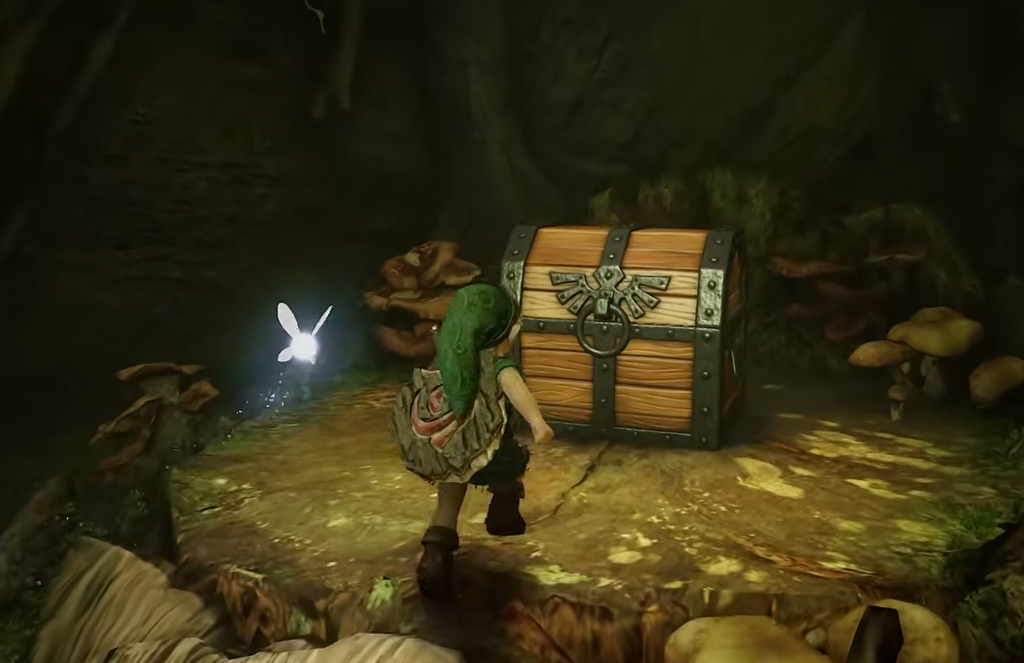
A new menu feature called Threads of Time tracks your story progress and points to your next objective, aimed at players new to the series. It doubles as a visual record. The more you accomplish, the more a tapestry-style display fills in, and you can check it at any time during play.
World changes: Hyrule Castle Town, real-time day, and loading screens
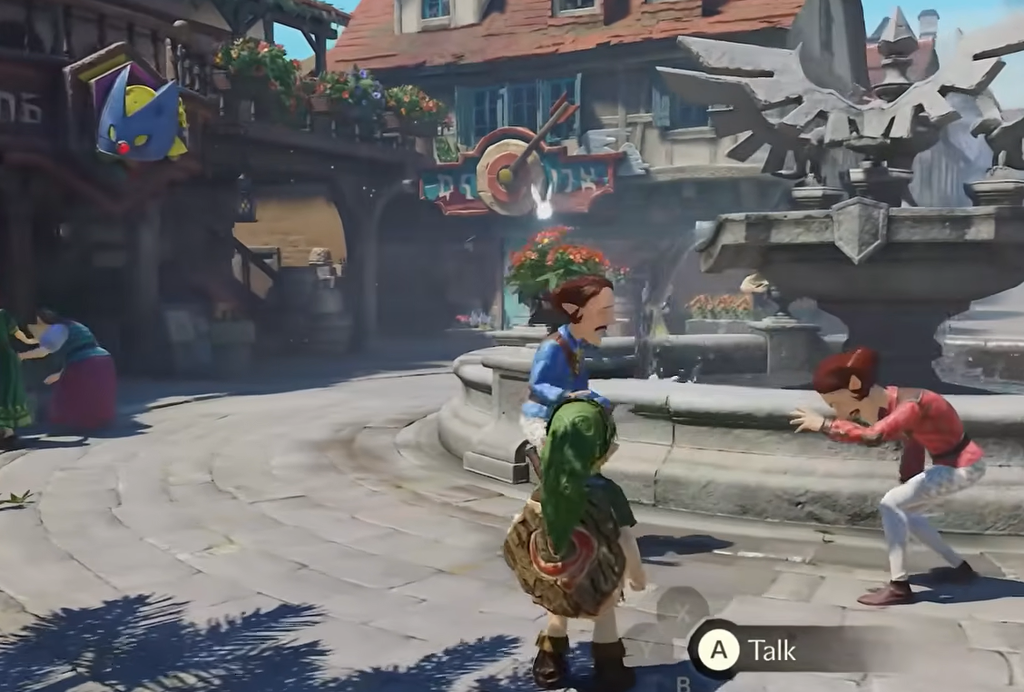
Hyrule Castle Town is bigger than the mostly closed-off backdrop from the original. You can wander the back alleys, meet more NPCs with distinct personalities, hear their gossip, and play mini-games inside certain shops. The fixed camera used in that location is gone.
Time now moves continuously across the world. In the original, the clock paused inside dungeons and indoor areas. In the remake, the day-night cycle keeps advancing wherever you are.
Note: Loading screens between certain regions were kept on purpose. Nintendo left them in to preserve the essence of the original game rather than stitching Hyrule into one seamless map.
Voice acting and expanded dialogue
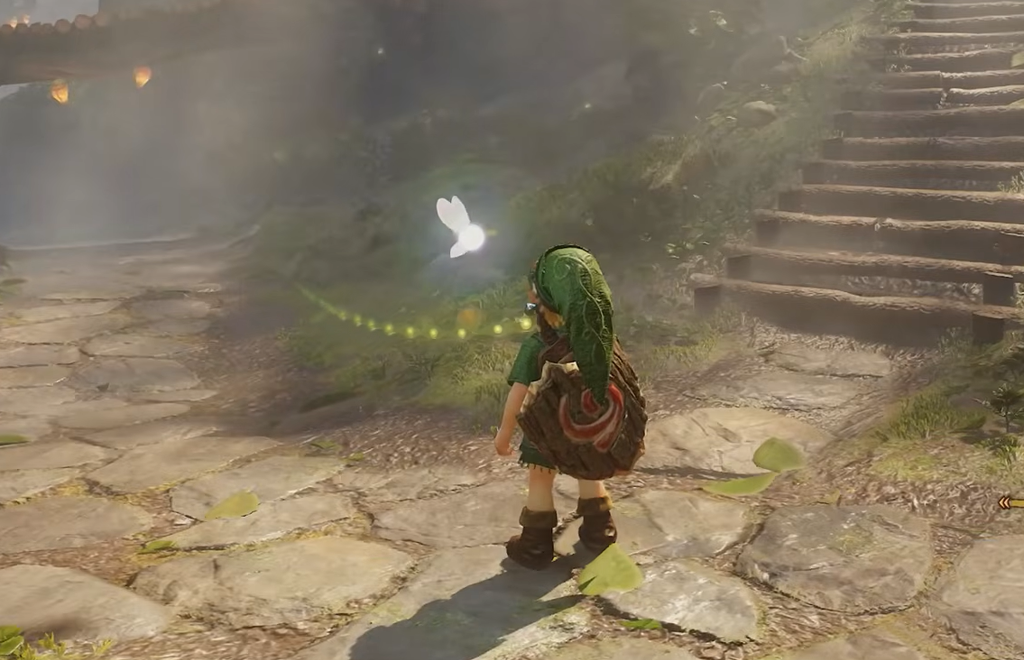
Cutscenes are now fully voiced, and characters have additional dialogue. The reveal showed a new conversation in the Kokiri Forest between Link and Saria, and Navi still delivers her familiar “LISTEN!” line, confirming this is the same story presented with more spoken detail.
Epona and horse riding
Adult Link can still ride Epona across Hyrule. As young Link, you can summon her by playing Epona’s Song, but you cannot ride her to travel, which is where the new dash comes in.
Original vs remake at a comparison
| Feature | Original (1998) | Remake (Switch 2) |
|---|---|---|
| Jumping | Automatic at ledges | Manual jump (X) |
| Underwater | Needs Silver/Golden Scale to stay under | Dive freely (hold A), swim faster (X) |
| Fast travel on foot | Repeated rolling | Dash by holding A after a roll |
| Item selection | Assigned to C-buttons | Hot-swap without pausing |
| Cutscenes | Text only | Fully voiced with added dialogue |
| Time of day | Pauses indoors and in dungeons | Advances everywhere in real time |
| Ocarina input | Button presses only | Buttons, microphone humming, or physical Ocarina |
| Hyrule Castle Town | Mostly a backdrop | Explorable alleys, NPCs, shop mini-games |
Release date, editions, and pre-orders
The remake arrives November 5, 2026, exclusively on Nintendo Switch 2. The physical edition ships in packaging with textured foil. Nintendo also announced Zelda-themed Switch 2 hardware, a matching Pro Controller, and a carrying case going on sale October 29, plus a LEGO set and new Link and Zelda amiibo.
Pre-orders are open now on the Nintendo eShop, where you can reserve the game ahead of launch.
Watch the reveal
The remake was shown during The Legend of Zelda 40th Anniversary Direct, which offered a full look at the art style, combat, and traversal running on Switch 2 hardware.
Between the rebuilt visuals and the new controls, this is Ocarina of Time reworked for modern hardware while keeping its structure intact, right down to the deliberate loading screens. If you are returning to Hyrule for the first time since the Nintendo 64 days, the manual jump, dash, and Ocarina humming are the changes you will notice first.