Onimusha: Way of the Sword ships with two difficulty settings at the start, and the names are misleading. Story Mode behaves like a standard normal difficulty rather than an easy mode, and Action Mode is the closest thing the game offers to hard until you finish a playthrough. The gap between them matters, because almost all of the challenge in Action Mode is concentrated in a small part of the game.
Quick answer: Action Mode is demanding in boss fights and forgiving everywhere else. Pick it if you can already parry on reaction in action games; if a boss stops your progress, you can switch down to Story Mode mid-playthrough without starting over.
Action Mode vs Story Mode difficulty settings
Both settings are selectable from the start. A third, genuinely harder difficulty unlocks only after you clear the game once, which is a long-standing Capcom habit and the main complaint from players who wanted a stiffer first run.
| Setting | What it plays like |
|---|---|
| Story Mode | Functions as a normal difficulty, not a cutscene-viewer mode. Bosses still require parries and dodges, but mistakes cost less. |
| Action Mode | The default choice for action-game players. Regular enemies stay easy; bosses punish reckless attacks and demand pattern recognition. |
| Post-clear hard difficulty | Unlocked after finishing the game. Aimed at players who found Action Mode too soft. |
Why regular enemies stay easy on Action Mode
Standard Genma telegraph nearly everything. Attacks come with distinct audio cues and slow wind-up animations, so you get a clear read on when to block or parry. Even the fast flying Tengu-style enemies follow patterns you can anticipate after a couple of encounters.
The bigger reason crowds feel undercooked is that most low-level enemies are passive. They hover around you instead of pressuring you, so the defensive system that the boss fights are built around barely gets exercised between them. That creates an awkward learning curve: you can slice through an entire chapter without needing to parry once, then hit a boss that checks it repeatedly.
Bosses carry the entire difficulty on Action Mode
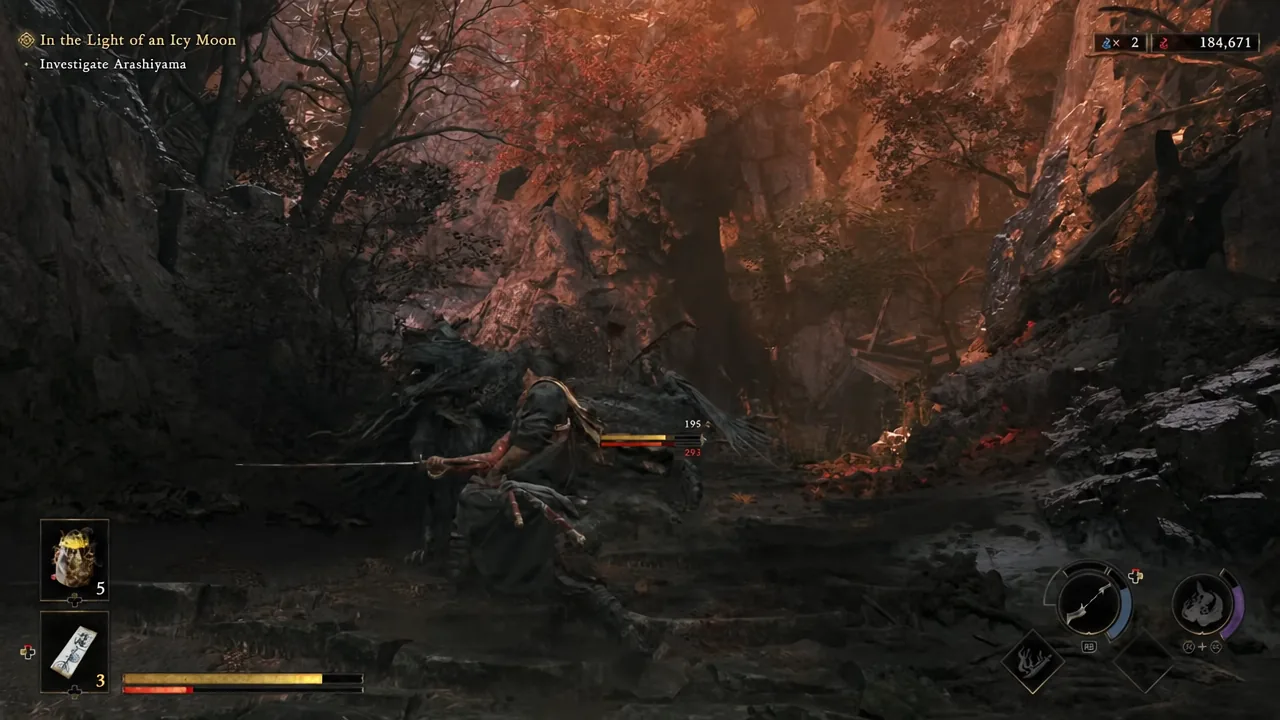
Main bosses are built in two stages, and the final encounter has three. The first stage is usually the gentler one. If you die during a later stage, you restart the fight from the beginning, which is what turns a manageable fight into a long one. Some encounters run past 25 minutes when you are playing carefully and conserving healing items.
Several specific behaviours make the fights harder than the moment-to-moment combat suggests.
| Mechanic | Why it hurts |
|---|---|
| Grab attacks | The hardest moves to counter reliably, since the animation gives less usable warning than a normal swing. |
| Blaze State | Getting caught by certain attacks can push a boss into a more aggressive state mid-fight. |
| Healing animation | Musashi eats before health returns, so healing is not instant. Aggressive bosses rarely give you a clean window. |
| Stage resets | A single mistake in a later phase sends you back to the start of the fight with your resources spent. |
| Lock-on camera | In tight arenas the camera can catch on walls and scenery, hiding the attack you were about to parry. |
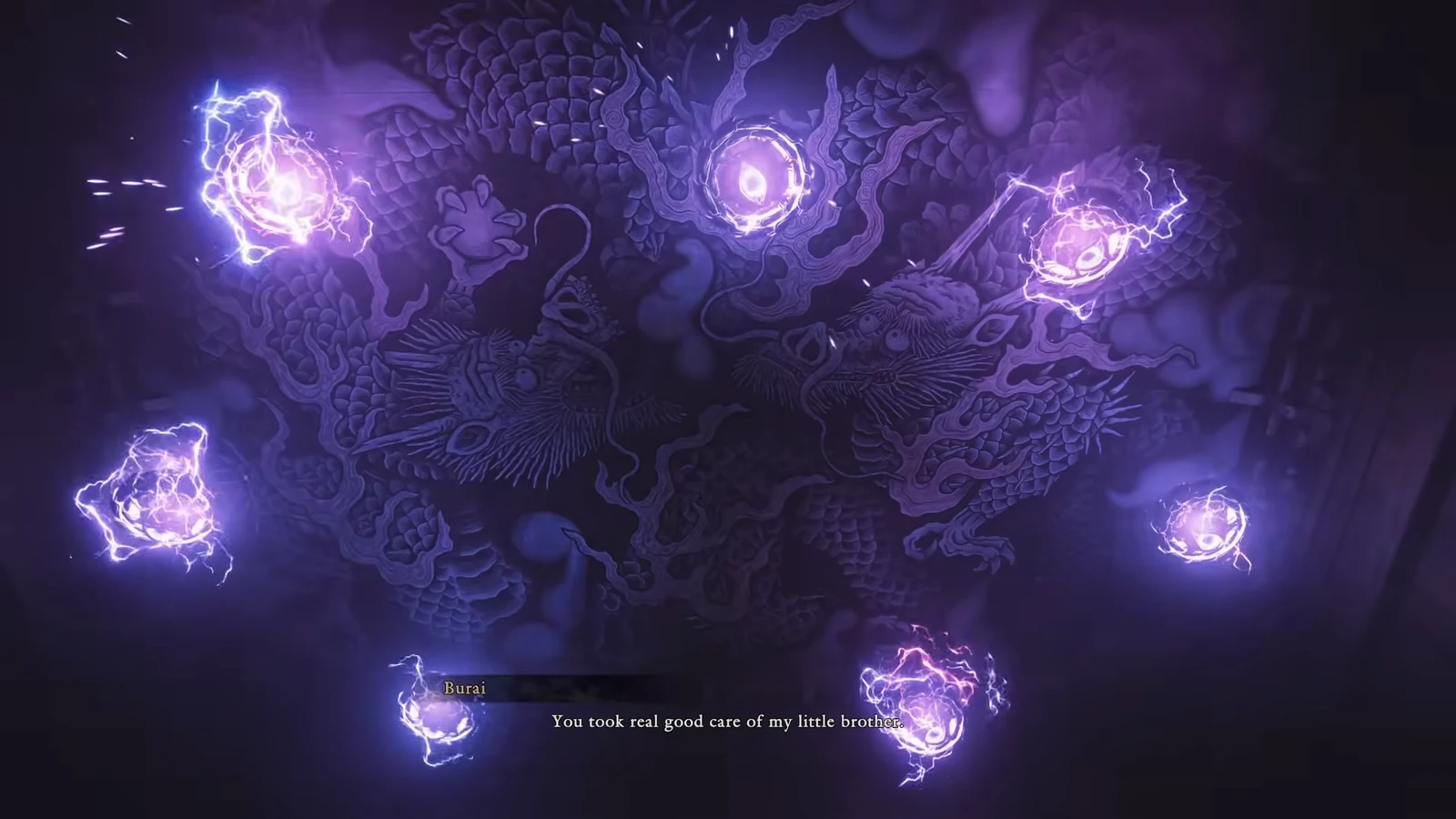
Named encounters like Burai, Daidara, Dohatsu ten and Benkei are where players tend to stall. Benkei in particular functions as a parry check — if your parry timing is not dependable by then, the fight will not go well.
Parry over dodge is the single biggest difficulty lever
Musashi fights with one katana, and defence does more work than offence. Blocking, parrying and dodging drain an opponent’s stamina, which opens the window for Break Issen — the game’s finishing counter. The direction you deflect in also changes the follow-up you get, so positioning is part of the read.
The parry window is generous compared to the Reflex Dodge, which is far less consistent to land under pressure. If you are choosing one defensive tool to lean on for the whole run, make it the parry. Later bosses move faster and mix up their timing, so a reliable parry is what keeps your health bar intact.
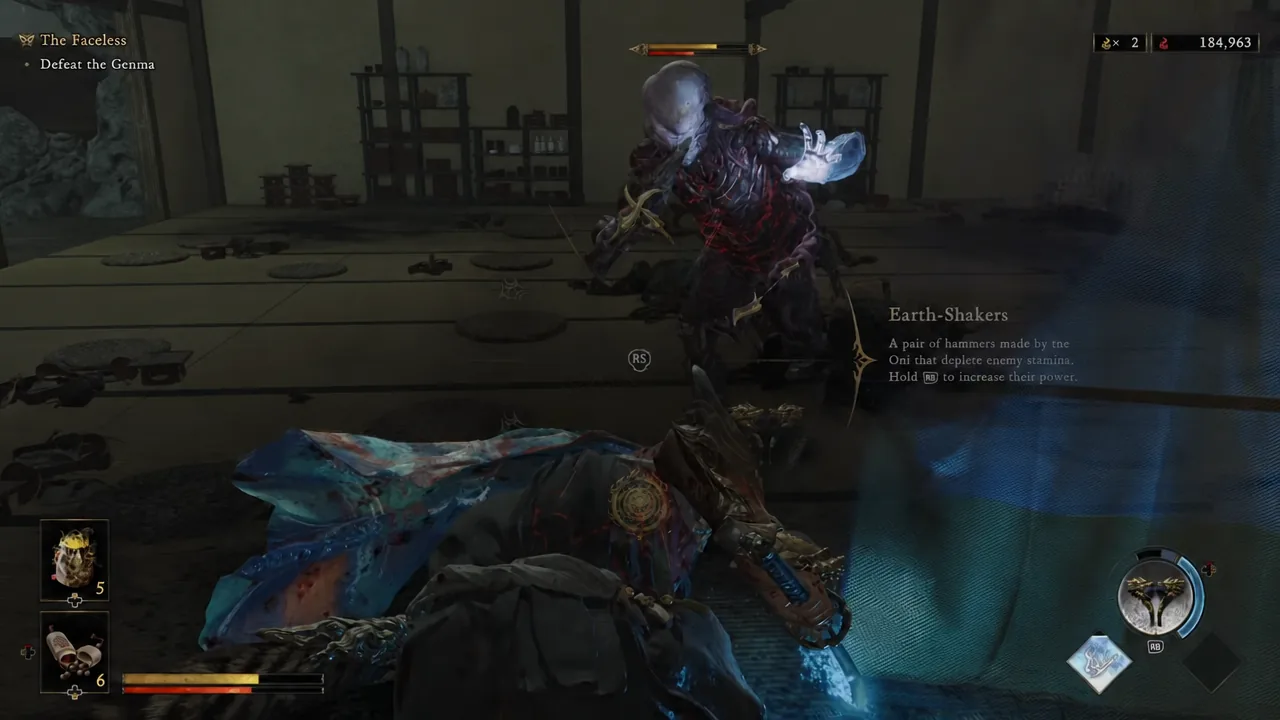
Tip: turn on the Action Prompts setting. It displays the correct button during sequences such as Blade Barrage, where it is otherwise unclear whether you should be pressing Square or Triangle. Oni Armaments have their own inputs too — the Earth-Shakers hammers, for instance, gain power while you hold R2.
How to make Action Mode easier without switching difficulty
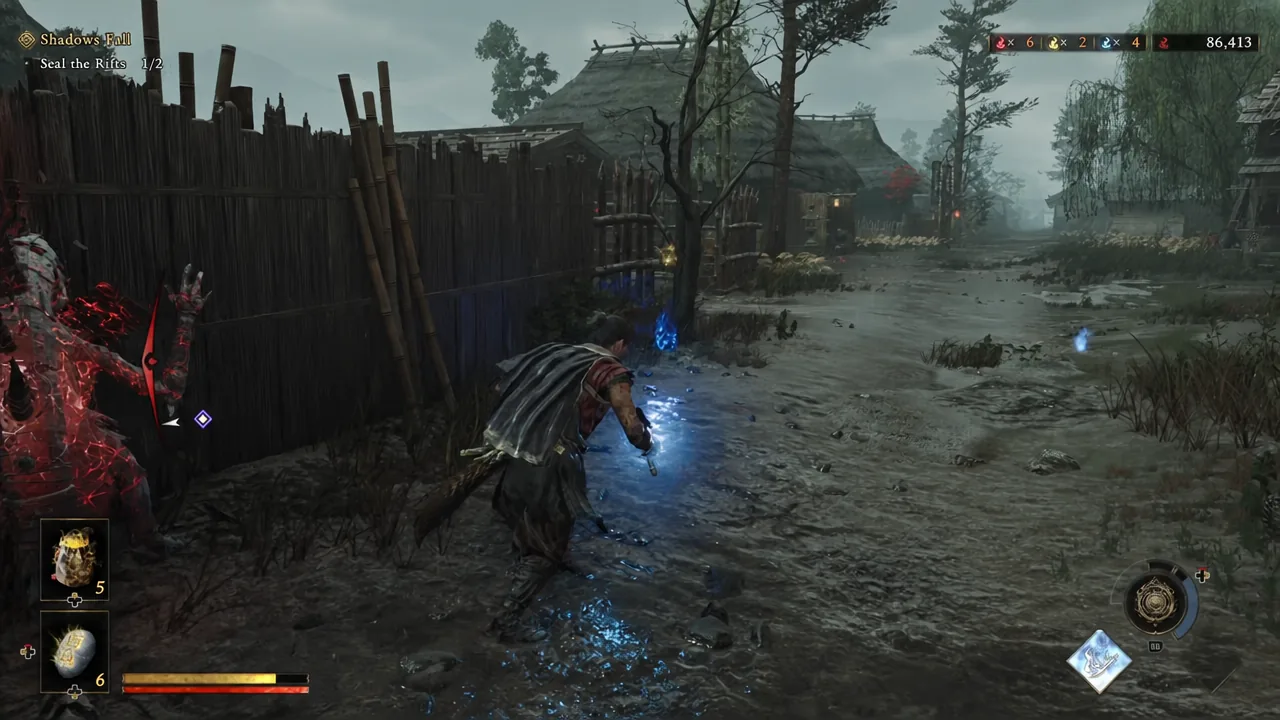
Upgrades are plentiful and cheap by the standards of the genre. Picking up materials as you go through each level, then spending Red Souls, is usually enough to upgrade your sword and armour several times over. Yellow Souls extend your life bar, and Blue Souls fill the Oni Armament meter for special attacks. Watch for enemies that eat unclaimed souls and use them against you.
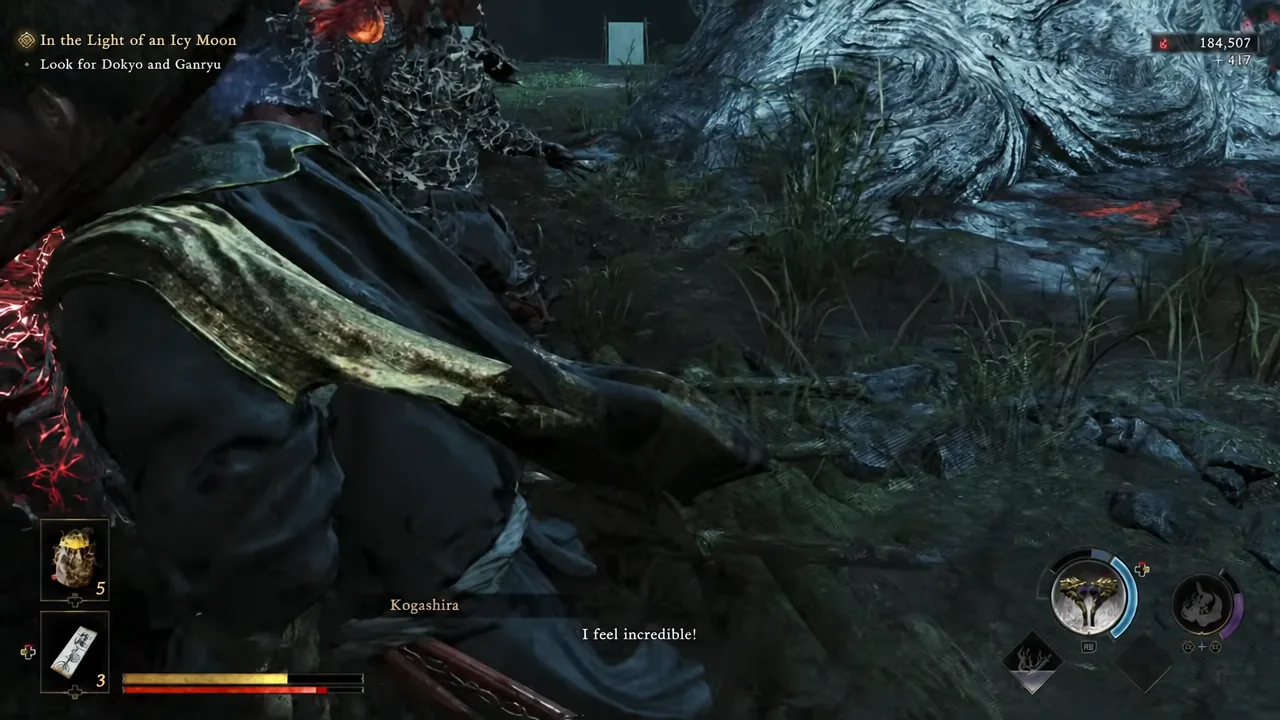
The reverse also works. Players chasing a harder first run deliberately skip sword and armour upgrades, which keeps Action Mode tense well into the mid-game. That works until roughly the Ganryu fight, where the missing stats start to show.
Is it a Souls-like? Not really
Way of the Sword borrows the parts of that formula that suit it — punished aggression, pattern reading, timed healing — but the overall structure is a linear, mission-based action game with far less systemic complexity. Capcom said before release that difficulty would not be the focus, and the finished game reflects that outside of boss encounters.
Opinion splits on how hard Action Mode really is, and the split is predictable. Players with deep experience in Devil May Cry, Ninja Gaiden or Souls games generally find it comfortable and criticise the passive trash mobs. Players coming in without that background report Action Mode feeling closer to a hard difficulty, mostly because of the number of bosses and sub-bosses and the phase resets. Both camps agree on the same underlying fact: the crowds are easy, the bosses are not.
If you are undecided, start on Action Mode. You lose nothing by dropping to Story Mode later for a fight that is not clicking, and Story Mode is still a real normal difficulty rather than a walkover. If you clear the game and want the version that actually resists you, the post-clear hard difficulty is waiting.