The Hantu is the ghost that gets stronger the colder the building gets. It thrives in freezing rooms, sprints through them during hunts, and slows to a crawl anywhere the heating is doing its job. That single relationship between temperature and speed is what makes it identifiable even when the evidence is ambiguous.
Quick answer: Confirm Freezing Temperatures, Ghost Orb, and Ultraviolet, then watch a hunt. If the ghost moves fast in the cold ghost room, visibly slows down in warm rooms, and never accelerates when it spots you, it is a Hantu. Turning the breaker off before the hunt makes it exhale visible frosty breath, which confirms it outright.
Hantu evidence in Phasmophobia
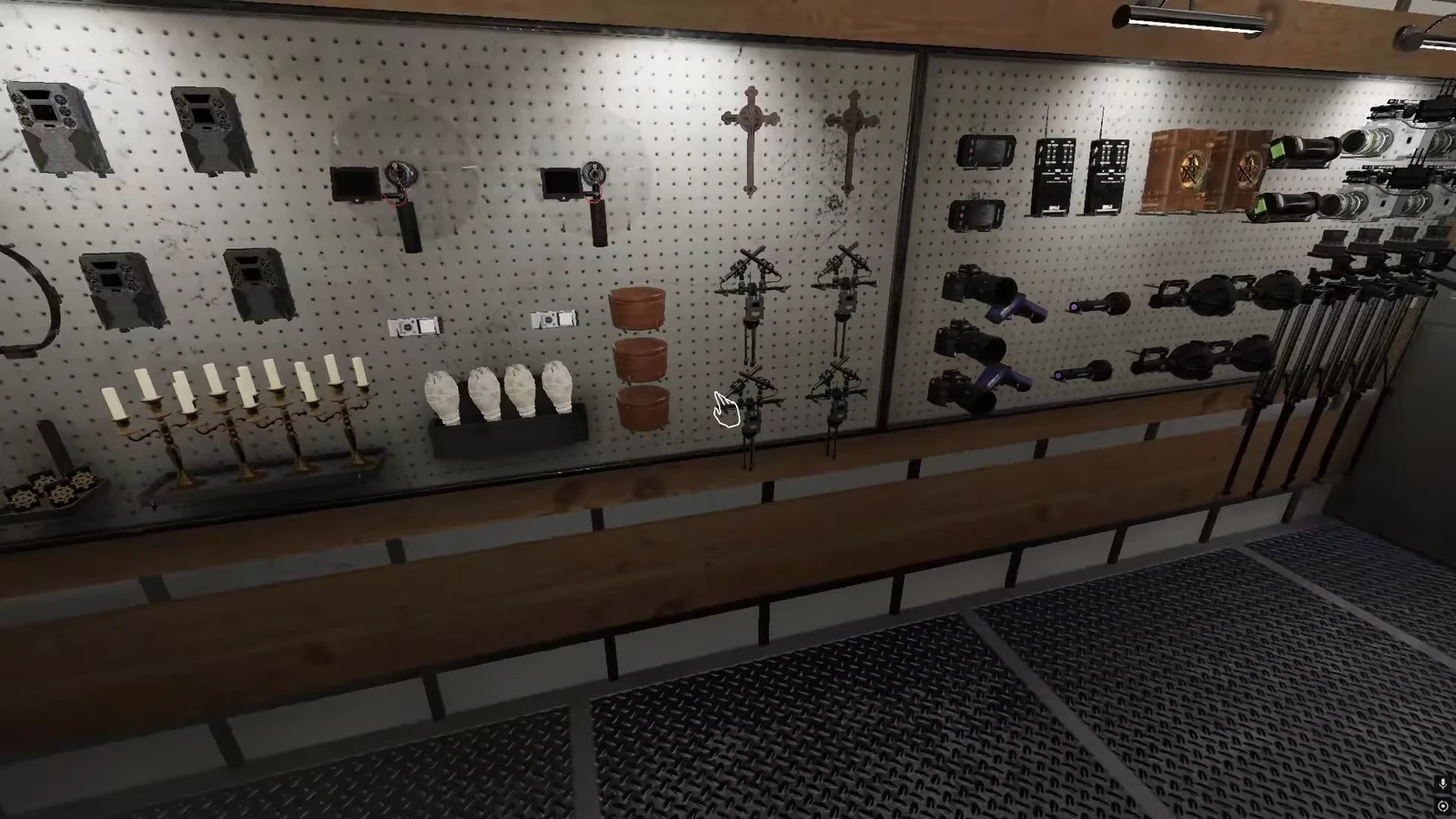
The Hantu uses three evidence types, and the journal marks all three the moment you select it.
| Evidence | How you collect it |
|---|---|
| Freezing Temperatures | Thermometer reading at or below 0°C (32°F), usually in the ghost room |
| Ghost Orb | Visible on a video camera feed or through night vision in the ghost room |
| Ultraviolet | UV light on handprints, fingerprints, or footprints left in salt |
On custom games limited to one or two evidence, Freezing Temperatures is always one of the pieces the Hantu gives you. That works both ways. If a reduced-evidence contract hands you anything other than Freezing Temperatures, the Hantu is off the board immediately.
Note: collecting all three does not close the case by itself. The Hantu is one of the ghosts whose full evidence set can also be produced by The Mimic, alongside the Kormos and the Onryo. Try the Spirit Box before you commit. A response means you are dealing with The Mimic instead.
Collect the three evidence types
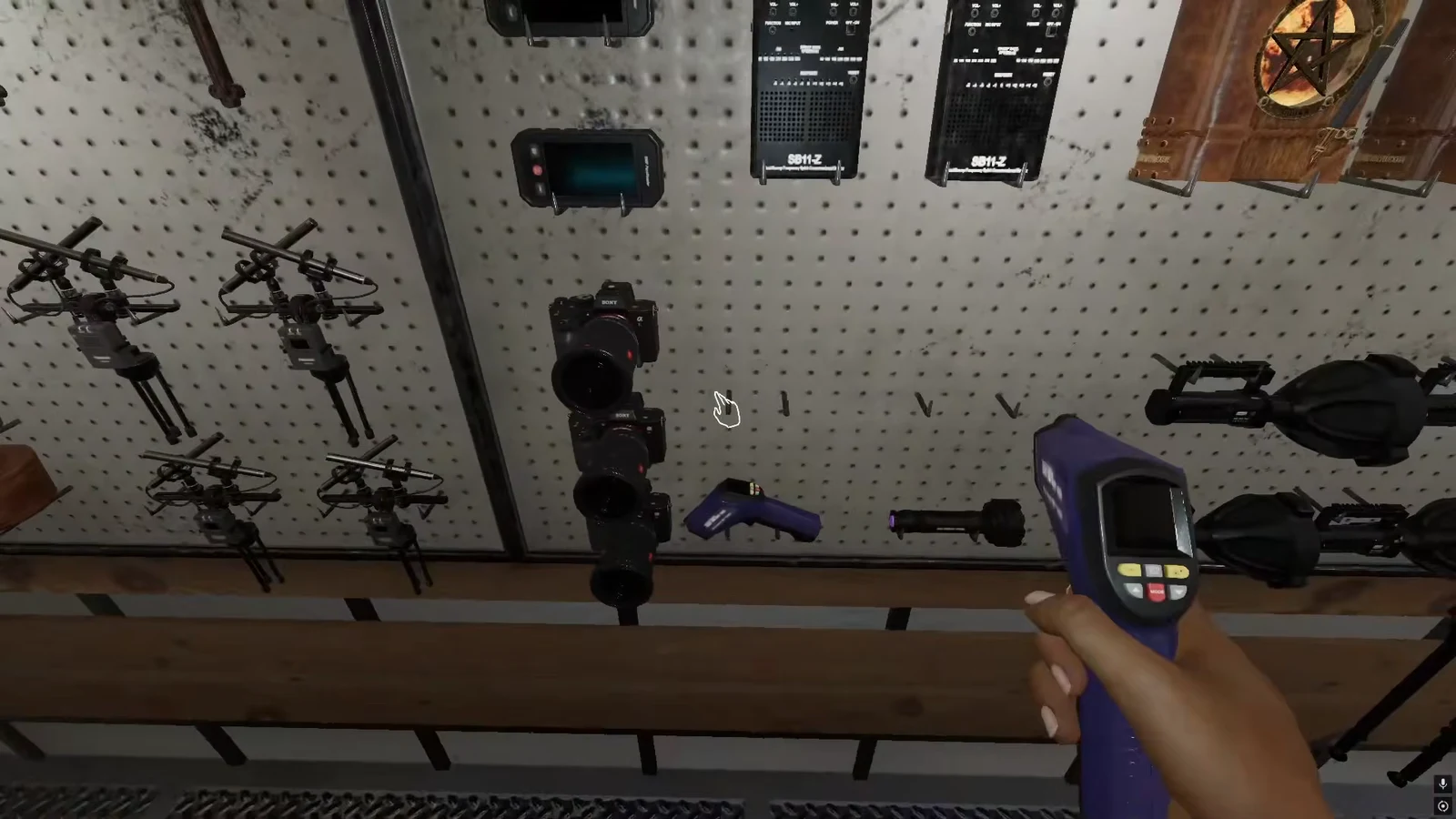
Freezing Temperatures can linger in a room the ghost has already left, so more than one area can read as freezing at the same time. Treat the coldest sustained room as the ghost room rather than the first cold reading you find.
Hantu speed by room temperature
During a hunt, the Hantu’s movement speed is set by the temperature of whatever room it is currently passing through. It recalculates as it moves, which produces a distinctly uneven footstep rhythm.
| Room temperature | Hantu speed |
|---|---|
| Above 15°C (59°F) | 1.4 m/s |
| 12–15°C (53.6–59°F) | 1.75 m/s |
| 9–12°C (48.2–53.6°F) | 2.1 m/s |
| 6–9°C (42.8–48.2°F) | 2.3 m/s |
| 3–6°C (37.4–42.8°F) | 2.4 m/s |
| 0–3°C (32–37.4°F) | 2.5 m/s |
| Below 0°C (32°F) | 2.7 m/s |
For a reference point, a player sprinting continuously off cooldown averages 2.125 m/s. That makes the Hantu noticeably slower than you above 12°C, roughly matched between 9°C and 12°C, and faster than you below 9°C.
The other half of the tell is what the Hantu does not do. Unlike most ghosts, it gets no line-of-sight acceleration. Standing in its eyeline during a hunt will not make it speed up, so any change in pace you hear comes from the room it is in, not from whether it can see you.
Confirm a Hantu during a hunt
The fastest confirmation uses the freezing breath. While the fuse box is off, a hunting Hantu puffs out visible frosty breath near its head roughly every three seconds, in any room. No other ghost does this, it is not tied to a difficulty setting, and it works on no-evidence contracts. The catch is that dead players cannot see it, so you have to survive long enough to look.
The safer alternative is to leave the breaker on and listen from a hiding spot. Track the footstep rate as the ghost moves between the cold ghost room and warmer parts of the map. Sudden, seemingly random changes in cadence that line up with room temperature point to a Hantu.
Experienced players can also loop the ghost around furniture in a warm room while carrying incense. If it never speeds up on sight and shows no other speed quirks, it is likely a Hantu. Be aware that the ghost’s presence cools the room down as the loop continues, so the longer you go, the harder that loop becomes. On medium and large maps, or during extended cursed hunts, spread the loop across multiple rooms instead of committing to one.
Rule out ghosts with similar speed behavior
Several ghosts change speed mid-hunt, which is where most misidentifications happen. Each one has a different trigger.
| Ghost | Why it gets confused with a Hantu | How to separate them |
|---|---|---|
| Raiju | Speeds up near active electronics | Freezing Temperatures as evidence eliminates it; on no-evidence runs, remove electronics first |
| Jinn | Speeds up when it spots a distant player, and cannot turn the fuse box off | Keep everyone hidden, or turn the breaker off just before the hunt |
| Moroi | Gets faster as average sanity drops | Hold sanity steady and avoid medication or sanity-draining cursed items mid-hunt |
| The Mimic | Can produce the exact same three evidence types | Test the Spirit Box; a response means Mimic |
There is one more clean elimination. A Hantu cannot switch the fuse box on, and it is twice as likely as normal to switch it off. If you watch the power come back on by itself, the ghost is not a Hantu.
Keep the building warm while you investigate
Leaving the breaker on is the safer default. Warmer ambient temperatures push the Hantu down into its slowest brackets everywhere except the ghost room, which stays cold as long as the ghost is sitting in it. Only flip the power off when you specifically want the freezing breath confirmation.
Distance matters more than usual here. The Hantu is at its most dangerous inside and immediately around the ghost room, so leave that area the moment a hunt starts rather than trying to hide in it. Light Snow weather compounds the problem, especially on outdoor maps such as Maple Lodge Campsite and Camp Woodwind, where ambient temperatures drop with the power off and the ghost gains speed across large stretches of the map.
One behavior worth noting but not relying on. Because turning the fuse box off draws from the same ability slot as ghost events, the Hantu triggers slightly fewer events than average. On Low event frequency that works out to roughly 29 percent instead of about 41 percent. Events are random enough that this is not a usable tell on its own, and a Shade will be quieter still.
Once you have the three evidence types plus either the freezing breath or a clear temperature-linked speed change with no line-of-sight acceleration, the identification is locked. Select Hantu in the journal, get everyone to the van, and end the contract before the cold room turns into a problem.