The Yurei is one of the 24 ghosts in Phasmophobia, and it is unusual because nothing about the way it hunts gives it away. Its speed is normal, its appearance is normal, and it has no hunt-specific tell. Everything that identifies a Yurei happens outside of hunts, in the way it handles doors and the way it eats your sanity.
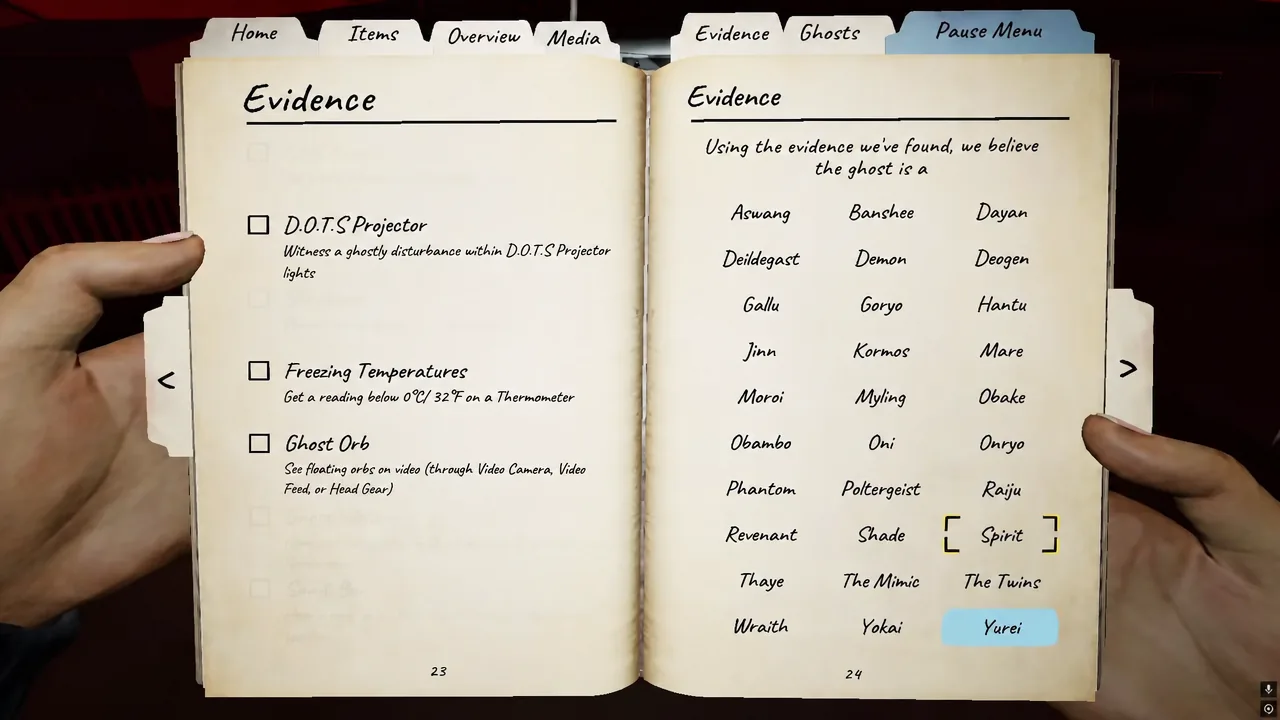
Quick answer: A Yurei gives Ghost Orb, Freezing Temperatures, and D.O.T.S. Projector. Without evidence, leave doors propped open near the ghost room and watch for a door swinging fully shut on its own while every nearby player instantly loses 15% sanity, with no hunt or ghost event happening.
Yurei evidence in Phasmophobia
On Amateur, Intermediate, and Professional contracts, all three pieces of evidence are available, so the Yurei is a straightforward journal entry once you collect them.
| Evidence | How you collect it |
|---|---|
| Ghost Orb | White floating orb seen through a video feed, such as a night vision camera in the ghost room. |
| Freezing Temperatures | Thermometer reading at or below freezing in the ghost room, usually with visible breath. |
| D.O.T.S. Projector | The ghost’s silhouette moving through the projector grid, seen on camera or through a video feed. |
Ghost Orbs are the awkward one here, because The Mimic produces fake orbs that look identical. If you see orbs, confirm the other two evidence types before you lock in your answer.
The sanity drain ability, and how doors expose it
The Yurei’s journal strength says it has a stronger effect on people’s sanity. In practice, that is a single ability with a very specific trigger. When the Yurei uses it, the game first checks whether the room it is currently in has an open door. If one is open, two things happen at once.
- Every player within 7.5 metres of the ghost instantly loses 15% sanity. Players outside the investigation area are not affected.
- One open door in the room is picked at random and closed fully, smoothly, with no creaking sound. That door registers as an EMF level 2 interaction.
Only one door closes per use of the ability. The drain also applies to dead players, so a teammate who gets revived can come back with less sanity than they died with.
Doors that count include normal room doors, exit doors, large tent doors on the campsite maps, the Dining Room cabinet doors and the Living Room and Games Room fireplace doors on Point Hope, and the washing machine and Morgue doors on Sunny Meadows. Hiding spot doors do not count. Large tent doors will not close all the way even when the ability fires.
The door test: how to identify a Yurei without evidence
On Nightmare, Insanity, and evidence-restricted challenge modes, doors are your main tool. The Yurei applies far more force to doors than any other ghost, which means it physically cannot nudge a door a few degrees outside a hunt. It either opens a door completely or closes it completely.
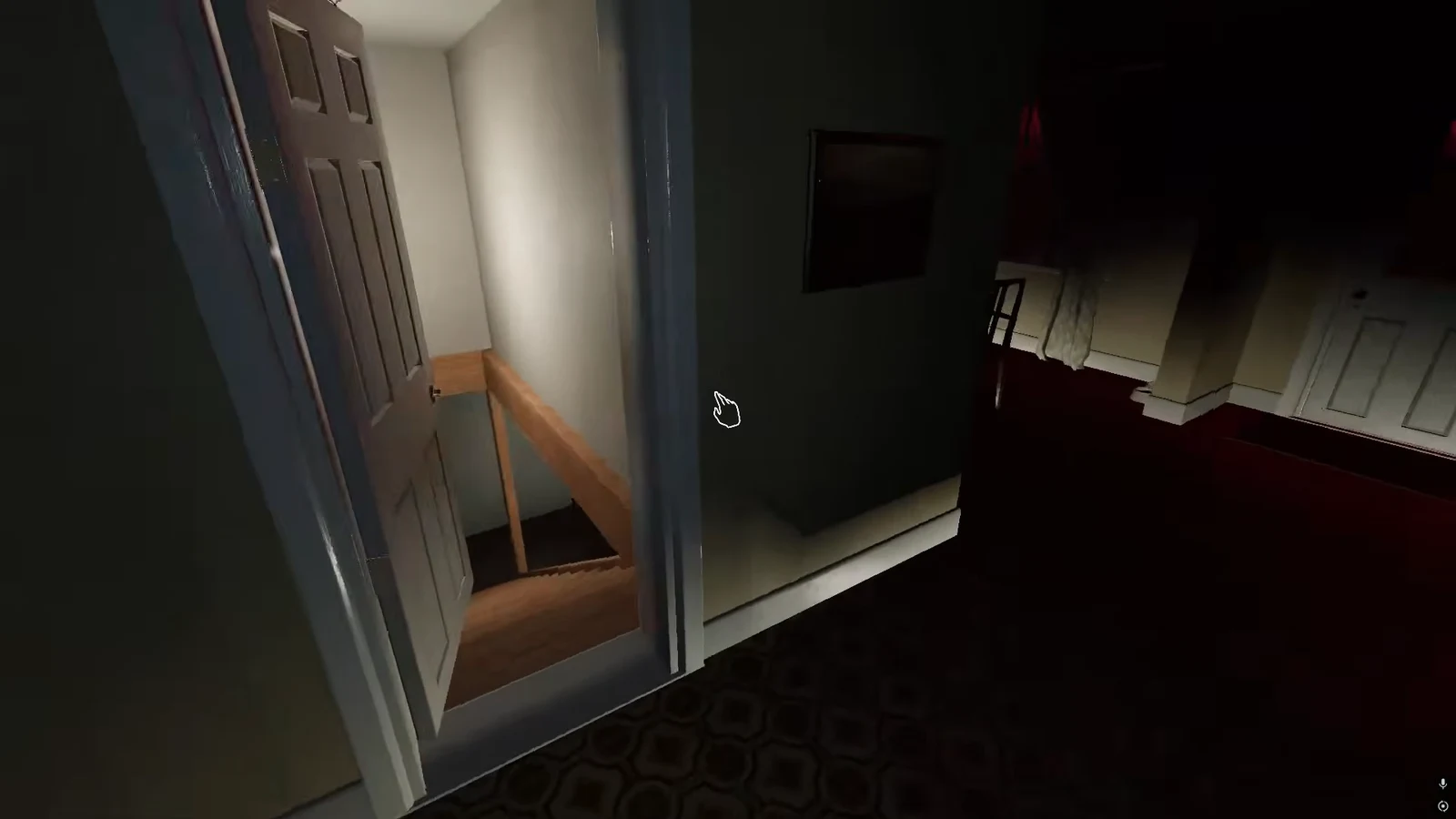
Note: run this test carefully. Every successful use of the ability pushes your team closer to a hunt, so the more times you bait it, the more dangerous the contract becomes.
How to rule a Yurei out from a door interaction
Ruling the Yurei out is faster and safer than confirming it. Outside of a hunt, if you see a door move only slightly, wobble, or come to rest partway open, it is not a Yurei. That partial movement is impossible for it.
| What you see (outside a hunt) | What it means |
|---|---|
| Door nudged slightly or left partly open | Not a Yurei |
| Door closes fully, no sanity drop | Could be any ghost; not confirmation |
| Door closes fully plus an immediate 15% sanity drop nearby | Very likely a Yurei |
| Exit door closes with no hunt or ghost event | Almost certainly a Yurei |
The important caveat is that every ghost can close a door completely and smoothly. A door going from fully open to fully shut is not proof by itself. The sanity drop is the part that makes it conclusive.
This test also stops working during hunts. While hunting, the Yurei moves doors the same way any other ghost does, including small partial movements, so ignore anything you see once a hunt begins.
The 90-second smudge test for a Yurei
Some rooms have no usable door at all. Hallways, open tents at Maple Lodge and Camp Woodwind, and certain rooms in Brownstone High School, Sunny Meadows, and the Prison leave the Yurei unable to use its ability. When that happens, fall back on its journal weakness, which is that smudging its place of death traps it temporarily and reduces how much it wanders.
The failure conditions are just as useful. If the ghost trips a sensor and leaves the room without a ghost event forcing it out, or if it shows up in a D.O.T.S. state inside that window, it is not a Yurei. If a ghost event happens outside the favourite room, do not call it yet. Wait for the event to end, and only rule the Yurei out if the ghost then roams away from its room.
Common reasons the Yurei test fails
Most failed identifications come down to a handful of specific situations rather than bad luck.
- The ghost is in a room with no linked door, so the ability can never fire. Hallways and open tent areas are the usual culprits.
- Every door near the ghost is already closed. The ability checks for an open door first, so leave at least one open at all times.
- Your investigators were more than 7.5 metres away, or outside the investigation area, so nobody registered the sanity loss.
- You judged the door movement during a hunt, when the Yurei behaves like every other ghost.
- The Yurei simply chose not to use its ability. It has no increased chance to interact with doors outside of that ability, so it can stay quiet for long stretches.
One quirk worth knowing about is a bug where the Yurei does not fully open or close locker doors, so treat locker movement as unreliable for this test.
For all its reputation, the Yurei’s 15% drain is fairly modest next to a Jinn’s 25%, and it does not increase passive sanity loss or drain faster from line of sight the way a Phantom does. The real danger is that a couple of quick ability uses can drop the whole team into hunting range before anyone has checked the monitor, which is exactly why the truck’s sanity display doubles as your best identification tool here.