Project Zomboid’s Build 42 landed on the stable branch as version 42.20 on July 29, 2026, and it is the largest overhaul the game has had. The Knox Country map is now more than twice as big, animals and deeper crafting have arrived, official multiplayer is in, and nights are genuinely darker thanks to a rebuilt lighting system. If you skipped the unstable testing, jumping back in will feel close to a new game.
Quick answer: Build 42 Stable (version 42.20) doubles the map, adds new towns, basements, skyscrapers, farmable animals, seasonal crops, a new aiming system, official multiplayer with anti-cheat, and a lighting overhaul. Old Build 41 saves will not load in Build 42, so you start fresh.
Build 42 Stable at the release point
| Detail | Value |
|---|---|
| Version | 42.20 (Stable branch) |
| Release date | July 29, 2026 |
| Map size | More than doubled, roughly 1,400 new buildings |
| New towns | Brandenburg, Irvington, Ekron, Echo Creek |
| Old saves | Build 41 saves do not carry over |
| Platforms | PC, Mac, Linux |
The developer, The Indie Stone, describes Build 42 as one of the most substantial evolutions in the game’s history and a foundation for what comes next, including future NPC work. You can grab or update the game from the official Project Zomboid store page.
A much bigger Knox Country to explore
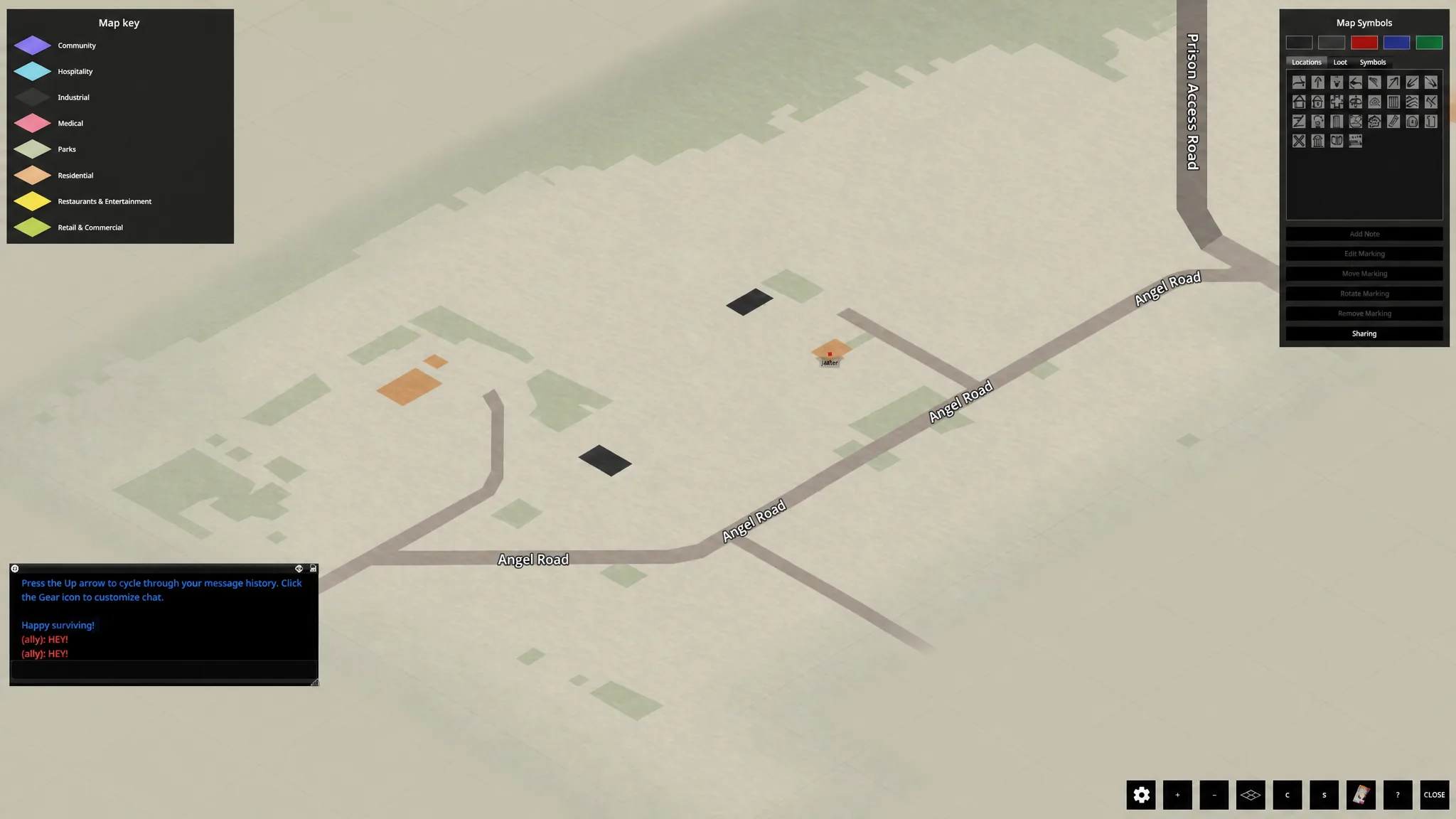
The map’s growth is the headline change. Existing towns like Riverside, West Point, Rosewood, Fallas Lake, Muldraugh, Ekron, and Dixie have been rebuilt with new tiles, consistent landscaping, and town-specific styles. On top of that, fresh locations join the world, including a Wild West tourist town, a docked steamboat, a racetrack, a lakeside guesthouse, and an abandoned sanatorium.
The map’s outer edges now hold large stretches of randomized wilderness, so you can abandon civilization entirely and live deep in the forest. Interiors are randomized too. Some houses may already be looted and trashed, interior doors and lights vary between playthroughs, and you can finally scrub grime off walls.
Basements and skyscrapers add vertical space
Technical work on height limits opened the world upward and downward. Below ground you can find bunkers, panic rooms, and strange hidden sets tucked under suitable houses. Above ground, Louisville’s skyscrapers now reach up to 32 zombie-filled floors, which means high-value loot but a serious risk on every climb.
Lighting overhaul makes nights harder
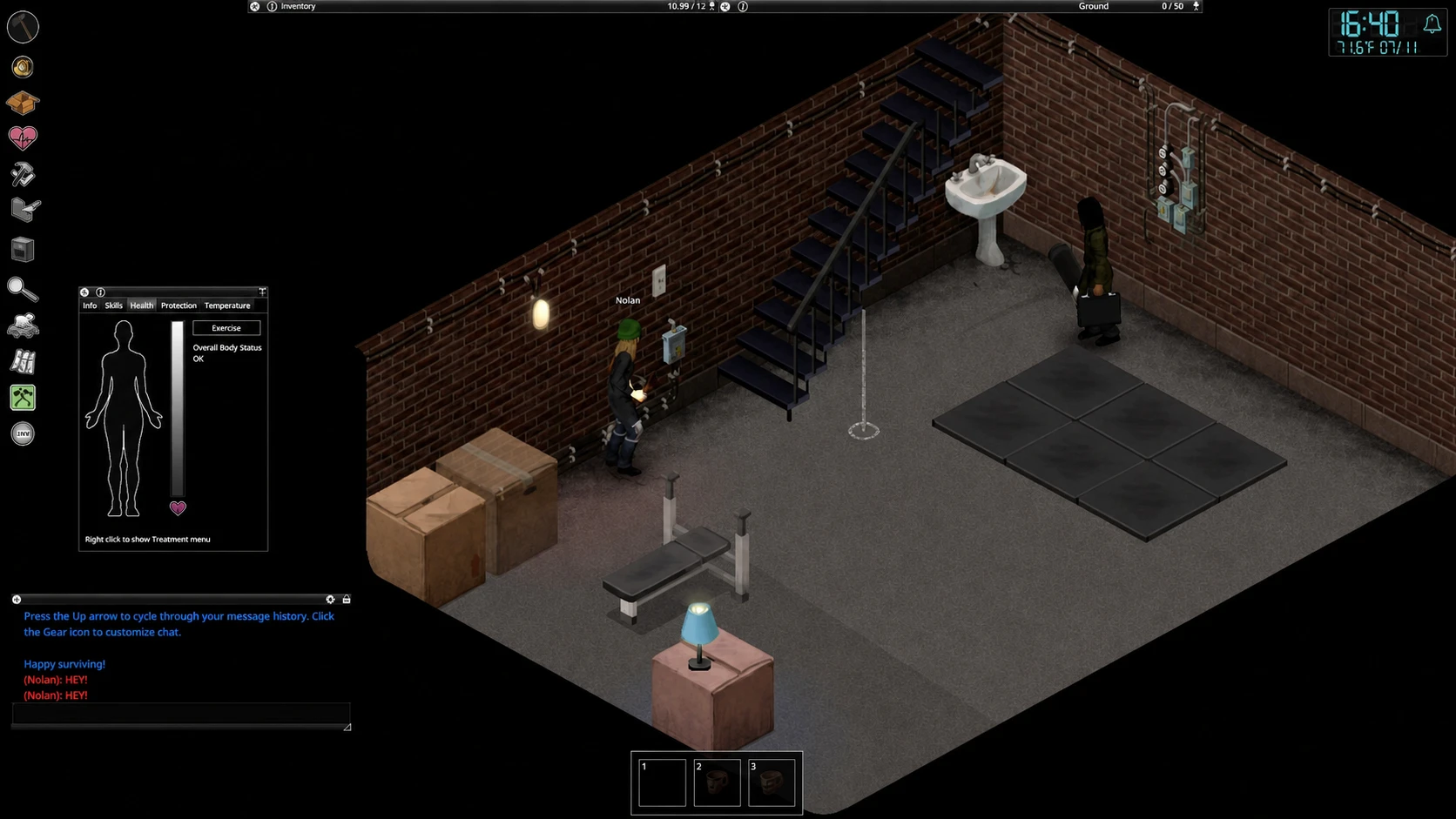
Light now bounces off walls and leaks through windows, doors, and other openings, with a pass built around 1990s-era bulbs. Streetlights, exterior lamps, and indoor bulbs look more grounded, but the trade-off is much darker nights and deeper shadows. Your flashlight matters more, and so does staying quiet enough not to draw a horde while you use it.
Animals, farming, and fishing turn survival long-term
Once the grocery stores are picked clean, you now have real ways to feed yourself. You can find, hunt, and raise animals including chickens, sheep, pigs, cows, rabbits, rats, and deer. Domestic animals produce meat, leather, eggs, manure, and milk, while wild animals can be tracked by droppings and paw prints. Some late-game crafting recipes lean on what you gather from hunting. Spiffo the Raccoon also finally shows up in Knox Country.
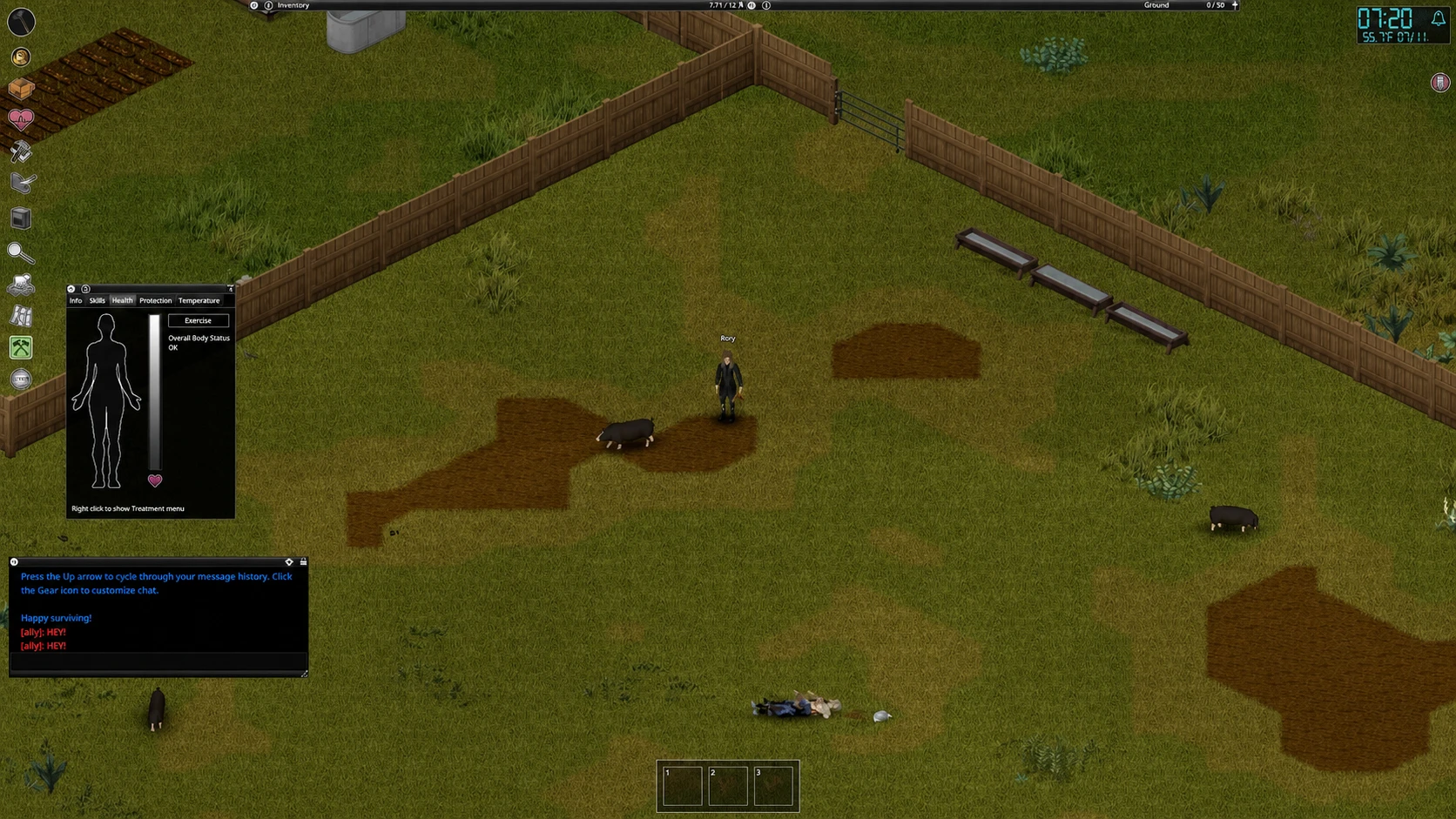
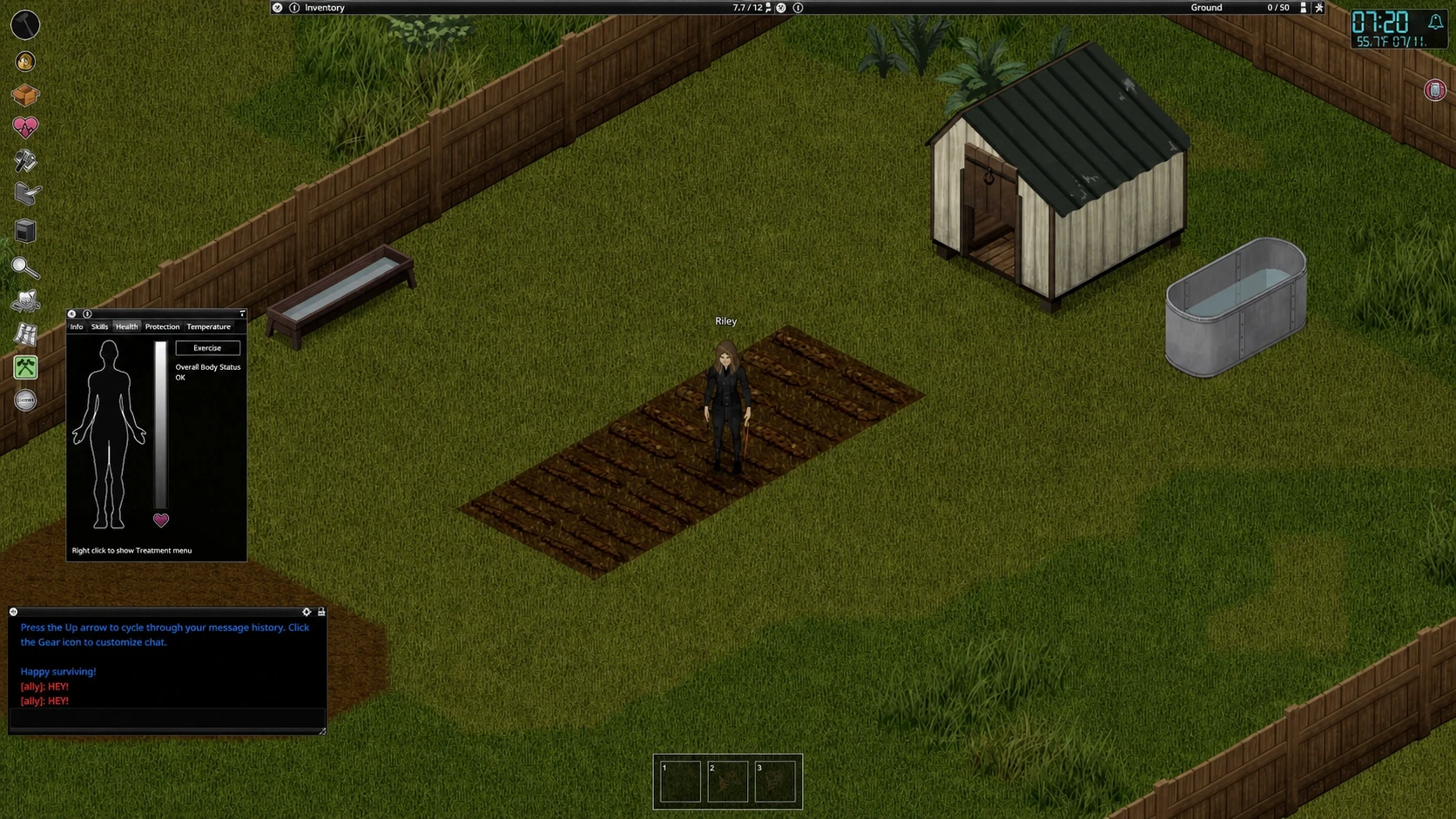
Farming is now a seasonal system rather than a plant-and-wait chore. New crops such as corn, peas, and tobacco arrive alongside herbs like rosemary, and each plant has an ideal planting window. Plant at the wrong time of year and the crop can fail. New tools let you pull stumps, scythe grass, and prepare fields, so building a self-sufficient base takes planning.
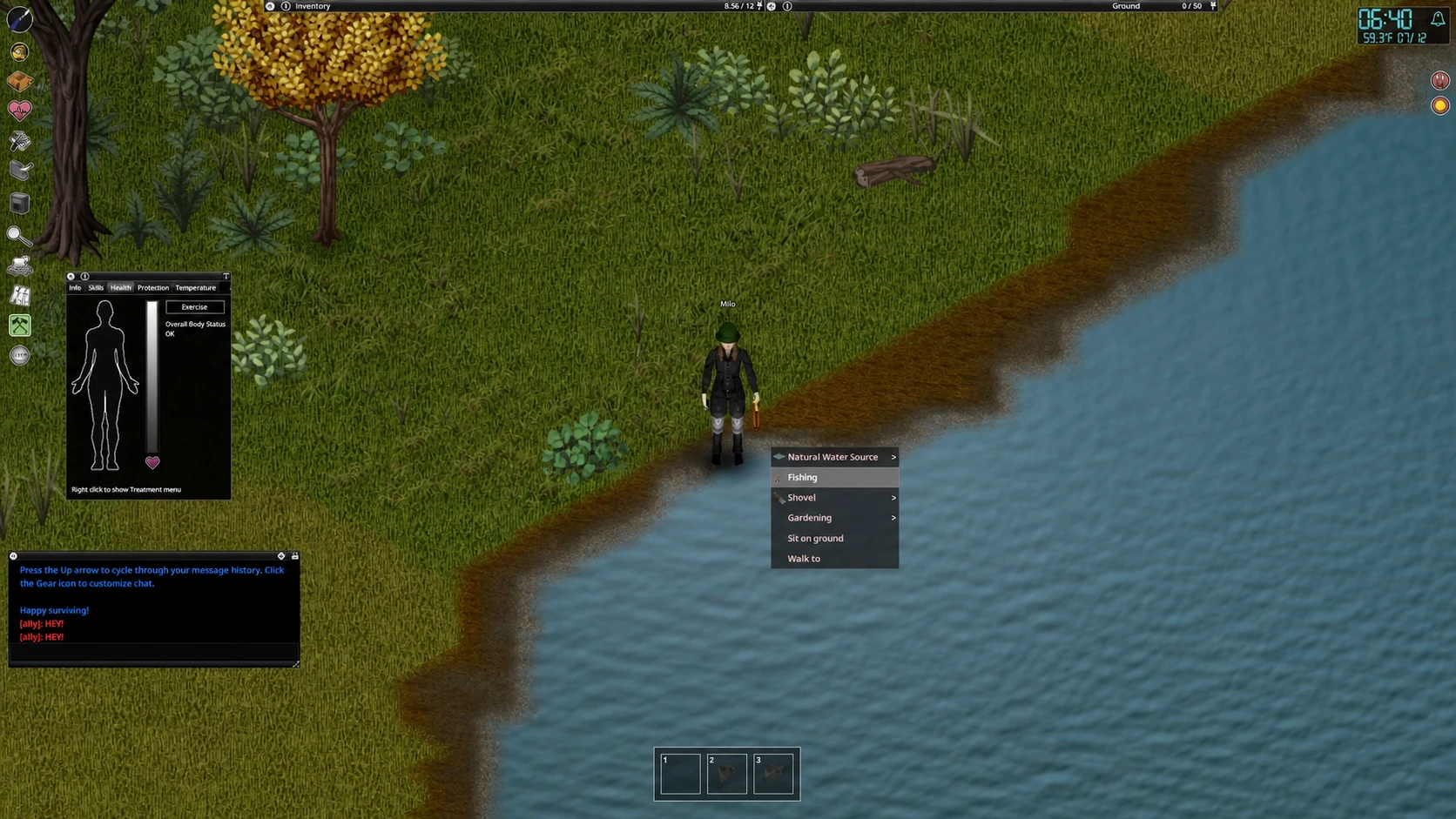
Fishing is more interactive as well. Fish create visible splashes on the water, and nearby noise scares them off, so a loud spot can temporarily go quiet. You can craft chum to draw fish to a specific area, which turns fishing into a planned food source instead of busywork while crops grow.
Combat, guns, and the new aiming system
Firearms have been rebuilt with new 3D models, animations, muzzle effects, ammo types, and sound, plus additions like the L92 Lever Action Rifle and JS-3T Tactical Shotgun. The new aiming system lets you target specific spots on a zombie, but accuracy still depends on your survivor’s state. Panic, stress, injuries, and firearm skill all affect where the shot lands, so a calm, trained character outperforms someone who grabbed a gun minutes ago.
Zombies now ragdoll physically when struck by vehicles, gunfire, or explosions. Some melee weapons also track handle and head condition separately along with blade sharpness, so a weapon head can fall off while a broken spear still works as a weaker wooden club.
Base building, clothing, and character personality
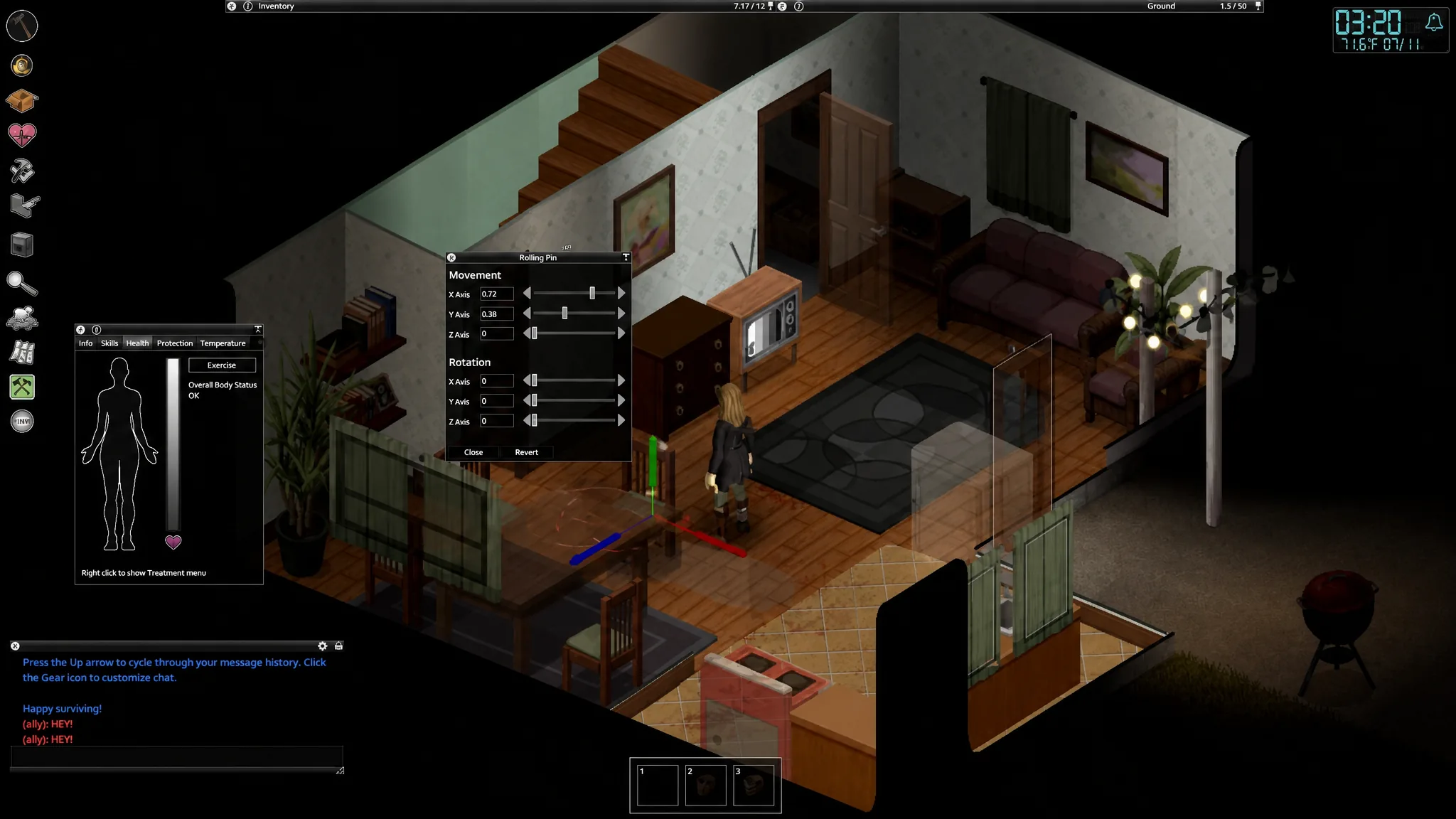
A new 3D item placement system lets you position inventory items anywhere within a tile. You can arrange furniture, display collectibles, and hang guns or crafted melee weapons on walls, which makes a base feel decorated rather than functional. Mannequins help you manage outfits too.
Clothing expands with hundreds of new items, from Halloween masks and unusual hats to SWAT uniforms and craftable armor pieces. Some of the new armor offers real protection, so appearance and defense often overlap.
Survivors are no longer silent. Beyond coughing, sneezing, and heavy breathing, they now make vocal calls like “hey!” and “psst!” and react audibly to carrying heavy loads, sadness, or wounds. These cues signal your character’s condition and give teammates something to hear in multiplayer.
Official multiplayer, anti-cheat, and challenge modes
Build 42 brings official multiplayer with a heavy backend rework. The inventory system and all timed actions now run on the server, with clients only handling visuals, which cuts down on desyncs and stuck-animation bugs. A full anti-cheat suite covering speed, hit, noclip, and inventory checks has been re-enabled on top of the server-side changes, and stackable item transfers are much faster.
Game modes were reshaped as well. The revamped set includes the canon Apocalypse, a faster Outbreak, a cozier Rising, and the brutal Extinction. Two new challenges join the rotation. “Top of the World” starts you at the top of a skyscraper, while “28 Minutes Later” fills a seed with sprinting zombies. Sandbox now lets you raise the zombie count before deletion from 500 up to 5000 and spawn in any Exclusion Zone town you choose.
Save compatibility and staying on Build 41
Build 41 saves will not load in Build 42, so moving up means starting a new character. If you would rather keep an existing Build 41 game or run a Build 41 server, there is a dedicated beta channel. In your Steam library, right-click Project Zomboid, open Properties, and under Game Versions & Betas select “legacy41”. Players who want to finish an Unstable 42.19 game can opt into the “42.19” beta the same way, since 42.19 saves are not compatible with 42.20 either.
You’ll know the update applied when the “Unstable” warning disappears from the main menu and the refreshed menu artwork loads. With hotfixes and a Build 42 support update focused on optimization, modding support, and polish planned through the rest of 2026, this stable release is the starting line for the game’s next stretch rather than the finish.