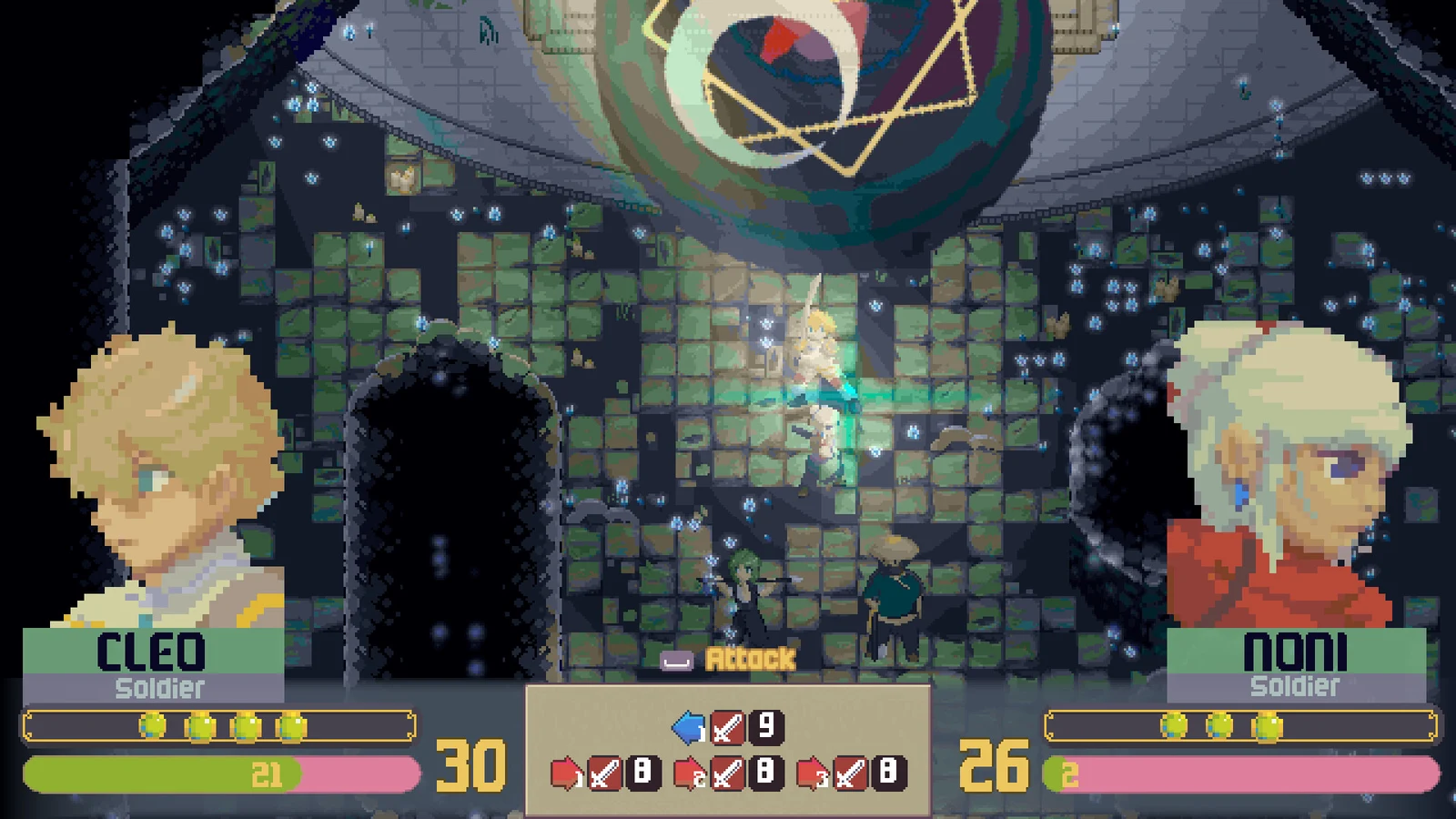
RuneCipher is a pixel-art tactics RPG that mixes turn-based strategy with active, timing-based combat. Its gameplay footage moves between one-on-one duels, grid-style tactical fights, and top-down exploration, framing a story about recruiting allies, digging through ancient ruins, and protecting a guild.
Quick answer: RuneCipher is a strategy RPG built around two combat modes and an SP skill system, and it is coming to PC through Steam and GOG. No release date is currently confirmed.
What RuneCipher is
RuneCipher presents itself as a tactics RPG in the mold of genre classics, told through fantasy anime-style pixel characters. Party members carry class-specific gear such as spears, swords, and daggers, and the cast shown includes named fighters like Bodhi, Noni, Ryn, Seng, Mirja, and Seraph.
The setup follows a group trying to save their guild by uncovering the secrets of an ancient magic. Along the way they recruit unlikely allies and explore long-forgotten ruins, with plot beats touching on a chronos relic and a “Time Rewind” ability. One sequence has the party confronting Prince Cleo in a relic vault, a clash that ends with royal guards surrounding the town.
Between battles, the game switches to isometric, overhead exploration. Characters travel through rainy forests, ascend huge wooden tree structures, take routes beyond a settlement in the Esme region, and explore a village hub featuring a circular tower and training grounds.
Two combat modes: duels and tactical encounters
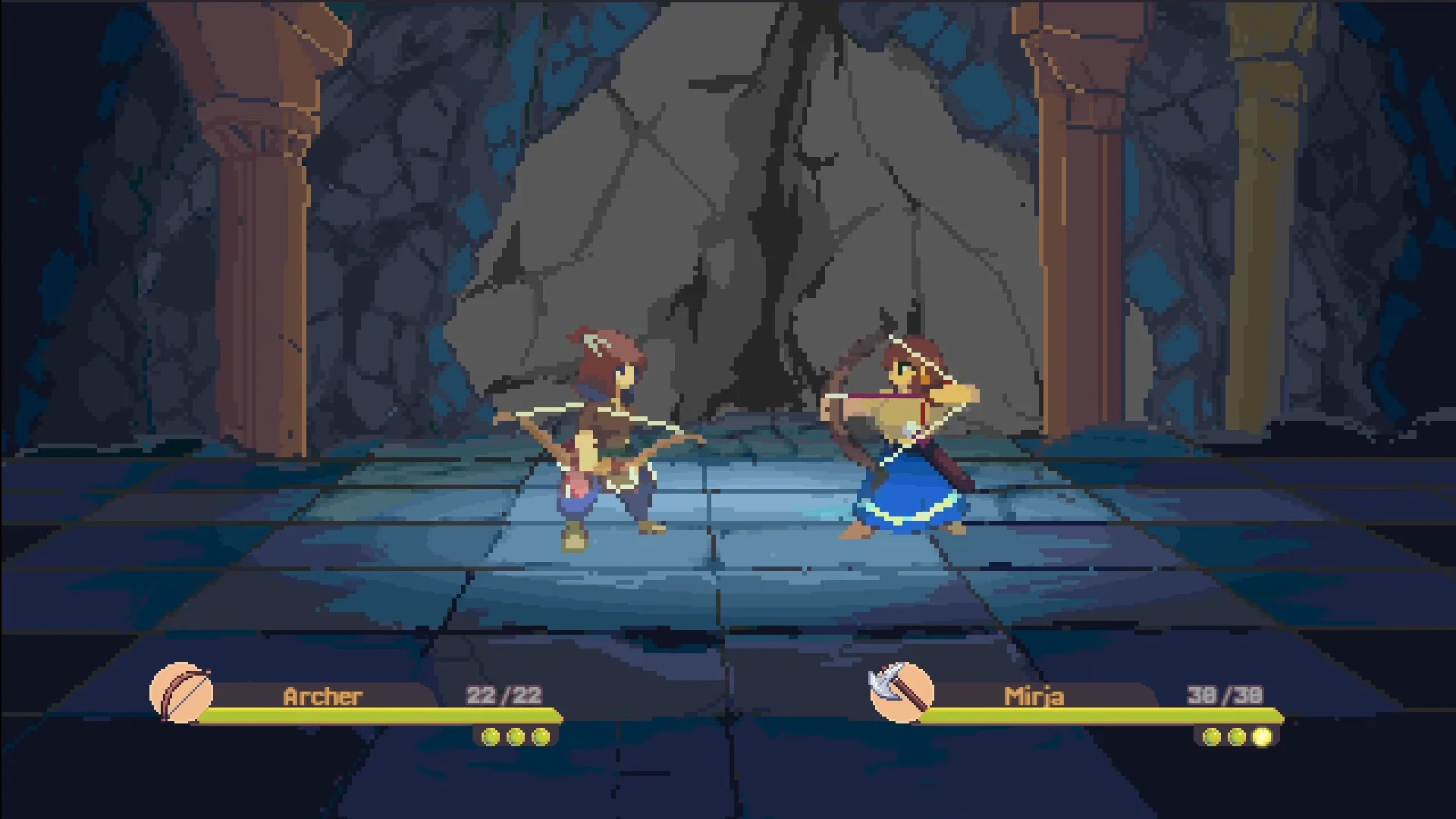
Combat splits into two distinct layers. The first is a 2D side-view duel, a focused one-on-one exchange where two fighters trade blows. Examples include Rogue against Noni, Archer against Mirja inside a stone cavern arena, and Seng against Ryn. Each combatant carries a visible health bar, and duels lean on timing skills like parries and counters.
The second layer is a tactical isometric battle fought across a grid, where you position a party against multiple enemies. These encounters play out on maps like river crossings and ruins, and they favor movement and area effects over a single duel’s back-and-forth.
Skills, SP, and the Break state
Actions draw on an SP, or Skill Point, resource. Powerful moves cost SP to activate, so managing that pool matters during a fight. In one duel, Seng spends 3 SP on a single sword attack, shown on screen as “Spent 3 SP.”
Skills fall into a few clear categories. Some reposition units, such as “SHOVE,” which Bodhi uses to push an enemy on a tactical map. Others are elemental area attacks, like “REND THUNDER,” a lightning spell dropped on a group of enemies fighting in a river.
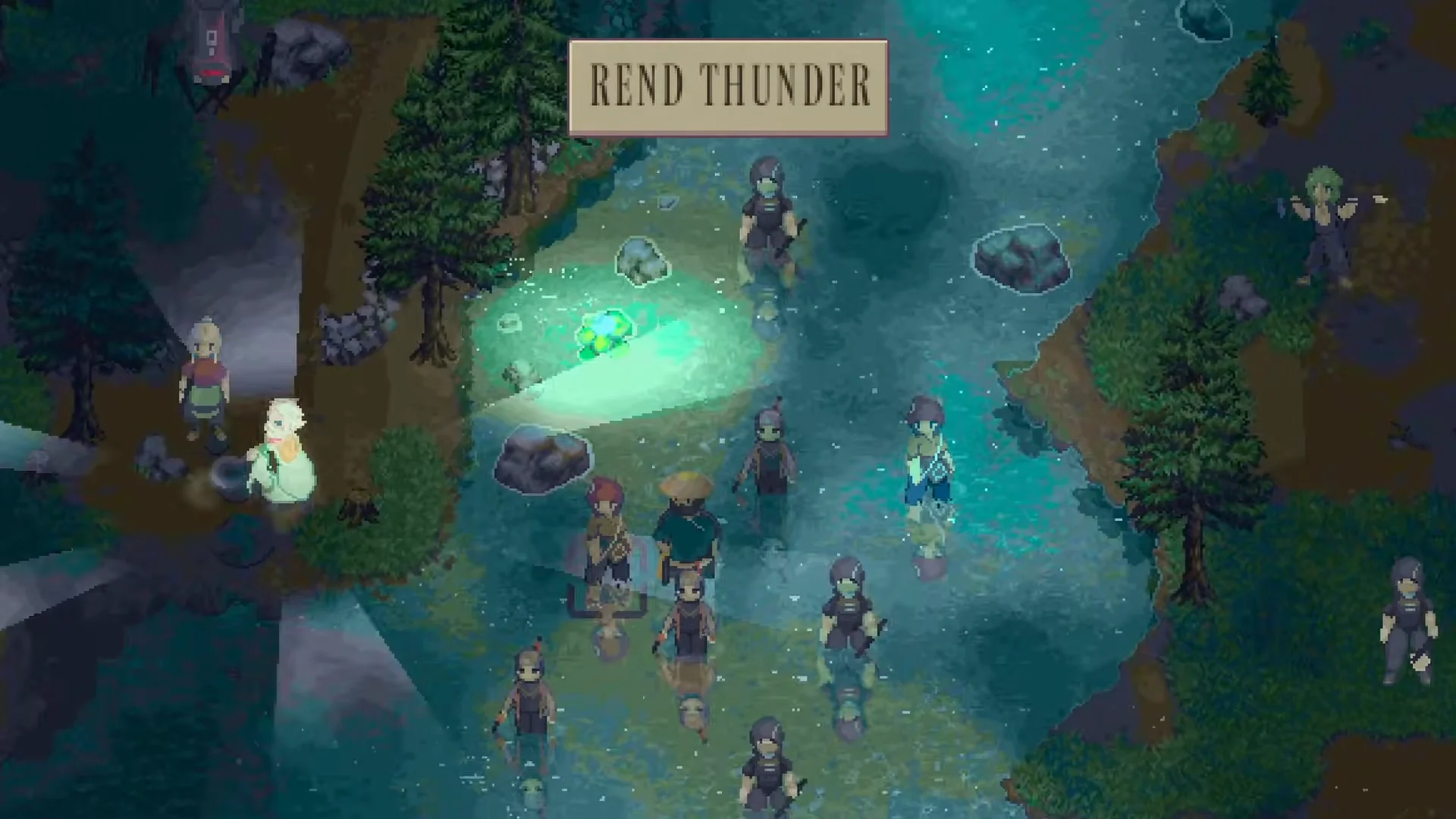
High-impact attacks can also trigger a “BREAK!” state. When Ryn lands “Dragon’s Tide” on Seng, the game flags a Break, a stun or defense-shatter effect that opens a target up. Skill announcements appear as on-screen banners naming the move as it fires.
Platforms and where to wishlist RuneCipher
RuneCipher is confirmed for PC, with wishlisting available on Steam and GOG. The footage closes on the game’s logo and a prompt to wishlist now on both storefronts.
No launch date has been announced yet, so wishlisting is the way to track updates as the project moves toward release. For now, the game’s identity is clear enough: a strategy RPG that asks you to plan on a grid, then commit to timed exchanges in its duels, all wrapped in pixel art and a guild-saving quest tied to ancient magic.