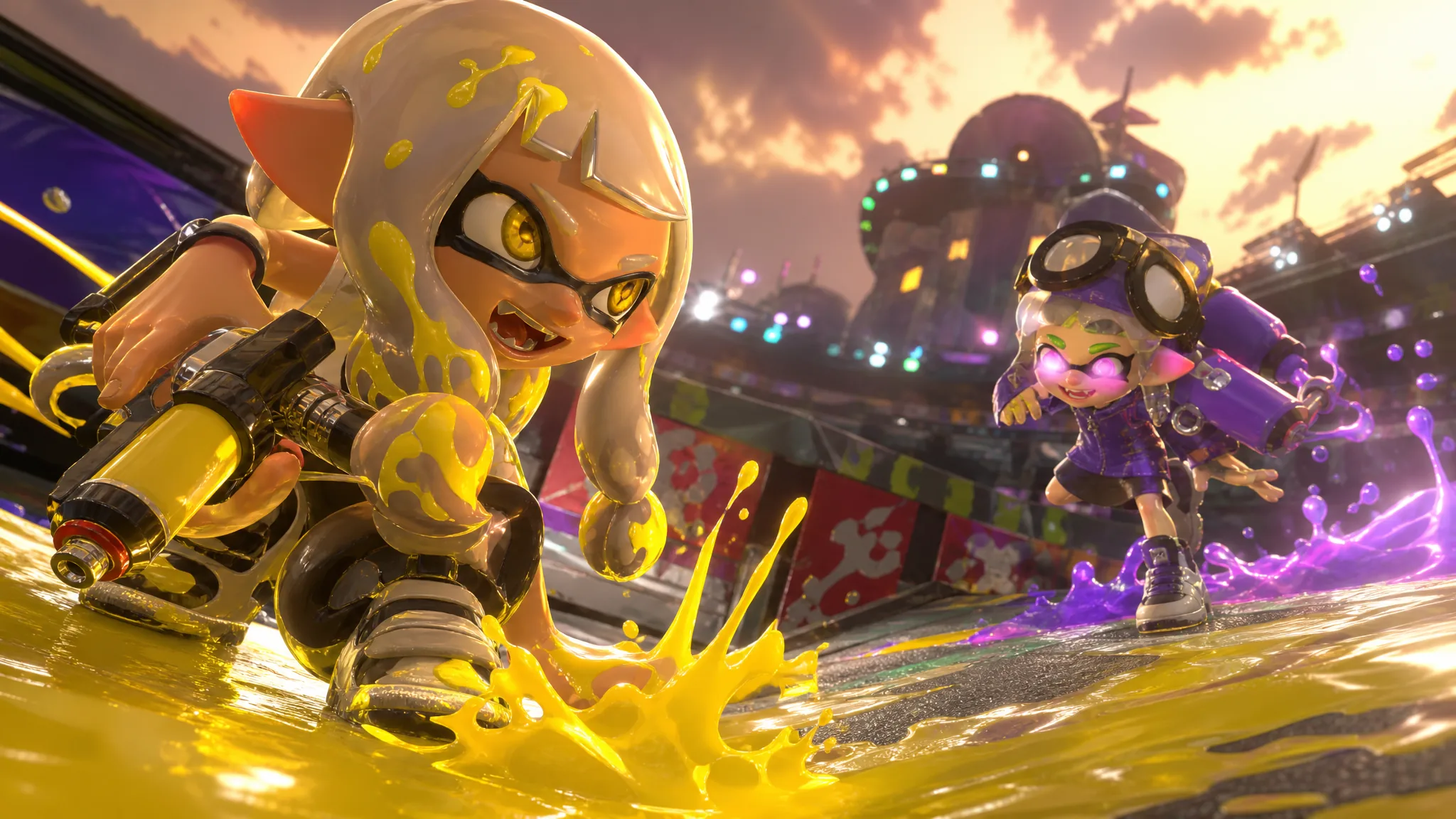
Splatoon Raiders takes the frantic Salmon Run part of Splatoon and turns it into a full single-player adventure. You crash-land on the Spirhalite Islands as a Mechanic, team up with Deep Cut, and spend the game splatting Salmonids, digging up treasure, and slowly building yourself into a walking arsenal. It plays like a looter shooter, so almost everything you do feeds a progression loop.
Quick answer: Clear Salmonid hordes on each island to dig up Spirhalite Shard caches and treasure, then spend that loot on new weapons, craftable gadgets, and Hideout Ship upgrades. You can run every mission solo or with up to three other players, and you keep your loot and experience even when a raid fails.
What you’re doing on the Spirhalite Islands
The game is a Nintendo Switch 2 exclusive that released on July 23, 2026. You play as the Mechanic, a lightly customizable Inkling or Octoling, alongside Shiver, Frye, and Big Man of Deep Cut. After a storm wrecks your helicopter, the crew sets up a floating base called the Hideout Ship and starts raiding the islands for valuables.
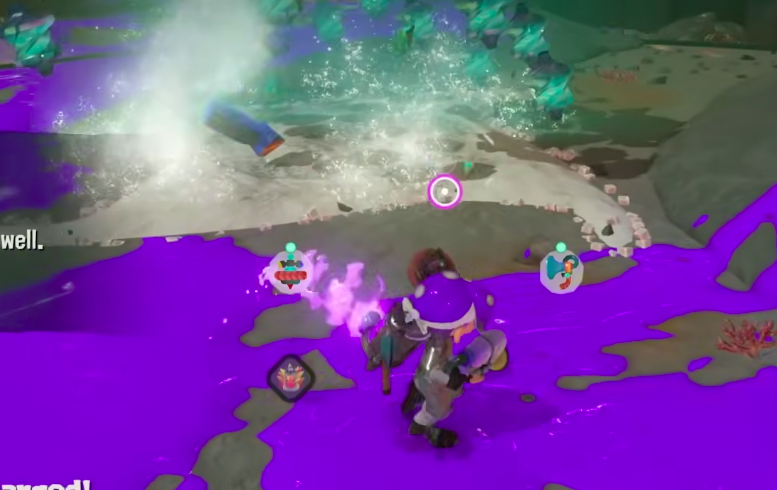
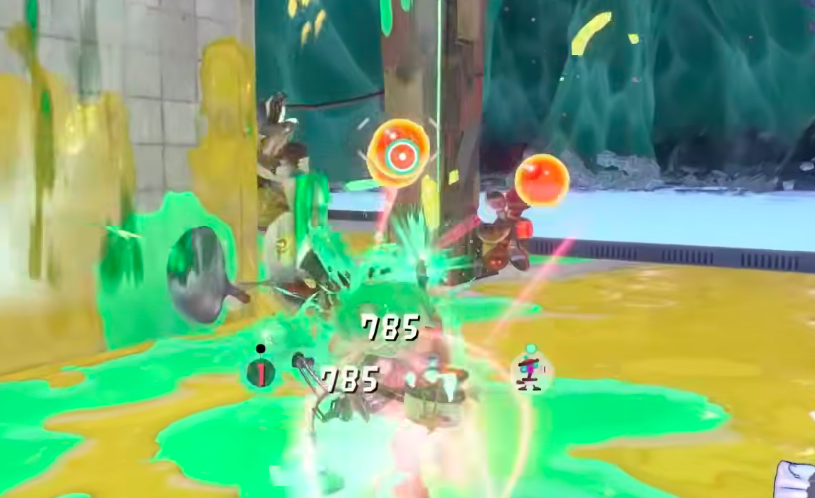
Combat is classic Splatoon at its core. You shoot ink, swim through it in squid form to move faster and refill your tank, and use gyro aiming. What’s new is the structure. Instead of turf wars, you drop into contained island missions, wipe out waves of Salmonids, and haul the loot back to base to power up.
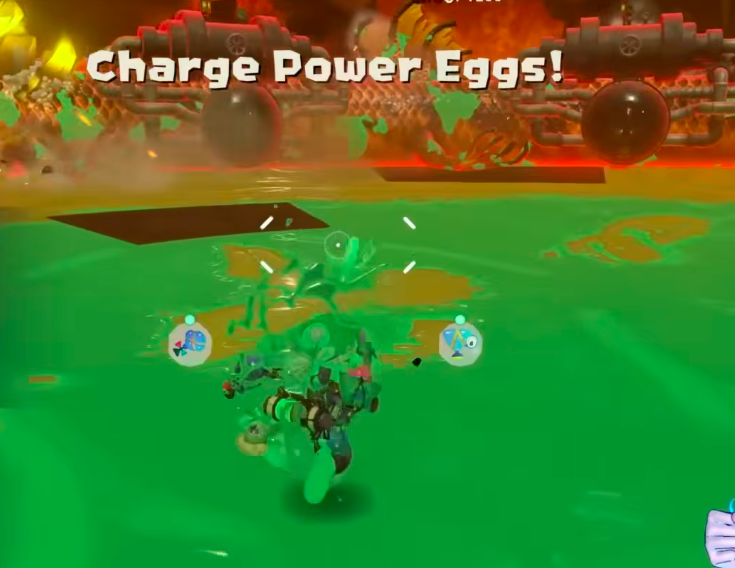
One of the Deep Cut members rides along in an Exploration Bot during raids. The bot helps you shoot, doubles as a launch pad to catapult you into the air, and does the actual drilling when it’s time to crack open a treasure cache. Collecting Power Eggs from fallen enemies charges the bot until your partner can unleash a Showstopper, a screen-clearing special attack.
Raid and mission types in Splatoon Raiders
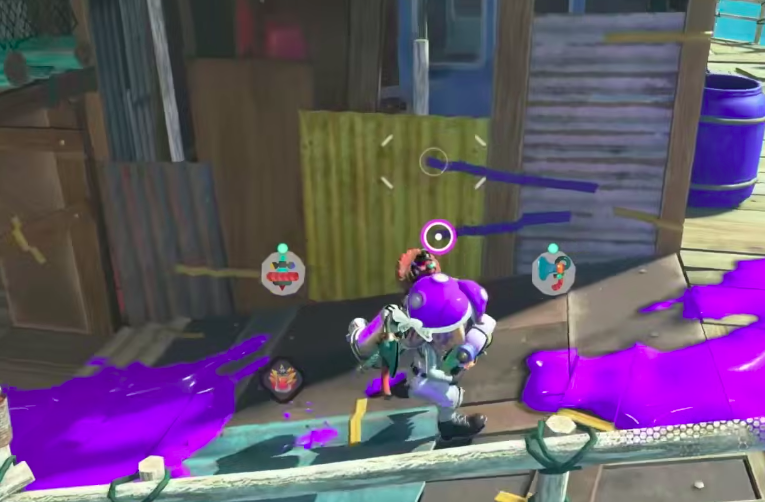
Missions come in a few distinct flavors, and each one asks something different of you. Standard raids are the bread and butter, while the underground missions crank up the pressure and the Sampler Dungeons swap combat for puzzles and platforming.
| Mission type | Goal | Notes |
|---|---|---|
| Standard raid | Clear the Salmonids near each Spirhalite Shard cache so your partner can drill it open | Mostly linear maps; drops new weapons and crafting materials |
| Salmonid Dens | Earn a set number of Power Eggs before the timer runs out | Drilling underground, closer to old base-defense play; noticeably tougher |
| Buried Ruins | Same idea as Dens, but three sublevels deep | Ends in a fight against a Seasoned Salmonid, a salt-crusted boss |
| Sampler Dungeons | Reach the end using a specific weapon or gadget | Hidden stages focused on platforming and light puzzles; reward a treasure book |
Standard raids are generally forgiving, with room to back off and recover when a swarm gets out of hand. The Dens and Buried Ruins are where the real difficulty lives, and they can get frustrating. The upside is that no run is wasted. Fail a mission and you still walk away with the weapons, materials, and experience you picked up along the way.
How gadgets work
Gadgets are the standout system. They act like sub-weapons on a cooldown timer, and you can equip up to three at once, mapped to the Switch 2’s shoulder buttons. Each one changes how you move or fight, and the Sampler Dungeons exist partly to teach you what a specific gadget can do.
| Gadget | What it does |
|---|---|
| Jump Bomb | Grants a double jump for extra vertical reach |
| Tether Wail | Fires a sustained laser beam |
| Splatellites | Summons a ring of orbital shields to survive incoming waves |
| Meteor Mitt | Slams down with a ground-pound splashdown attack |
| Dash Bomb | Provides a quick burst of movement |
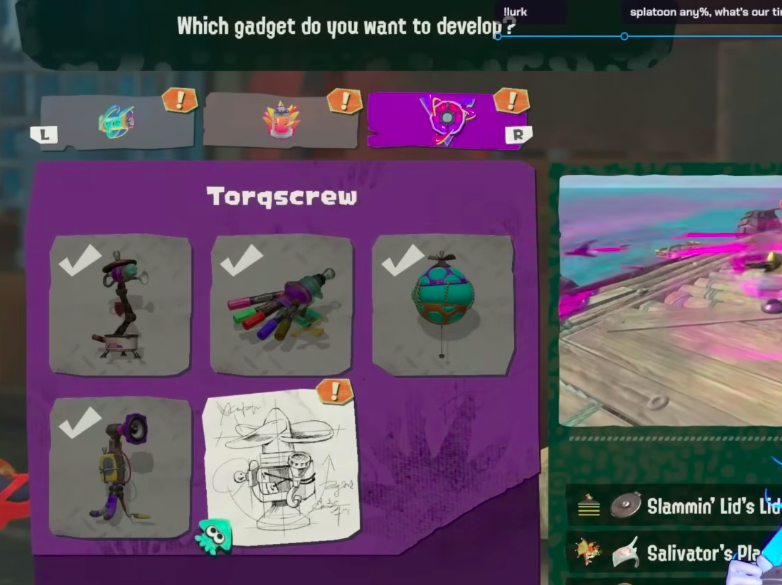
You don’t just find gadgets fully formed. You develop them at the workshop using Spirhalite Shards, which you mine from ore nodes, plus Salmonid equipment pieces looted from raids. Once a gadget is built, you can bolt on parts to change how it behaves. The Dash Bomb’s “Invulnerable Time Up” part, for example, extends its window of invulnerability. Those parts are either found during raids or crafted from harvested materials.
Upgrades, the workshop, and the Hideout Ship
Progression runs on several tracks at once. Your ink tank levels up separately based on the total Power Eggs you’ve collected, and each level lets you improve core stats. Your rank climbs as you earn money from treasure, layering on more bonuses.
| Upgrade | Effect |
|---|---|
| HP | Raises your maximum health |
| Weapon Damage | Increases damage from your equipped weapon |
| Gadget Damage | Increases damage from your gadgets |
| Gadget Part Slots | Adds room to equip more gadget parts |
| Hideout Ship Level | Expands the base and unlocks more workbenches for tinkering |
Weapons carry their own levels and star rarities, and higher-rarity picks come with bonus status buffs. You’ll pull everything from the basic Splattershot to rollers and paint-dealing katanas, then level them up with materials. There are also three ink tanks tuned toward different playstyles, roughly speaking speed, power, and a tactical option. Swapping to something like the Super Power Tank before a tricky raid can push your stats over the line.
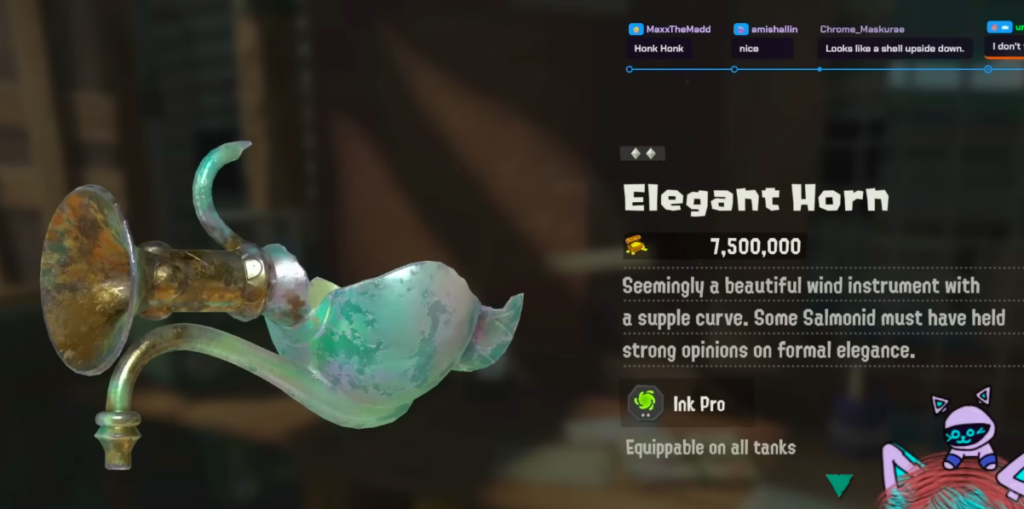
The other reward you’re chasing is Salmonid relics. Unlike shards and equipment, relics grant the Mechanic unique combat abilities rather than crafting fuel, so bosses that drop them are worth the trouble.
Co-op and difficulty help
Every part of the game can be played with up to four players total, online or via local wireless. Difficulty scales to the number of players in the session, so a full squad faces tougher waves than a solo run. The trade-off is that dropping strangers into a carefully planned raid can turn a tidy treasure hunt into chaos.
There’s also a lighter assist option built in. If a level is beating you, you can call in another player to help with a tricky stretch, in the vein of a summon system. Difficulty settings on top of that are meant to make the game friendlier for anyone new to Splatoon. Online play does require an active Nintendo Switch Online membership.
Bosses and endgame
Bosses are where the loot gets good. Beating a Seasoned Salmonid at the bottom of a Buried Ruins, or a named boss like Refill Steelhead or The Rolling Boiler Paincourse, hands over high-value relics and gear such as a 4-star ABC Splatling. The bigger set-piece fights are a clear highlight, and they build toward the Salmonarch, a three-headed beast you take down with the Exploration Bot, Frye’s eels, and Shiver’s shark Master Mega.
Rolling credits takes roughly 12 hours, but the game keeps going after that. Harder “Spicy” versions of raids open up, there’s a secret boss named Lord Saltimatum tied to a true ending, and the constant drip of new weapons, parts, and upgrades keeps the “just one more raid” loop turning. If you liked hunting Salmonids in Salmon Run, this is a much larger, gear-driven version of that same idea.