
Leveling in The Witcher 3: Wild Hunt is tied almost entirely to quests, not kills. Geralt gains a skill point and a bump to health and damage with every level, so climbing quickly is what turns those early beatings from wolves and Nekkers into easy fights. The catch is that experience is scaled to level difference, which means timing matters as much as the activity you choose.
Quick answer: Do main quests and contracts while they sit at or slightly above your level, keep a +5% XP trophy equipped, and never save low-level quests until they turn grey.
How XP scaling decides everything
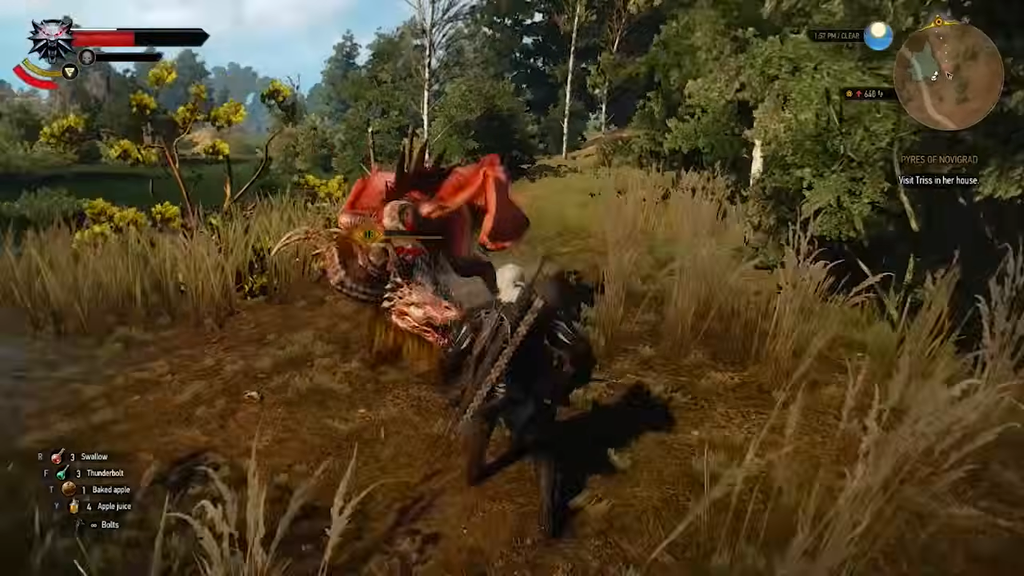
Experience is gated by the gap between Geralt’s level and the target’s level. Content at or just above you pays full XP. The further below you it drops, the less it gives, until a quest or enemy several levels under you is worth almost nothing.
Your journal shows this with color. Treat white or red quests as the ones to clear now, because they are at or above your level. Green quests are already below you and pay reduced XP. Chasing anything green or grey is how players quietly delete thousands of potential experience points from a playthrough.
When you can handle a quest listed a couple of levels above your own, its XP payout is among the game’s richest.
Push the main story early
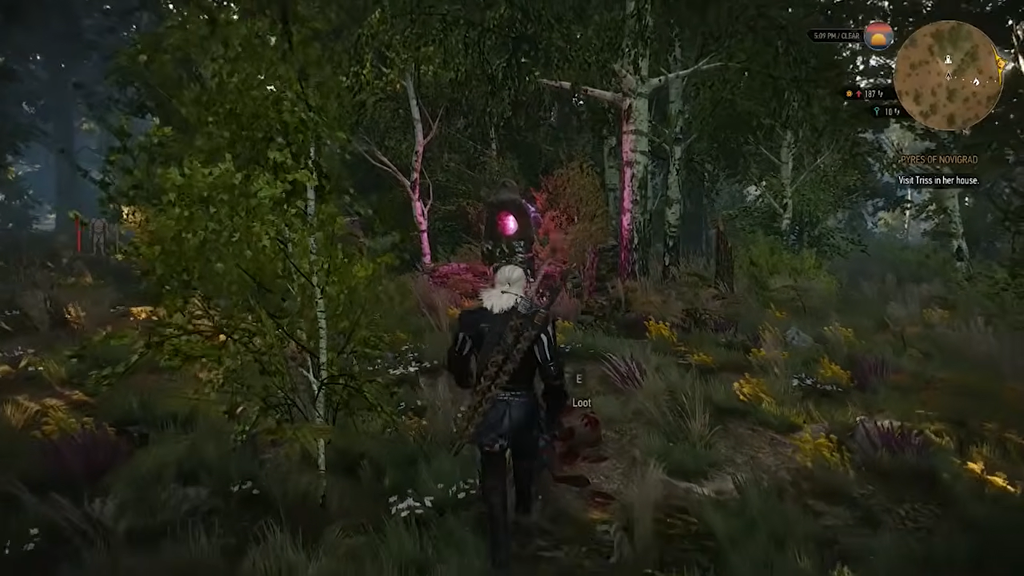
Main quests outclass other activities for XP, and the story advances quickest in its opening acts. Prioritizing them leaves side content accessible, opens regions with better contracts, and helps Geralt stay strong enough to avoid frustration.
For rapid leveling, build around Velen’s early quest chain. The Bloody Baron comes first, followed by Family Matters and then Ladies of the Wood; these lengthy, branching quests are intended for Geralt at level 6 or higher and award a large XP haul upon completion. Earlier, the Beast of White Orchard is a useful test of your combat skills and preparation before entering tougher territory.
A clean rule of thumb is to advance the main story until you are one or two levels above the local content, then branch out into side quests and contracts before they slip below you.
Use contracts as your steady XP source
Witcher contracts offer one of the game’s most even XP rewards. They scale effectively, remain worthwhile longer than standard side quests, and grant crowns and a monster trophy as well as experience. At your level, each contract awards 300 to 500 XP; completing several can take you up one level during the mid-game.
The densest early hunting grounds are Velen and Novigrad, where monster contracts overlap with the main quest chains you are already running. Accept contracts as soon as they appear on notice boards, but hold completion until they are close to your level, and always negotiate the payment since there is no downside.

Stack XP bonuses from trophies and dialogue
Monster hunts reward trophies that hang from Roach’s saddle, and some carry a flat +5% bonus to experience gained. The Cave Troll Trophy and the Fiend Trophy both give this boost, and keeping one equipped compounds across every quest and kill.
Dialogue is the other overlooked source. Investing in the Axii sign unlocks conversation options that award experience, so choosing the Axii response whenever it appears adds up over a full playthrough without a single extra fight. The Delusion ability in the Signs tree makes these options available and is worth an early skill point.
Monster nests and meditation loops
When you are just short of a level for new Witcher gear, monster nests fill the gap. Clearing the enemies and then destroying the nest with a bomb triggers a burst of XP, so keep craftable bombs on hand.
You can also farm respawning enemies. Find a monster that reappears after meditation, kill it, meditate to reset the spawn, and repeat. This works best while you are still under-leveled, since the payout shrinks the higher you climb.

What does not speed up leveling
Players arriving from other RPGs may instinctively farm ordinary foes, but that approach is a trap here. Defeating enemies below your level yields almost no XP, so combat is better used to collect loot, crafting materials, and Bestiary entries than to gain levels.
- Difficulty setting does not change XP gain, only combat challenge.
- Places of Power grant a one-time ability point, not experience.
- Question mark locations give small XP that falls off fast once you out-level the area.
- Hoarding side quests until later means clearing them for a fraction of their value.
Ability points and levels are separate currencies. You still need levels to unlock the slots that hold points from Places of Power, so gather both, but do not expect one to substitute for the other.
Skip the grind with console commands (PC)
With the debug console enabled on PC, you can bypass leveling entirely. These commands set your level or hand you raw experience directly.
addexp(10000)      // adds raw experience; you level as the bar fills
levelup(5)         // instantly gains the given number of levels
setlevel(30)       // sets Geralt directly to a chosen level
addskillpoints(1)  // grants ability points to spend in the trees
You will know it worked when the level indicator updates and the XP bar reflects the change immediately after entering the command.
Where the level cap lands
The base game caps Geralt at level 70, and the Blood and Wine expansion raises that ceiling to 100. That headroom is why efficient timing pays off across a long playthrough: keep quests and contracts in the sweet spot, wear a +5% trophy, and lean on the main story early, and Geralt grows powerful without turning drowners into an afternoon job.