

Honey is one of the few resources in Valheim that keeps paying off from your first hour to the endgame. It works as an early stamina food, it feeds a long list of cooking recipes, and every single mead base runs on it. The catch is that you can’t gather it from the ground. You have to take a Queen Bee from a wild hive first, then build your own beehives at home.
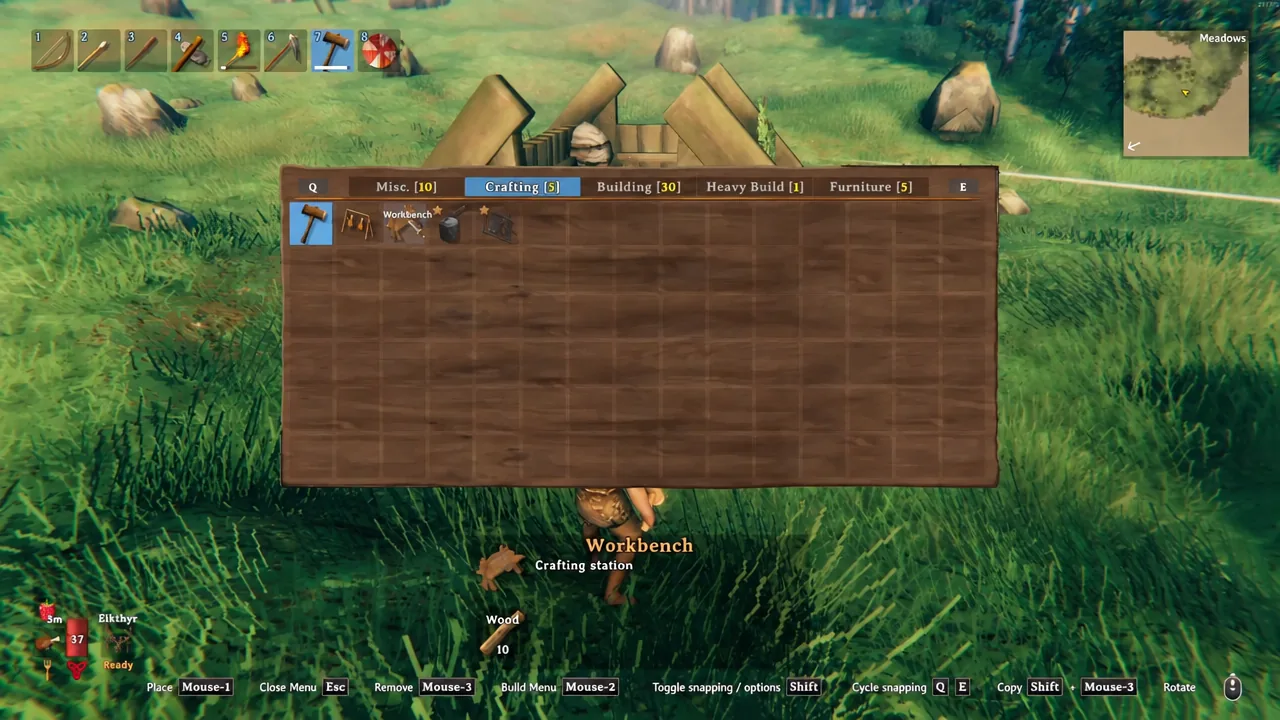
Quick answer: Destroy a wild beehive inside an abandoned building in the Meadows to get Honey and a Queen Bee, then craft a Beehive with 10 Wood and 1 Queen Bee near a Workbench and place it uncovered in the Meadows, Black Forest, or Plains.
Where wild beehives spawn in Valheim
Wild beehives sit inside the abandoned wooden buildings scattered across the Meadows. Not every ruin has one, so this is a numbers game. Hives can also turn up in trees around the Swamp, and Black Forest towers have a small chance to hold one, but the Meadows shacks and towers are by far the most reliable place to look.
You don’t need to walk inside every structure to check. Hives make a loud, distinctive buzzing, so jogging past a building is often enough to tell. Hives also tend to sit on the upper parts of a structure, which means tall, open towers can be cleared visually from a distance.
Tip: mark or clear the buildings you’ve already searched. Tearing down an empty shack for its wood stops you from checking the same ruin three times on later trips.

How to break a wild beehive without getting stung
Bees aggro the moment you get close, and they chew through your health fast in starting gear. There are two clean ways to deal with a hive, and neither involves standing under it swinging a club.
Method 1: Dismantle the building with a Hammer
Method 2: Shoot the hive with a bow
Either way, the hive drops Honey and a Queen Bee once it’s destroyed. Picking up the Queen Bee unlocks the Beehive build recipe permanently.
Beehive recipe and production numbers
Each hive you build consumes one Queen Bee, so the size of your farm is capped entirely by how many wild hives you’ve cracked open. Wood is never the bottleneck.
| Detail | Value |
|---|---|
| Materials | Wood x10, Queen bee x1 |
| Crafting station | Workbench |
| Valid biomes | Meadows, Black Forest, Plains |
| Storage cap | 4 Honey per hive |
| Production rate | Roughly 20 minutes of real time per Honey |
| Durability | 100, weak to chop damage, immune to poison |
| Rain damage | No |
Placement rules that keep the bees happy
A beehive only produces Honey when two conditions are met. It has to sit in the Meadows, Black Forest, or Plains, and it has to be less than 60 percent covered. In practice that means no roof above it, and no closely packed obstructions on opposite sides. Two boulders, two walls, or a wall and a cliff face pressed against the hive will all shut it down.
Give each hive roughly two building units of clear space around it and you’re safe. There’s one useful exception: other beehives do not count as obstructions. You can pack them shoulder to shoulder, which lets you cram a large farm into a single low-walled, roofless enclosure.
Note: Greydwarfs and other roaming mobs will attack beehives. A ring of roundpole fence, stake wall, or half walls around the farm keeps them off without covering the hives.
How to confirm a beehive is working
Walk up to a hive and the prompt reads “Check the bees.” Interact with it and the flavor text tells you the status outright:
- “The bees are happy.” — placement is valid and Honey is accumulating.
- “The bees are angry.” — the hive is too covered or in the wrong biome, and nothing is being produced.
- “The bees are sleeping.” — normal at night and during rain, not a problem.
Once Honey is stored, interacting with the hive pulls it out and you’ll see “Added Honey x1” in the message log. A hive labelled “Beehive (EMPTY)” simply hasn’t finished a batch yet. Since each unit takes about 20 minutes of real time and the hive stops at four, there’s no reason to hover over it. Go sail, mine, or fight a boss and empty the hives when you pass by.

What Honey is used for
Eaten straight, Honey is a light stamina food that stays useful through the early bosses. It’s cheap to keep in rotation and it heals while the buff is active.
| Honey stat | Value |
|---|---|
| Max Health | +8 |
| Max Stamina | +35 |
| Duration | 15 minutes |
| Healing | 1 hp per tick |
| Weight / stack | 0.2 / 50 |
| Portal safe | Yes |
The bigger reason to farm it is mead. Every mead base recipe calls for 10 Honey plus regional ingredients, crafted at the Mead ketill and then left in a Fermenter to finish. That covers minor and major healing, stamina, eitr, and the frost, fire, and poison resistance flasks you’ll want before heading into the Mountain, Swamp, and later biomes.
Honey also shows up across the cooking tree. Boar jerky, Wolf jerky, Serpent stew, Black soup, Spicy marmalade, unbaked sweetbread, and honey glazed chicken all list it as an ingredient, which is why a farm of even five or six hives quickly stops feeling like an early-game novelty.
The honest bottleneck in all of this is Queen Bees, not honey. One drops per wild hive, so pair your Meadows sweeps with boar hunting, mushroom picking, and wood runs, and knock down every buzzing ruin you pass. A dozen queens is enough to keep a fermenter busy for the rest of a playthrough.