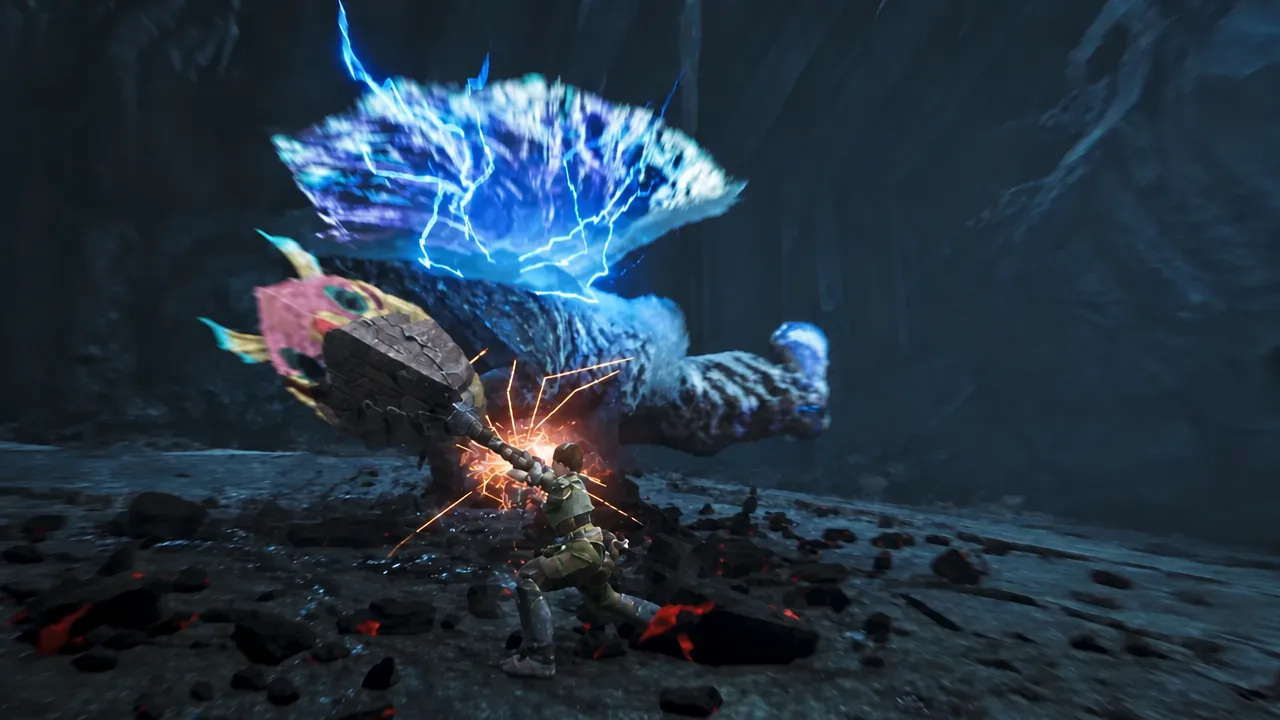
The Hammer is getting the biggest structural change it has had in years with Monster Hunter Wilds: Ascendance. Capcom’s new Boost Bracer sits on top of the weapon’s existing charge system, and once you trigger it, most of the Hammer’s core actions swap out for faster, longer, or more explosive versions. It is not a new gauge you manage in a menu, it is a state you earn by staying aggressive.
Quick answer: Build Boost Bracer energy by attacking, then activate Boost with a Boost Driver (or by manually triggering the bracer). While Boosted, the Hammer’s Evade, Charge Step, Big Bang combo, and finisher are all replaced by enhanced versions for a limited time.
How the Boost Bracer works on Hammer
The Boost Bracer is a new hunting action shared by all 14 weapon types in Ascendance, and it works the same way at the top level regardless of what you are carrying. You fill Bracer energy by keeping pressure on the monster, then convert that energy into Boost using a Boost Driver attack or a weapon-specific activation. Capcom describes Boost Drivers plainly in the on-screen text: they are powerful attacks that activate Boost, and while boosted, certain actions are temporarily enhanced.
What matters for Hammer is which actions get swapped. This is not a flat damage buff. Individual moves are replaced with different animations that travel further, chain faster, or end in a new finisher, which changes how you approach spacing on a monster rather than just how hard you hit it.
| Move | What changes |
|---|---|
| Boost Driver | Launches the hunter into the air for consecutive strikes and a heavy slam; activates Boost |
| Mid Air Spinning Bludgeon | Aerial follow-up from the Boost Driver used for horizontal movement and repositioning |
| Boosted Evade | Rocket-propelled dash that closes gaps quickly and flows into an upswing |
| Boosted Charge Step | Faster and longer than the standard step, and keeps your existing charge |
| Boosted Big Bang Combo | Noticeably quicker than the standard combo, ending in two mid-air spins and slams |
| Boosted Finisher | Enhanced ender available out of the Boosted state |
| Charged Upswing Offset Attack | New offset counter that lets you build charge while answering a monster’s attack |
Boost Driver and the mid-air slam
The Boost Driver is the Hammer’s entry point into Boost, and it is the flashiest part of the moveset. Instead of a grounded wind-up, the hunter is launched upward, lands a run of consecutive strikes on the way up, and then comes down with a slam. It reads as a rising uppercut with a hammer attached, and it puts you above a monster’s head rather than beside it.
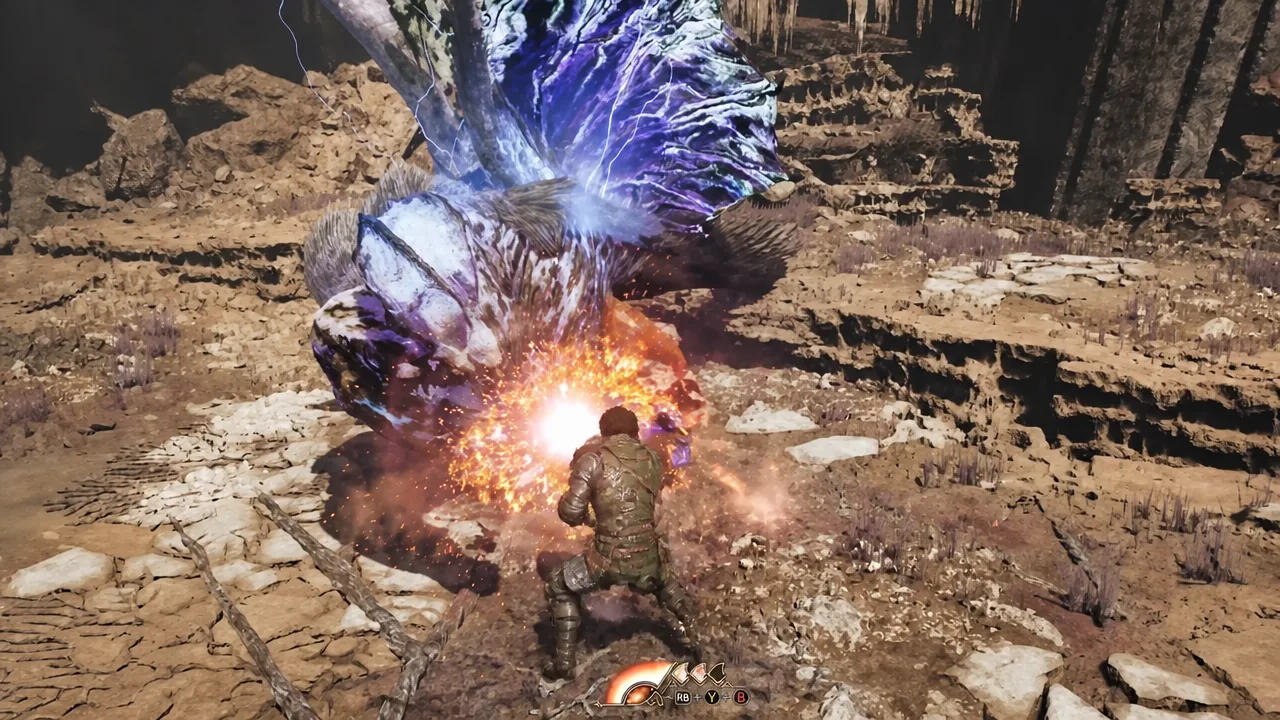
You are not locked into the slam. From the Boost Driver you can branch into the Mid Air Spinning Bludgeon, which converts the vertical launch into horizontal travel. That gives you a way to correct your position mid-animation if the monster shifts, which is the sort of thing Hammer players usually have to eat a whiff for.
Boost can also be triggered manually. Activating the Boost Bracer directly before initiating a Boost Driver gives you control over when the state starts, rather than relying purely on the combo path to get you there.
Boosted Evade and Boosted Charge Step: repositioning while boosted
The Boosted Evade is the clearest quality-of-life change in the set. It is a rocket-propelled dash, closer in feel to the Gunlance’s Blast Dash than to a normal roll, and it exists to cover distance in a hurry. After the dash you can follow up with an upswing, so the movement is not a dead defensive step. It is a gap-closer that ends in damage.
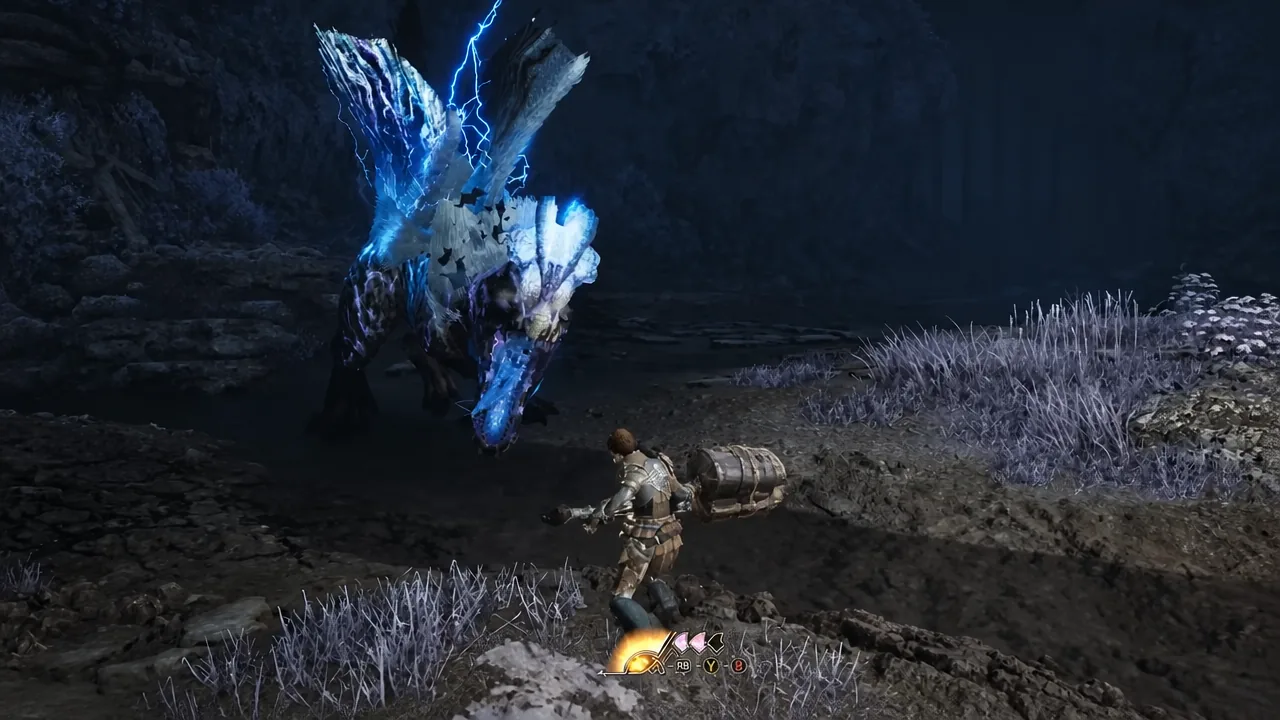
The Boosted Charge Step is the subtler upgrade and probably the more important one for existing Hammer mains. It covers more ground and moves faster than the standard version, and critically, it retains your charge. Charge Step playstyles already lean on staying charged while shuffling around a monster’s hitbox, so a longer, quicker step that does not dump your charge level directly extends how far you can reposition between commitments.
Boosted Big Bang combo and finisher
Big Bang is the Hammer’s signature combo and also its biggest commitment, so speeding it up is a meaningful trade. The Boosted version runs significantly faster than the standard one and leans on spin animations, closing out with two mid-air spins and slams instead of the usual grounded ender.
The Boosted Big Bang Finisher caps that sequence off, and the Boosted state is built to be chained rather than spent in one burst. You can string Boosted Evades into Mighty Charges into finishers and keep the flow going, so the state functions as a window of continuous offense instead of a single enhanced attack.
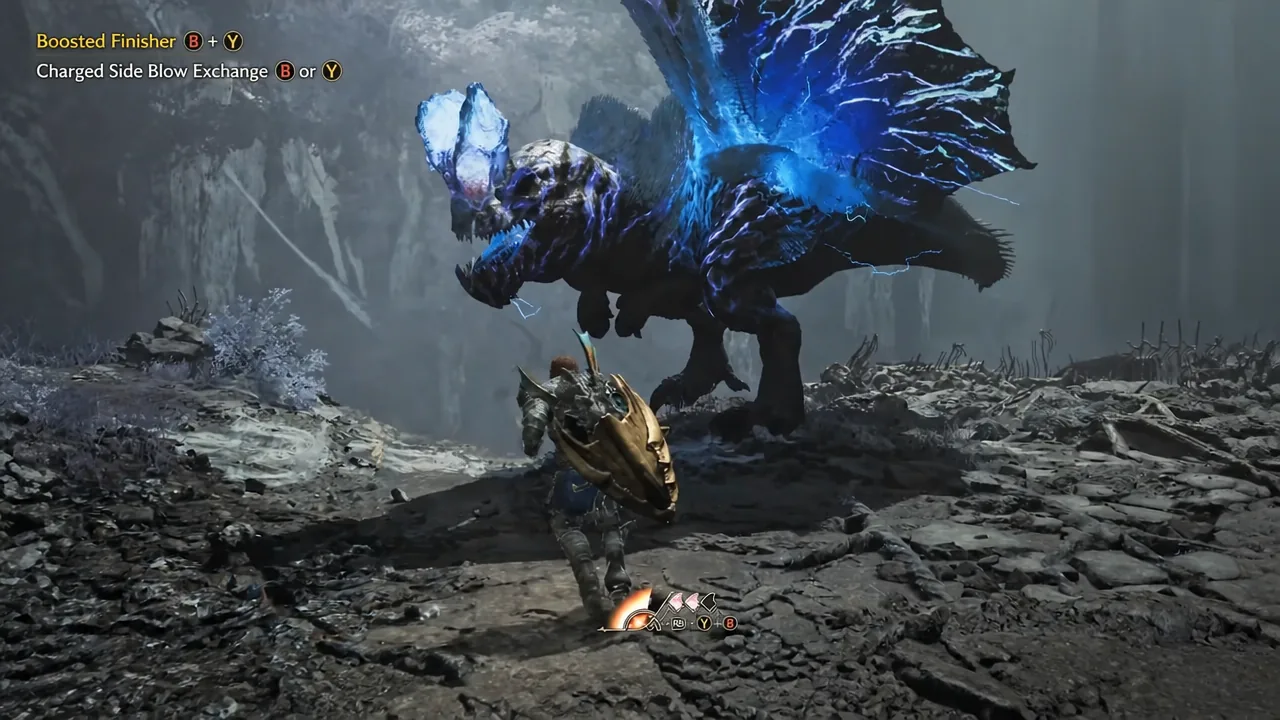
There is also an early release option out of a Mighty Charge into an upswing, which then transitions into a finisher. That gives you a shorter path to a big hit when a monster’s opening is smaller than a full charge would allow.
Charged Upswing offset attack
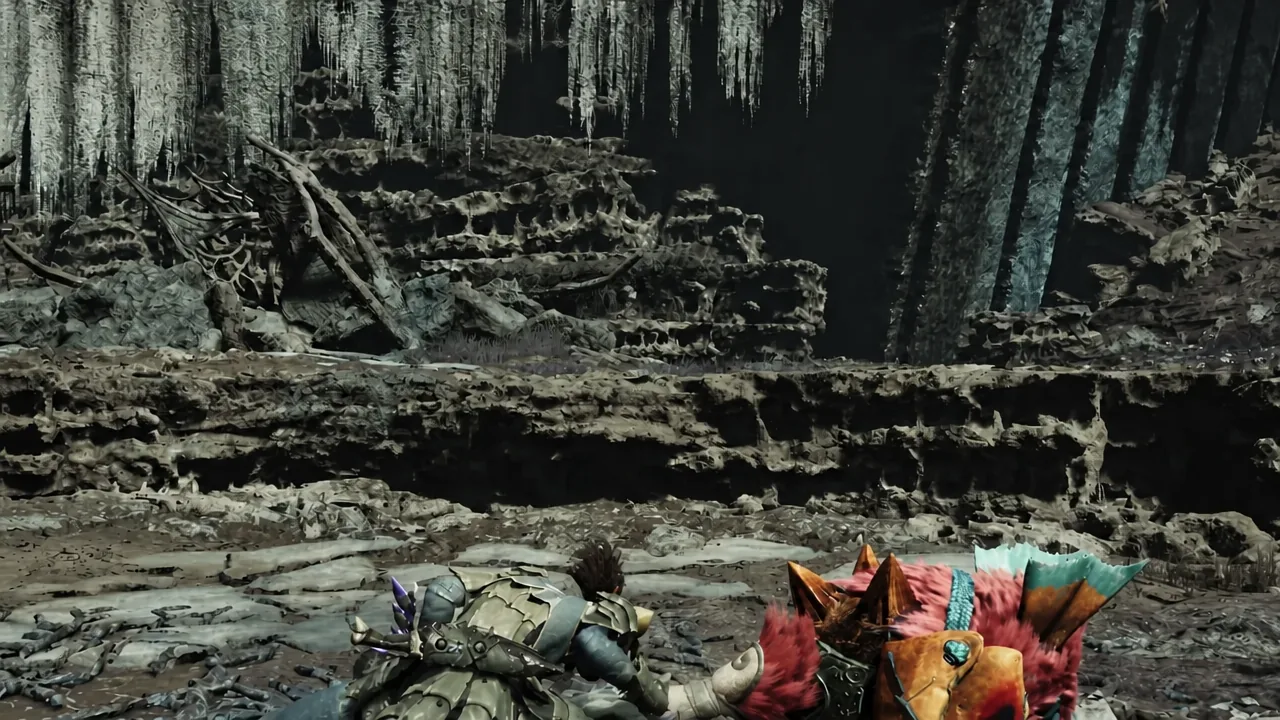
Offsets have been part of Wilds since launch, and the Hammer gets a new one built around the Charged Upswing. It lets you counter an incoming monster attack while you are still building charge, which removes the usual choice between defending and staying charged. In practice this pushes Hammer further toward standing your ground, since a mistimed read no longer costs you the entire charge you were holding.
Note: the broader design goal across all 14 weapons is a faster, more aggressive playstyle, so expect the monsters in Ascendance to be built with that reaction speed in mind.
Yian Kut-Ku Master Rank armor and Hammer
Alongside the moveset, the Hammer footage shows off the Yian Kut-Ku Master Rank armor set, paired with a matching Hammer built around the Kut-Ku’s head. It is a cosmetic pairing rather than a mechanic, but it confirms the classic monster’s armor line is returning at Master Rank.
When the remaining weapon breakdowns arrive
Capcom started rolling out one Boosted Action breakdown per weapon per day on September 2, beginning with the Great Sword, and the run continues through September 15 to line up with the start of Tokyo Game Show. The Bow video, which turns the weapon into something closer to an explosive shotgun, has already gone out. A fuller look at the expansion is expected during the show.
Monster Hunter Wilds is available on PlayStation 5, Xbox Series X/S, and PC via Steam, with a Switch 2 version in development. Ascendance is due in 2027, and no specific release date has been confirmed.
Taken together, the Hammer changes read as a merge of two eras of the weapon. The aerial mobility and dash-heavy movement lean on what Monster Hunter Rise established, while the weight and timing of the charge and offset play stay closer to Monster Hunter World. Whether it stays that clean once Master Rank monsters start punishing the extra commitment is the open question.