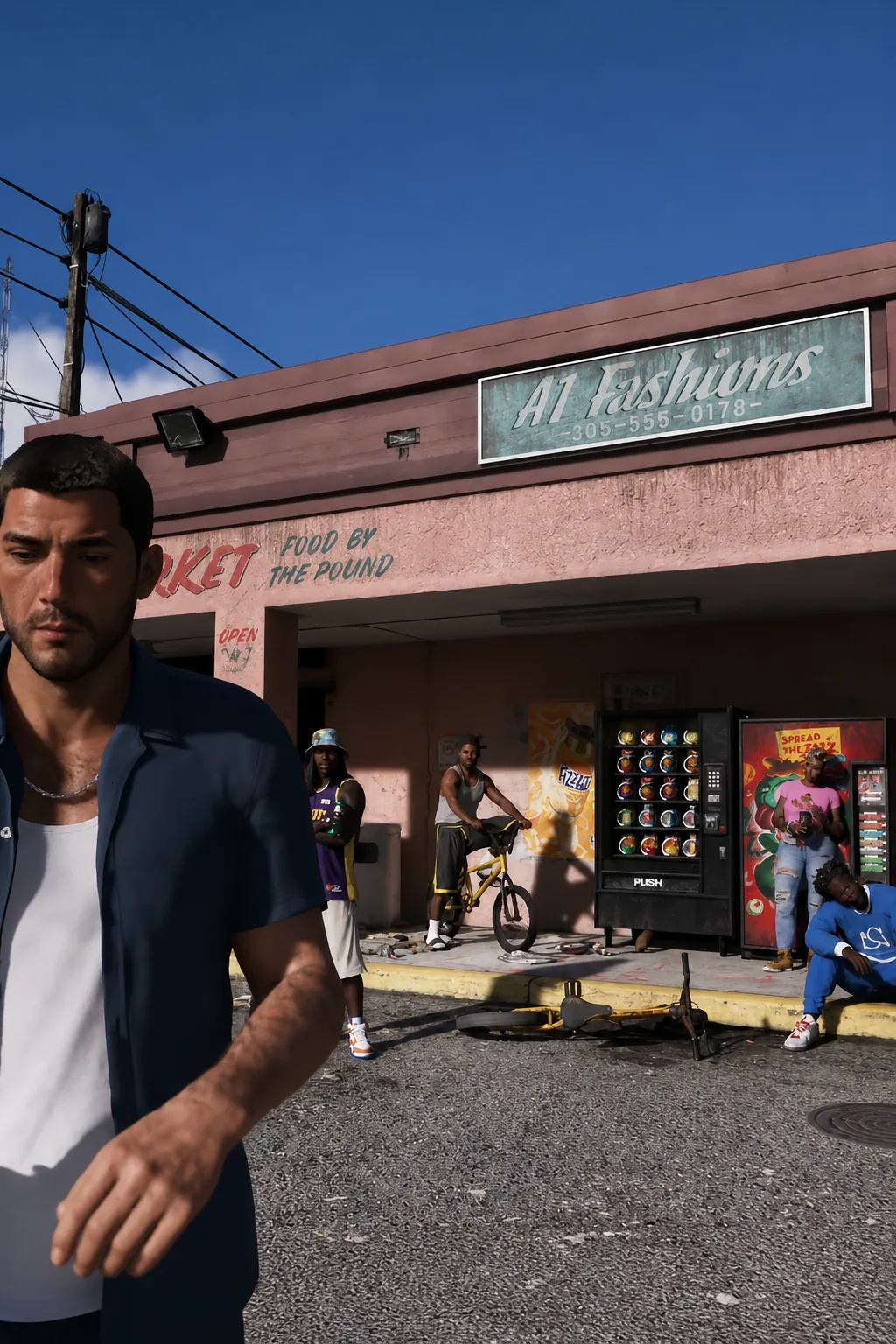
Escaping the cops in Grand Theft Auto VI is no longer a matter of driving fast until the stars blink out. Police in Leonida build a description of the person they are chasing, and that description sticks around. If a witness saw Lucia’s face, a camera caught Jason’s shirt, or dispatch has a plate on the getaway car, that information keeps working against you long after the initial chase ends.
Quick answer: Look at the red icons underneath your wanted stars and cancel each one individually. Change your hairstyle to break a physical description, swap your entire outfit to break a clothing description, abandon the car to break a vehicle match, and split Jason and Lucia up to break the couple match. Then leave the red search zone on the minimap.
Being wanted and being identified are two different things
The wanted stars still measure how hard the police are coming after you. The new heat layer measures something separate, which is how much usable information they actually have. A crime can be reported without anyone knowing who did it, and that gap is where most of the new gameplay lives.
Police also need to learn about a crime before they respond at all. Someone has to see it happen, or an alarm has to go off. Steal a car on an empty street with nobody watching and there is no report, no dispatch call, and no chase. Rob a store and get out before anyone dials, and the same logic applies.
The Wanted system in GTA 6 requires that someone witness the crime, or an alarm needs to be set off for it to be reported to the law.
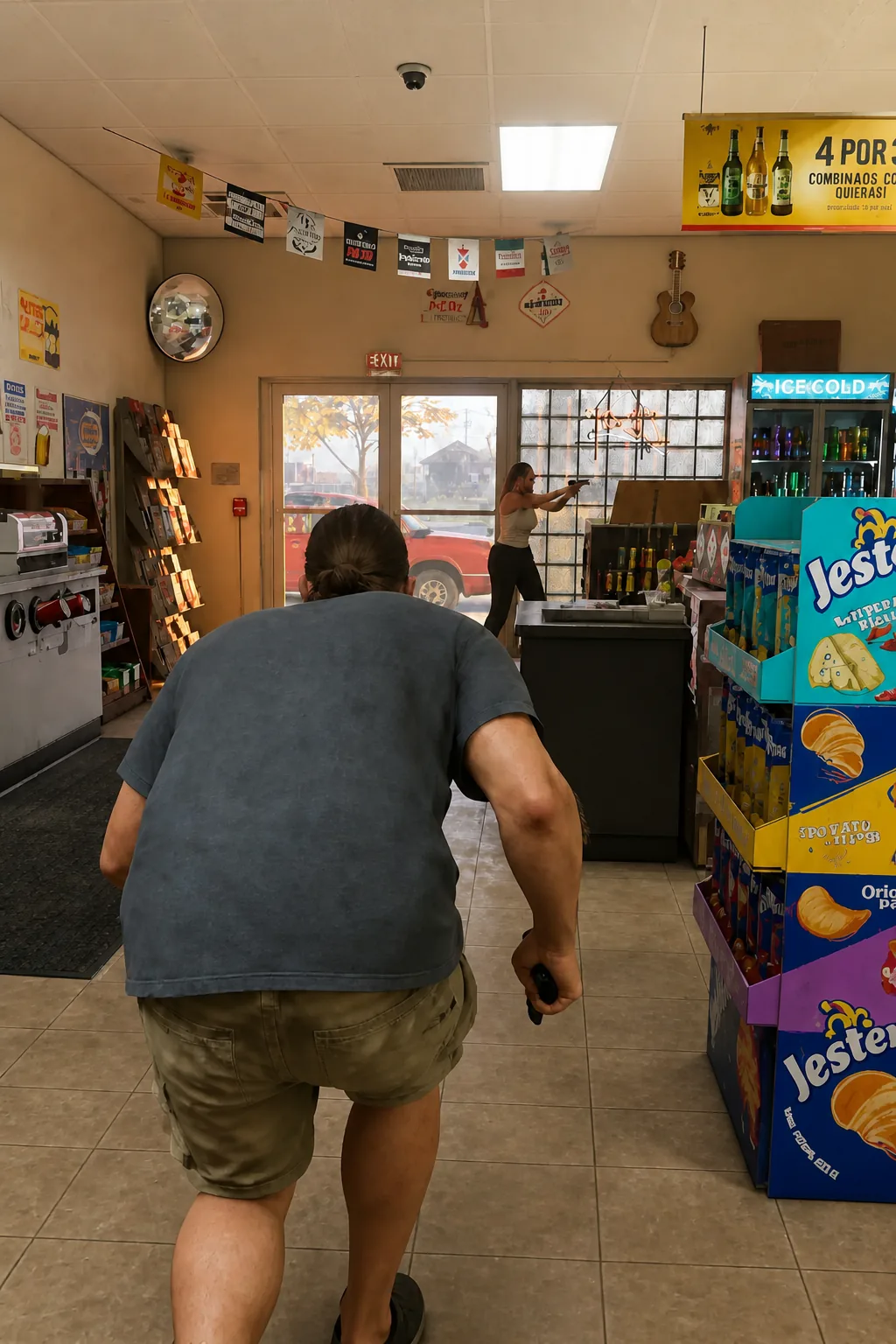
Once a call goes in, officers do not materialize behind your bumper. They get the details of the incident and head for the reported location, then work outward from there. Store robberies are the clearest demonstration of this. The clerk and any customers inside are potential witnesses, and how the encounter plays out decides what dispatch hears.
Every heat indicator and how to cancel it
When you pick up a wanted level, one or more red icons appear beneath the stars. Each icon is a piece of information the police are holding, and each one has its own counter. Clearing a single icon does not clear the rest, which is why a baseball cap on its own does not save you.
| Indicator | What police have | How to cancel it |
|---|---|---|
| Physical description (human silhouette) | A description of your face and build, usually from a witness | Change your hairstyle, or wear a mask or helmet before the crime |
| Clothing (clothes hanger) | What the suspect was wearing | Change your whole outfit, including from a spare stored in your personal vehicle |
| CCTV (camera) | Security camera footage of the crime | Destroy the footage inside the building |
| Vehicle | The car seen leaving the scene | Abandon it and take a different one |
| Couple | That two suspects are travelling together | Split Jason and Lucia up and move separately |
| Weapons | The gun officers saw you carrying | Hide or drop the weapon |
Appearance and clothing are tracked as separate records. Adding a hat or swapping glasses can update what police think your face looks like, but the clothing description stays valid until you change the outfit itself. That is what makes the spare clothes in your car trunk genuinely useful rather than decorative.
Note: a mask worn during the job stops witnesses and cameras from getting a face, but it does nothing about your shirt, your car, or the fact that two people walked out of the building.
What the star colors are telling you
GTA VI brings back the six-star wanted scale, last seen in Grand Theft Auto: Chinatown Wars. The stars also change appearance depending on the state of the pursuit, so the HUD tells you whether you are being chased, hunted, or simply near a crime scene.
| Star state | What it means |
|---|---|
| Solid white | Police have direct line of sight on you right now |
| Flashing white | You have broken line of sight and officers are searching |
| Hollow (white outline, dark center) | A crime was reported but police have no idea who they are looking for |
| Red | You lost the pursuit but are still inside the area where the crime happened |
Hollow stars are the best possible outcome of a messy job. An alarm went off, patrol cars are out, and none of it points at you. In that state you can drive straight past officers without them reacting.
One practical change worth knowing before you start a chase: police cars no longer show up as blips on the minimap. You use Focus to spot officers through walls instead, which makes escaping on foot through alleys a real option rather than a last resort. Running, jumping, and climbing have been rebuilt for exactly that, and dense city streets are often harder to drive out of than to walk out of.
Hot areas and heat zones after the chase ends
Losing the police does not reset the neighborhood. The area around the crime turns red on the minimap, with a tighter search radius and a wider outer ring around it. Leaving both at once is the cleanest way to shake a pursuit, though it is not strictly required.
That red zone then settles into a heat zone roughly the size of a neighborhood. Inside it, police do not know where you are but they do know who they are after. Walk past an officer with an uncleared indicator still active and you are recognized immediately, and the chase restarts. Rob a small store and expect a perimeter set up around it to keep you from coming back.
At six stars the search goes mapwide. That makes the initial escape far harder, and it makes scrubbing your heat afterward harder still, because there is no quiet corner of Leonida to sit in while it decays.
Working the escape as Jason and Lucia
Trackers and why your getaway car choice matters
Vehicles can report on you without a single witness involved. Some cars carry trackers, and if one is still active, police can eventually pull the car’s location. A vehicle scanner lets you check what you are dealing with before you take a car, and a vehicle fence can strip trackers out once you have unlocked that option.
Expensive vehicles are the worst choice for a job. High-end cars can have alarms and tracking systems, and some need a key cloner to take at all. An older, plainer car is harder for the police to follow electronically, which flips the usual instinct to grab the fastest thing on the street.
The Criminal Profile tracks the kind of criminal you are
Separate from the immediate police response, GTA VI keeps a longer-term record called the Criminal Profile. It is not the honor meter from Red Dead Redemption 2, and it is not a simple good-versus-bad slider. It reads context. Shooting someone who shot at you first is not treated the same as escalating a routine argument into a street massacre.
Clean, controlled work moves the profile one way. Repeated pointless violence moves it the other, and small everyday actions count too, down to feeding stray animals or throwing your trash away properly. The profile sits in a menu rather than flashing on screen, so you are not watching a number twitch after every fistfight.
Crimes committed as part of a mission are also weighed differently from crimes you commit because you felt like it. Shooting your way out of a scripted robbery is not scored the same as gunning down pedestrians on a sidewalk.
Rockstar’s Rob Nelson has said there is no single right or wrong way to play, and that consistent behavior shapes how the world reacts to you and how the story can develop. What Rockstar has not spelled out is the precise math. The exact triggers, how far the profile can slide, and what a permanently damaged profile actually changes are all still unexplained.
Avoiding a wanted level in the first place
The cheapest heat to clear is the heat you never generate. Crouching to stay out of an officer’s line of sight, avoiding cameras, and keeping witnesses out of the picture all mean dispatch gets nothing usable, which is what produces those hollow stars.
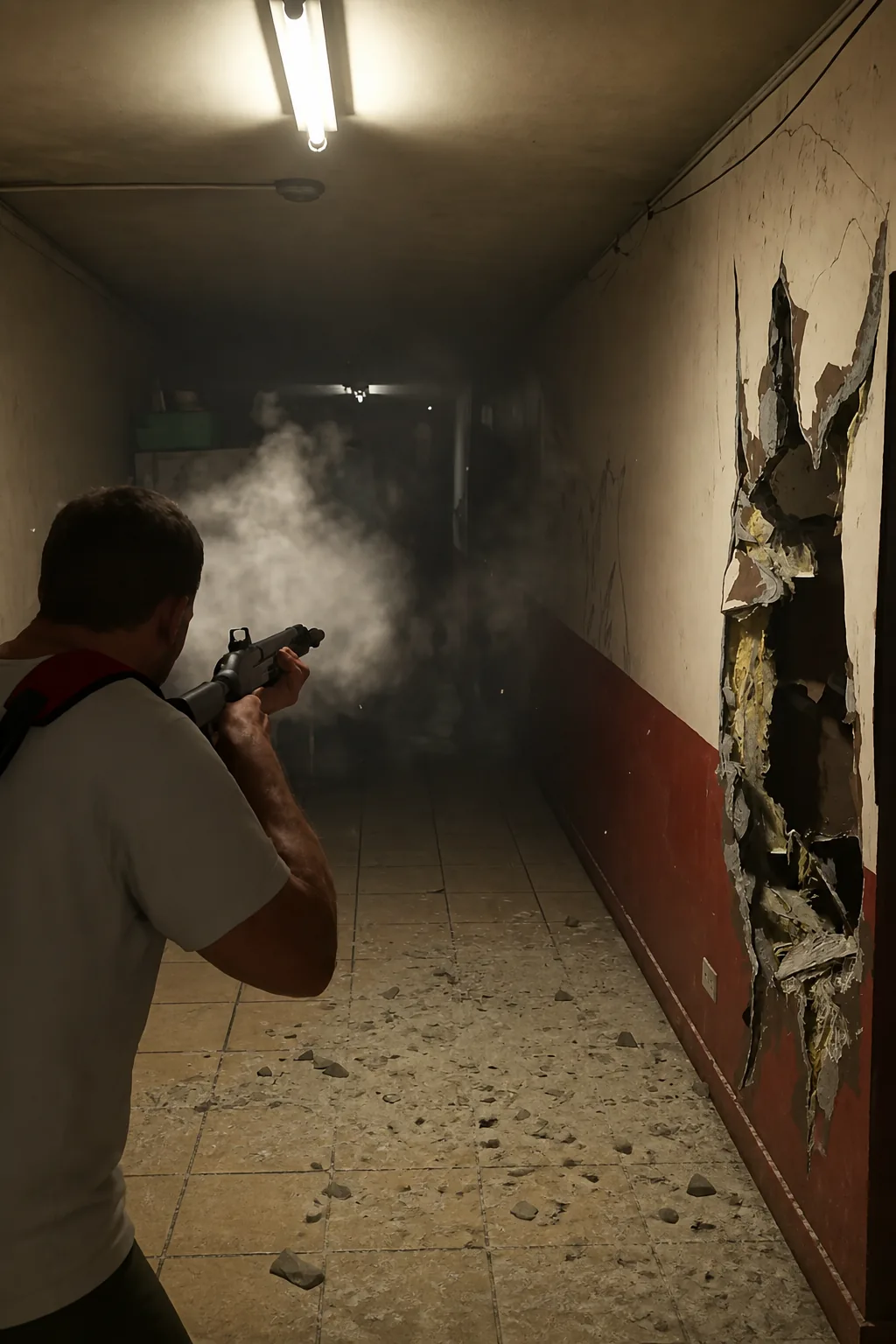
Pedestrians also respond to how you carry yourself. Walking down the street holding a two-handed weapon without aiming it gets you noticed, but people move away rather than screaming and calling it in. Take a firing stance with that same gun in front of officers and the situation escalates straight to a chase. Police issue a warning first, which leaves room to back down.
De-escalation is a real tool. In one demonstration, Jason pointed a gun at a hostile group without firing. They ran and reported it, and because nobody was shot, the wanted level stayed low.
The practical takeaway is that the police in Leonida are not tougher so much as better informed. Every clue you leave behind, whether it is a face, a jacket, a plate, or a camera angle, has to be canceled out individually. Racking up six stars will be easy enough. Convincing the city to forget what it saw is the part that takes planning.