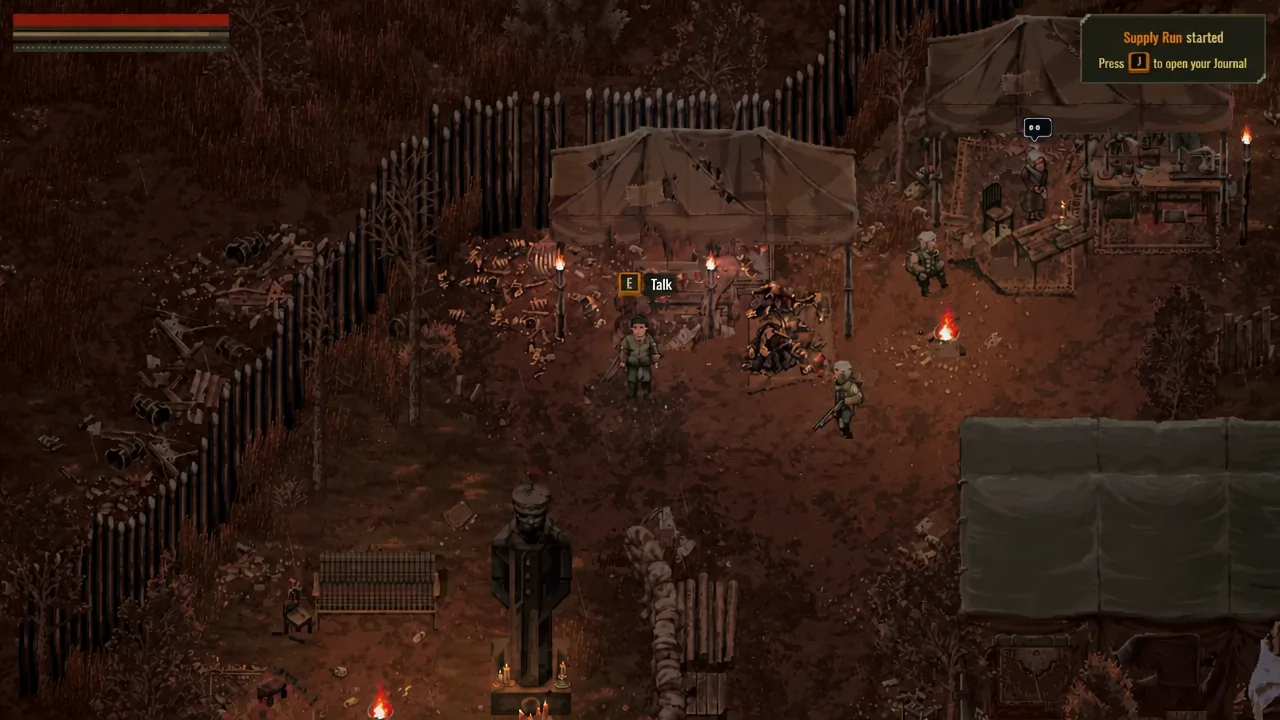
Scavland launched into Steam Early Access on September 4, 2026, and the first substantial patch from NoShadow arrived days later as version 0.1.10. It is a balance and accessibility patch rather than a content drop. The headline addition is a third difficulty tier called Explorer, but the changes that matter most in a normal run are quieter ones: campfires now heal you, stamina is twice what it was, and enemies can no longer shoot at you from outside your view.
Quick answer: Start a New Game and pick Explorer on the difficulty screen to get forgiving combat, higher money and reputation rewards, auto-save turned on by default, and gear retention on death (everything except what is in your backpack). The build number shown on the main menu should read V.0.1.10.
Explorer difficulty: What it changes
Scavland now offers three difficulty options at character creation. Explorer sits below the existing tiers and is the one to pick if the launch build’s punishment loop wore you down. Returner is the standard experience, and Ironman remains the unforgiving end of the scale.
| Difficulty | What it means |
|---|---|
| Explorer | Softer combat, more money and reputation per job, auto-save enabled by default, and equipped gear stays with you when you die |
| Returner | The baseline difficulty the game shipped with |
| Ironman | The hardest tier, intended for players who want the original survival pressure |
The gear retention rule has one important limit. Items sitting in your backpack are still lost on death. Equipped weapons and armor come back with you, so a bad ambush no longer erases the rifle you spent two hours earning.
Difficulty is chosen when you start a run, not toggled mid-game, so an existing save will not gain these rules retroactively. If you want Explorer, begin a New Game from the main menu.
Campfire healing and how to confirm it is working
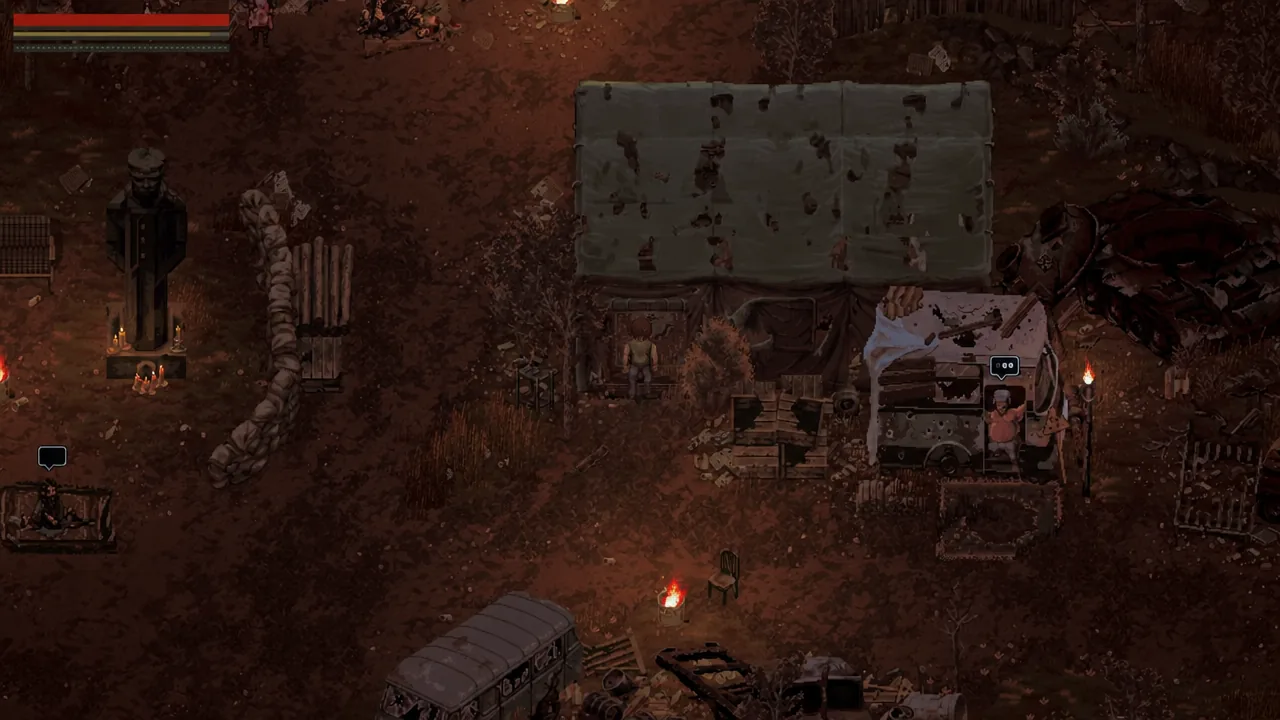
Lit campfires now restore health. Standing at one gives you a passive recovery source that does not consume a bandage or a medkit, which changes how you plan the walk home from a job. Instead of burning your last medical item to survive the trip, you can route through a fire.
You will know it is working because the game shows it. Healing at a fire comes with a visual and audio cue tied to the recovery, so there is no guesswork about whether the effect has started. If nothing happens, the fire is not lit.
Stamina, stash space, and carrying capacity
Stamina has been doubled. That is the single change most likely to alter how a run feels minute to minute, because sprinting away from a fight or crossing open ground between ruins no longer strands you halfway with an empty bar.
Stash capacity has also gone up significantly. The practical effect is that you can hoard crafting components, spare ammunition, and trade junk without the constant triage that the launch build forced on you every time you returned to town.
Combat and durability changes
Several fixes here address the deaths that felt unfair rather than earned. AI enemies can no longer fire on you from off-screen, which was the most common way a run ended without warning in a top-down view where your sightline is the screen edge.
| Change | Effect in play |
|---|---|
| Off-screen AI fire removed | Enemies must be visible to shoot you |
| Slower weapon and armor degradation | Fewer repair trips and less money spent on upkeep |
| Reduced gun explosion chance at low durability | A worn firearm is less likely to destroy itself mid-fight |
| Small Rat bleed nerf | Early trash mobs no longer drain your bandage supply |
| Green reticle on friendly NPCs | Aiming at an ally is visibly flagged before you fire |
| Green dot on neutral NPCs | Distinguishes neutrals from friendlies at a glance |
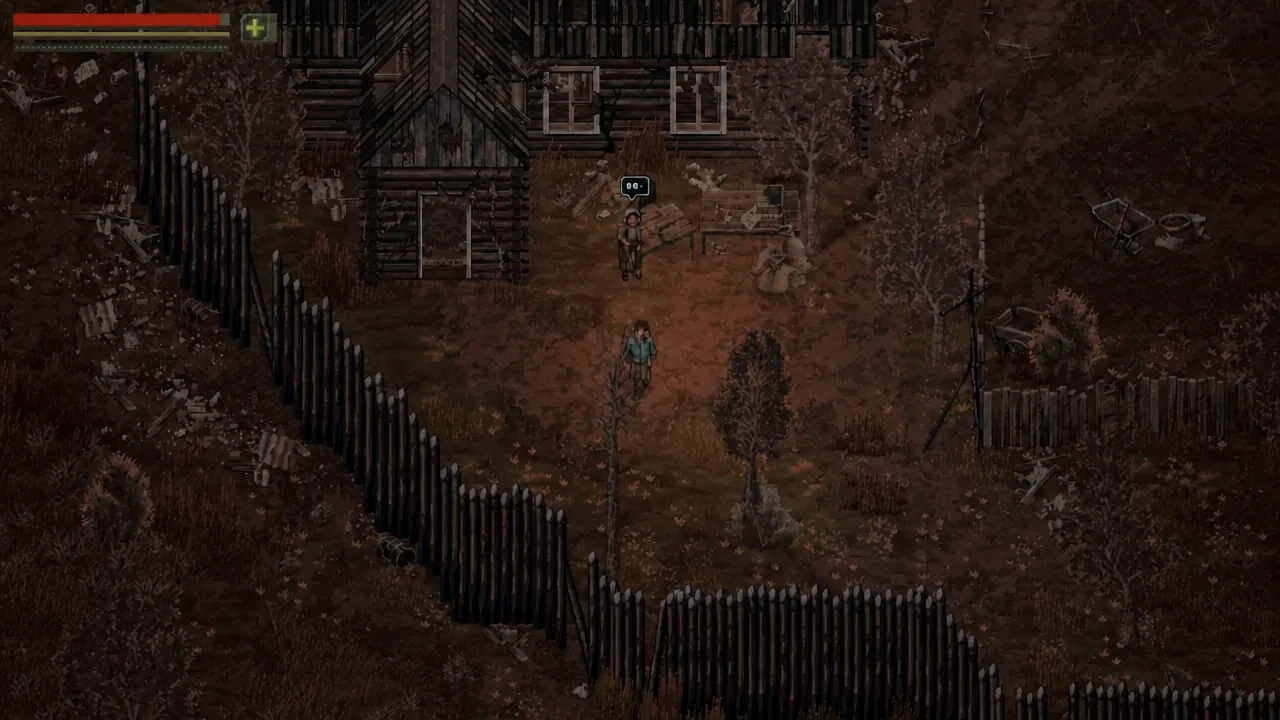
The reticle colors matter more than they sound. Shooting the wrong person in Zalesye is a reputation decision, and the aiming indicator now tells you which category a target falls into before the trigger pull commits you.
New medical blueprints
Four crafting blueprints were added on the medical side, which gives the economy an outlet beyond buying healing items from traders. Together with campfire healing, they reduce how dependent a run is on whatever stock a settlement vendor happens to have.
- Advanced Bandage
- AI-2
- IFAC
- Stim Pack
Trading and world adjustments
NPCs with an empty inventory no longer show a trade option in dialogue. That removes a small but constant annoyance, since opening an empty shop screen was the only way to find out there was nothing to buy.
Rain now falls less often across the world. Weather in Scavland is not cosmetic, and fewer storms means fewer stretches where visibility and movement are working against you at the same time as everything else.
How to check you are on version 0.1.10
Where this sits in Early Access
Scavland is a top-down pixel art survival RPG set in Zalesye, a Soviet-era region ruined by war and the Mist. You play a Vulture, a scavenger who works jobs for the region’s ten factions while managing hunger, thirst, radiation, and weapon durability. NoShadow, which co-publishes with UNSUBSCRIBE, spent six years building it and expects Early Access to run roughly 12 to 24 months, covering Act I before Acts II and III and a cooperative mode arrive later.
The studio said from the start that it would prioritize community feedback, and 0.1.10 reads exactly like that promise being executed. Nothing in it adds new regions or weapons. It adjusts the friction that early players pushed back on hardest, and it does so without removing the harder tiers for people who wanted the original difficulty. If you bounced off the game in its first week, Explorer plus doubled stamina and campfire healing is a materially different opening few hours.