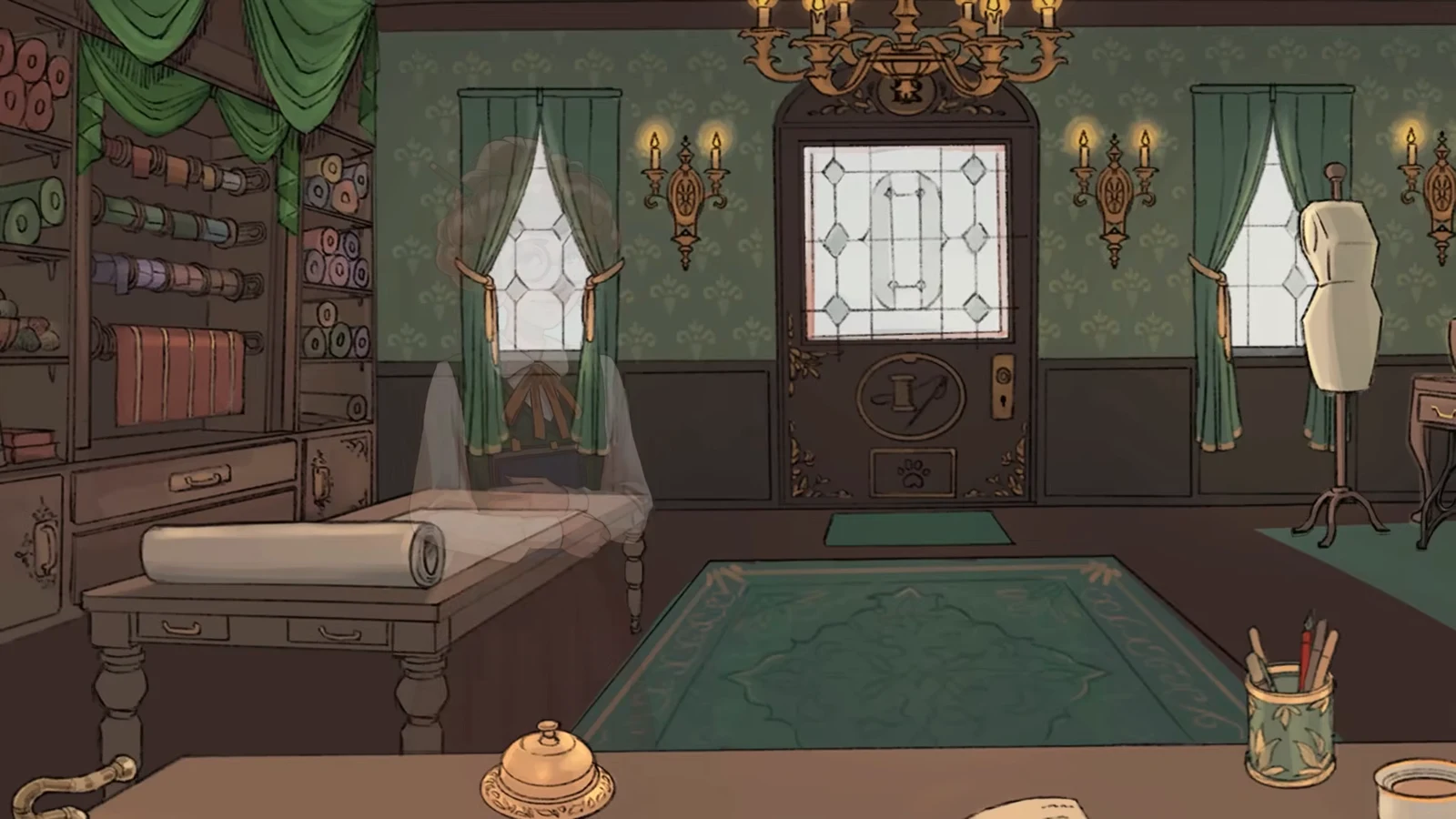
Dressmaker turns clothes-making into a hands-on loop where every commission is judged on how well the finished garment matches what the customer asked for. Early orders get much easier once you stop treating each dress as one big sewing test and start solving the brief in stages. The tips below focus on the decisions that decide your quality score before you ever touch the sewing machine.
Quick answer: Start with the brief: assess the customer’s budget, mood, and occasion. Choose matching patterns and fabric, align every pattern piece with the grain, sew at a measured pace, and add decoration only after construction.
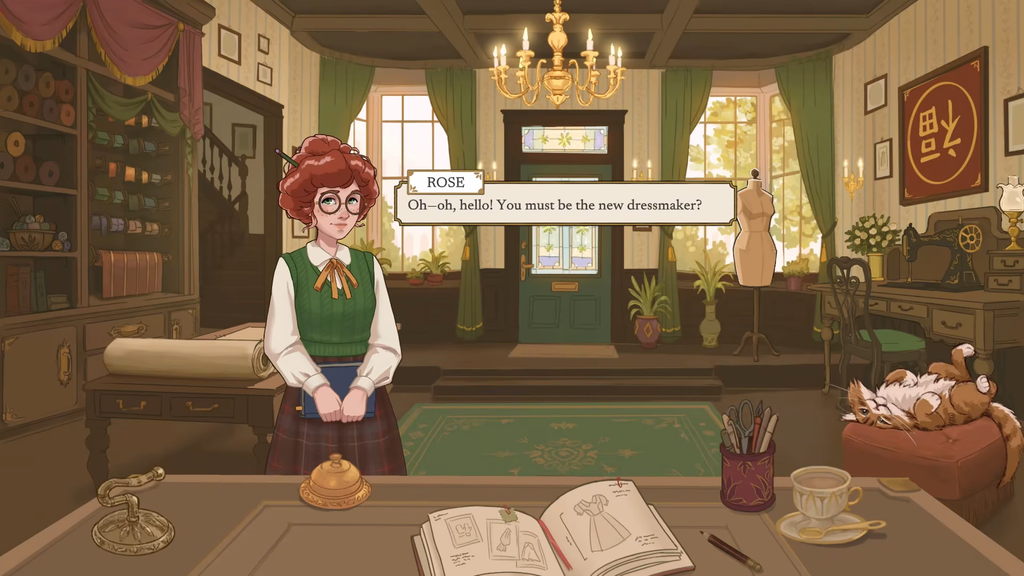
The commission loop, stage by stage
Most jobs follow the same rhythm, and learning it is the single most useful thing you can do early. Each stage feeds the next, so a mistake made while shopping or cutting cannot be rescued by good sewing later.
| Stage | What you do | Why it matters |
|---|---|---|
| Consultation | Read the request | Sets the design direction |
| Measurements | Record bust, waist, hips | Creates the correct fit |
| Design | Build the garment in the sketchbook | Defines the final look and style tags |
| Shopping | Buy fabric and trims | Materials must match the brief |
| Cutting | Position and cut pattern pieces | Affects fabric use and quality |
| Sewing | Guide fabric through the machine | Determines seam quality |
| Decoration | Add buttons, lace, bows | Improves style match |
| Delivery | Present the finished dress | Earns money and reputation |
Start with the customer brief, not a fabric you like
Every commission begins with an occasion, a requested style, and a budget. Treat those three as filters that narrow your choices before you design anything. A customer asking for an elegant dress will not be satisfied by something built for a casual occasion, no matter how nice it looks.
Pay attention to the words describing the desired garment, such as elegant, professional, playful, warm or modest. These are not flavor text; they point directly at the pattern pieces, fabric and trim you should be aiming for. If the request feels vague, work from the strongest constraint first: a tight budget limits materials, while a specific mood should steer your fabric and decoration.
Take measurements seriously
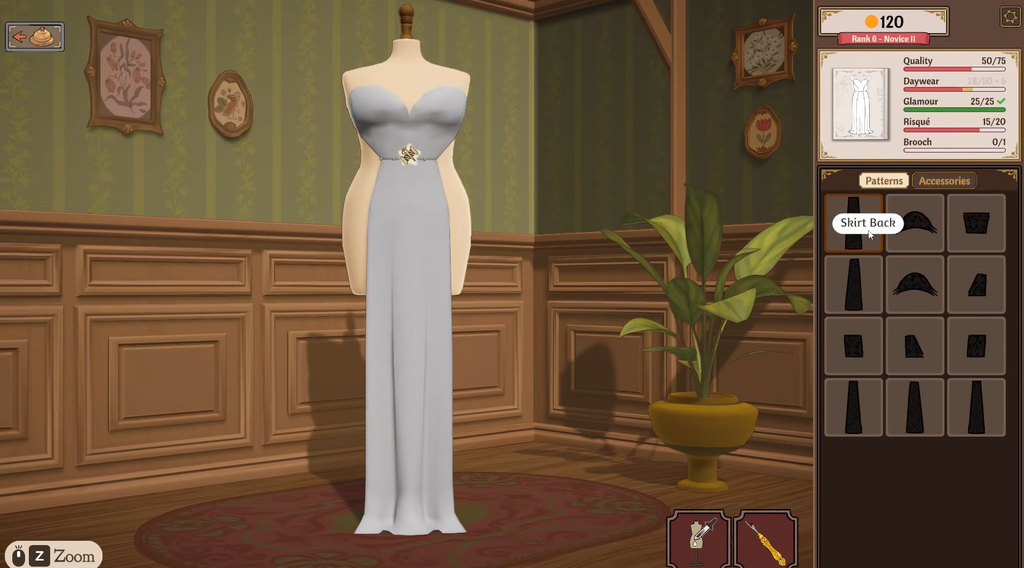
Once you accept a commission, use the measuring tape to record the customer’s bust, waist and hips, then adjust your workshop mannequin to match. It is easy to treat the mannequin as something you set roughly and forget, but a poorly adjusted mannequin produces an obviously bad fit. Verify the measurements one more time before you cut, because correcting a mistake before construction is far easier than after.
Experiment in the sketchbook while changes are still free
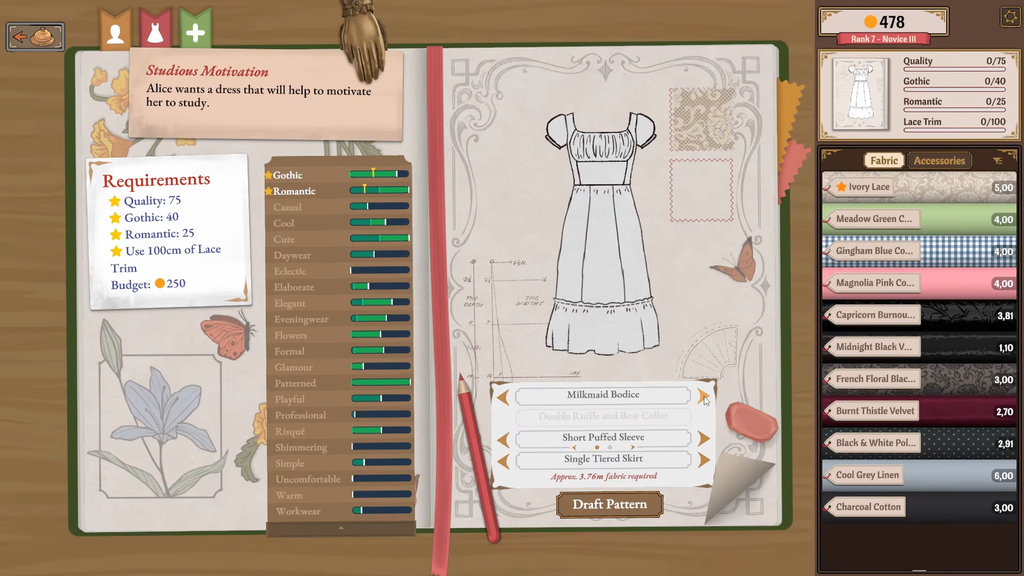
The sketchbook is where you build the silhouette from bodices, necklines, sleeves, skirts and collars. Components such as Princess Seams, Sweetheart Necks and Square Necks change the personality of the outfit, and the style tags there show whether your design is drifting toward the wrong mood.
Build a habit of checking the style tags before choosing a design and purchasing fabric. First, drag fabric swatches onto the sketchbook to test how they look together. Adjustments are free at this point, but noticing a mistake after cutting and partially sewing the garment becomes costly.
Buy fabric for the brief, not for the price tag
The Emporium offers cotton, linen, wool, silk, velvet, lace and sequins, and you can filter fabrics and accessories by the stats you want. Fabric is usually the largest part of your budget, so the most expensive option is rarely the smart one. Check the requested material characteristics and attributes, then buy what actually satisfies them.
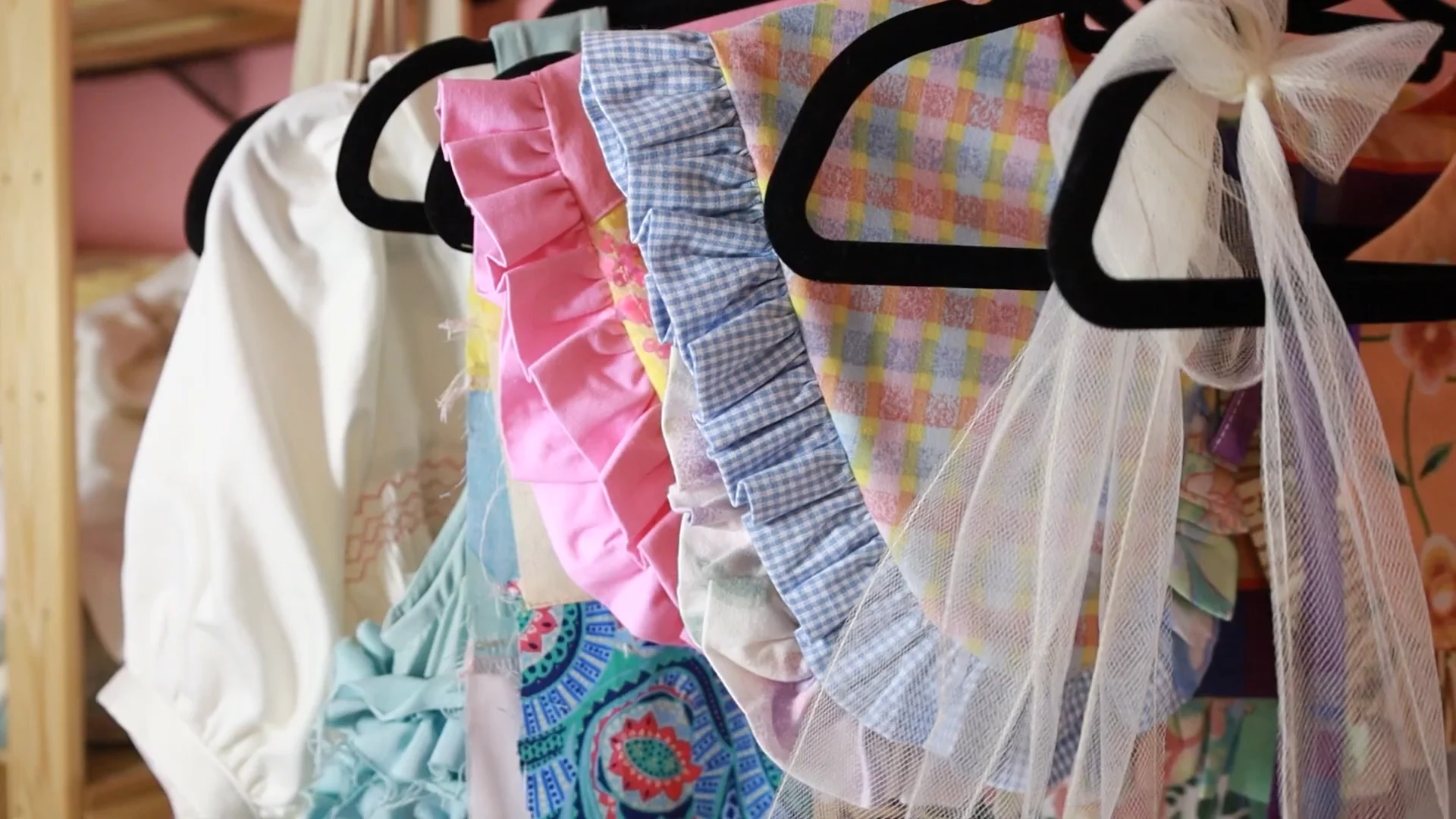
Work with two or three fabric types at a time early on. It keeps the final look easy to picture and saves money, and it stops you building a costly personal collection before your shop can afford it.
Accessories such as buttons, bows and lace do not raise attributes much, but some customers specifically request them. Keep enough budget in reserve for essential trim, and if you have already met the requirements you can skip extra decoration entirely to protect your funds. You can wishlist or pick up the full game on its Steam store page.
Pack pattern pieces tightly and cut on grain
The game tells you the fabric requirement for each piece before work begins, so use the cutting table as a spatial puzzle. Lay out the largest or most awkward shapes first, and use smaller pieces to occupy the remaining gaps. A close arrangement preserves leftovers for later orders, reducing the need to buy fresh bolts every time.
Inspect the grain line before cutting any piece. Because each pattern carries an arrow, turn the fabric until that marker is positioned correctly. A green outline means alignment is correct, making the cut safe. Turn a piece roughly 45 degrees for a bias cut; this creates a softer drape suited to elegant and evening designs.
A misaligned piece can severely limit the quality you reach later, so this is one of the first habits to build. If the required quality is low, you can compromise slightly on grain to save fabric, but never do it on a demanding order.
Sew for accuracy, not speed
You guide the fabric with the machine, while the Spacebar operates the foot pedal. Watch the accuracy meter as it changes live: a sharp decline signals that you are leaving the dotted guide line. Move confidently along straight stretches, but reduce your speed around curves, corners, and cuffs.
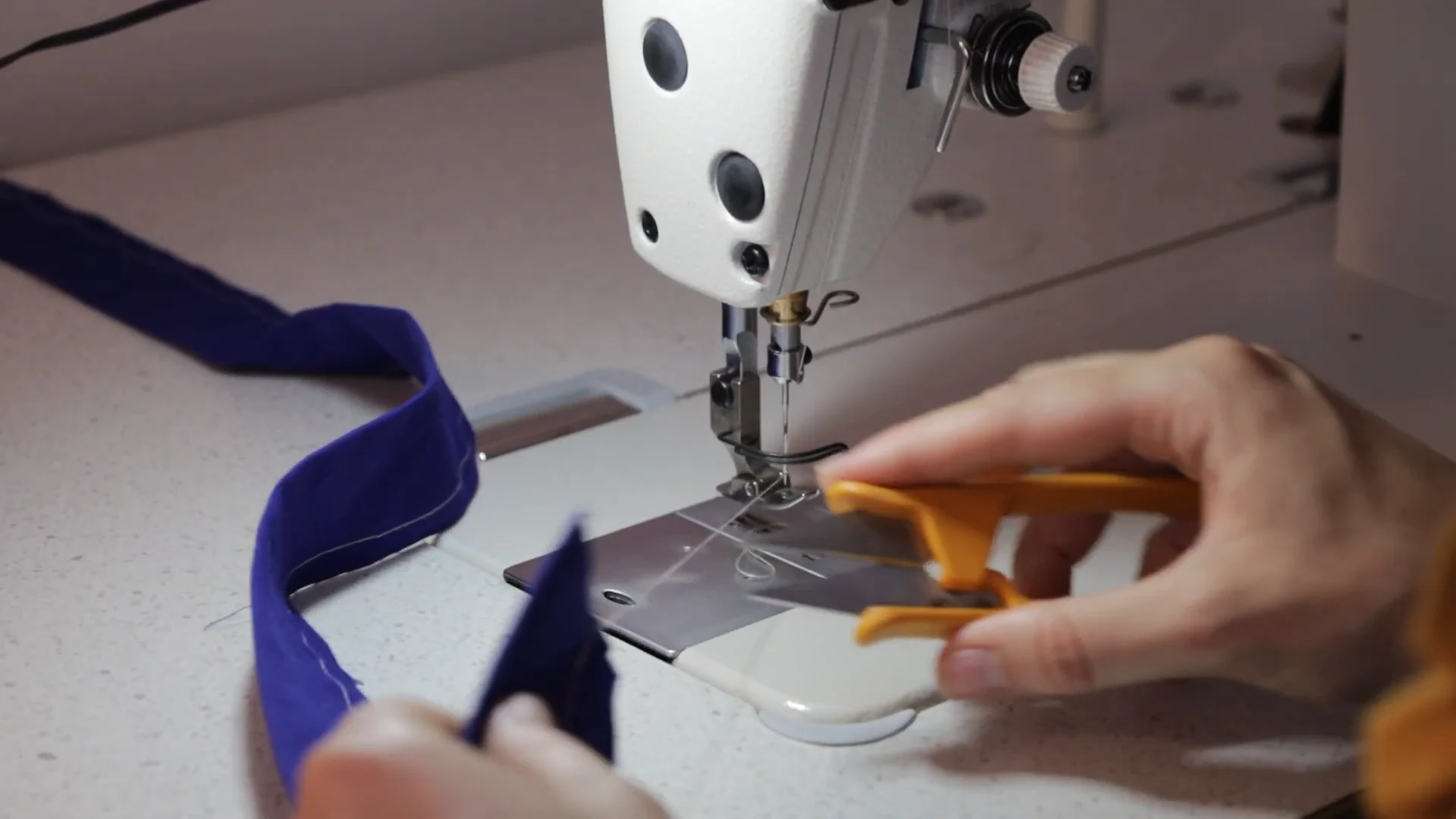
If accuracy starts falling, stop and correct your position rather than powering through to finish the seam. Pausing is not failure; a clean seam produced slowly beats a crooked one rushed. Look slightly ahead of the needle so you set up each turn before you reach it, and use any speed-control option while you learn.
Decorate to match, not to cover
Add buttons, bows, lace, zippers and appliqué only after the garment structure works. More decoration does not automatically mean a better dress. A silk evening piece often reads as more elegant with a few restrained details, while a playful commission can take bolder patches and accessories. Match the trim to the requested mood instead of decorating for its own sake.
When a dress scores poorly, find the stage that failed
Do not respond to a bad result by simply trying harder next time. The score reflects the quality of the work, how well the design fits the request, and how you handled the budget. Trace the disappointment back to the stage that caused it.
- Design feels wrong: compare it again with the requested style and occasion.
- Money keeps disappearing: use a simpler pattern, repurpose fabric, or reserve more of the budget for trim.
- Fabric runs out too fast: pack the pattern pieces tighter before cutting.
- Sewing quality drops: ease off before curves and adjust your angle rather than forcing the seam onward.
- Careful sewing still underperforms: check for an earlier cutting or grain-alignment mistake.
Use the early game to learn the work loop instead of racing to perfect every dress. Completing commissions unlocks additional fabrics, patterns, and tools, while customer stories carry on through repeat visits. Follow the brief, settle costly choices before cutting, preserve fabric you already have, and slow down whenever precision counts. With those habits in place, tougher orders become far less intimidating.