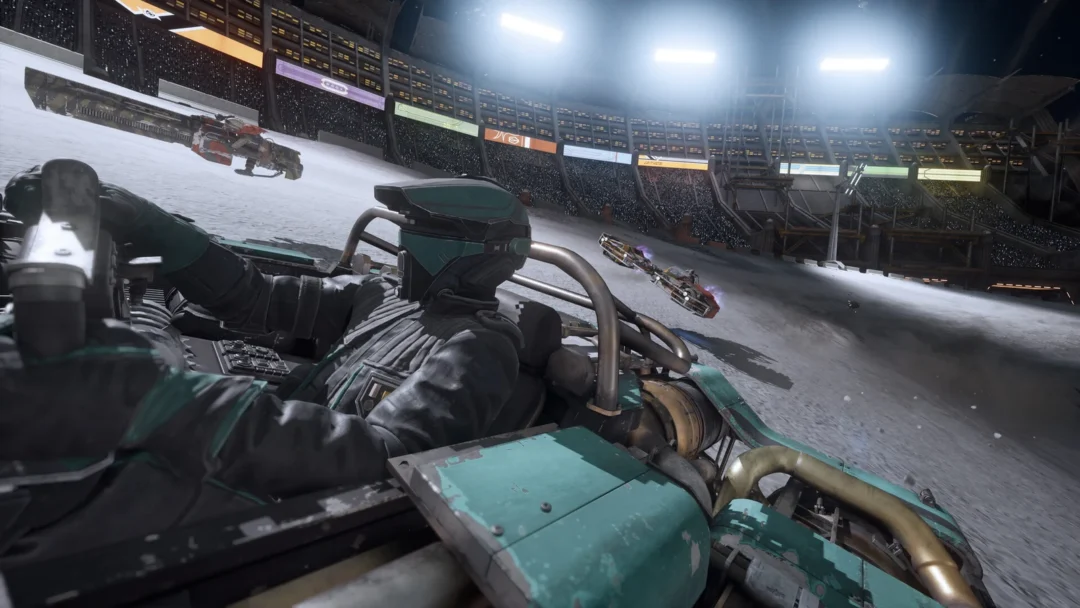
Perfect Landing is a mid-air skill in Star Wars: Galactic Racer that rewards you for touching down cleanly after a jump. It is not about surviving the drop. The game checks whether your speeder matches the angle of the track at the moment it lands, and several parts sold at Hibi’s Shop only pay out their bonus when you pull it off.
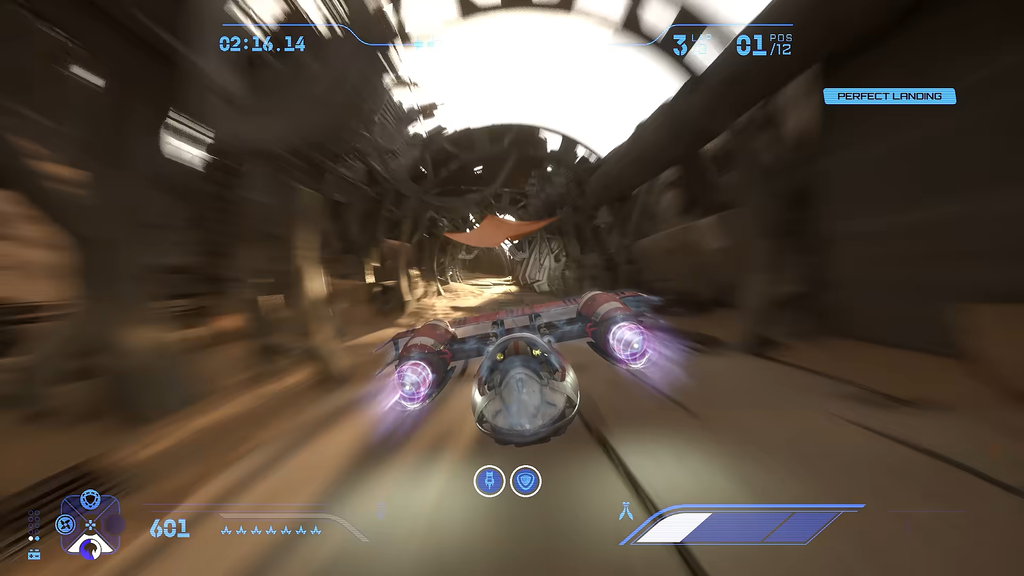
Quick answer: While airborne, use the left analog stick to tilt your speeder until it sits parallel with the ground below it, then land. A Perfect Landing notice appears in the top-right corner when it registers.
How to perform a Perfect Landing
Every Perfect Landing comes down to matching your vehicle’s angle to the surface you are about to hit. The left analog stick controls that orientation while you are in the air, so the real skill is reading the landing zone early and nudging the stick to suit it.
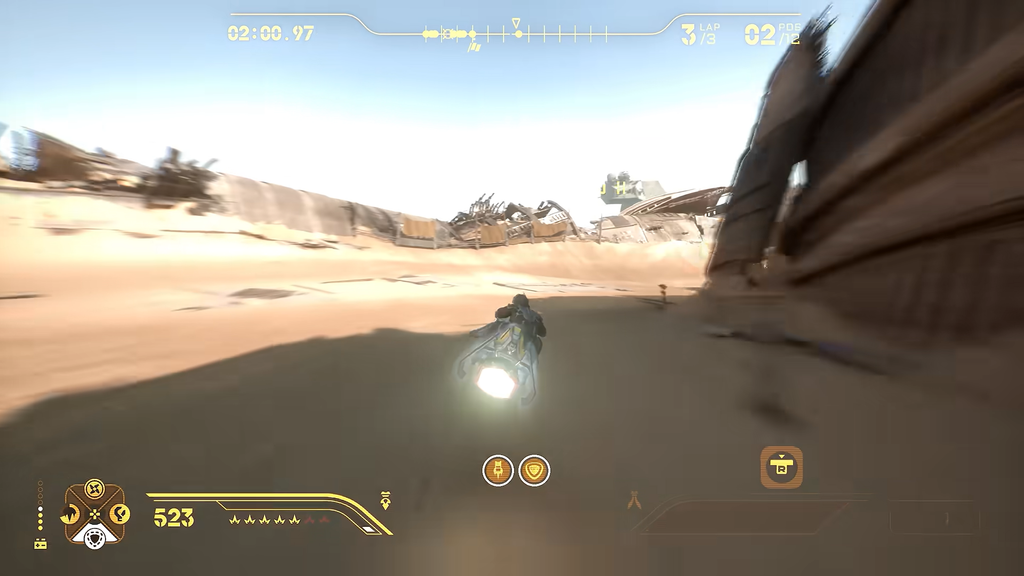
On flat ground with no immediate turn ahead, you often do not need to do anything at all. If the speeder is already level, let go of the left stick and it should settle into a Perfect Landing on its own.
Match both the side tilt and the pitch
Lining up left-to-right is only half of it. You also have to account for how steeply the landing slopes forward or backward, and both have to be right at the same time.
- Flat ground: keep the speeder level and avoid extra inputs.
- Sideways slope: tilt toward the lower side so that edge drops to meet the track.
- Incline or decline: pitch the speeder nose-up or nose-down so its chassis follows the slope.
For example, if the ground tilts down toward the right, ease the stick right to lower that side. If you are coming down onto a rising incline, lean the speeder further back so it lands flush with the climb. Because every jump drops you onto a slightly different surface, there is no single stick position that works everywhere. Read each landing and set both axes to suit it.
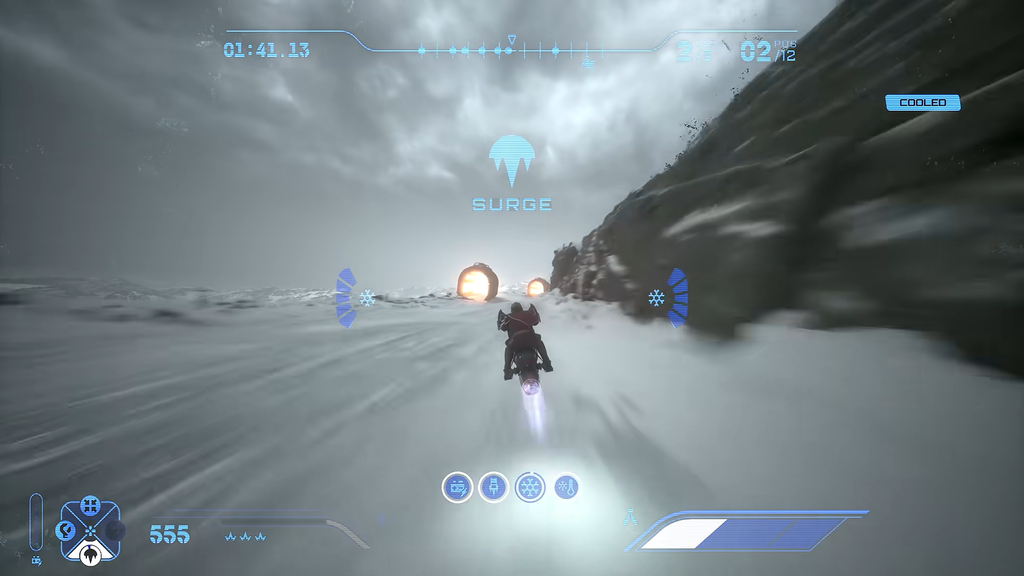
How to confirm the landing registered
As soon as the game registers the maneuver, Perfect Landing appears at the screen’s upper-right. No other confirmation is needed; the prompt shows your angle was accepted.
Once that prompt shows, equipped parts that use Perfect Landing as their trigger activate on their own. There is no second button to press after you hit the ground, so the bonus just rolls into your run.
What a Perfect Landing gives you
A clean landing on its own helps you carry speed through a jump instead of bleeding momentum. The payoff grows once you fit parts built around it. Depending on your setup, a Perfect Landing can hand you a burst of extra speed or activate Shield as soon as you touch down.
Perfect Landing itself does not grant a speed boost. You only get the tangible reward when you have a part installed that specifically pays out on a Perfect Landing, such as Repulsormod I.
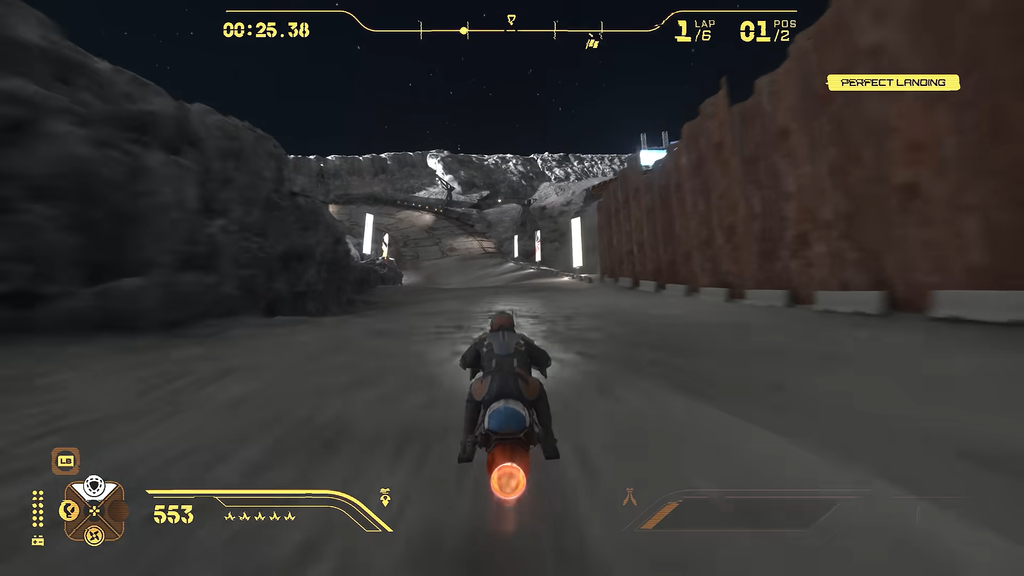
How to land perfectly every time
The usual mistake is overcorrecting. Perfect Landings want small, controlled nudges, not constant stick movement right before you touch down. Those late, aggressive corrections turn an easy landing into a missed one.
- Keep the speeder level for flat landings.
- Match your side tilt to a sideways slope.
- Adjust pitch forward or back for inclines and declines.
- Avoid sharp inputs in the final moment before contact.
- Watch for the prompt to learn how much each jump needs.
Use the on-screen prompt as feedback while you learn. After a handful of jumps, you will start judging the right amount of tilt by eye, which matters most when your build stacks several parts that fire off Perfect Landings.
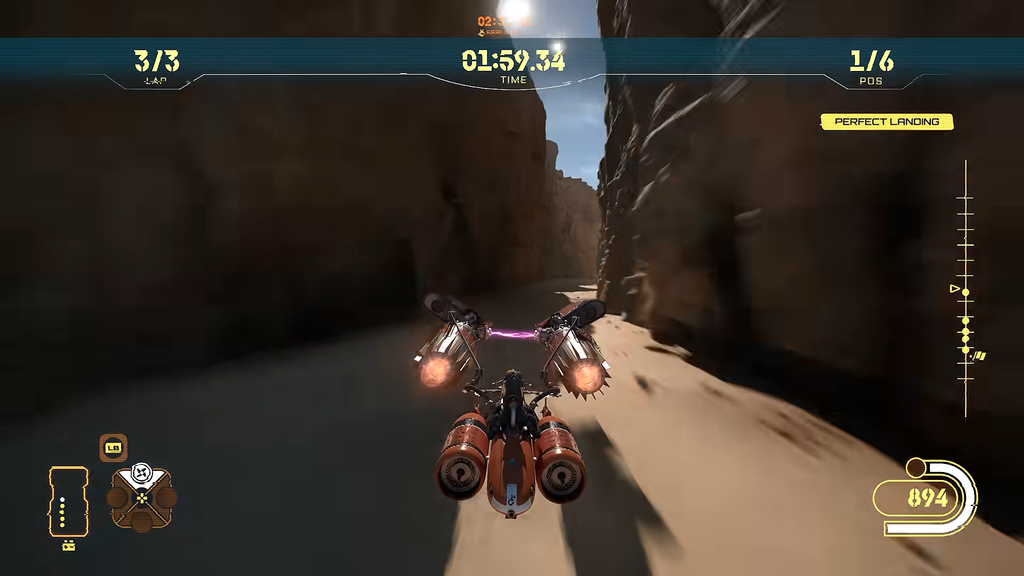
Turning jumps into overtakes
Use your airtime to prepare for what follows the landing. When a tight corner is next, turn the speeder toward it before touchdown while keeping the vehicle aligned with the landing surface. You’ll land cleanly and emerge facing the right way.
This pairs well with parts that grant speed on a Perfect Landing. Touch down cleanly, collect the bonus, then feed it straight into your Afterburner when the track opens up. With the right loadout, the airborne sections that usually slow racers down become some of your best spots to close a gap or slip past an opponent.