


Cash runs your zoo in Planet Zoo 2, but Conservation Credits fill it. Most animals on the Franchise Mode market cost Credits rather than cash. Animals you buy with cash are usually lower genetic quality because they were seized at customs or rescued. Credits also pay for new Wildlife Reserve permits and for founding new zoos. Every reliable way to earn them involves animals you have bred, so the system rewards a healthy breeding program over a high ticket price.
Quick answer: Breed healthy animals, then release them, either through Release Groups into a Wildlife Reserve or with Quick Release. You can also sell them for Credits on the Animal Trading market, and claim Conservation Project and Community Challenge rewards from the Hub.
Every Conservation Credits source in Planet Zoo 2
| Method | Where | Payout | Catch |
|---|---|---|---|
| Release Groups | Trading & Storage | Based on species and genetics | Needs a suitable reserve |
| Quick Release | Animal release option | Fixed, shown before confirming | Animal is gone for good |
| Animal Trading market | Franchise Mode | Price you set | Needs a buyer |
| Conservation Projects | Hub (leaf icon) | Credits, cash or animals | Some are limited-time |
| Community Challenges | Franchise Hub | Personal and community rewards | Goals change each time |
| Reserve photos | Wildlife Reserves | Bonus Credits | Needs a thriving reserve |
| Greeting avatars | Your Franchise zoo | Small amount | Depends on visitors |
No single per-animal Credit figure applies across the whole roster. Species, genetic quality, appeal, and conservation status all change the result. Rarer and more endangered animals pay more when released. Always check the release or sale panel for the actual number before you commit.
Releasing animals for Conservation Credits
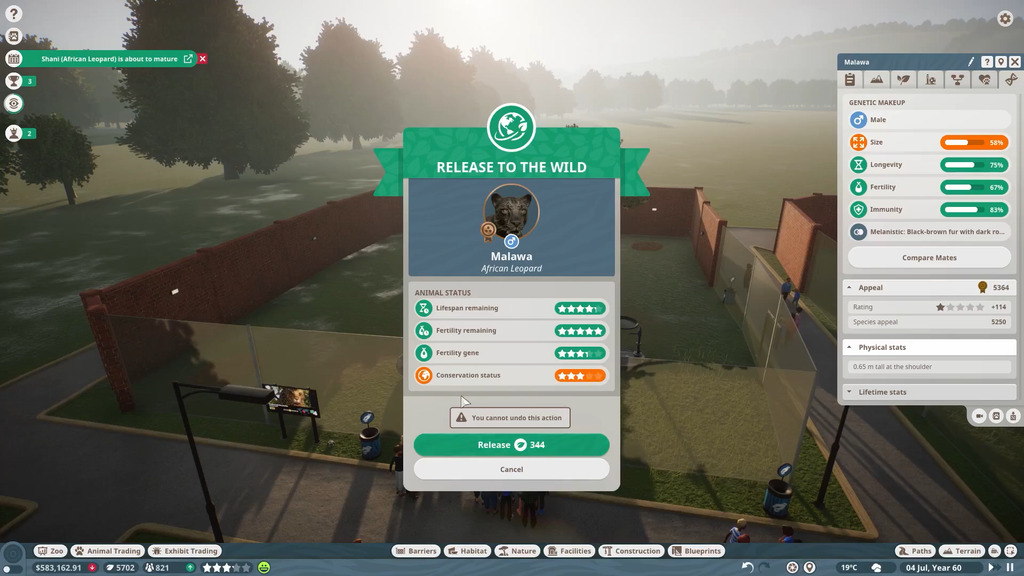
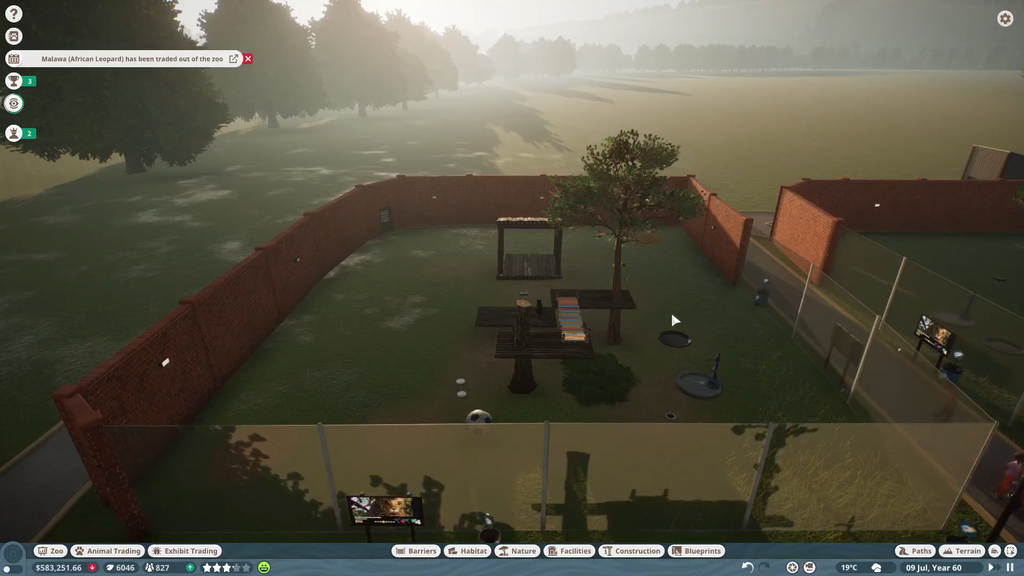
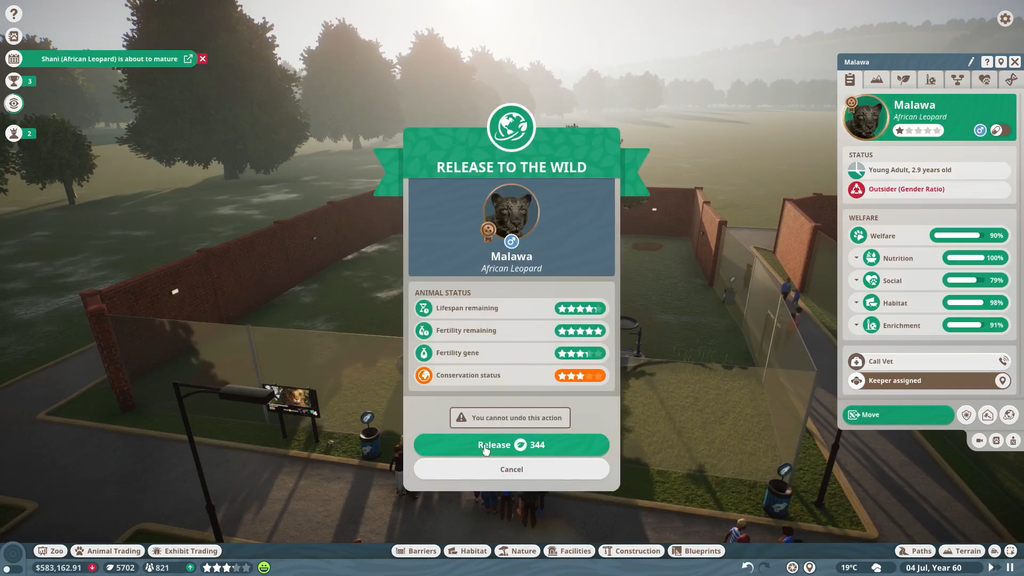
There are two release options, and either one permanently removes the animal from your zoo. This is the most straightforward way to earn Credits. Before confirming, check that the animal isn’t a breeder you still need.
Quick Release
Quick Release applies to any eligible animal not purchased with cash. It awards a fixed number of Conservation Credits according to the animal’s genetic quality and appeal. The animal isn’t transferred to one of your reserves; it exits the game instead. As you work toward a reserve, this is the quickest way to convert surplus offspring into Credits. Quick Release is available for every animal, including species that cannot inhabit a Wildlife Reserve.
Release Groups into a Wildlife Reserve
Sending animals into a Wildlife Reserve you own takes more setup. You need to unlock and prepare a reserve that suits the species, research that species at your zoo, and breed healthy, fertile animals that meet the group’s requirements. Released animals then join the reserve’s ecosystem. That progress also counts toward reserve biodiversity and Franchise Accreditation.
Selling on the Animal Trading market
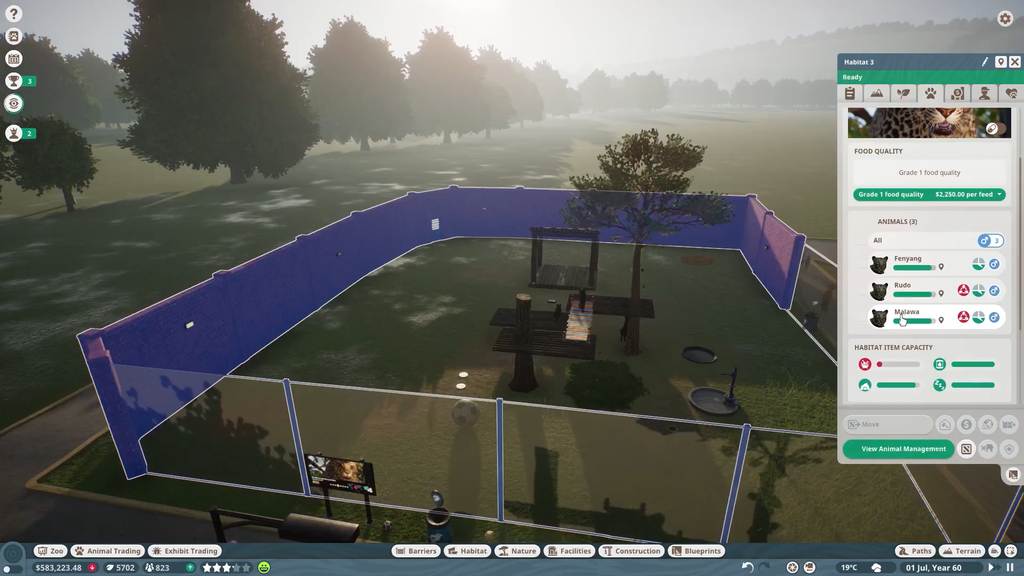
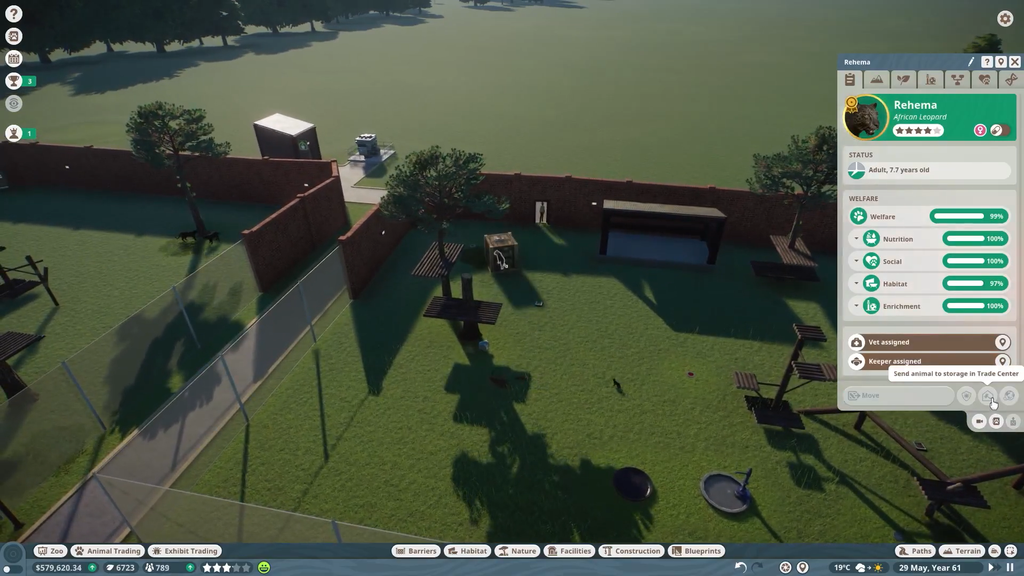
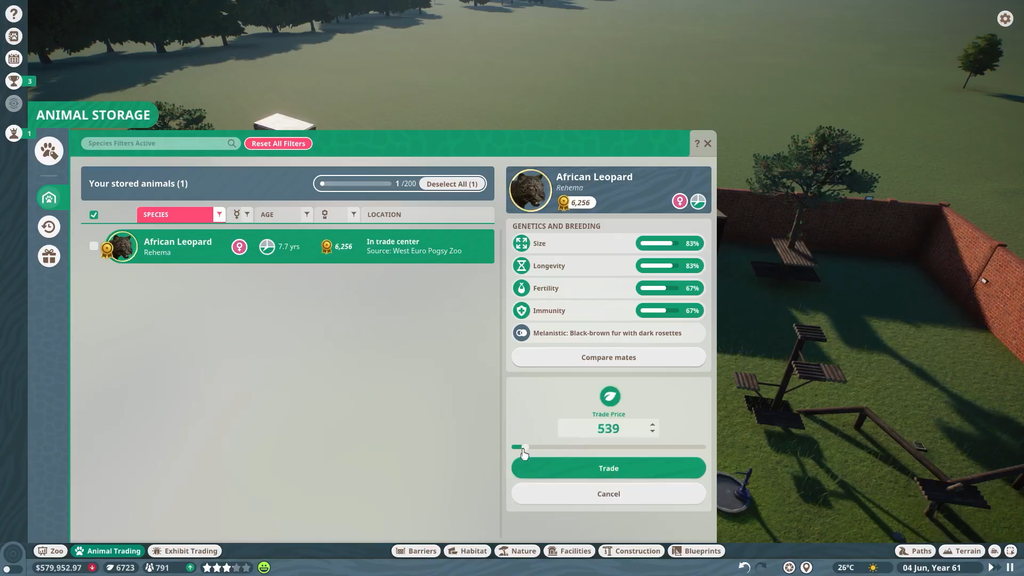
In Franchise Mode, you can list animals on the shared Animal Trading market for a Conservation Credits price. Animals born in your zoo qualify, and so do animals you bought with Credits. You set the price and how long the listing stays up, and any player in the world can buy it. Animals bought with cash cannot be traded, but their offspring can. That lets you build a breeding base without spending Credits at all.
Selling can earn more than Quick Release, but it is not guaranteed. A listing can take time, and it may never sell. Endangered species and rare color variants command a premium, including albino, leucistic and melanistic individuals. Two tactics hold up well:
- Sort the market by price to find underpriced animals, then relist them for more.
- Buy breeding stock for cash or Credits, then breed better offspring to sell. Your research level helps here.
- Price close to the going rate. An overpriced listing sits unsold and blocks a trade slot.
A thin market is not always a Credits problem. Frontier acknowledged launch server load and a shortage of listed animals, and Update 1.0.4 on October 14 increased trading volumes. Some species also stay hidden until you reach a higher Franchise Accreditation tier.
Conservation Projects and Community Challenges in the Hub
Conservation Projects are short objectives with fixed rewards. Some are weekly, some are tied to special events, and others appear at random. A project might ask you to donate a sum of cash, release a specific species, or contribute animals or staff. Rewards are usually Conservation Credits, though some projects pay out cash or animals instead. Some Franchise projects are limited-time.
Community Challenges sit in the bottom-right corner of the Franchise Hub. Open the current one to see its goals. Community-wide rewards unlock as all players progress together, while a separate tally tracks your personal contribution and pays individual rewards. The first challenge asked players to breed aquarium animals at Silver genetic quality or higher. Later challenges follow a similar format with new goals each time, often built around breeding or releasing a type of animal. You can also preview the next challenge, which gives you time to breed the right animals ahead of it.
Small bonuses: reserve photos and avatar visitors
Once a Wildlife Reserve is thriving, high-quality photos taken there earn bonus Credits. Rare animals showing unusual behavior make the best subjects. In Franchise Mode, avatars of friends and other players sometimes wander through your zoo, marked as VIPs. Click one and greet it to collect a small Credit reward, and do this every time one appears. Neither source will fund a rare animal by itself, but both cost almost nothing.
How to confirm Conservation Credits were added
Your Credit balance goes up only when an action actually completes. A release counts once you confirm it, and the animal is no longer in your zoo. A market listing pays nothing until another player buys it, and only then does the animal leave your collection. Conservation Project rewards have to be claimed manually after you allocate resources. If you trade during a server disruption, check that the transaction went through before you try again.
Keep the two currencies separate in your planning. Cash pays for staff, facilities and construction, while Credits buy animals and permits. A zoo that is losing money needs its expenses fixed, because no amount of Conservation Credits will cover keeper wages.