Big Walk, the co-op puzzle game from House House and Panic, is built as a handcrafted, one-island experience rather than a randomized one. Players walk, explore, and solve puzzles together, and the whole map is fixed. If you are trying to work out how much life the game has after you finish it, the honest picture is that replay value comes from people and player count, not from procedural systems.
Quick answer: Big Walk has no procedural generation or randomized layouts. Replay value comes from playing with a different group, changing the session size between 2 and 12 players, chasing extra achievements, or returning after enough time that you have forgotten the puzzle solutions.
What Big Walk’s replayability actually is
The map, puzzle placement, and solutions do not change between runs. There are no shuffled routes, no random events, and no rearranged objectives. What varies from session to session is who you bring and how many of them join, since a session supports a minimum of two players and up to twelve.
| Source of replay value | What changes |
|---|---|
| New group of friends | Fresh reactions, different puzzle-solving pace, new communication chaos |
| Player count (2–12) | Higher counts raise the carnage; some puzzles benefit from more people |
| Time away from the game | Forgetting solutions lets the puzzles feel new again |
| Extra achievements | Reasons to revisit areas you already cleared |
Why the map and puzzles do not randomize
Big Walk is deliberately handcrafted. Progression follows a fixed loop. You solve a puzzle, collect a small statue, and place it on a pedestal. Once enough statues are set, you earn a key, then grind that key down until it fits a slot and opens the next area.
Because puzzles are designed around specific rooms, sightlines, and voice distances, they are tied to their locations. Randomizing them would mean dropping the same puzzle into a different spot, which does not create genuinely new challenges. The first area is fairly linear, and the island opens up after that while keeping the same core loop, with each new key making movement a little easier.
How voice chat and player count add variety
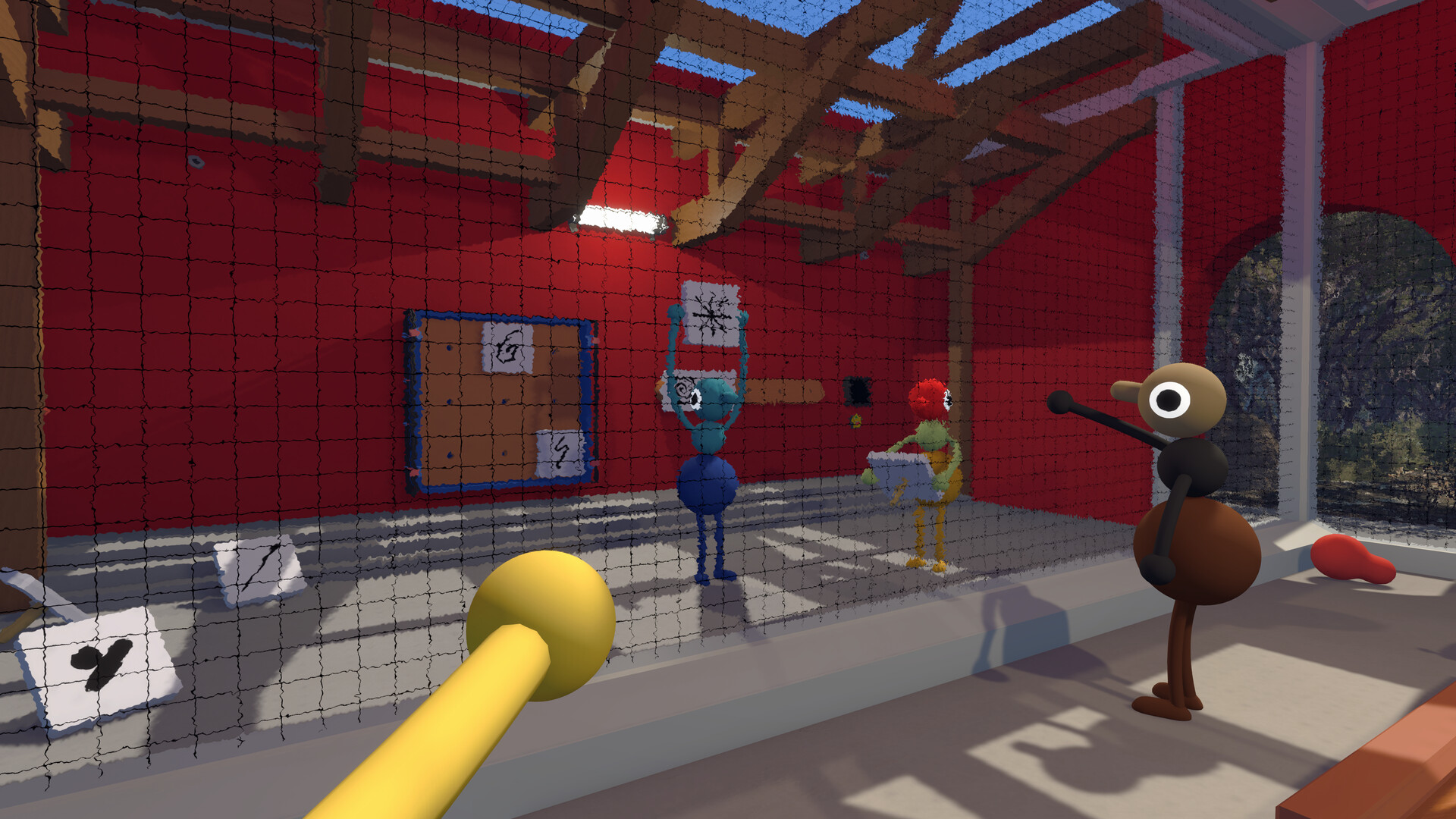
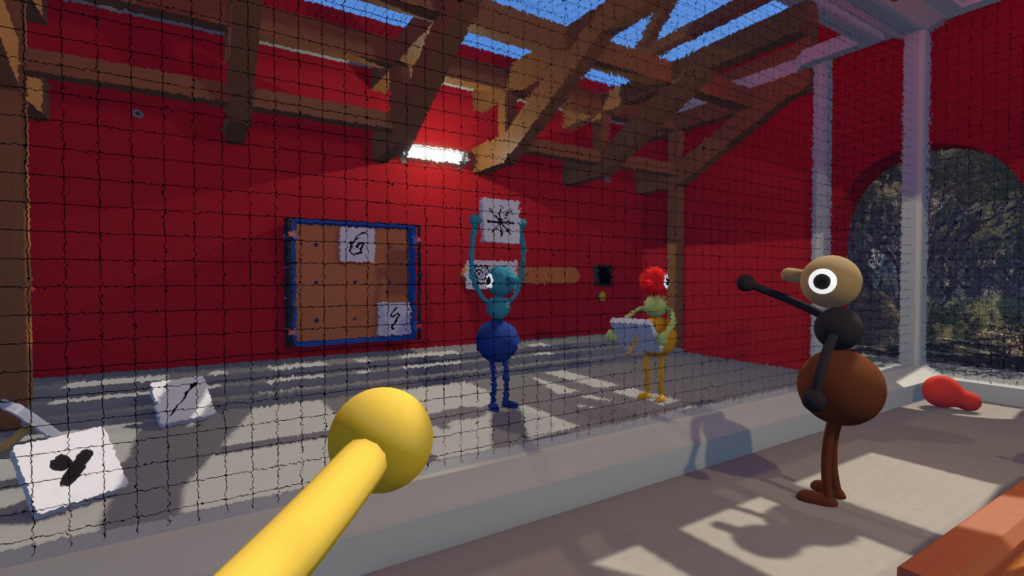
The strongest source of session-to-session difference is communication. Proximity voice chat is central, and puzzles lean on it in awkward, deliberate ways. One example seals a player in a room behind soundproof glass, forcing the group to complete a task without speaking normally to each other. Some puzzles restrict voice entirely and ask players to mirror poses or match symbols.
Nothing in the world is labeled by name, so groups invent their own references for landmarks and pillars. Those made-up names differ every time you play with new people, which is a large part of why a second group can feel fresh even on the same island. Extra communication tools such as walkie-talkies, flare guns, lights, and signboards give bigger sessions more ways to coordinate or cause trouble.
With larger lobbies, the game shifts toward chaos rather than added puzzle depth. More players can help on certain puzzles, but the extra bodies mostly change the social tone of a run.
What to expect on a second playthrough
Once you know the solutions, a repeat run turns into executing steps you already understand. You can split up, send each player to a known spot, and clear the island quickly. That efficiency is exactly what removes the surprise, since the puzzles do not re-scramble.
Joining a public lobby as a veteran carries its own trade-off. Leading new players directly to answers can take away the discovery that makes the first run land. The most reliable way to get a genuinely new experience is to wait long enough to forget solutions, or to go in with people who have never played, and let their fresh problem-solving drive the session.
Where to play Big Walk
Big Walk is available on PC, PlayStation 5, and Nintendo Switch 2. On PC it is listed on Steam. If replay value is your main concern, treat it as a strong single co-op journey first, with repeat runs powered mainly by fresh groups and time away rather than by any randomized content.