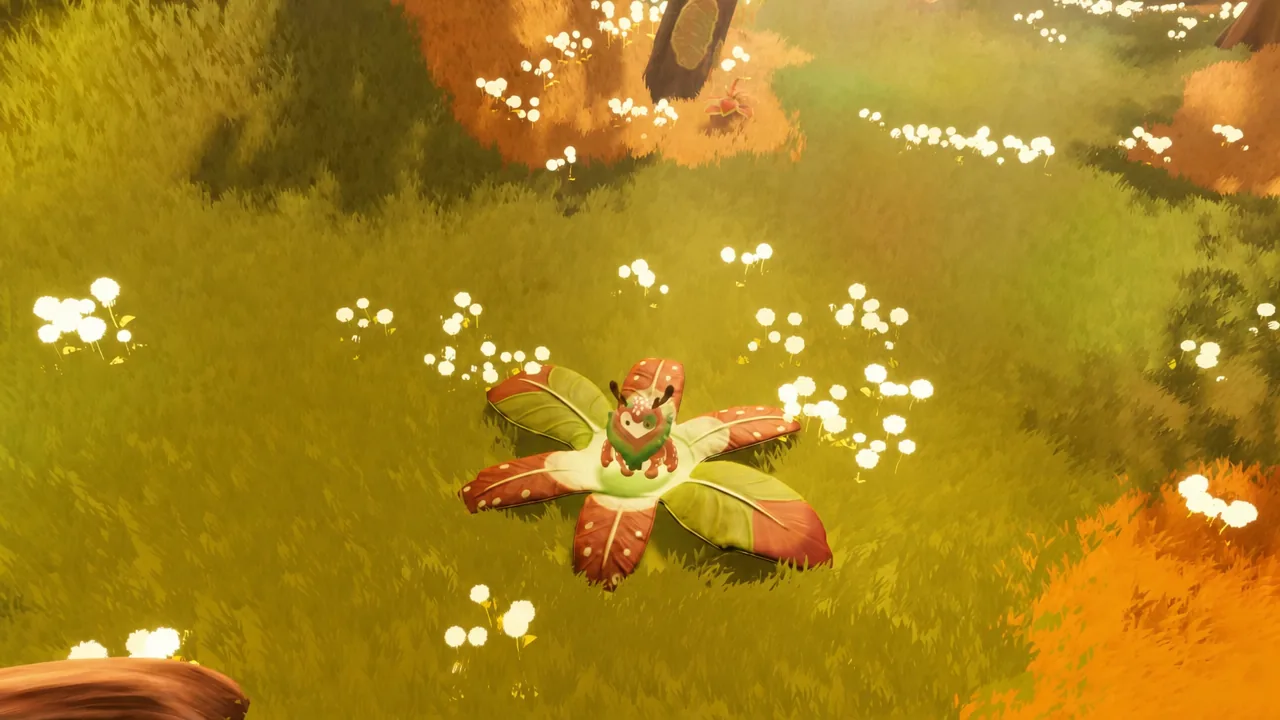
The island of Hedera has burned down to ash, and the job of putting it back together falls to a Guardian and a crowd of small, easily distracted creatures called Pouics. BloomKeeper, developed and published by Resonance Interactive, turns that setup into a top-down real-time tactics adventure where the ground you restore can burn again if you wander too far from it.
Quick answer: You herd Pouics across scorched terrain to regrow grass and flowers, then lead a large enough group to each region’s central burning rock and touch it to bloom a giant flower and clear the level.
BloomKeeper price, release date, and platform
BloomKeeper launched on PC via Steam on September 16, 2026 at $19.99, with an introductory 20 percent discount bringing it to $15.99. That discount ends September 23.
| Detail | Value |
|---|---|
| Developer / Publisher | Resonance Interactive |
| Release date | Sep 16, 2026 |
| Price | $19.99 ($15.99 until Sep 23) |
| Genre | Adventure, Casual, Indie |
| Modes | Single-player, online co-op |
| Achievements | 15 |
The game supports Steam Cloud and Family Sharing, and the interface is available in 10 languages, including English, French, German, Spanish (Spain and Latin America), Simplified and Traditional Chinese, Korean, Japanese, and Brazilian Portuguese.
The core loop: guiding Pouics to regrow the land
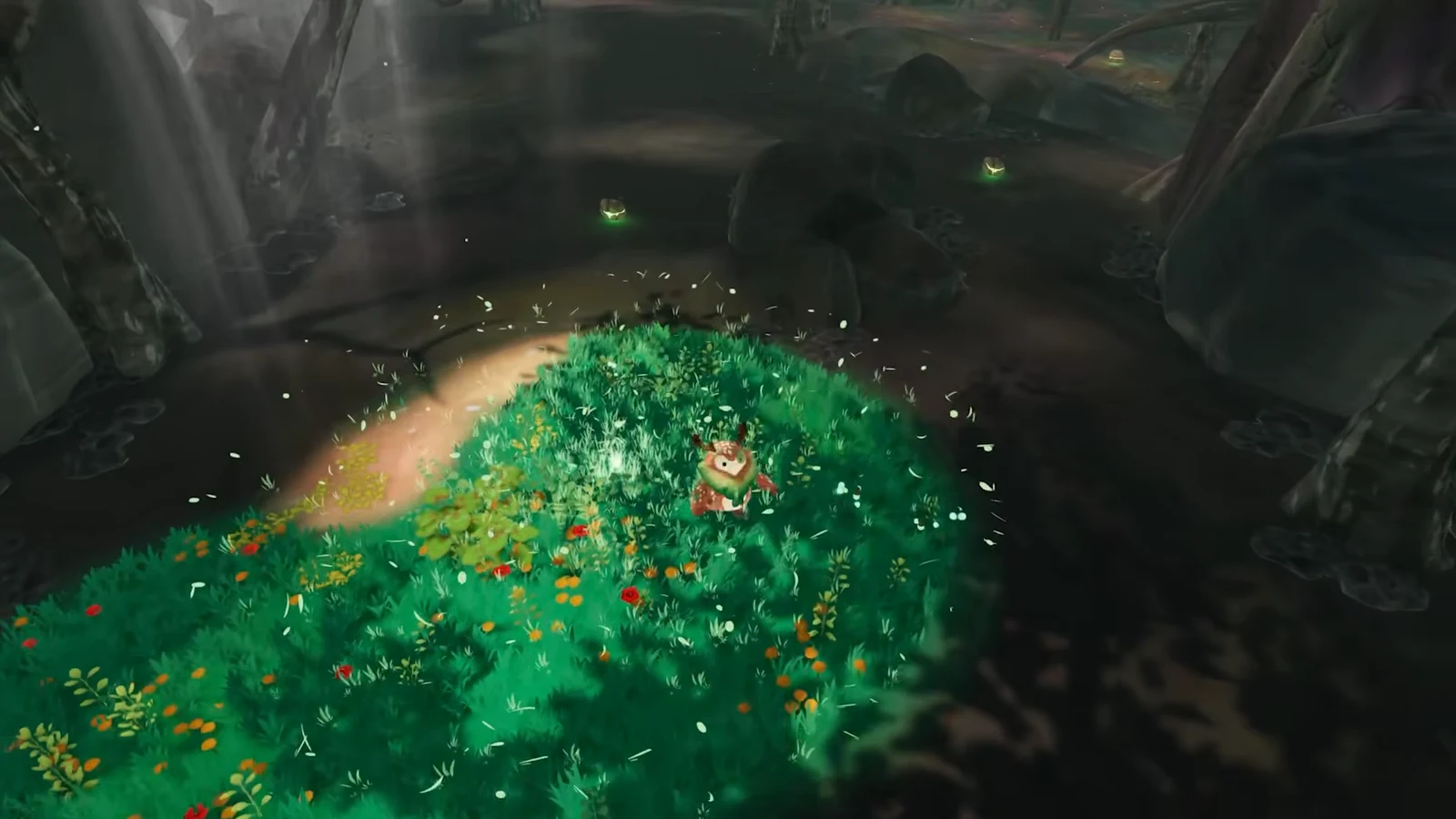
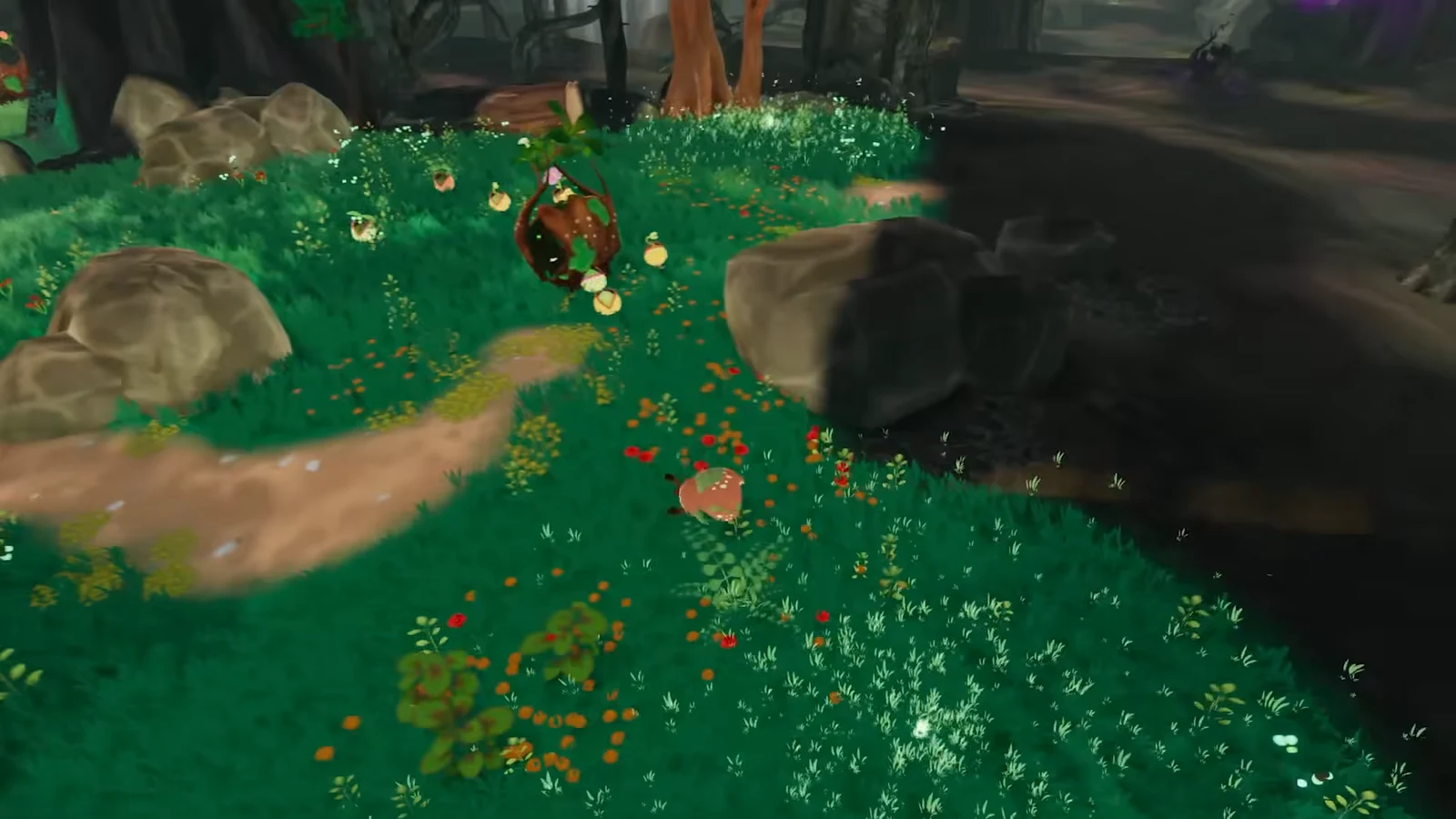
You do not paint the world green yourself. The Pouics do it. Your job is to find them, wake them, keep them bunched together, and steer them onto the grey, charred ground so grass and flowers spread behind their footsteps. The bigger the group, the faster an area recovers.
The opening moments teach movement, camera rotation on the right stick, and a roll bound to RT on a controller. Rolling is the fast way to scout ahead. Once you reach the first pod, an on-screen prompt reading Guide the Pouics appears, and the herding begins.
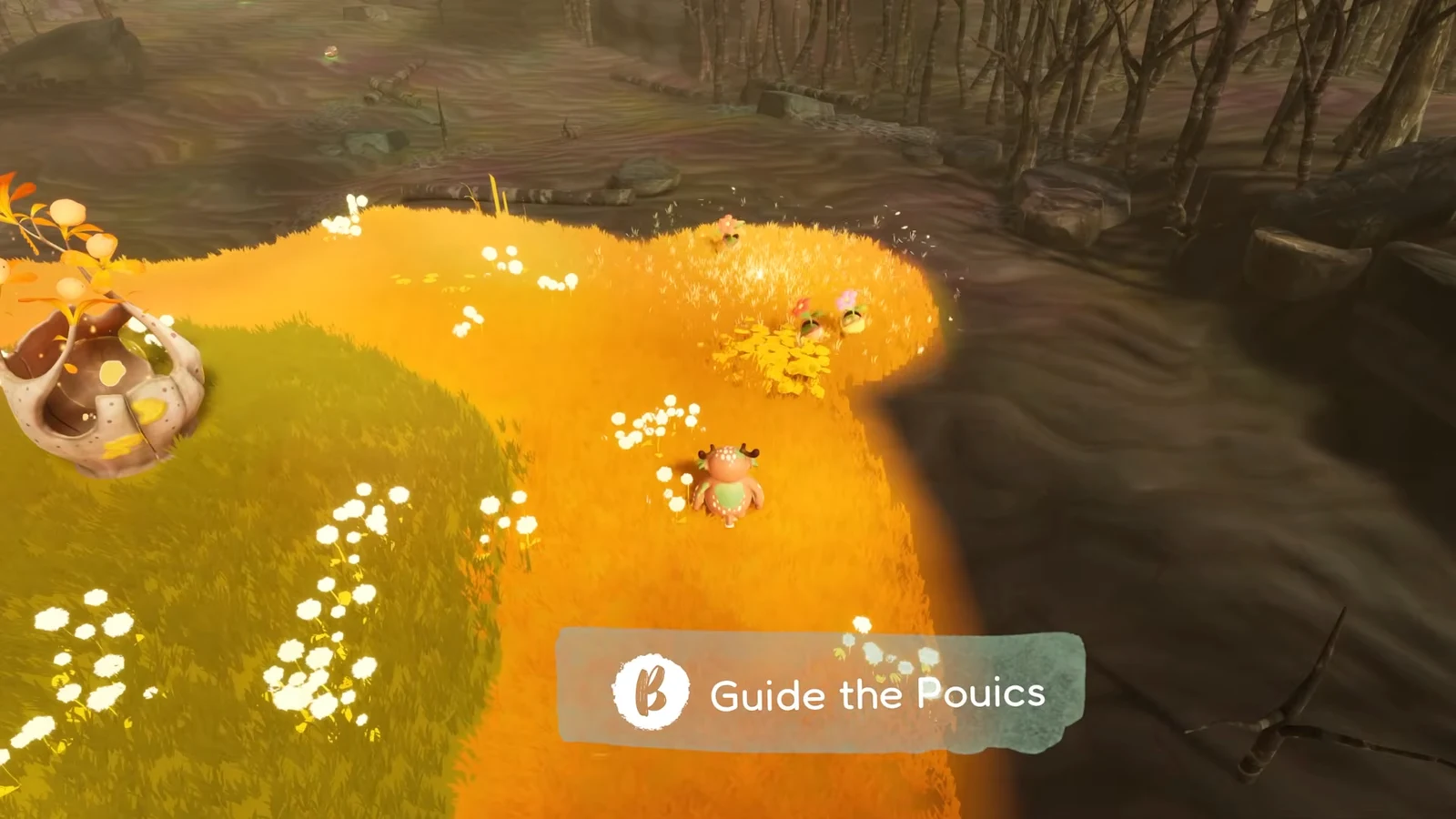
Seed pods scattered through each level are the way you grow the colony. Lead Pouics to a dormant or corrupted pod and it blooms, releasing more helpers. Finding pods early matters more than rushing, because a small group simply cannot cover enough ground to keep up with the spreading ash.
Controls you will use constantly
- Movement and camera, with free rotation to line up a herd before you push it.
- Roll mode, used to cover distance quickly and to run over corrupted creatures.
- Nudge, the basic command that pushes Pouics in the direction you want.
- Grab and throw, unlocked later, which tosses a single Pouic across gaps or onto raised ledges.
Throwing a Pouic is often the only way to start a bloom on the far side of a river or on a high rock shelf, so it is worth checking elevated ground before circling a long way around.
Scorched zones, corruption, and Malpouics
This is where the calm exterior gets teeth. Scorched zones do not sit still. They keep spreading across each level, and their pressure intensifies the closer you get to the source of the blight. Ground you cleaned can fade back to corruption if there are not enough Pouics around to hold it.
Losing Pouics costs more than progress. Corrupted ones turn into Malpouics, purple creatures that actively spread the scorched zones and make the rest of the run harder. The counter is direct: you run them over. A prompt spells it out plainly when they first appear, and rolling through them buries them.
Terrain is the other half of the puzzle. Cliffs, lakes, and natural hazards shape every route, and some environmental features pull your colony together or scatter it. Used well, the landscape slows the spread and shelters ground you already saved. Water is part of this too, since directing Pouics into a geyser pool opens a stream that floods a dry riverbed and widens the area that can support growth.
Because the spread reacts to how you progress, two runs through the same region will not unfold identically. Pushing hard toward the objective with a large swarm is faster but harder to control. Securing ground step by step is slower but keeps the ash from reclaiming the path behind you.
How a region is completed and how you know it worked
Every region ends at a large burning rock at its center. Surround it with enough Pouics and they pour energy into it until the corruption around it burns off.
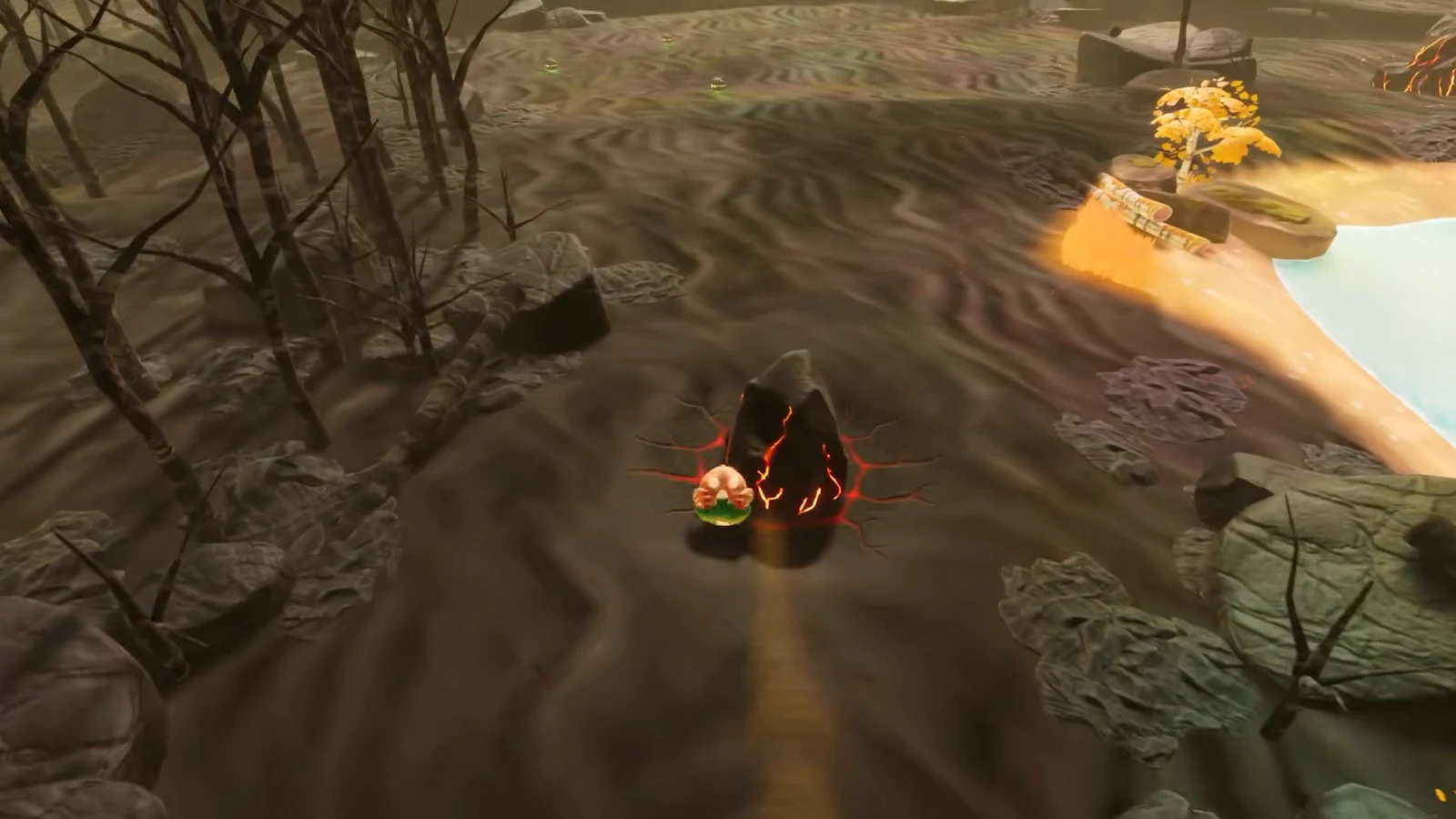
Confirmation is unmistakable. Once the blight clears, a Touch the rock prompt appears. Activating it blooms a large glowing blue lotus, the level completes, and the camera pulls back to show the restored island before you return to the hub.
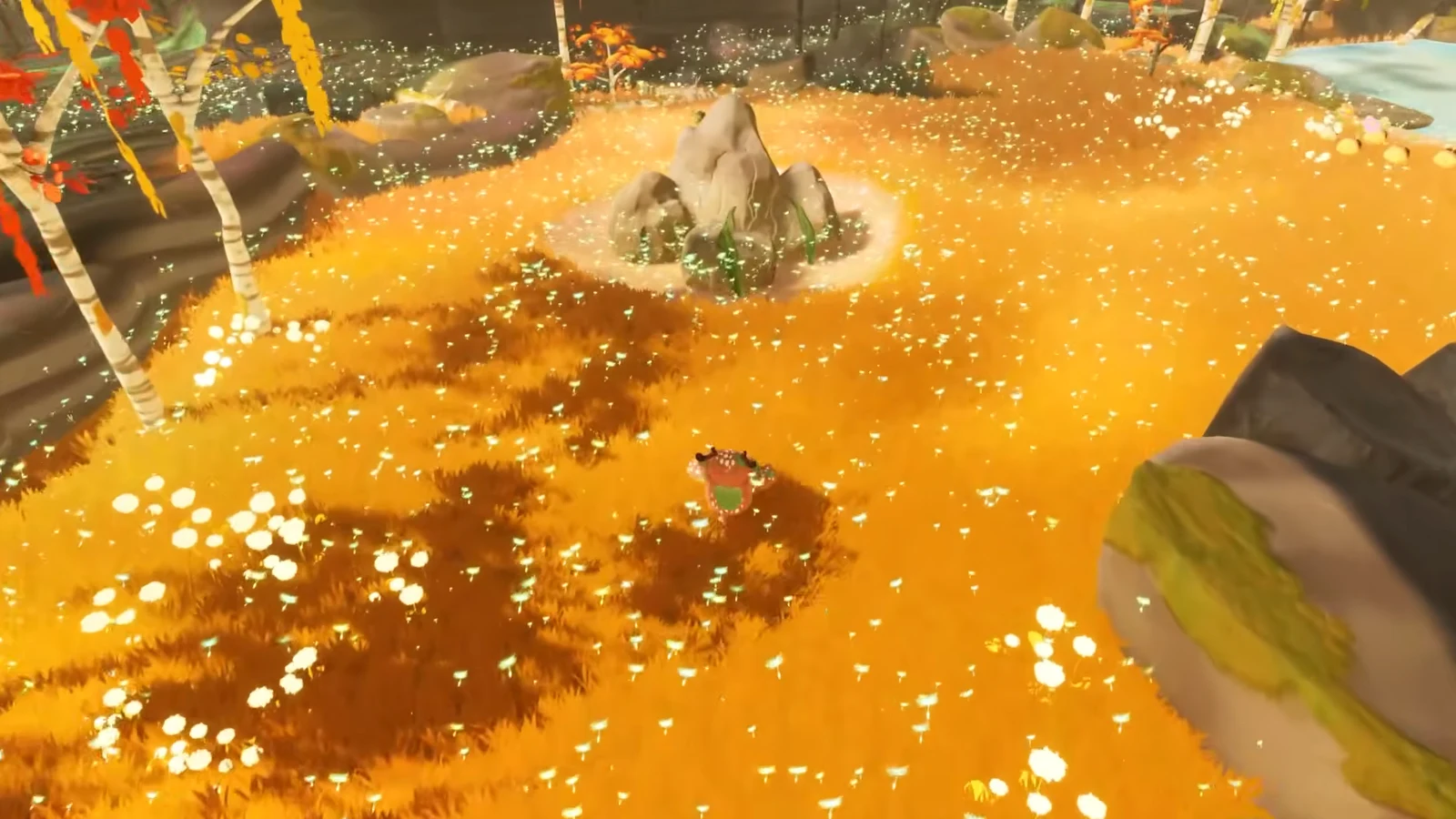
Between regions you land back at a hub called The Glade and travel onward using a dandelion seed on the world map, which carries you to the next area, such as The Little Wood or The Island of the Malpouics. Tree hollows in the hub handle multiplayer, labeled for opening your game to friends or joining a friend’s game.
Co-op and difficulty options
Online co-op supports up to four players working through the same campaign, and the shift in feel is mostly about coordination. One player scouting ahead while others hold restored ground is a very different rhythm from the solo version, which leans contemplative.
The options menu covers multiplayer and difficulty, with three settings plus a separate toggle:
- Easy
- Normal
- Challenging
- Malpouics enabled or disabled
Turning Malpouics off removes the corrupted-creature threat entirely, which is the single biggest change you can make if you want the herding without the pressure.
BloomKeeper PC system requirements
| Component | Minimum |
|---|---|
| OS | Windows 10 (64-bit) |
| Processor | AMD Ryzen 3 4300G |
| Memory | 16 GB RAM |
| Graphics | GTX 1660 |
| DirectX | Version 11 |
| Network | Broadband internet connection |
| Storage | 5 GB available space |
A broadband connection is listed under the minimum specs because of the online co-op mode. The recommended spec sheet only specifies DirectX 11.
The pitch is straightforward enough to read in a screenshot, but the tension underneath it is what defines the game. Restoring Hedera is not a one-way ratchet, and the ash keeps moving whether or not you are watching it, which turns a gentle-looking herding game into a set of real decisions about when to advance and when to hold.