Fire Emblem is best known for its grid-based tactics, but Fortune’s Weave slips a second, very different combat style into its side content. When you leave the main tournament battles and go exploring, the game switches to a classic turn-based RPG setup, the kind where your party lines up on one side and the enemies stand on the other, trading blows in turns.
Quick answer: Fortune’s Weave keeps its usual isometric tactical maps as the main combat, but its explorable dungeons use a separate small-party turn-based mode where your units fight in a row and chain attack combos. You reach it by walking into enemies on the dungeon map between Heroic Games matches.
Two turn-based systems in one game
The core of Fortune’s Weave is still the isometric strategy the series is built on, and that is turn-based too. What is new is the second mode tucked into exploration. Instead of the wide, overhead battlefield with large formations, the camera pulls in close on a smaller group of your fighters facing a smaller group of enemies. It plays like the front-line combat of Dragon Quest or older Final Fantasy titles rather than a tactics map.
If this reminds you of something, it echoes Fire Emblem Echoes: Shadows of Valentia and the older Gaiden entry it was based on, both of which paired dungeon exploration with combat. The twist here is that Fortune’s Weave puts several units on each side in this mode, which those earlier games did not do. The result is a straightforward, old-school JRPG battle running inside a modern Fire Emblem.
How dungeon exploration works
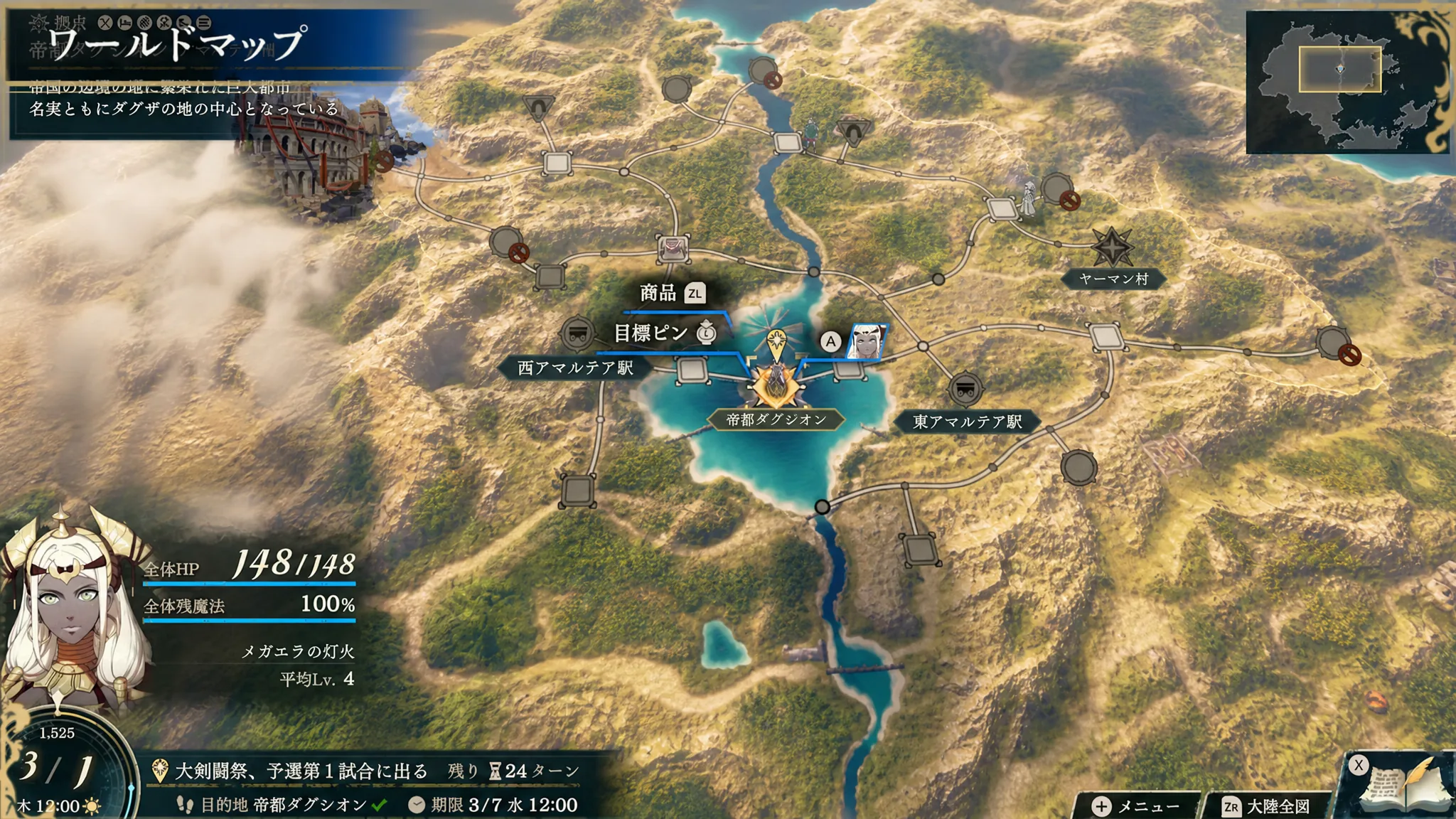
From the world map, you can travel across the continent and enter a handful of dungeons. Once inside, you directly control your chosen commander and walk them through the environment, such as the cave-like location called Beast’s Maw. You go there to hunt for weapon materials and other treasure.
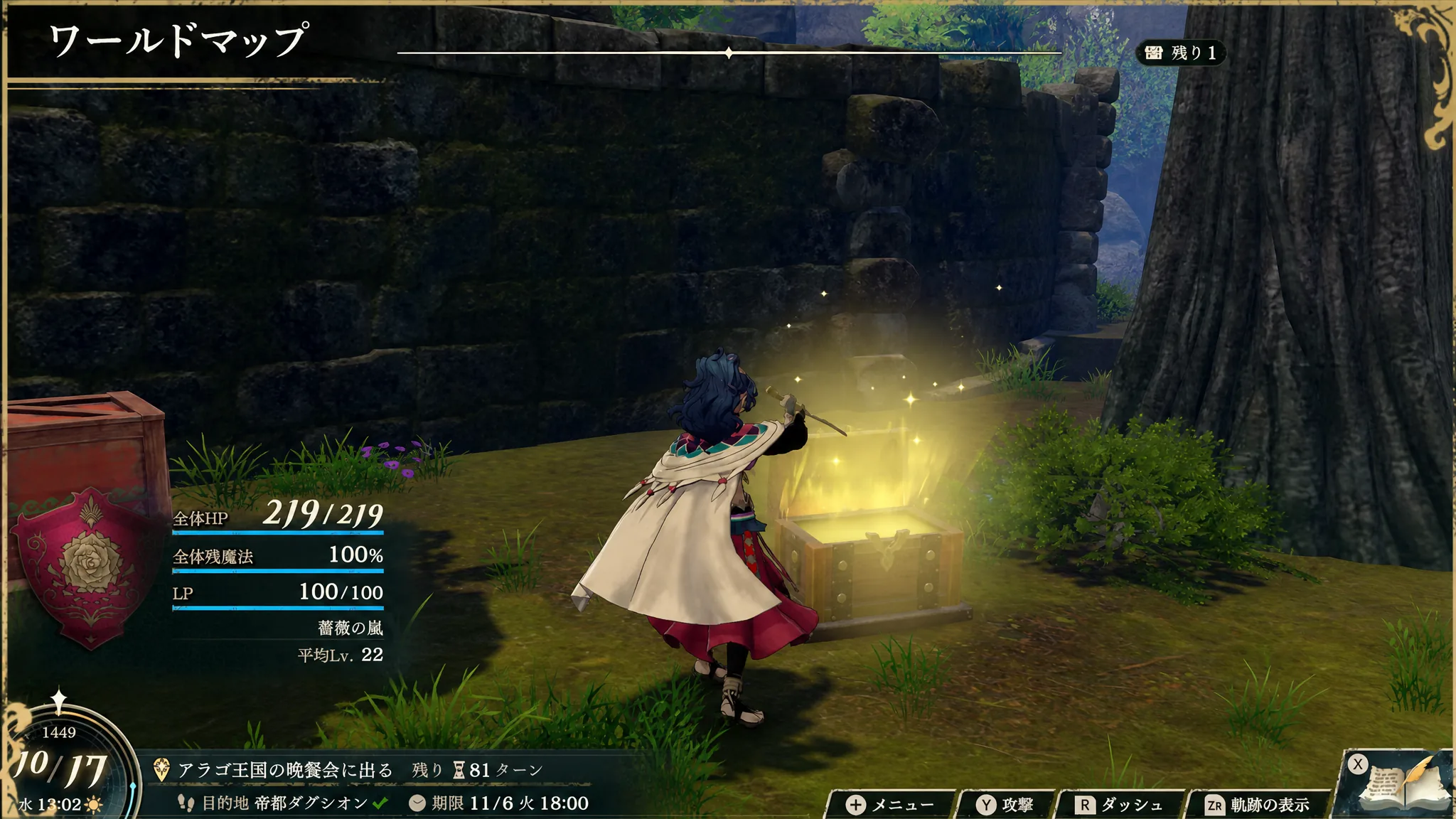
Enemies roam these areas on the map itself. Making contact with one starts the fight, so encounters are visible ahead of time rather than random. This is where the mode splits away from the tactical maps you play in the tournament.
How the turn-based battles play out
When you touch an enemy on the dungeon map, the screen flashes and the view flips to the classic layout. Your fighters appear on one side, the enemies on the other, and both sides take turns. Your units have attacks and modifiers that seem tied specifically to this mode, and the camera zooms in tight, closer to the attack and defense animations you normally only glimpse during a single clash on the tactics map.
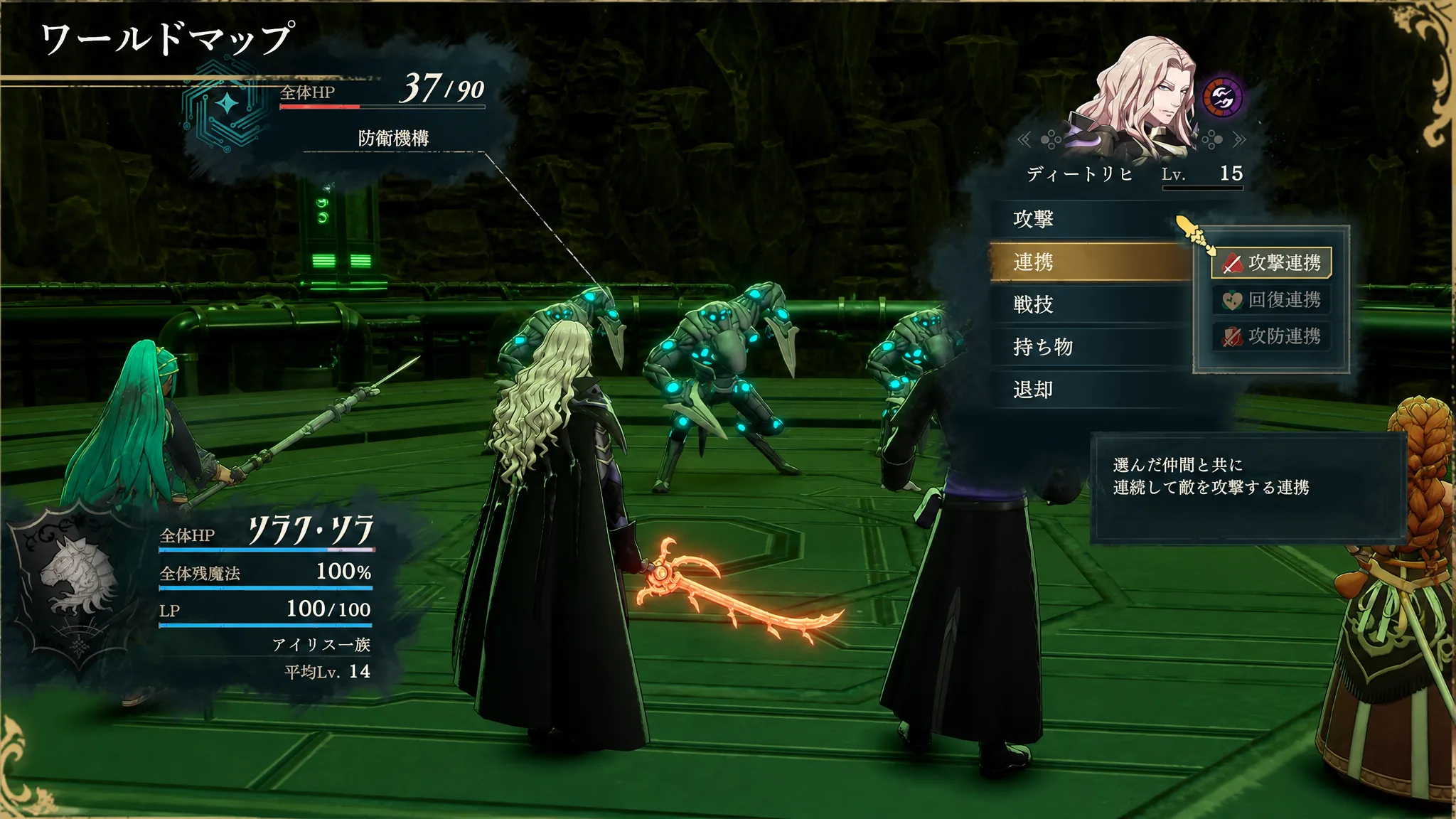
The group stands in a row, line formation style, as seen with Dietrich flanked by three allies. A key feature of these encounters is attack combos, where units perform coordinated attacks alongside each other to bring down enemies.
Protagonist abilities that change exploration
Each of the four protagonists brings a skill that affects how you explore and fight in dungeons, so who you take matters. Two of these are confirmed:
| Protagonist | Ability |
|---|---|
| Dietrich | Draws hidden enemies out into the open |
| Theodora | Recruits soldiers in towns, then sends them to gather materials or deploys them in battle |
Dungeon trips are tied to the clock
Exploration is not free of consequences. Dungeon expeditions connect to the game’s time management system, and moving across the continent makes time pass. Because the Heroic Games run on a schedule, you have to plan your dungeon trips around upcoming matches rather than wandering endlessly.
The wider structure leans open-ended. You are free to rush toward the finish if you want, though doing so would be extremely difficult, which points to a design that rewards taking your time with the side content.
Release details
Fire Emblem: Fortune’s Weave is developed by Intelligent Systems and published by Nintendo, exclusively for Nintendo Switch 2. It is rated Teen and launches on September 17, 2026. The turn-based dungeon fights are optional side content, so some players may rarely touch them, but their inclusion still marks a notable shift for the series toward the classic JRPG combat style many fans have been asking to see return.