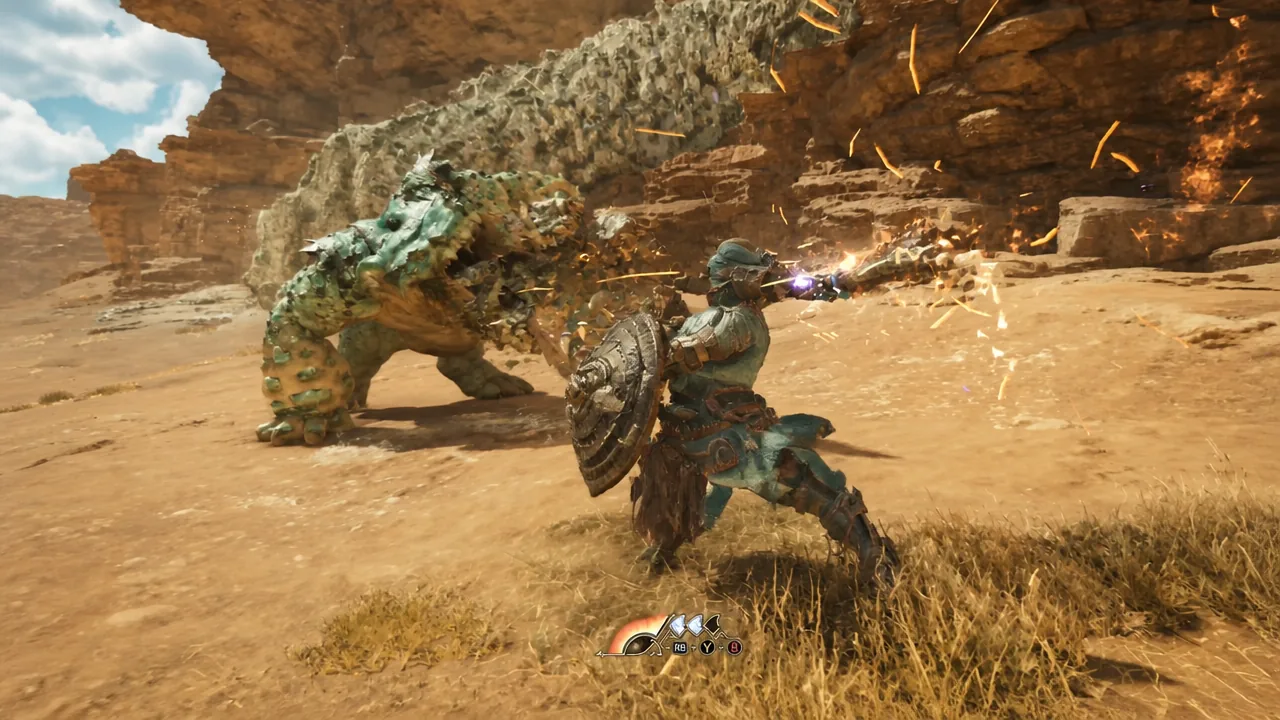
The Sword & Shield already lets you drink potions with your weapon out. In Monster Hunter Wilds: Ascendance, the Boost Bracer takes that idea much further, turning item use into an attack, adding a ranged grab that pops wounds, and giving the shield a proper counter. Here is exactly how the weapon behaves once Boost is running.
Quick answer: Land a Boost Driver attack to enter Boost, then keep it alive by using the ranged wound finisher — popping a wound refills both the Boost timer and a Boost Driver charge.
Boost Drivers: How the Sword & Shield turns Boost on
Boost Drivers are the entry point. They are real attacks, not a stance change, and landing one flips the weapon into its Boosted state for a limited time. Boost energy builds while you stay aggressive, and Boost Drivers run on a charge system shown at the bottom center of the screen, similar to how Wirebugs worked in Rise.
The Boost Driver input is a three-button press. Capcom lists it as R1 + Triangle + Circle, which maps to RB + Y + A on an Xbox pad, while the Sword & Shield footage shows an RB + Y + B prompt on screen — so treat the exact face buttons as something to confirm in-game rather than memorize now.
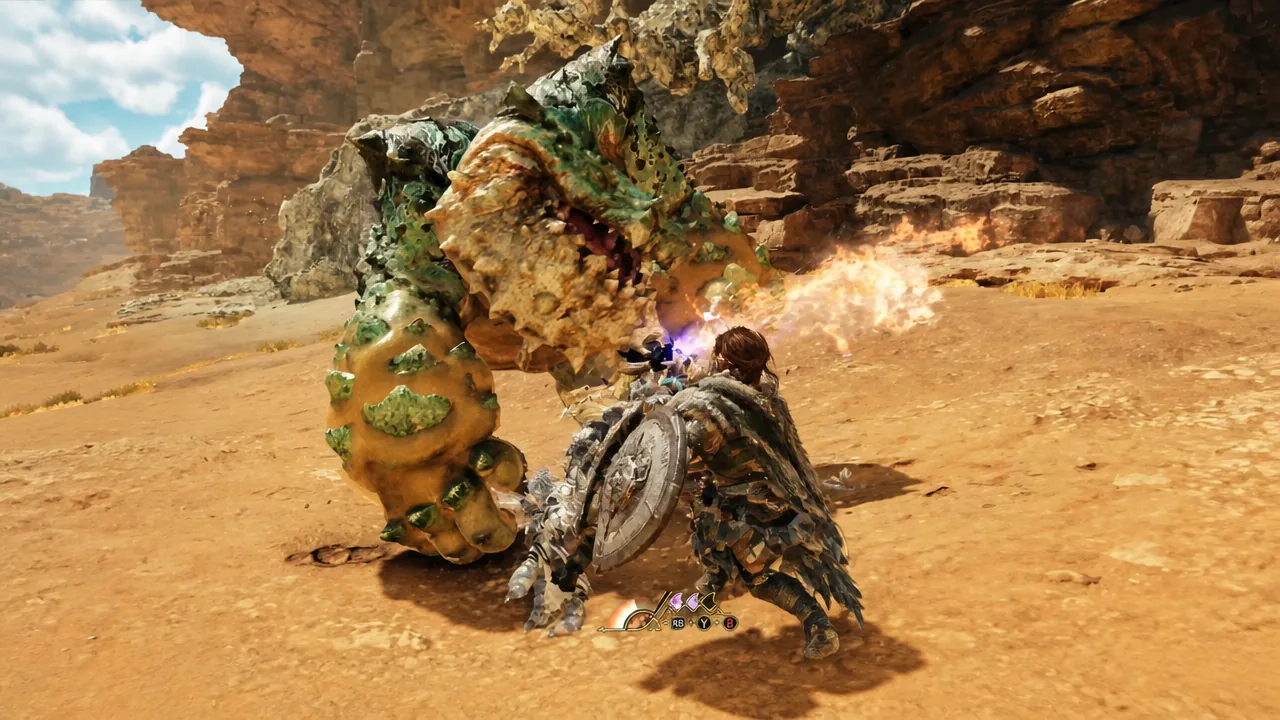
Boost does not have to be started from neutral. Certain actions can flow straight into activation mid-combo, so you can commit to a regular attack and still come out the other side boosted.
What changes while Boost is active
Boost does not simply add a damage multiplier. Specific moves are swapped for longer, multi-hit versions, and a couple of them gain properties they do not have otherwise. Capcom’s own summary of the weapon’s Boosted Actions is short: empowered combos, coatings applied through Bladecoating Slash, and the ability to clutch onto wounds from a distance.
| Move | Behavior while boosted |
|---|---|
| Standard slash combo | Gains an extra triple-hit spin on the end |
| Downward stab | Continues into an aerial triple spin slash |
| Charged Chop | Adds a spinning slash follow-up (Charged Chop Extension) |
| Downward shield bash | Functions as an offset attack |
| Wound attack | Ranged clutch-style finisher that restores Boost |
The ranged wound finisher and keeping Boost alive
This is the move that makes the whole loop work. While boosted, the Sword & Shield can fire out a clutch claw-style grab at range, latch onto a monster, and pop an open wound. Doing so pays you back twice: the Boost timer is topped up, and a Boost Driver charge is refunded.
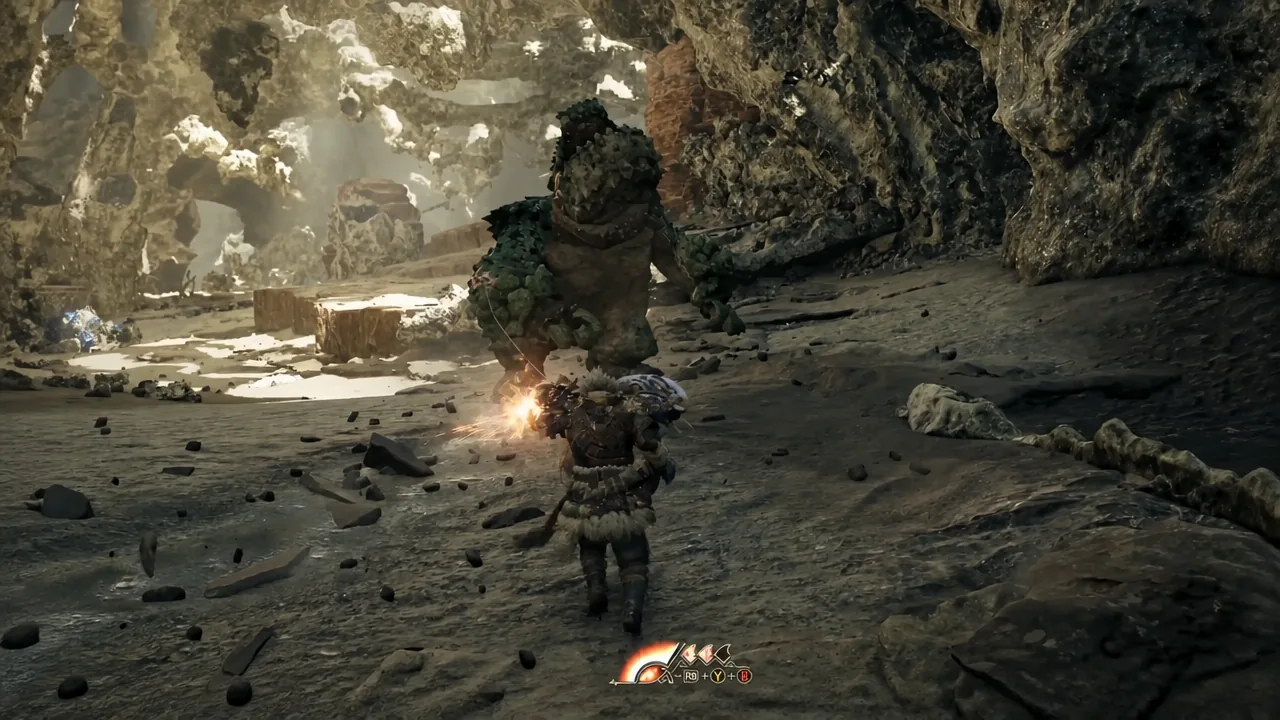
Practically, that means wounds are your Boost fuel. If you can space your wound pops out rather than dumping them all at once, you can stay in the boosted state across a much longer stretch of a hunt.
Bladecoating Slash: using items in the middle of an attack
Bladecoating Slash is new to the weapon. Instead of stopping to drink or apply something, you throw the item into the air and cut it, consuming it as part of the swing. The effect applied to your blade depends on the item’s type, and the on-screen tip is explicit that it can also be performed while not boosted.
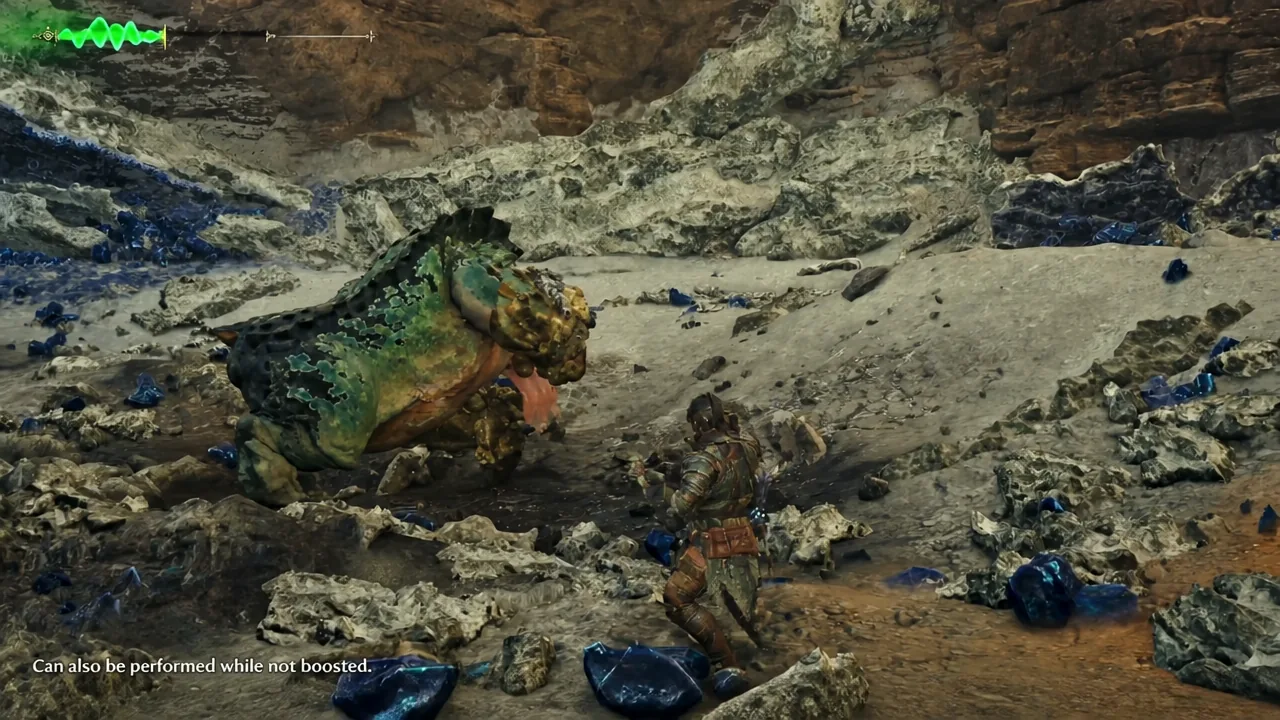
The clearest demonstration uses a Potion. The hunter tosses it mid-air, slashes it, heals, and comes away with a green glow on the sword that regenerates health as they keep hitting. So one item gives you both the immediate heal and a lingering weapon effect, without ever putting the weapon away.
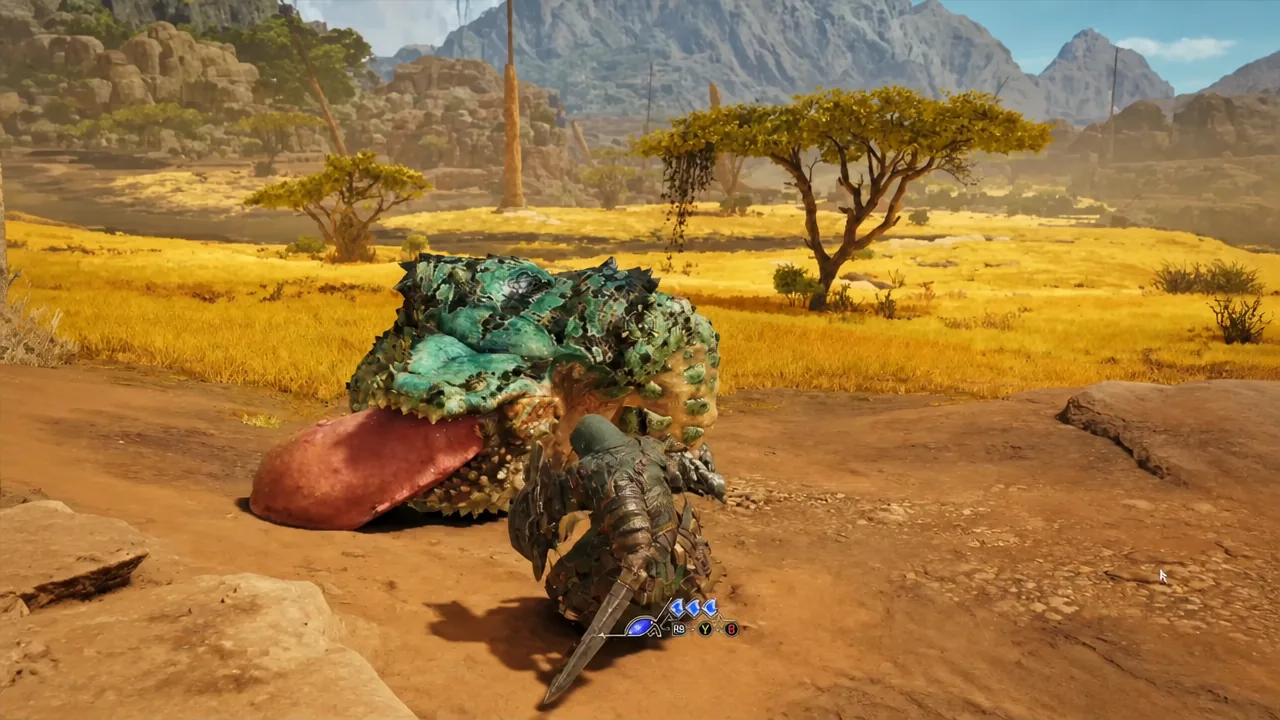
Note: Only the Potion coating has been shown in action so far. Items like Demondrug and Armorskin are the obvious candidates for other coating types, but their exact effects through Bladecoating Slash have not been confirmed.
The boosted shield bash is an offset attack
The downward shield bash performed during Boost is confirmed to work as an offset attack. Time it into a monster’s incoming strike and you cancel the attack outright and knock the monster down, which is a very different tool from a Perfect Guard — you are trading blows rather than absorbing one.
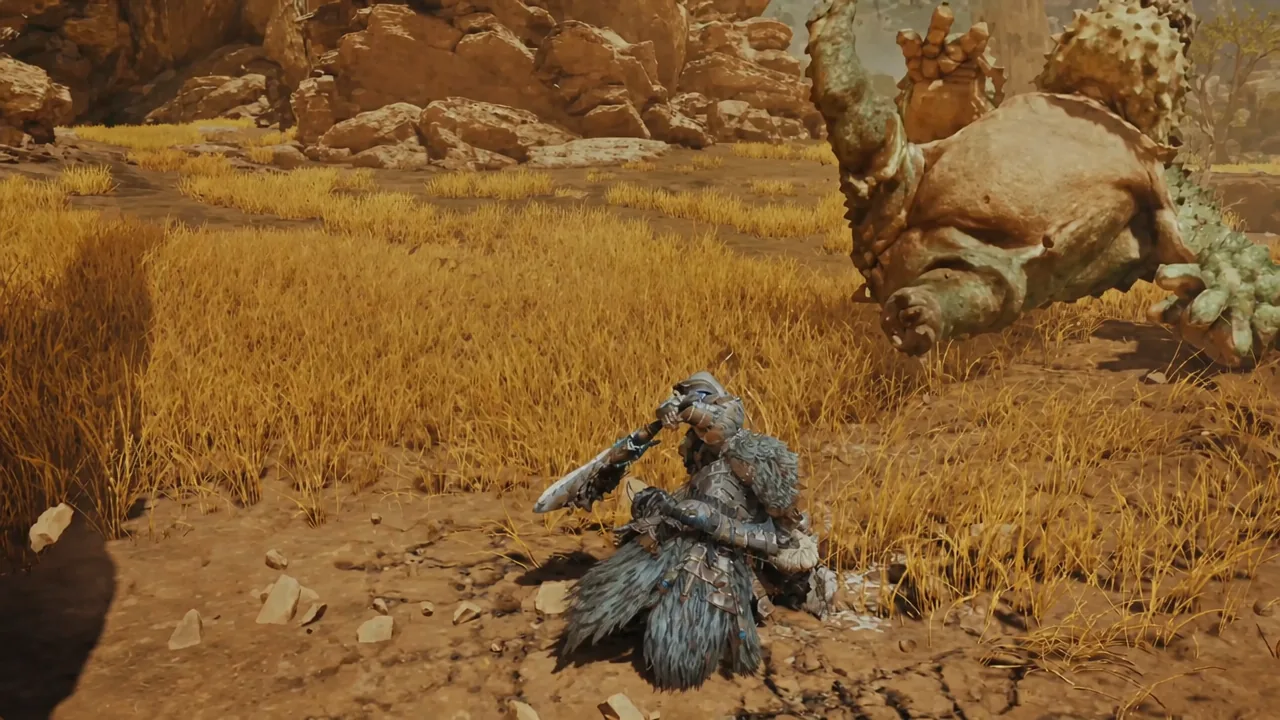
You know it landed as an offset rather than a normal hit because the monster’s attack is interrupted and it drops, giving you a free window. The Sword & Shield is not alone here — Dual Blades, Bow, Insect Glaive, Light Bowgun, and the Charge Blade’s AED all gain offset options through the Bracer as well.
Gear shown in the Sword & Shield breakdown
The footage pairs the Guardian Folga Sword & Shield with the Master Rank male Shagaru Magala armor set. Neither is required to use any of the Boost Bracer actions — the Bracer applies to all 14 weapon types regardless of what you have equipped.
Capcom is rolling out one Boosted Action breakdown per weapon, and the Sword & Shield entry landed after the Great Sword, Bow, Dual Blades, Hammer, Light Bowgun, and Charge Blade. Monster Hunter Wilds: Ascendance is due out in 2027 on PlayStation 5, Xbox Series X|S, and PC, with a Switch 2 version of the base game still in development.