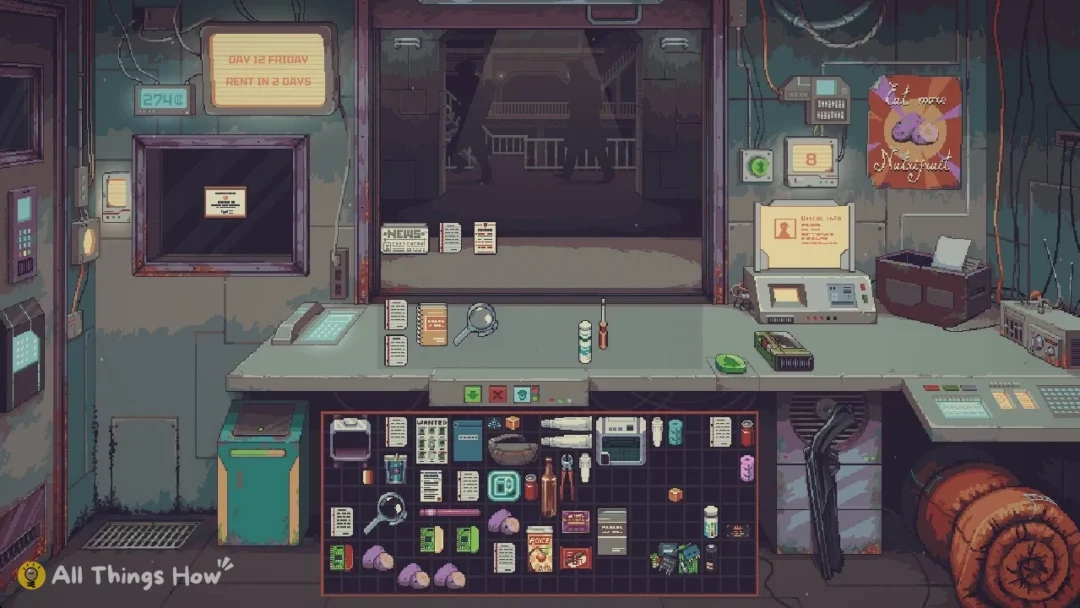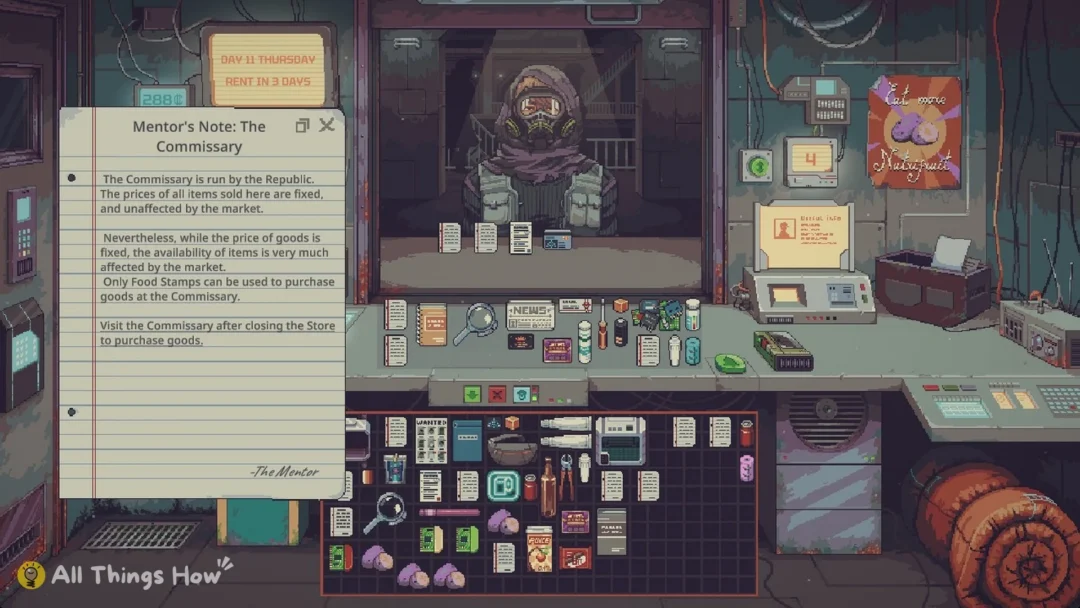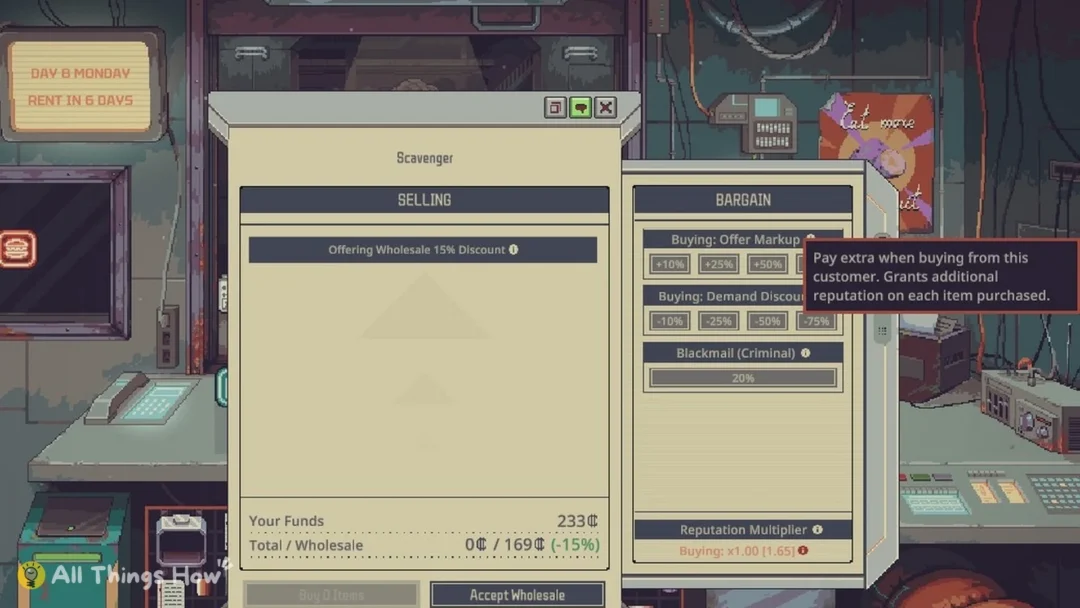

Winemaking in Probably Stolen: Cyberpunk Shopkeeper Sim opens through a single upgrade, and after that it takes water and BloomBerry in a Wine Bottle, with Yeast optional, then a short wait. The finished bottle keeps gaining value the longer you hold it.
Quick answer: Buy the Retired Winemaker upgrade in Wild’s Network. Pour 750 ml of water into a Wine Bottle and add one or two BloomBerry handfuls plus Yeast. Then press Start Fermenting and wait two days.
How to unlock winemaking in Probably Stolen
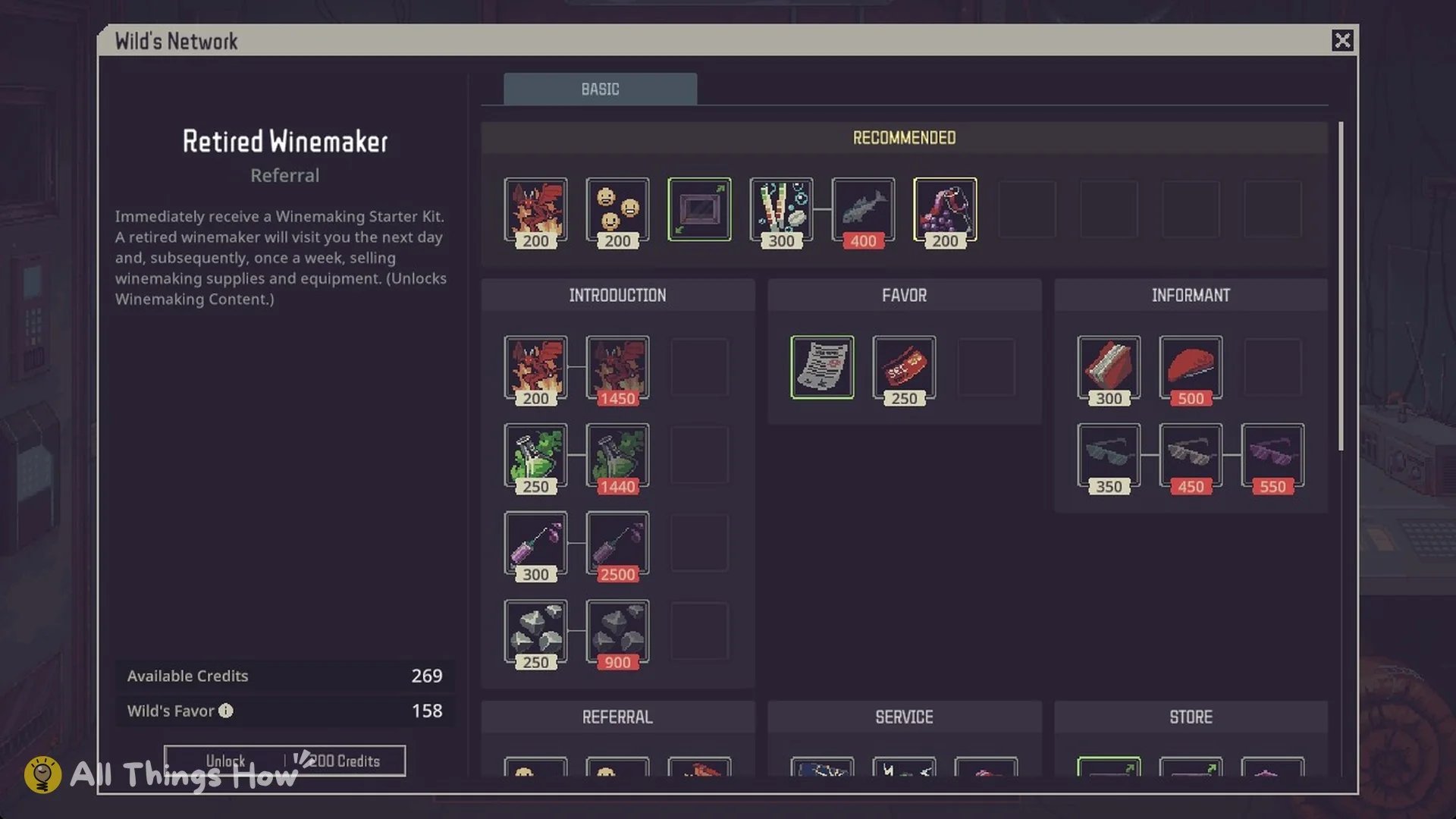
The Retired Winemaker upgrade unlocks Winemaking. Find it under Referral in Wild’s Network for 200 on Mark Up difficulty; it may also appear in the Recommended row. Joe Wild opens Wild’s Network when he visits your window, or you can call Joe Wild’s Assistant at 8376.
Upgrades draw on your Wild’s Favor first. Any amount left over is paid in credits, so you don’t need the full 200 in Favor to buy it. On Day 13 of our Mark Up run we had 158 Wild’s Favor, and the unlock took all of it plus 42 credits. The upgrade description reads:
“Immediately receive a Winemaking Starter Kit. A retired winemaker will visit you the next day and, subsequently, once a week, selling winemaking supplies and equipment. (Unlocks Winemaking Content.)”
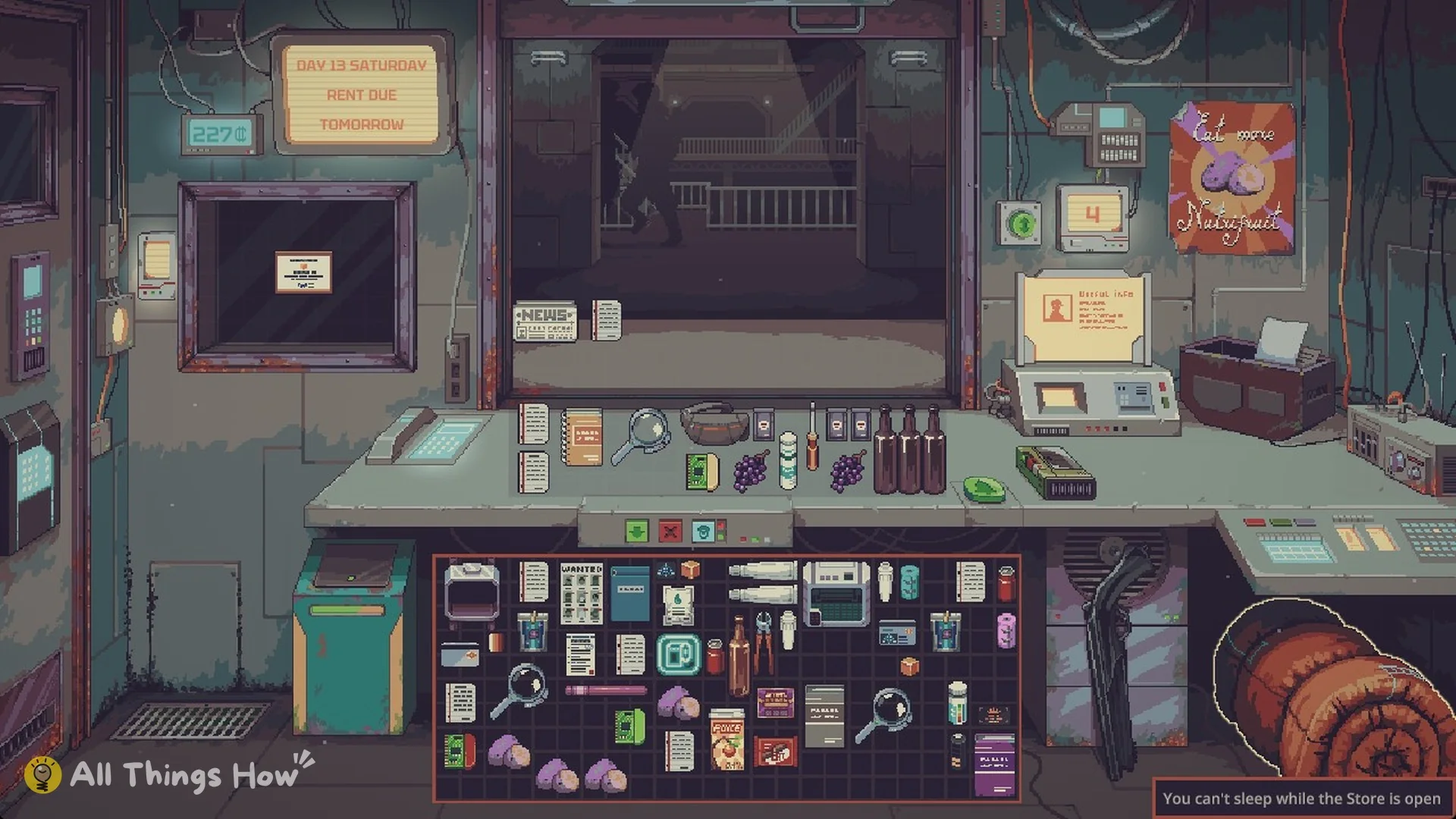
The Winemaking Starter Kit lands on your counter as soon as you buy the upgrade. That is how you know the purchase went through. It contains the following:
- BloomBerry Wine Fermenting Guide ([Document], Est. Value 25)
- 3 Wine Bottles
- 3 Yeast
- 2 BloomBerry bunches
What goes into a Wine Bottle
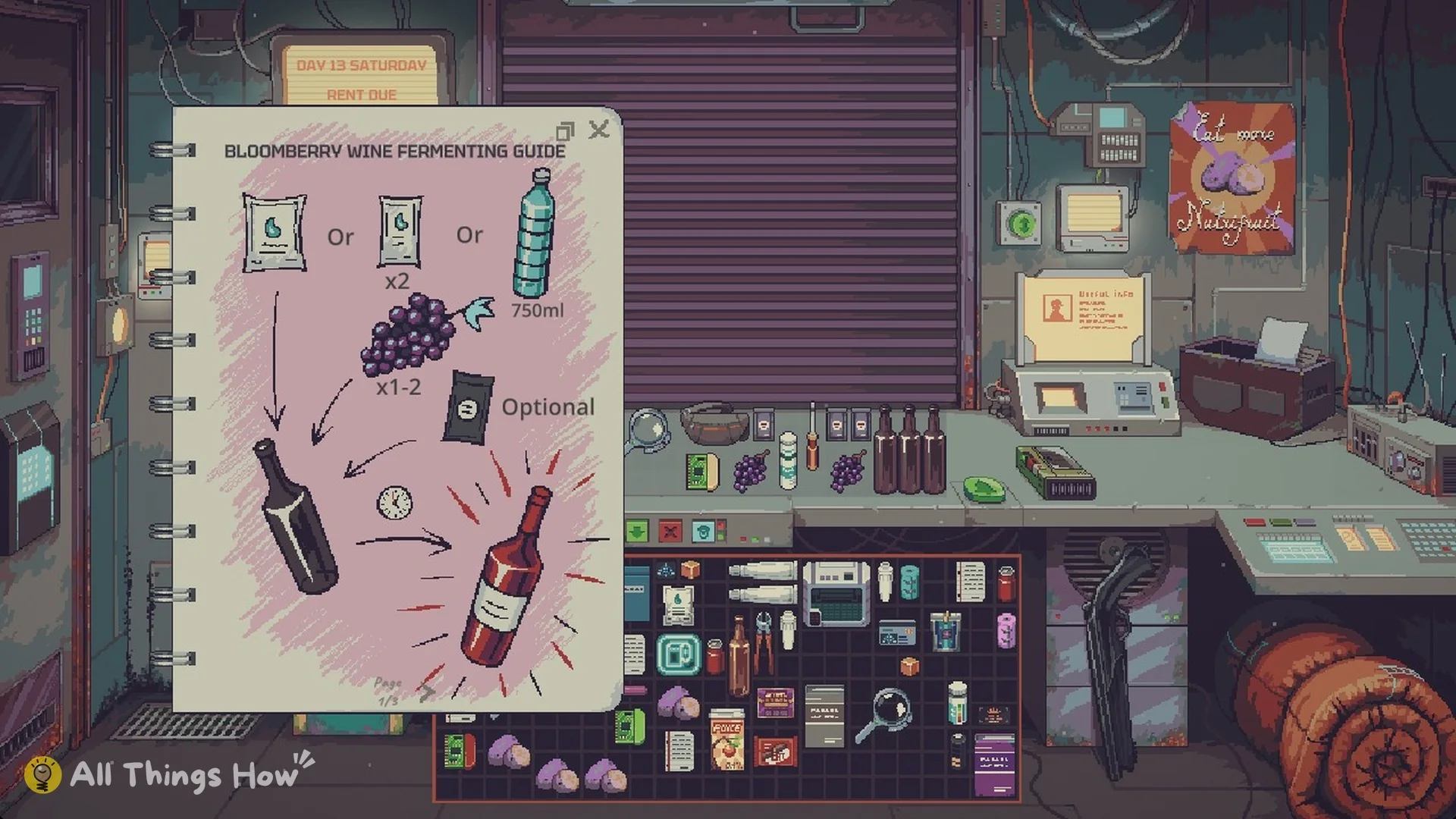
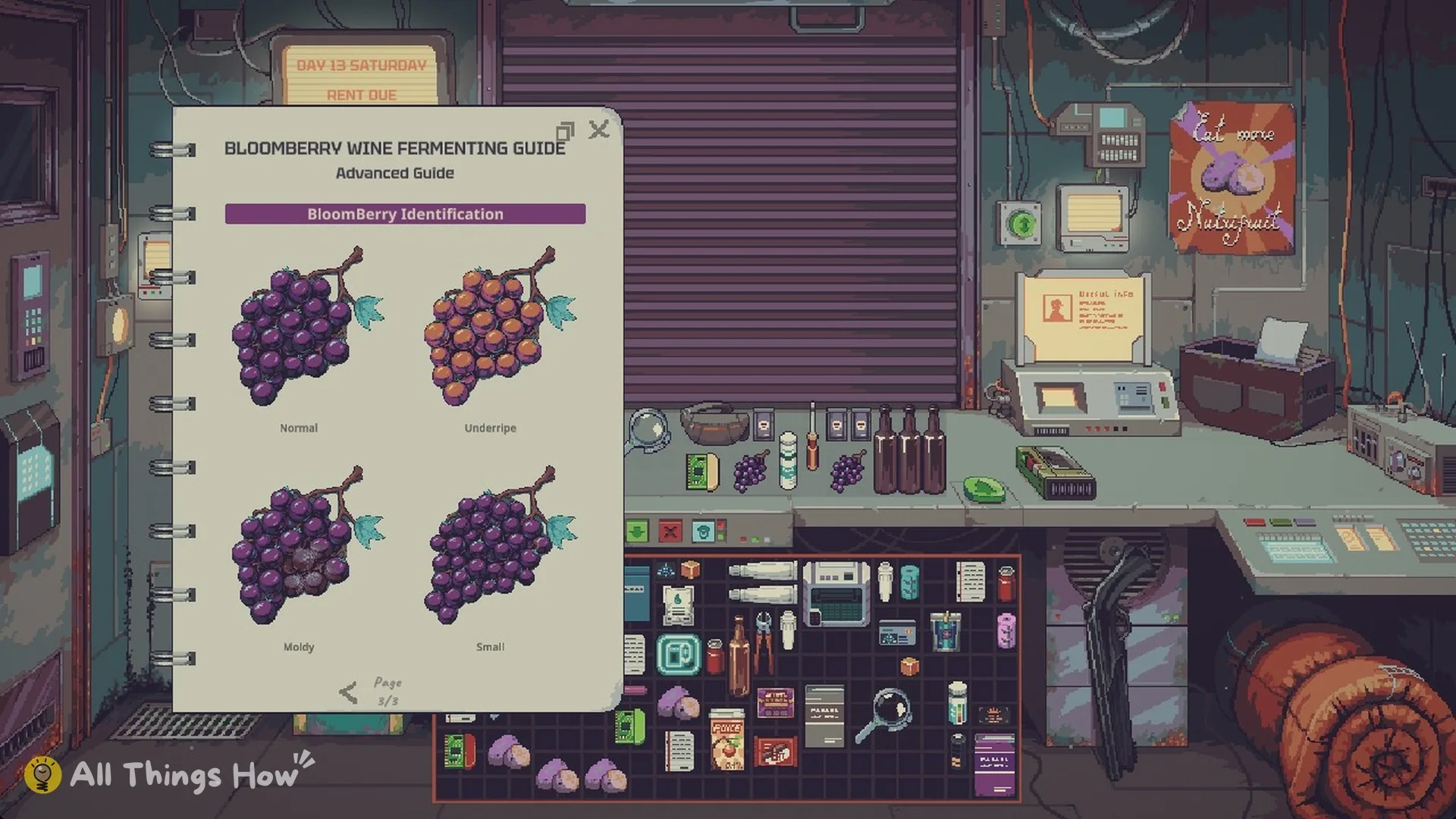
Double-click the BloomBerry Wine Fermenting Guide to read its three pages. The first page shows the base recipe as pictures. The second page explains how each ingredient affects quality. The third page helps you tell good berries from bad ones.
| Ingredient | Amount | Use this | Avoid |
|---|---|---|---|
| Water | One water ration, two small water packets, or a 750ml water bottle | Basewater or High Quality Water | Pure Water, lower grades |
 BloomBerry | One or two handfuls | Small, ripe berries | Overripe, underripe, moldy |
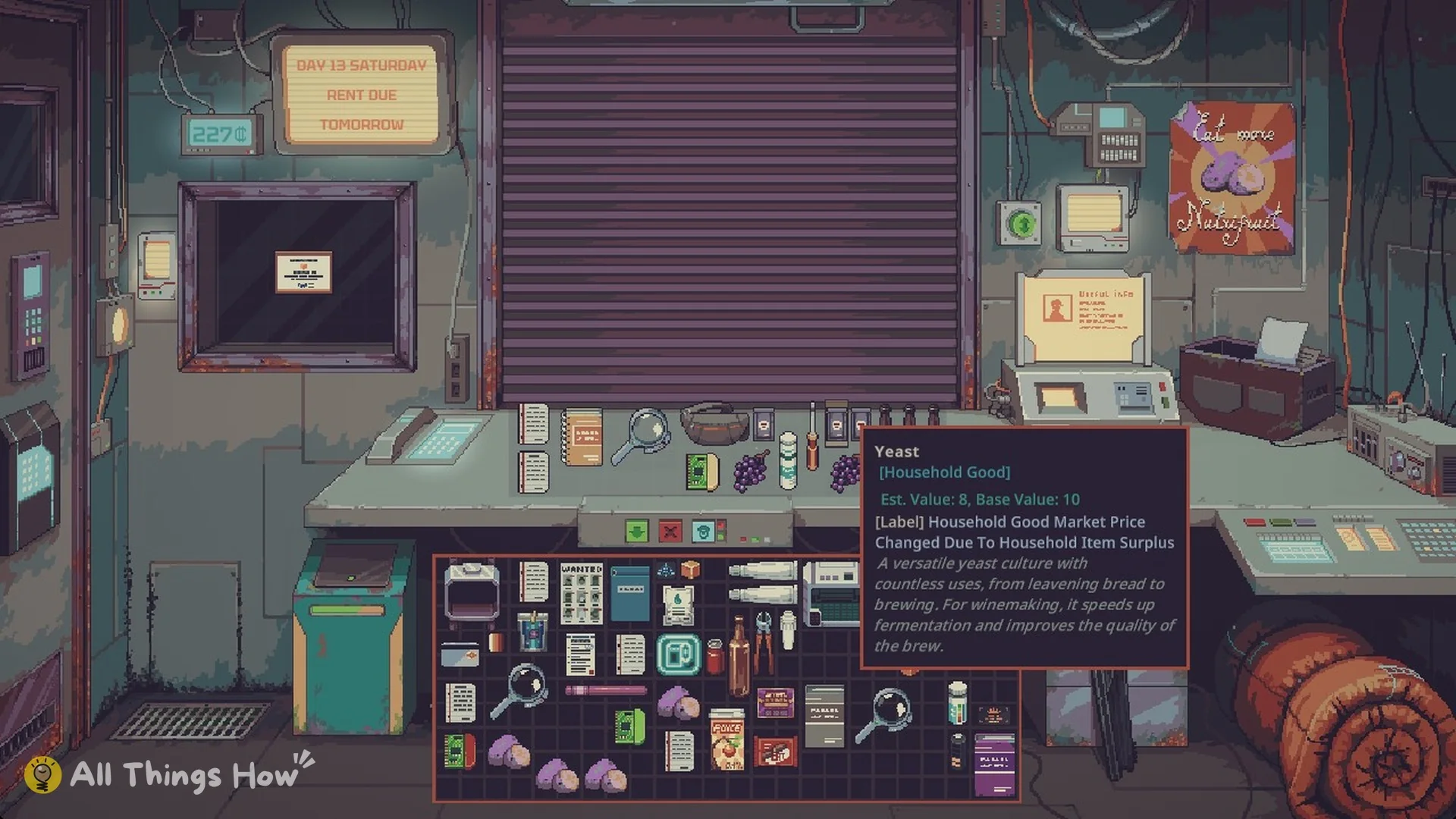
 Yeast | Optional | Standard Yeast | Leaving it out |
Water is where most bad batches start. The guide warns that “Pure Water lacks the minerals needed for fermentation,” and lower grades of water greatly reduce wine quality. A Sealed Water Ration (Standard) holds 750 ml of Basewater, which is exactly one bottle’s worth.
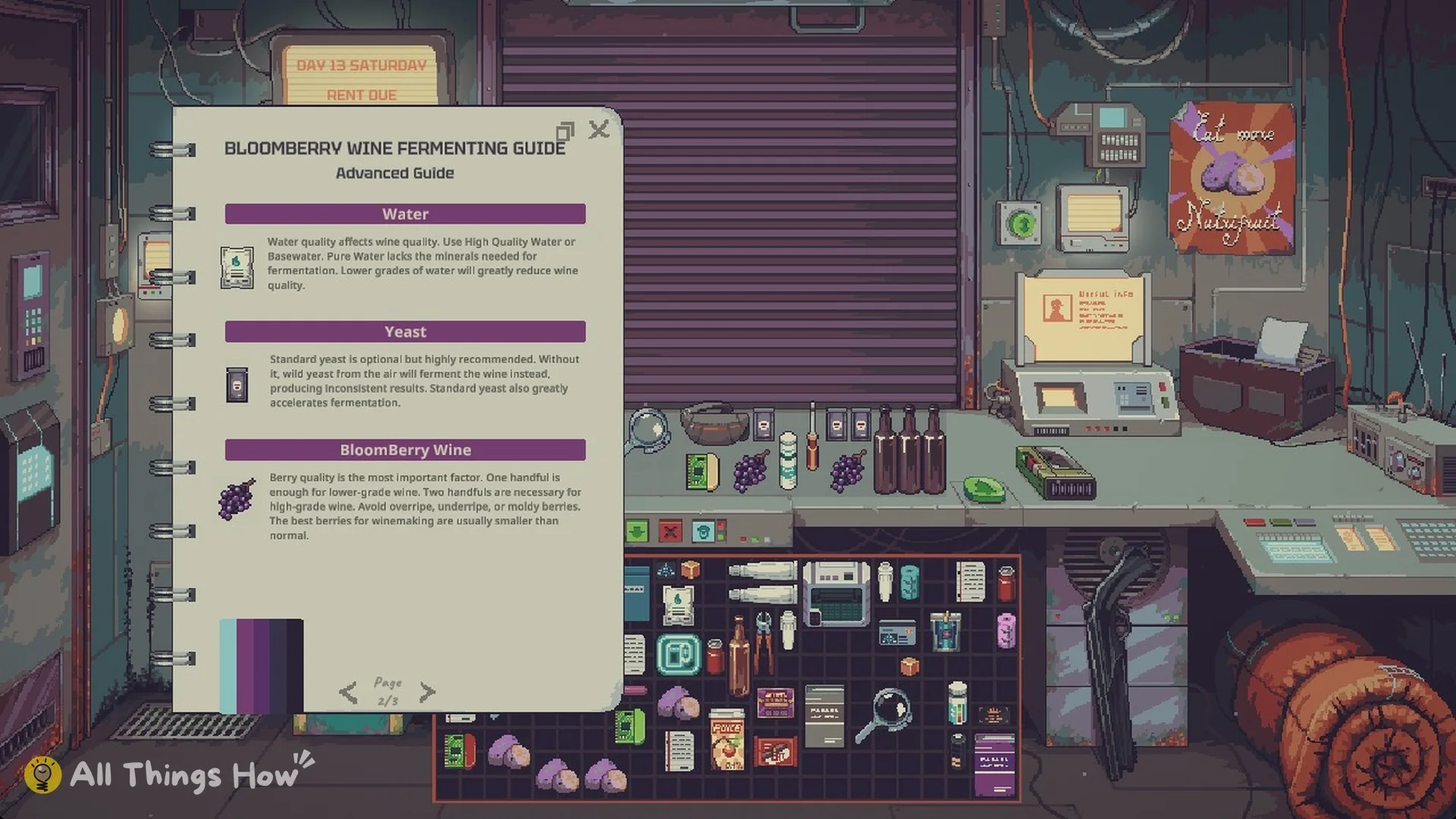
The quality of the berries matters most. A lower-grade wine needs only one handful, but a high-grade batch requires two. The identification page shows four bunch types: normal berries are dark purple, underripe bunches include orange berries, and moldy bunches have grey-brown patches. Small bunches, with their tighter, smaller berries, produce the best wine. BloomBerry “Can be inspected with a Magnifying Glass“, so you can check a bunch before putting it in the bottle.
Yeast isn’t required, but it’s best to use it every time. Otherwise, airborne wild yeast does the fermenting, leading to unpredictable results. Standard Yeast also makes fermentation much faster.
| Item | Category | Est. Value |
|---|---|---|
| BloomBerry | [Food] | 14 |
| Yeast | [Household Good] | Base 10 |
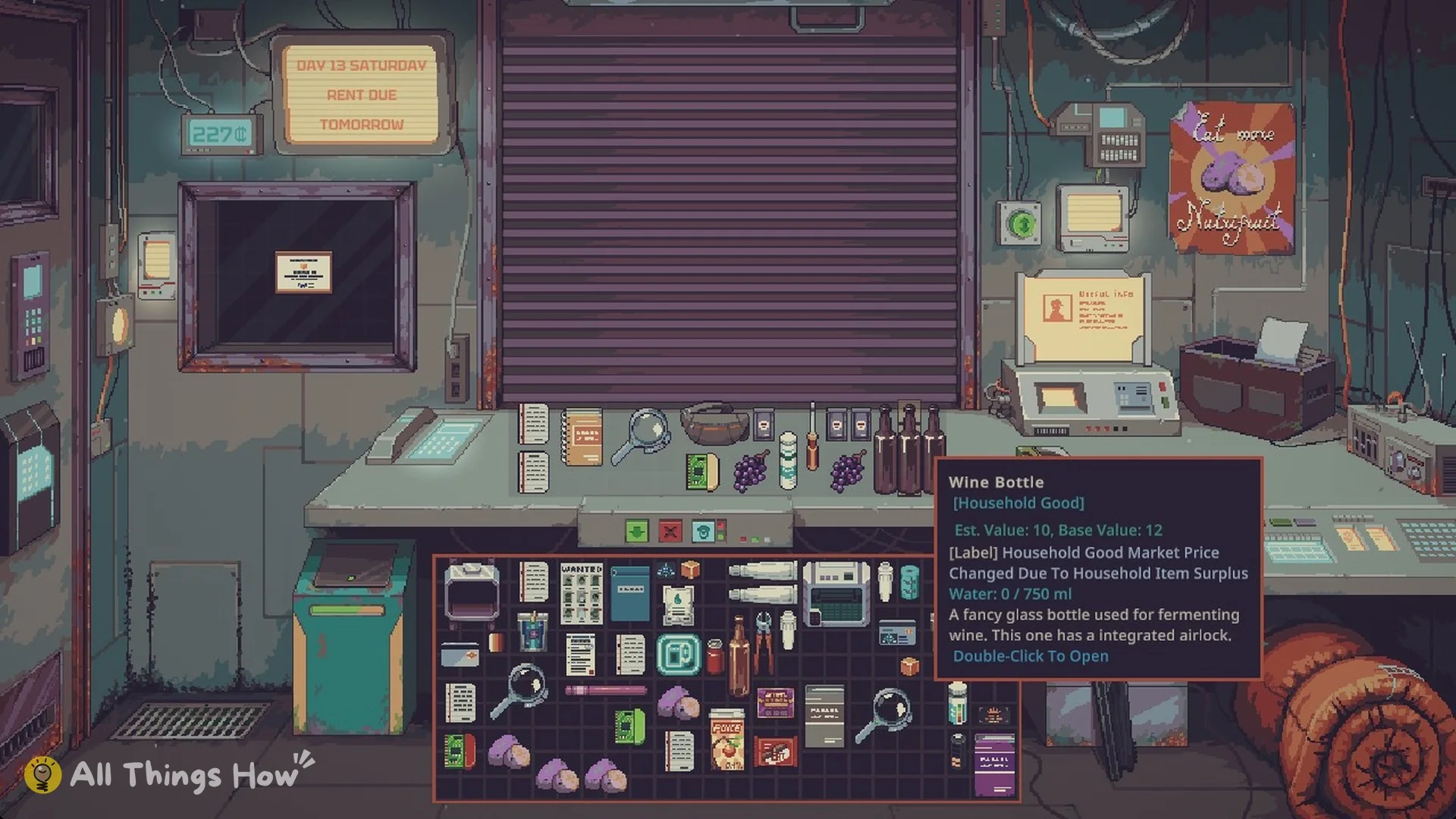
 Wine Bottle | [Household Good] | Base 12 |
Daily events shift these prices. A Household Item Surplus can drop Yeast to 8; the Wine Bottle has an Est. Value of 10 (Base 12). You can also grow your own BloomBerry from Bloomberry Seed in hydroponics.
How to start fermenting BloomBerry wine
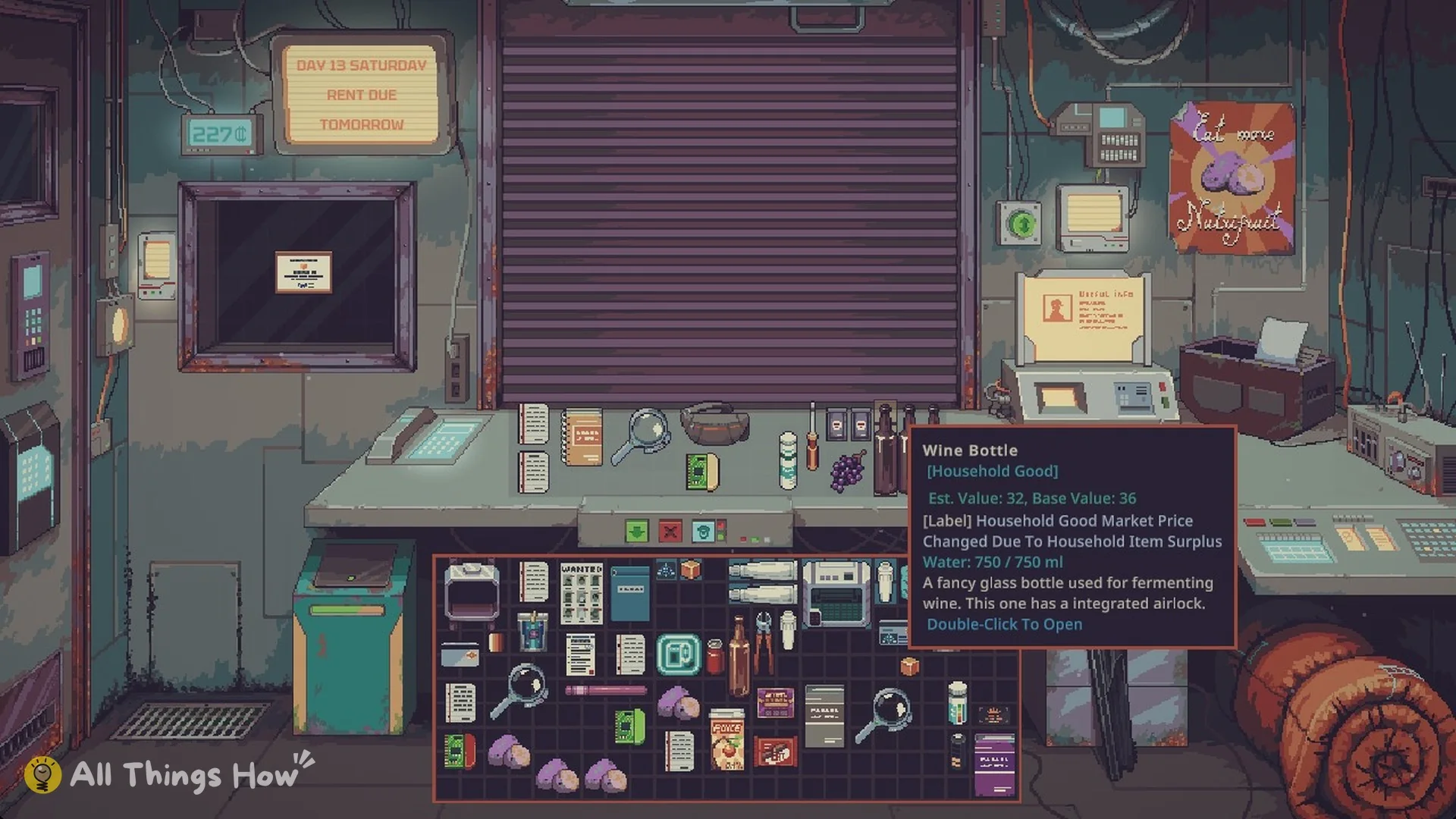
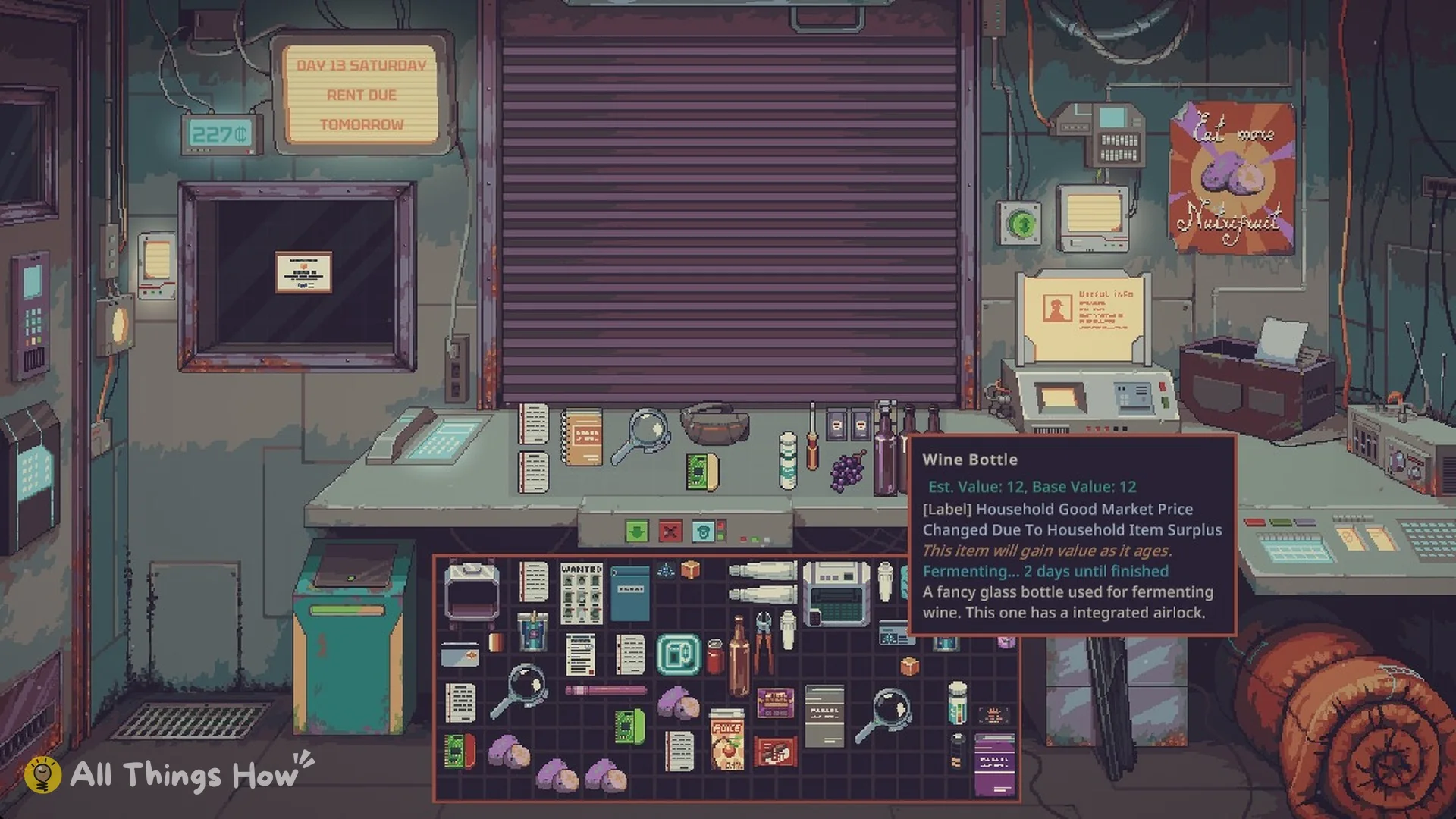
That tooltip confirms the batch is running. A bottle made with one handful of BloomBerry, one Yeast, and Basewater takes two days to finish. After one bottle, the starter kit still leaves you two empty bottles, one BloomBerry bunch, and two Yeast. You can use the remaining BloomBerry and Yeast in another batch, with water.
What finished BloomBerry Wine is worth
Our first bottle, started on the night of Day 13 with one handful of BloomBerry, one Yeast and Basewater, was finished on the morning of Day 15. The bottle on the counter had become BloomBerry Wine: [Substance] [Alcohol], Est. Value 100, Base Value 100, [Label] Homebrew, and still “This item will gain value as it ages.” Its description reads “A popular alcoholic beverage in both the Upper and Lower Levels.”
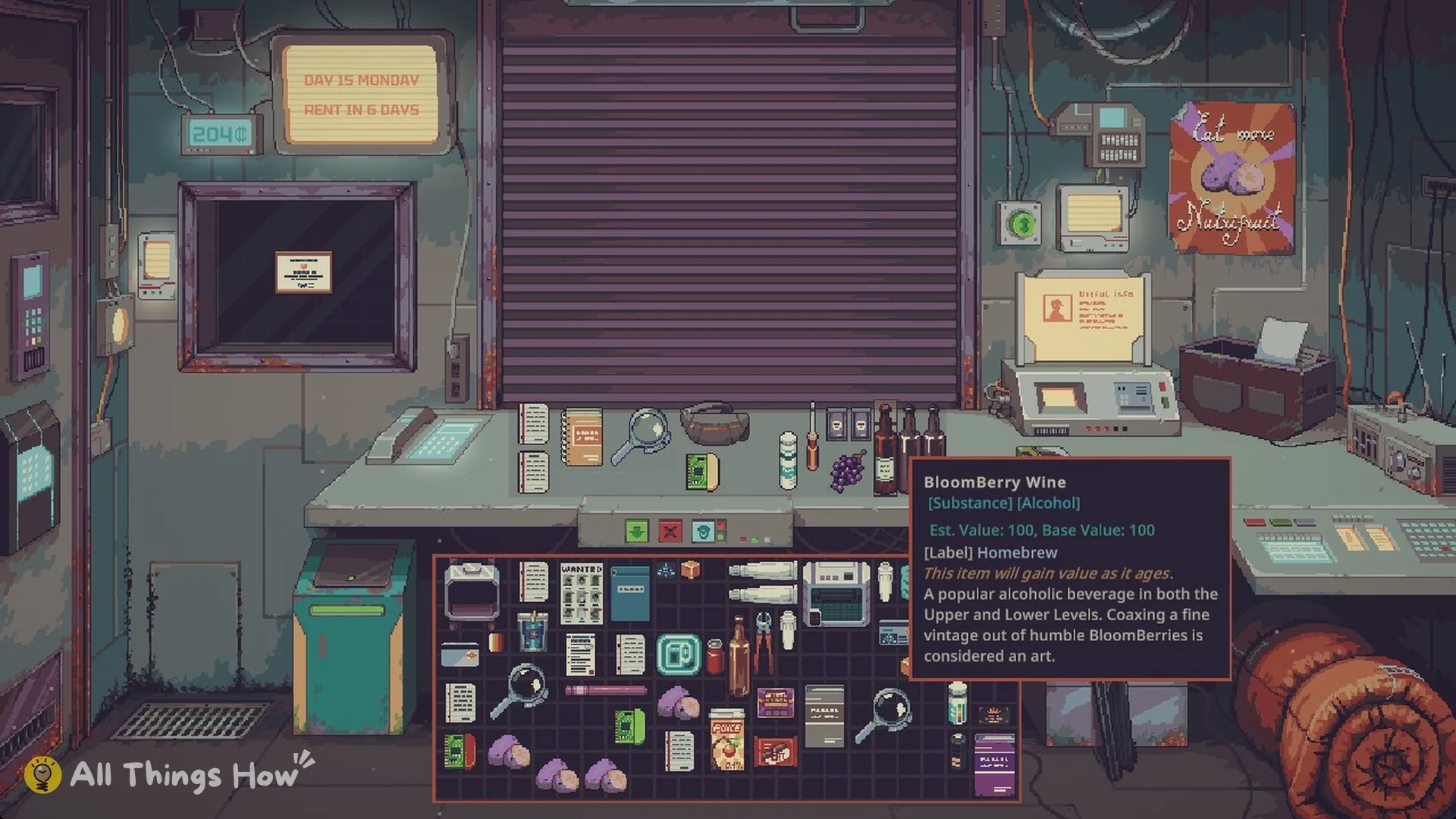
That is a good return on a starter-kit bottle: a BloomBerry (Est. Value 14), a Yeast, a Wine Bottle and a Sealed Water Ration come to well under 100 at their usual prices. Double-clicking the finished bottle does nothing, and food buyers do not want it: a Foodie Tourist on Day 15 listed it as Not interested. Sell it to buyers interested in Substance or Alcohol instead. While it is still fermenting, buyers treat it as a plain Wine Bottle; a Merchant offered only 10 for ours on Day 14.
How much wine gains in a day
Ageing starts as soon as the bottle is finished. Our BloomBerry Wine was finished on Day 15 at Est. Value 100. On the morning of Day 16 the tooltip read “Est. Value: 103, Base Value: 103” with a new line, “Age: 1 Days”: three credits more after one night.
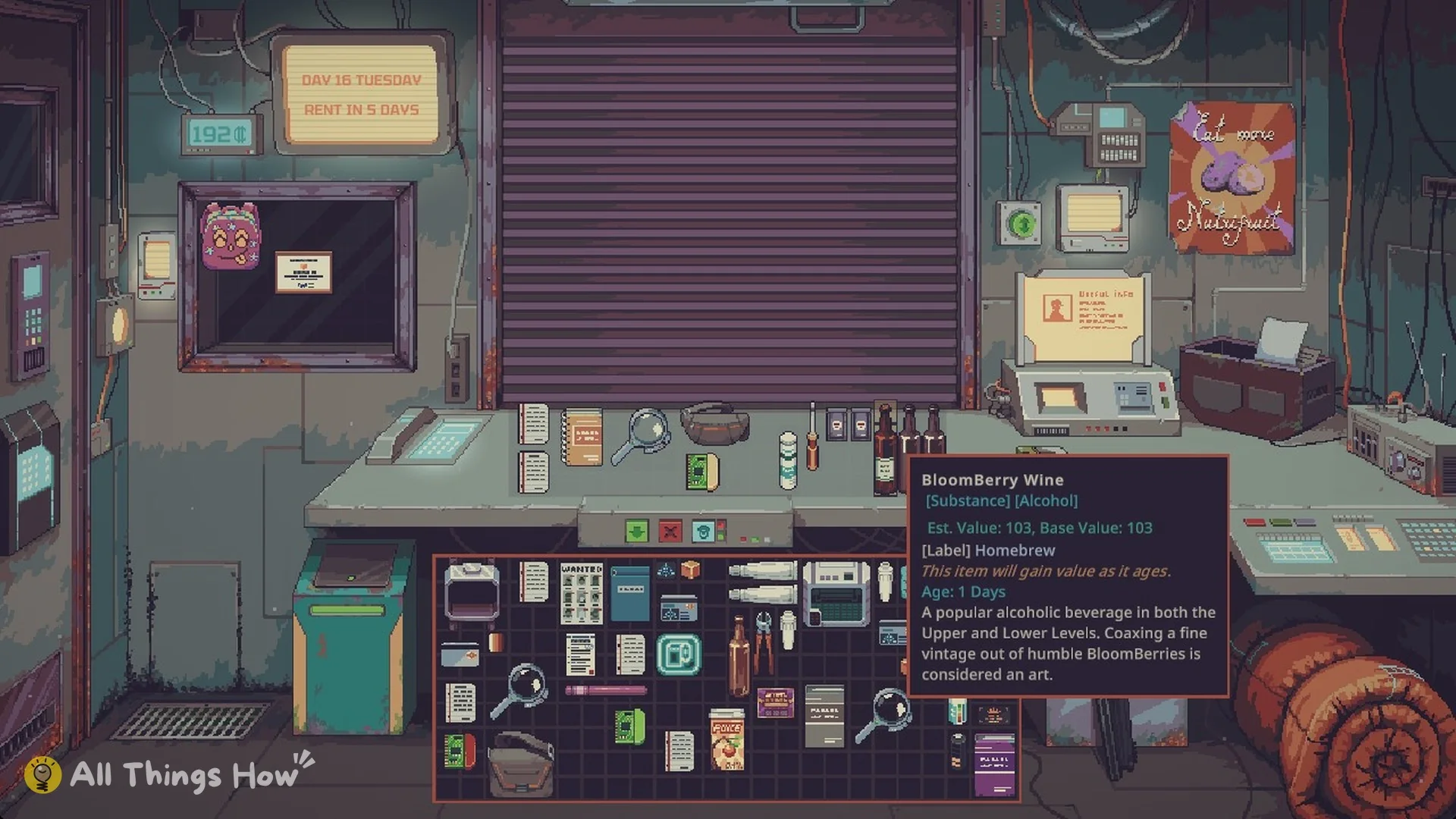
Both the Est. Value and the Base Value went up.
Don’t sell a finished bottle the moment it’s done.
Buying more Wine Bottles and winemaking gear
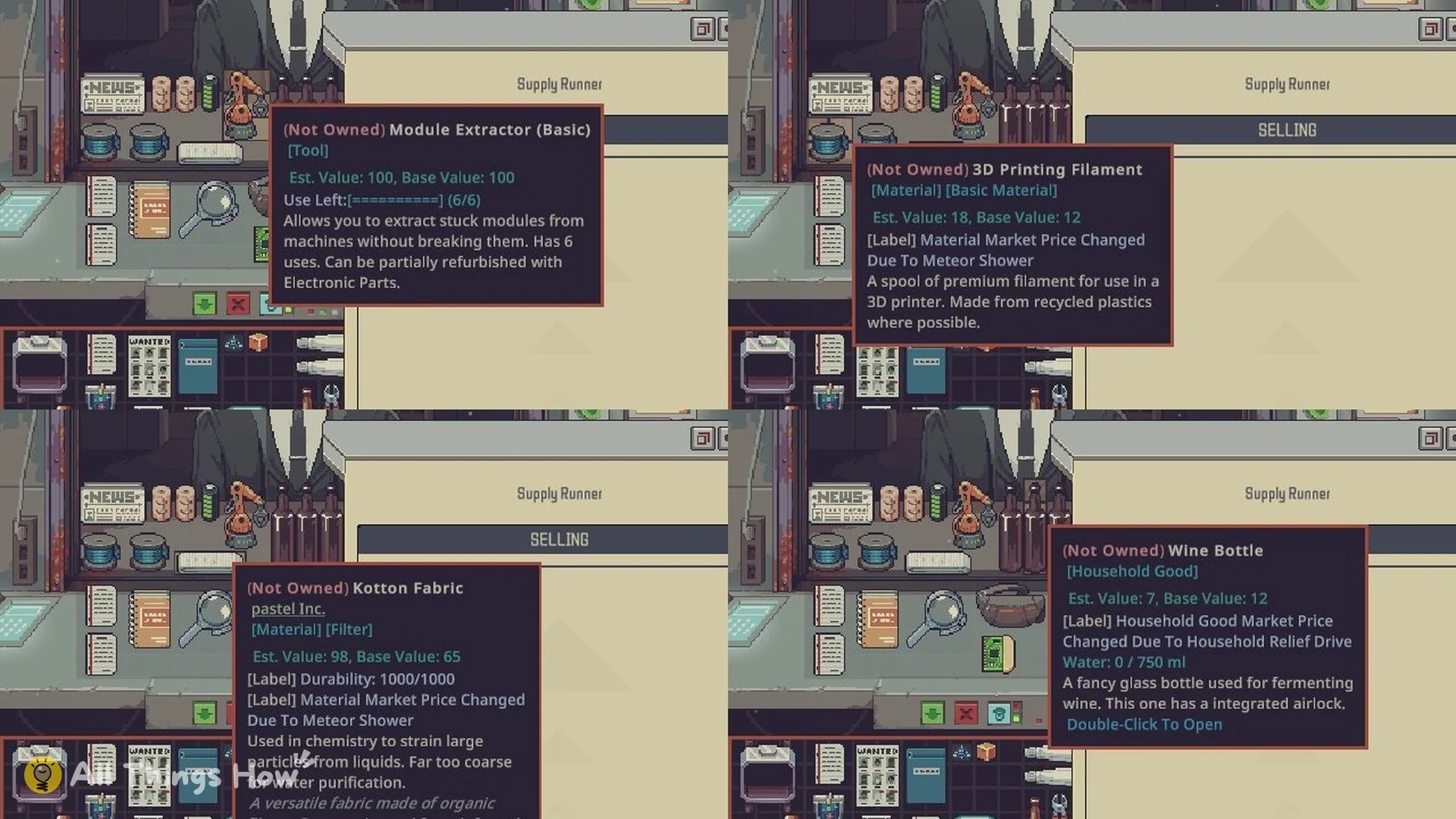
On Day 14 of our run, the day after we bought the upgrade, a seller labelled “Supply Runner” came to the window with Wine Bottles on his ledge. His other stock includes a Module Extractor (Basic) for 100, 3D Printing Filament for 18, and Kotton Fabric for 98. A bottle’s usual base value is 12, but a “Household Relief Drive” event may lower it to 7. The upgrade text promises the winemaker’s visits once a week after the first.
Other items change how fermentation and aging work:
| Item | Base value | Effect on wine |
|---|---|---|
 Super Yeast | 20 | Dramatically speeds up fermentation |
 Synthetic Yeast | 8 (Contraband) | Replaces yeast; needs only water |
 Yeast Bioreactor | 250 | Endless yeast, never consumed |
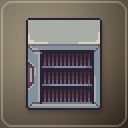 AgeWell | 350 | Wine kept inside gains one extra day of age per cycle. |
You can buy Super Yeast from thieves. Synthetic Yeast is illegal; it produces cheap wine described as “mildly carcinogenic.” Starting fermentation returns the Yeast Bioreactor to your inventory rather than consuming it. AgeWell runs overnight if it has power and a finished wine bottle inside.
A Fridge won’t help, because its chilling bonus doesn’t apply to wine. Each finished bottle holds 750 ml at 20% alcohol. You can use it as the alcohol in Dream Dust.
Tips for making wine
- Use Basewater or High Quality Water. A Sealed Water Ration (Standard) is exactly one bottle of Basewater; never use Pure Water.
- Two handfuls of small, ripe BloomBerry make high-grade wine. Check bunches with the Magnifying Glass and skip underripe or moldy ones.
- Always add Yeast. Without it wild yeast ferments the wine, with inconsistent results and more slowly.
- Keep finished bottles a while: the tooltip says the wine gains value as it ages, and an AgeWell adds an extra day of age each night.
- Keep spare Wine Bottles, Yeast and berries from the starter kit for a second batch.
Related guides: Wild’s Network upgrades, all crafting recipes, the items list, how to make money fast and the complete Probably Stolen guide.