Saving $250 in Shift at Midnight is the one hard requirement standing between you and the True Ending. The trap most players fall into is spending freely on tools and upgrades, only to reach the final night with a healthy store balance and an empty personal wallet. The money that pays for your pet’s surgery is tracked separately, so the whole run works best as one long savings effort rather than a spending spree.
Quick answer: Reach at least $250 in personal funds before you start Shift 13, then do not call Sheriff Clyde after Shift 12. Pay the veterinarian yourself and both your pet and Clyde survive.
Personal funds and store revenue are two different wallets
The single most important thing to understand is that the store’s account and your personal savings never mix. A packed, profitable night can fill the store’s balance without adding much to the money that actually covers the surgery.
Store money pays for weapons, traps, ammunition, healing, stock, boards, and decorations. None of it counts toward the $250 the veterinarian asks for. Before every big purchase, check both balances. Having enough store cash for another weapon does not mean your surgery fund is safe.
You are warned about the surgery after Shift 10, but do not treat that message as the starting line. By that point most of the story is already behind you. Protect your personal pay from the very first night, when shifts are calmer and clean paychecks are easier to bank.
How each shift pays you
Every completed shift adds a $10 base wage to your personal funds. The bigger lever is the daily quota. Beat the store’s revenue target and you collect roughly 10% of that night’s store revenue as personal pay on top of the wage. Simply surviving the night for the flat $10 will rarely get you to $250 by Shift 13, so hitting quota as often as possible is the backbone of the run.
| Source | Personal payout |
|---|---|
| Completing a shift | $10 base wage |
| Beating the store quota | ~10% of that night’s store revenue |
To hit quota, keep customers moving. Stay near the counter during rushes, verify quickly, and avoid making people wait while you handle low-priority cleaning. Keep shelves stocked so customers can actually buy what they came for, and clean the shop before the shift ends so a dirty store does not drag down satisfaction.
Small cash sources to collect every night
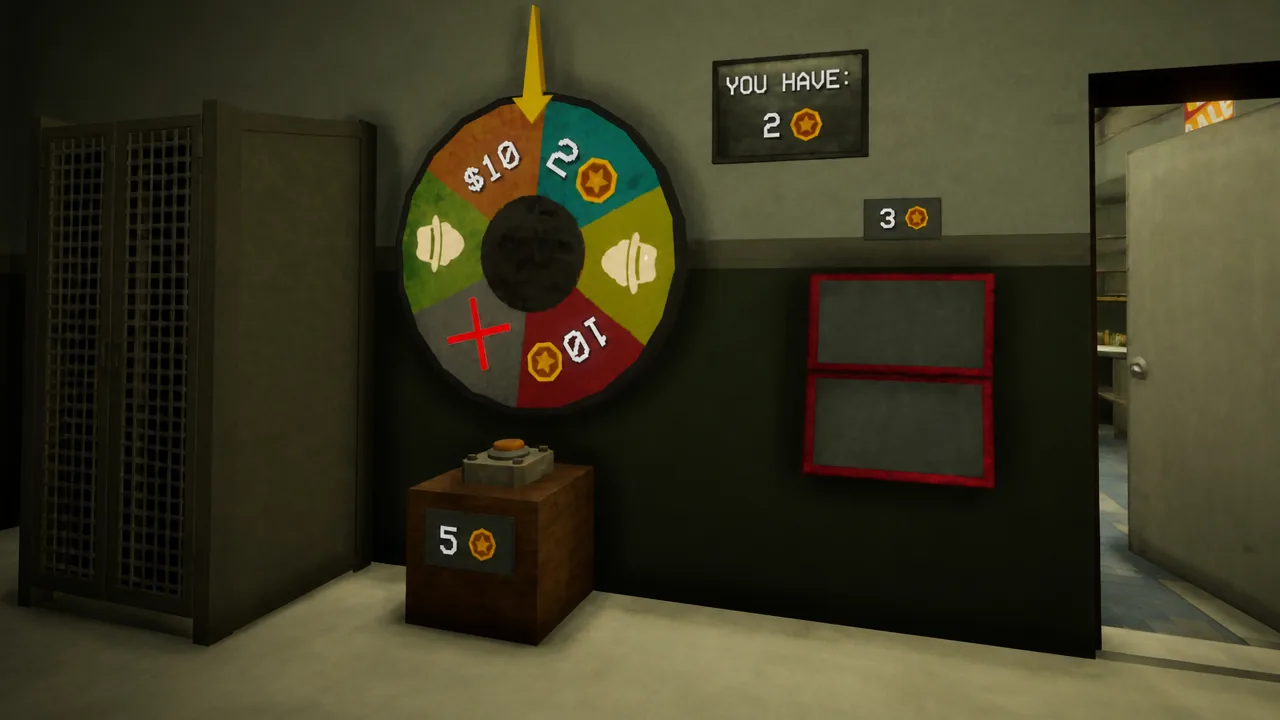
Beyond wages and quota, the shop floor is full of tiny payouts that add up over 13 nights. Cleaning is not just for your rating. Rats are worth far more alive than dead, and the prize wheel can hand you a clean $10.
| Action | Reward |
|---|---|
| Cleaning a stain | $0.10 |
| Throwing trash or a severed limb into the dumpster | $0.10 |
| Throwing a living rat into the dumpster | $3 |
| Killing a cockroach with the mop | $0.10 (plus the stain it leaves is worth another $0.10) |
| Landing on cash on the prize wheel | $10 |
When you need money, do not shoot rats. Pick one up alive and drop it in the dumpster for $3. Tossing a body part from a dead rat only pays $0.10, so killing them throws away almost all the value.
Search for tokens around the store at the very start of the night, before you touch the notice board that begins the shift. Once business opens, hunting for them gets much harder. Spin the wheel when a cash result would help your savings plan. It also drops hats and extra tokens, and once every hat is unlocked, landing on a hat refunds the five tokens you spent. Treat the wheel as a bonus, not the foundation of your $250.
Complete manager bonus requests
The store manager will occasionally call with a timed challenge that pays extra cash. These often ask you to clear a set number of rats or cockroaches before the timer runs out. On the fourth shift, for example, a typical offer is $20 for getting rid of 20 rats. Other requests include catching shoplifters or cleaning the forest behind the store.
You can carry pests outside by hand, but that eats time. Shooting them with your gun also counts toward the objective and is far faster when the clock is tight.
Read the objective early and slot it into a quiet moment, either before opening, during a lull, or after the main rush. Do not abandon the register mid-rush to chase it, because losing several customers can cancel out the bonus entirely.
Protect your pay: don’t shoot the wrong customer
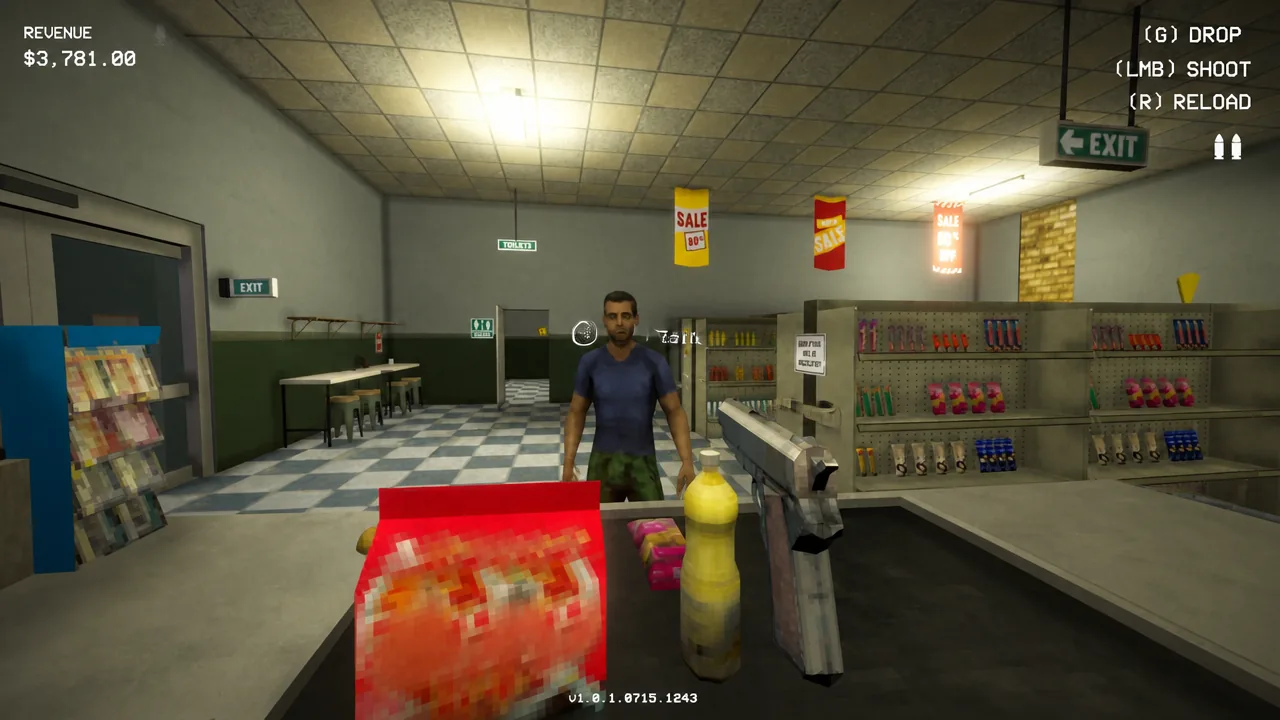
Killing an innocent human customer docks your end-of-shift pay, and a single mistaken shot can wipe out the profit from several legitimate sales. During a $250 run, that penalty hurts more than almost anything else.
Before firing, check the customer’s N.E.T. profile and question them. Use the ID information, occupation, physical description, behavior, and vehicle details to decide. If the evidence is still shaky, let them walk. You may have to survive an Entity hunt later if they were a doppelganger, but surviving that fight is cheaper than eating a human-kill penalty.
Serve a confirmed doppelganger, then eliminate it
When you are certain a customer is a doppelganger, complete their transaction first, then kill them with your firearm or any weapon on hand. The store still gets the sale, you take their money, and the doppelganger no longer feeds into the end-of-shift hunt. It is more profitable than attacking before the purchase finishes.
Only use this when your identification is reliable, because completing the sale does not cancel the human-kill penalty if you were wrong. One exception applies. A Blood Moon can force an Entity hunt no matter what you do, so clearing a single doppelganger will not always stop the attack at the end of that night.
Keep your shop rating at four stars or higher
A higher shop rating means customers spend more, which feeds directly into quota and your 10% cut. Aim for four stars or above. The simplest fix is placing a few decorative items around the shop, which you buy from the computer.
Cleaning speed matters too. The mop is slow and pulls you off the register. The sledgehammer destroys leftover flesh after violent encounters, and the hose clears blood faster than the mop. Buy both from the store computer when the store account can afford them, since they cut the time needed to reset the shop. During a rush, only clean what blocks movement or checkout, then finish the rest before the shift ends.
Spend store money only on things that earn it back
Buying every available upgrade is unnecessary and can quietly starve your run. Prioritize shelf capacity, faster cleaning tools, and anything that reduces service delays, since those raise revenue and make quotas easier. Weapons and traps are worth it when they prevent a failed night, but expensive gear you never use does nothing for the surgery goal.
Medicine is a special case. Paying for it lets your pet join the next shift, which helps solo players, but the cost comes out of personal funds. Buy it only when the extra help is likely to prevent a bigger loss, such as a difficult event night. Skip it on nights you can handle alone, because buying it too often can leave you short of $250 even after strong shifts.
The final night: don’t call Clyde
After Shift 12 you get the option to call Sheriff Clyde to cover the surgery. If you are chasing the True Ending, refuse it. Calling him locks you into the Grave Decision outcome, where your pet lives but Clyde dies. Refusing the call keeps Clyde alive, but you still have to pay the $250 yourself.
You do not necessarily need the full amount the moment the Clyde choice appears. Shift 13 still pays out, and that final income can close a small gap before the veterinarian checks your balance. A run that finishes at $252 or $257 succeeds. A large shortfall will not be rescued by one last night, so use your recent clean paychecks to judge whether a gap is realistically closable.
You know it worked when you refuse the call, complete Shift 13, and pay the veterinarian at least $250. The surgery succeeds, both your pet and Clyde survive, and the save moves into post-story play with your pet able to join future shifts. One thing to avoid entirely is accidentally shooting Clyde during his in-shift visits. He may even appear to behave like a stranger, but killing him while he is human removes the call option and can lock you out of the endings, so verify him carefully before you ever pull the trigger.