
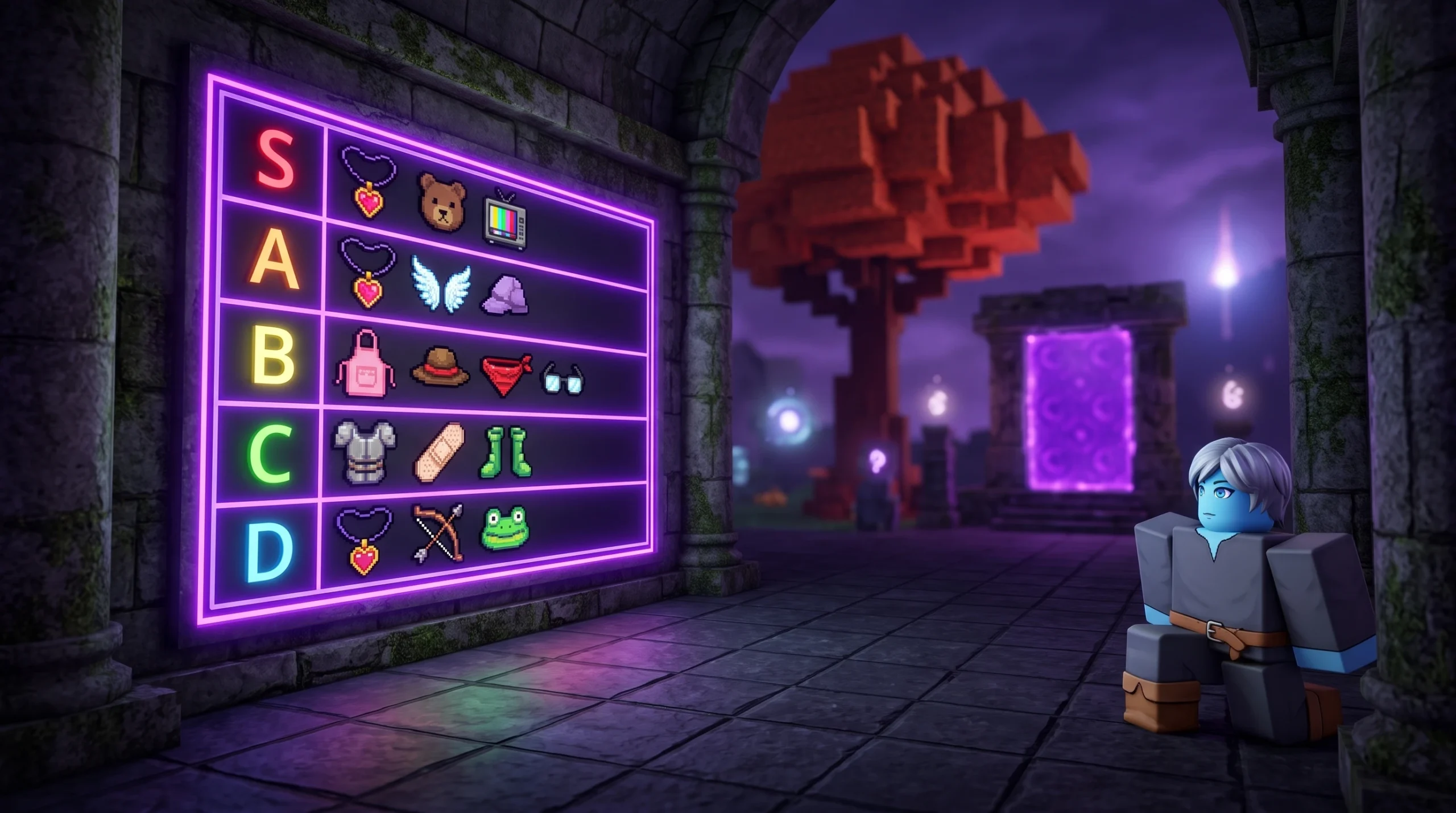
Armor in Souls Crossover X changes how long you survive in a fight, how much punishment you can trade, and how aggressive you can afford to be against other players and bosses. Picking the right set matters as much as your build, so it helps to know how the ranking scale is read before you commit resources to one piece.
Quick answer: Rank an armor by three things in order: raw defense and effective health, any resistance or status mitigation it grants, and the mobility or cooldown penalty it costs you. A set that raises survivability without slowing your kit belongs at the top; a set that adds defense but cripples your movement drops down.

How the armor tiers are scored
The tier scale runs from S down to D. Each letter describes how strong a piece is in the current meta, not how rare it looks. Use the meanings below to place any armor you pick up.
| Tier | What it means |
|---|---|
| S | Meta. Best defensive value with little or no cost to your kit. |
| A | Very good. Strong survivability with a minor trade-off. |
| B | Good. Solid in the right build, situational elsewhere. |
| C | Usable. Works early or as a stopgap. |
| D | Weak. Outclassed once better sets are available. |
What pushes an armor up or down
A high placement almost always comes from stacking defense without paying for it elsewhere. Sets that add flat mitigation or reduce incoming damage while leaving your movement and skill cooldowns untouched are the ones that hold S and A. The moment a piece slows your dashes, drags out your cooldowns, or locks you out of core abilities, it slides toward B or lower even if its defense number looks large.
PvP and PvE also pull placements in different directions. In player fights, mobility and status resistance often matter more than raw defense, so a lighter set can outrank a heavier one. Against bosses, sustained damage reduction and effective health carry more weight, so a bulky set that would feel clumsy in a duel can earn a higher spot in raids.
- Effective health, meaning how many hits you can eat before dropping.
- Resistance to status effects and elemental or type-specific damage.
- Mobility and cooldown cost, which decides whether the defense is worth it.
- Fit with your class and skill build, since the same armor can rank differently across playstyles.

How to place your own armor right now
You will know a set is worth keeping when you notice you survive exchanges you used to lose without giving up the openings your kit relies on. If a piece leaves you feeling sluggish or unable to escape pressure, it belongs lower on your list no matter how strong its defense reads.
This ranking framework reflects the meta as of July 2026, and armor values shift whenever a new update adjusts defense, resistances, or class balance. No official, fixed armor ranking is currently confirmed for Souls Crossover X, so lean on the scoring above to place each piece for your build, and re-check your picks after the next balance patch.