A WARDOGS account is seeded with $10,000 once, and that is it. There is no per-life allowance, no refill, and no cheap way back up if you spend badly. That makes the infantry-only question a real one: with no attack vehicles, no supply runs, no mortars and no exploits, how much cash can a player on foot actually pull out of a 100-player match? The answer, over four days of early access play, was $600,808.
Quick answer: Live inside the Hot Zone. It pays $320 per scoring cycle against the Normal Zone’s $160, and every kill you confirm while standing in it adds $1,500–$2,000 on top.
The infantry-only rules, and why they matter
The “Boots on the Ground” run sets four bans: no attack vehicles, no supply runs, no mortars, and no money exploits. The target is 30 Gold Bars before Season 1 closes. That last number is what gives the challenge its scale, because the Gold Exchange lists a single Gold Bar at $2,798,240.
Those bans remove the biggest shortcuts in the economy. Buying a $400 logistics crate and delivering it nets $2,100 a run with no risk at all, and ferrying teammates as a Driver or Pilot pays $300–$450 per delivery plus $500 more if the passenger survives ten seconds after disembarking. Take all of that away and you are left with three income streams: standing in the zone, helping teammates, and shooting people.
Zone occupation is the floor under everything else
A scoring cycle runs roughly every 10 to 15 seconds, and the faction with the most players inside the Control Zone when it ticks takes the money. The Control Zone itself is a single large circle around 2km across that moves between matches rather than sitting in one place. The Hot Zone is smaller, separate, and counts each player inside it as two bodies toward the scoring calculation, which is exactly why it pays double.
| Zone | Pay per cycle | Scoring weight |
|---|---|---|
| Normal Control Zone | $160 | 1 player |
| Hot Zone | $320 | 2 players |
Everything else on an infantry earnings sheet is paid on top of this, which is why proximity to the zone matters more than any individual fight. Roaming the map for kills breaks the cycle income and does nothing for the faction score, and the first team to 100 points wins.
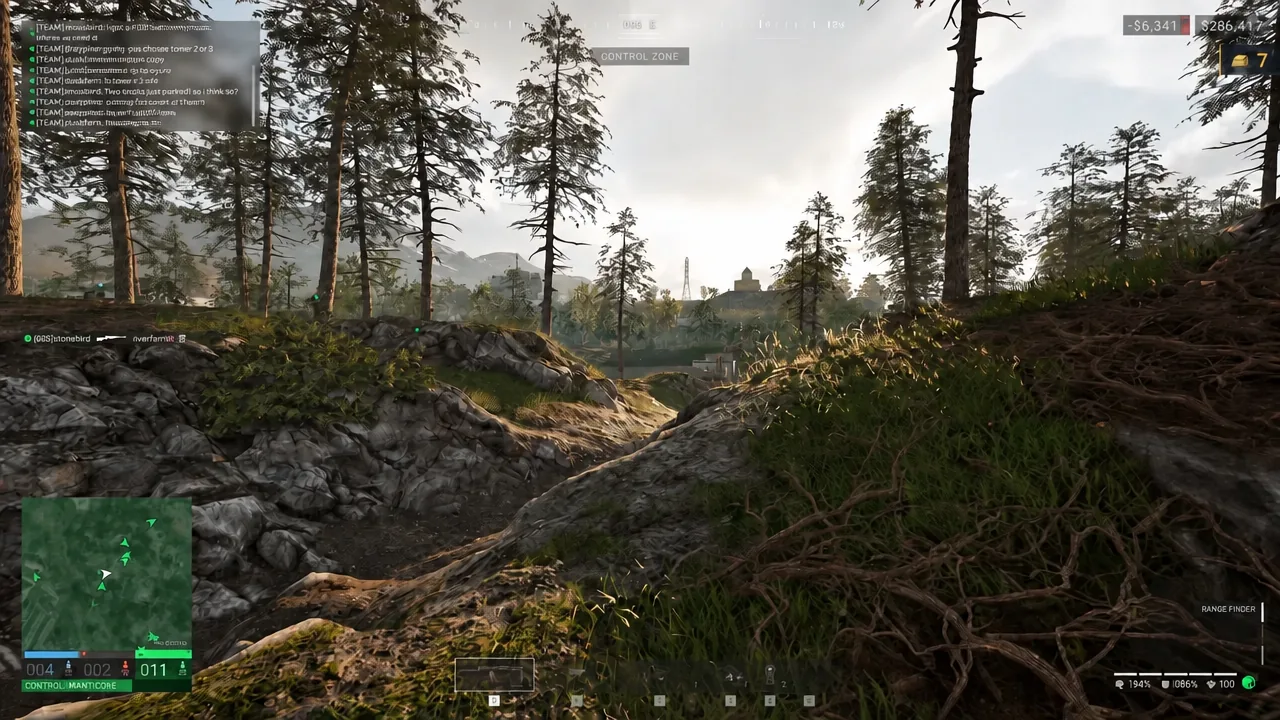
Turtling on a fixed position loses, even when your FOB happens to sit inside the zone. The zone moves, so you move with it.
Every cash payout available on foot
Each earning action also feeds XP into a specific class, and the six classes level independently. Kills and vehicle destroys are the odd ones out, since they credit whichever class the weapon or vehicle you used belongs to rather than a fixed track.
| Action | Cash | Class |
|---|---|---|
| Kill Confirmed | $1,500–$2,000 | Weapon’s class |
| Spot assist | $800 | Recon |
| Revive | $100–$900 | Medic |
| Bandage heal | $400 | Medic |
| Spot with Monocular or Range Finder | $100 | Recon |
| Finish a structure | $15 | Support |
| Hit the marked yellow X | $6 | Support |
| Regular hammer hit | $1 | Support |
Spotting pays twice. You get $100 for marking a target, and another $800 when a teammate kills it, which stacks rather than replaces. Building pays three separate ways per structure, and every player swinging a hammer on the same build gets their own payouts rather than splitting one.
Penalties run in the opposite direction. Team kills and team kill assists are the most severe, followed by destroying a friendly build structure or supply pallet, with damaging a friendly structure at the bottom.
Utility is what keeps you in the zone
Infantry income collapses the moment you get pushed off the objective, so smoke and frags end up doing more for your bank balance than any weapon upgrade. Thrown across open water and roads, a line of smoke grenades builds a visual wall long enough for a whole squad to cross into cover when the Hot Zone shifts.
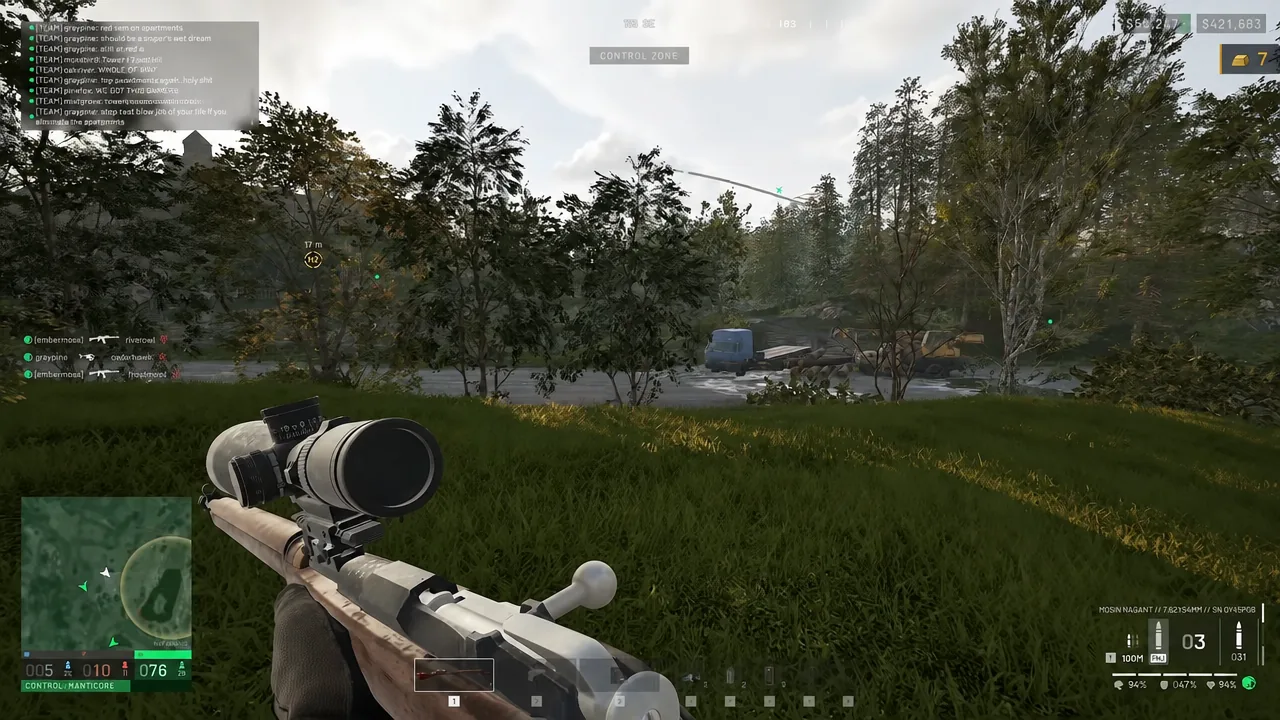
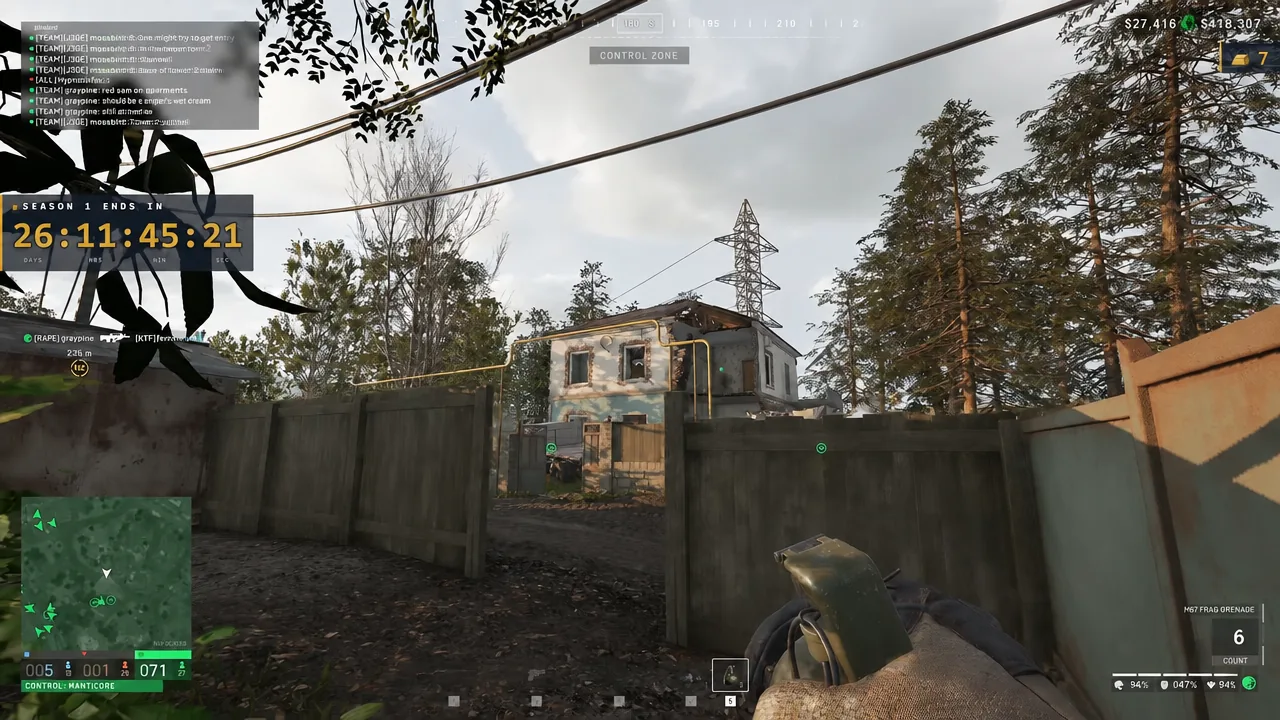
For dug-in defenders, cooked M67 Frag Grenades thrown over compound fences flush infantry out of houses without you having to walk a doorway. It is the cheapest way to break a held building, and anything that comes running becomes a confirmed kill.
The third piece is the bleedout timer. It is long on purpose, so a downed teammate is a revive waiting to happen rather than a loss. Letting it expire sends that player back to HQ and takes a body out of the zone for far longer than picking them up would, and the revive pays you between $100 and $900 for the trouble.
Weapons worth buying on an infantry budget
Because a loadout is bought per life, every gun is a recurring cost rather than a one-time purchase. Cheap and adequate beats expensive and dead.
| Weapon | Price | Damage (body / head) | Unlock |
|---|---|---|---|
 Bushmaster M17S Bushmaster M17S | $0 | 28.0 / 65.8 | None |
 Compound Bow Compound Bow | $800 | 77.0 / — | Recon 17, $125,000 |
 Scout Rifle TD Scout Rifle TD | $1,100 | 28.0 / 89.6 | None |
| PP-19 Vityaz | $1,200 | 22.0 / 46.2 | Medic 4, $25,000 |
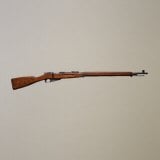 Mosin Nagant Mosin Nagant | $4,500 | 55.0 / 176.0 | Recon 10, $50,000 |
Bushmaster M17S costs nothing, fires semi or burst at 700 rounds per minute, and cannot take attachments at all. It is the fallback when a run of deaths has thinned your cash, and it still does 11.2 damage through body armour.
Mosin Nagant is the one that changes how infantry play works. At 55.0 damage a shot and 176.0 on a headshot, it kills level 1 armour outright at range, it zeroes out to 800m, and a single round lined up through a stairwell can collateral two players at once. The $50,000 unlock fee is steep against a $10,000 starting balance, but it is paid once, and the $4,500 per-life cost is what you actually live with.
Scout Rifle TD is the budget stand-in. It is a break-action sniper firing the same 5.56x45mm as the assault rifles, so body damage sits at 28.0, but the 89.6 headshot and 975 m/s muzzle velocity make it a genuine long-range option for $1,100 and no unlock requirement at all.
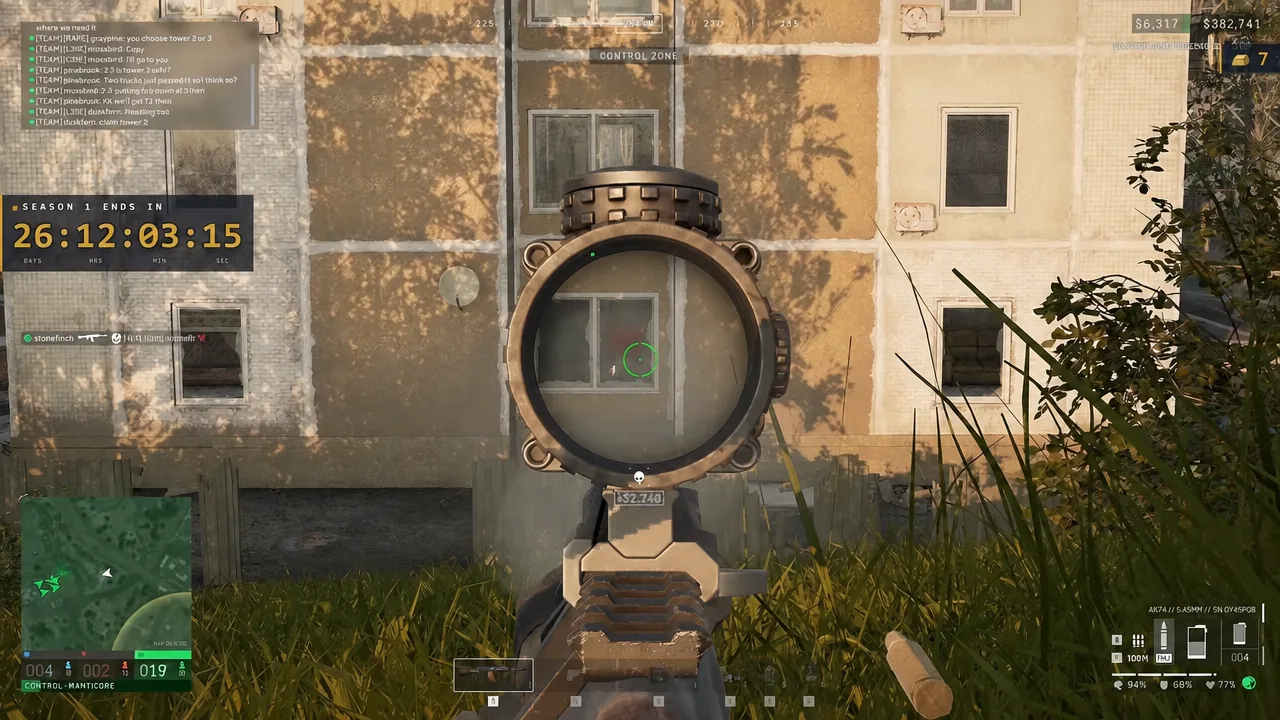
Before those, the spending order that kept the run solvent was level 2 armour, an AFG foregrip, a TGP-A suppressor, an M4, smokes and an IFAK, then the Mosin, with an AA launcher last.
Killing vehicles without driving one
Destroying an enemy vehicle pays a bounty, and nothing in the infantry-only ruleset stops you from doing it with explosives. The placement is not forgiving, though. A tank’s front glacis absorbs 80 to 90 percent of incoming damage and lights your reticle red, and rockets that strike armour at more than 60 degrees off normal simply ricochet.
- 1 IED on the rear engine deck or exhaust is an instant kill.
- 2 IEDs detonated together on the side hull drops it to critical.
- 3 or more IEDs are needed from the front, so never ambush head-on.
- 2 C4 charges on the turret ring or rear hull destroy a main battle tank; one only strips optics or a track.
- Tracks sit on a separate 450 HP pool, so a single RPG-7 or MAAWS hit on a drive sprocket is a mobility kill.
The payouts for the aircraft and light vehicles you are most likely to catch are modest next to a stack of kills, which is the honest reason infantry stay pointed at people rather than metal.
| Vehicle | Cash for destroying it |
|---|---|
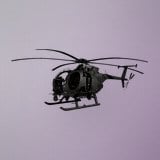 AH-6M [Miniguns] AH-6M [Miniguns] | $800 |
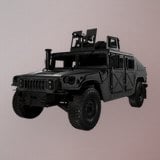 Humvee [Minigun] Humvee [Minigun] | $500 |
Combat vehicles are bought from the vendor in your faction’s safe zone and are never placed in the world during a match, so anything hunting you was paid for by a player who wants it back in one piece.
What the cash converts into
Gold Bars are a separate currency from cash and buy cosmetics only. Weapons, gear and vehicle unlocks all stay on cash, permanently. The route to Gold Bars is a progression reset, where any cash you have not spent converts automatically instead of being wiped.
That makes hoarding neither a trap nor an advantage. Nothing is lost by carrying a balance into a wipe, and nothing is gained either, so the sensible play is to buy the unlocks you actually want first and let the remainder become cosmetic currency. WARDOGS itself launched into Steam Early Access on 10 September 2026, and the $39.99 PC listing is the only way in.
How to tell it is working
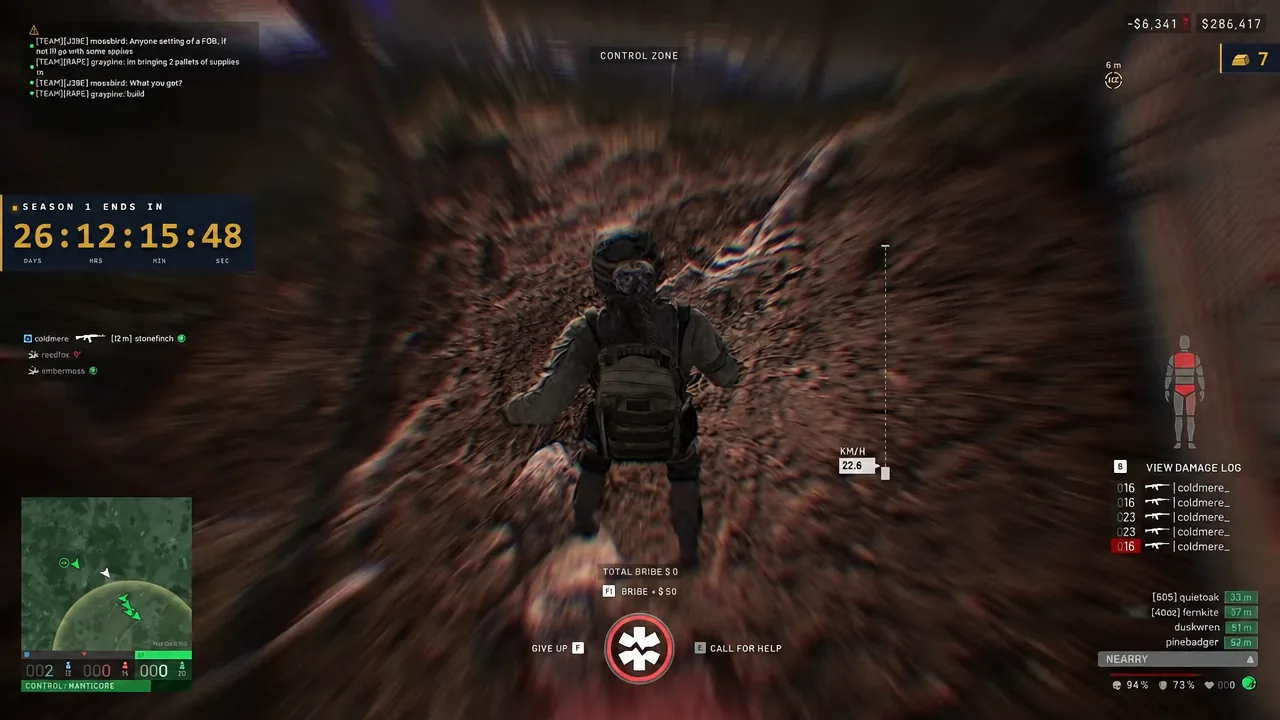
Pull the scoreboard mid-match. It shows your earnings line as it climbs, which is the fastest read on whether your positioning is paying. A figure like $83,047 partway through a match means the zone income and kill confirms are stacking properly; a flat number means you have drifted off the objective.
At the end, the victory breakdown gives the match total. One Manticore win closed at $118,296 in match cash. Across the first four days the running total reached $600,808 from 11 matches — four wins, six losses and one quit — with 211 kills, 105 assists, 104 deaths and a 2.03 K/D.
Set against a Gold Bar at $2,798,240 and a 30-bar target, four days of infantry-only work covers roughly a fifth of a single bar. The pace is not the point, though. What the numbers show is that a player who never touches a vehicle, a mortar or a supply run can still clear six figures a match, purely by standing where the money ticks and being useful to the people standing there with them.