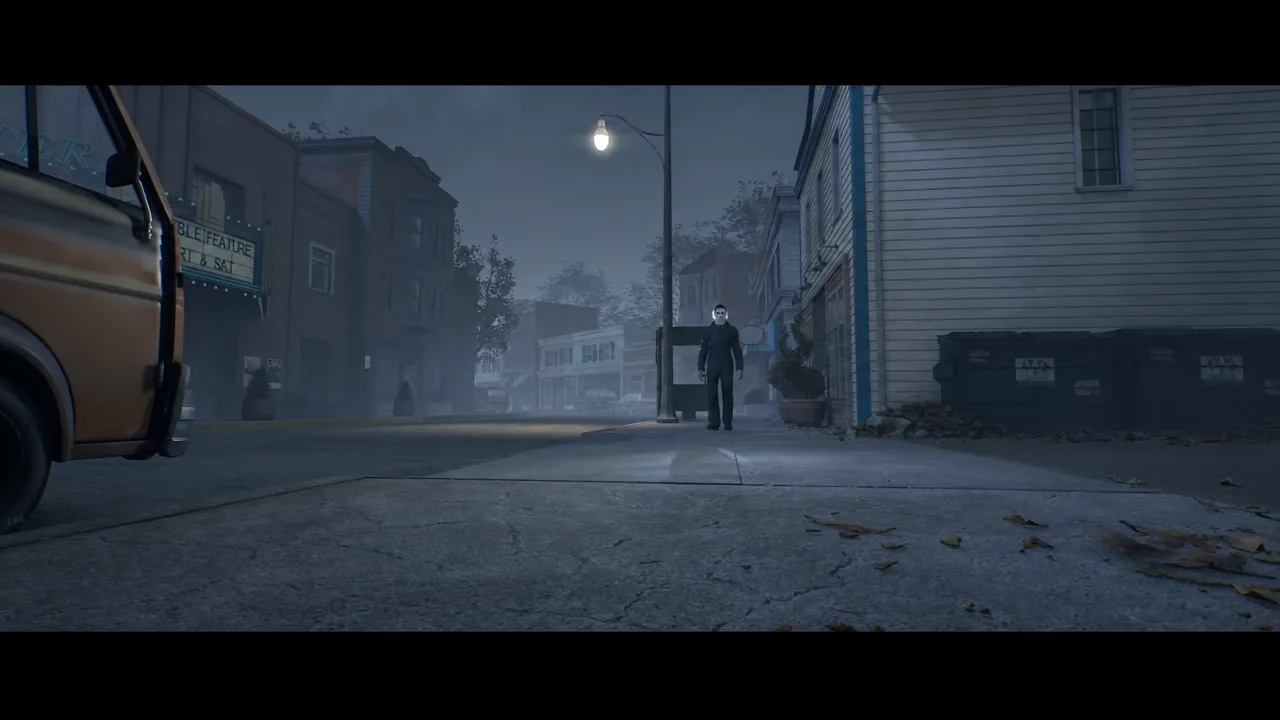
Michael Myers plays like a stealth character with a very short patience meter. In Halloween: The Game, the objective banner is blunt about it — KILL ALL THE RESIDENTS — but the systems underneath reward watching people before you touch them. Stalk first, kill quietly, then clean up the evidence before someone reaches a phone.
Quick answer: Build Bloodthirst by stalking residents from cover, use Shape Jump and blackouts to close distance unseen, and hide every body in a bathtub, closet, bush, or car trunk while breaking landlines so no one can call the police.
Bloodthirst tiers: What stalking actually unlocks
Stalking is the engine of Michael’s kit. Holding focus on a resident builds Stalk, which raises Michael’s Bloodthirst tier and helps him keep track of that target. The game confirms each step with an on-screen notice — BLOODTHIRST TIER 1 REACHED, then Tier 2, then Tier 3.
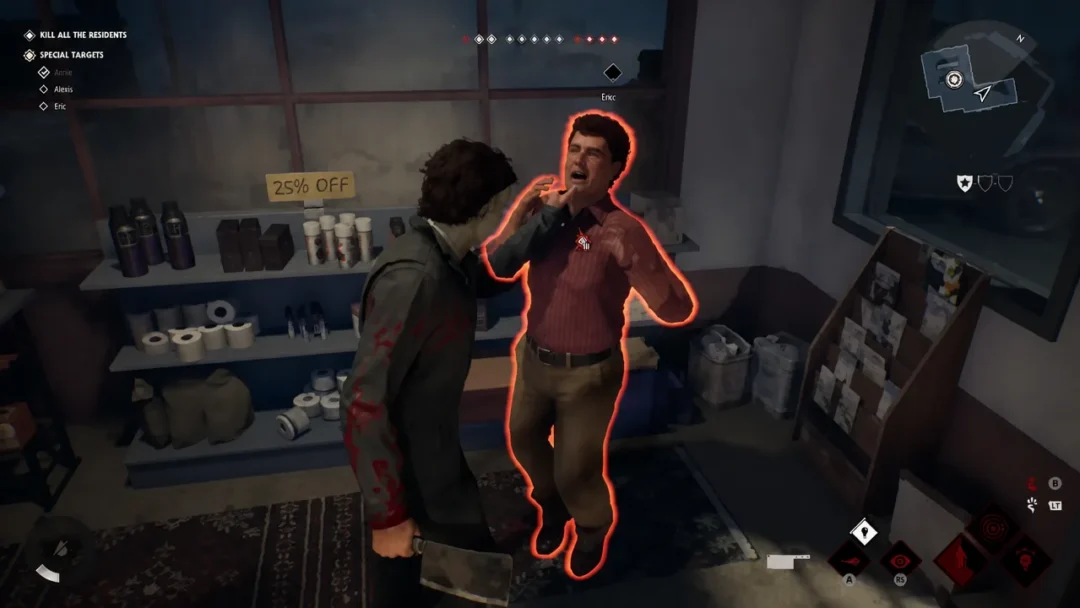
Higher tiers open up stronger execution animations, including the environmental kills that need a specific object nearby. At the low end, Michael can still finish someone bare-handed with a choke. That is the fallback when nothing useful is in the room.
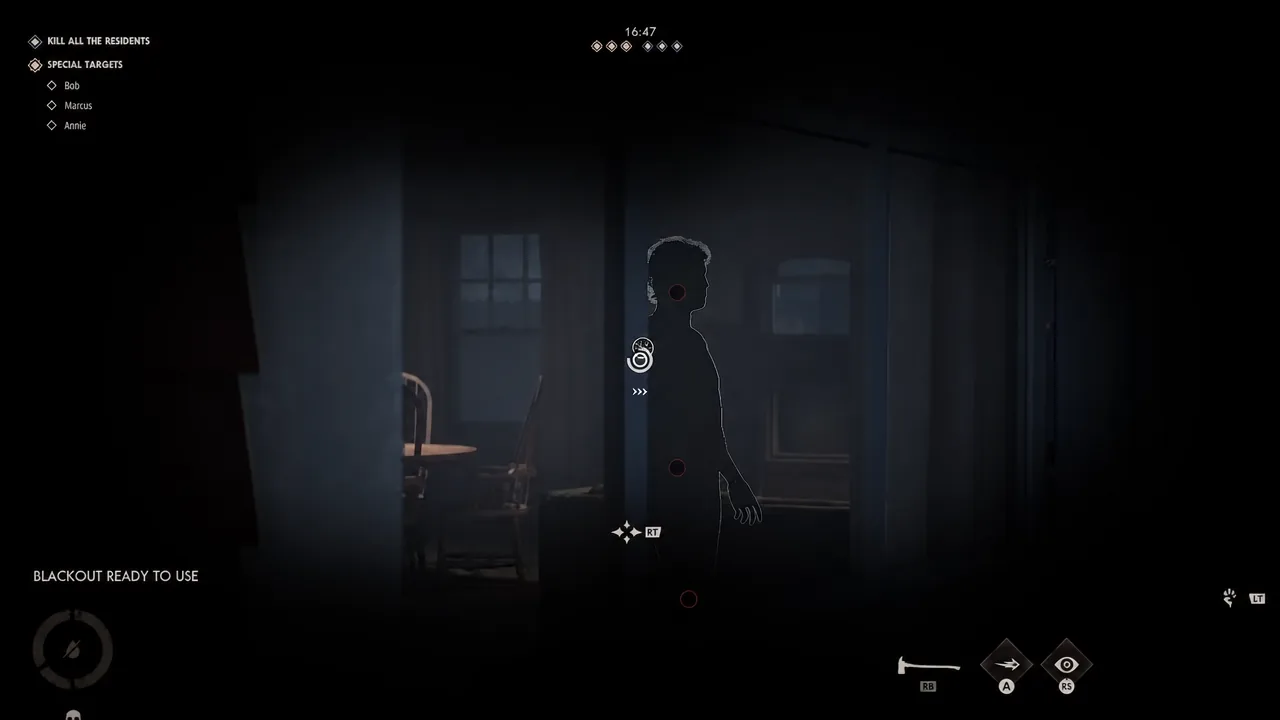
Killer Sense is the companion tool here. Switching to first-person view picks out nearby residents so you can pick a target before revealing yourself. Perks can extend that awareness further — a radar detector perk, for example, shows survivors inside a house you have not entered yet.
Michael’s abilities and movement tools
Michael never sprints across a lawn to catch anyone. His traversal is built around shadow, darkness, and short bursts of speed, with on-screen prompts telling you when each ability is off cooldown.
| Ability | What it does |
|---|---|
| Killer Sense | First-person view that detects nearby residents and marks potential targets. |
| Stalk | Focus on a resident to track them and raise Bloodthirst. |
| Shape Jump | Move through shadows unseen at increased speed, including teleporting through a window. |
| Shape Dash | Short forward lunge to close the last few feet on a fleeing resident. |
| Blackout / Darkness | Cuts lights and power in a house, creating shadow for Shape Jump. |
| Detection Pulse | Briefly reveals resident positions. |
| Melee combat | Fights back when residents arm themselves and resist. |
Power boxes are the manual version of a blackout. Disabling one kills the lights in a house, and Michael can then jump straight through a window into the dark interior instead of walking in through a lit doorway.
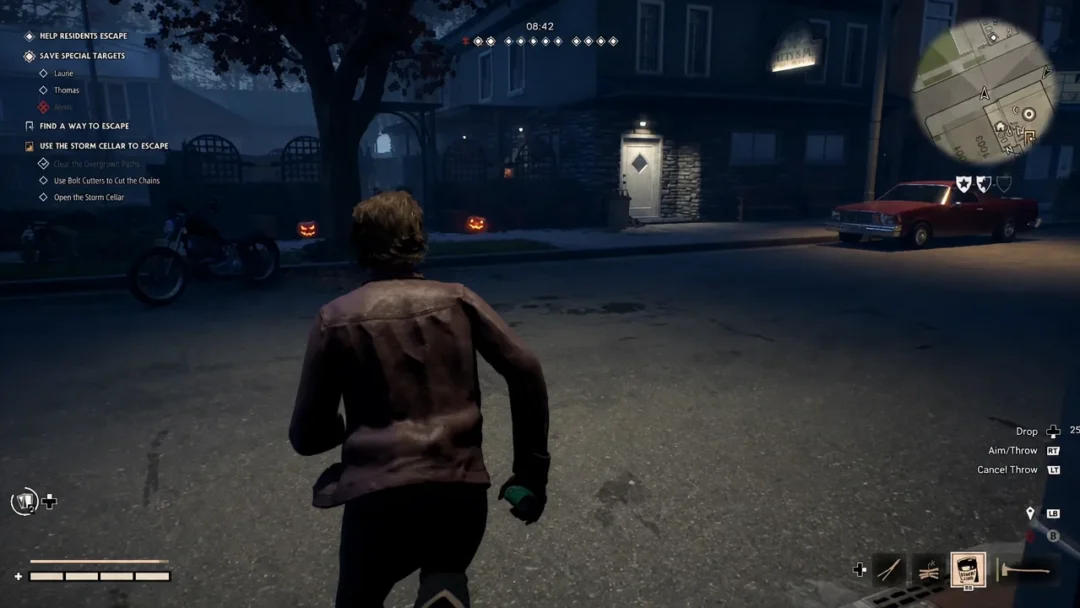
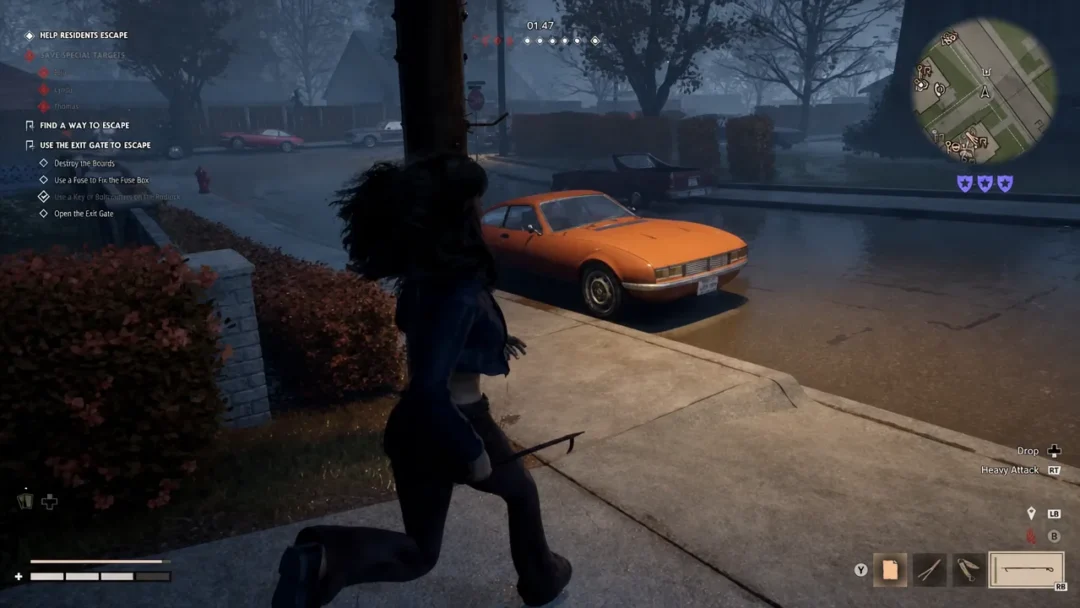
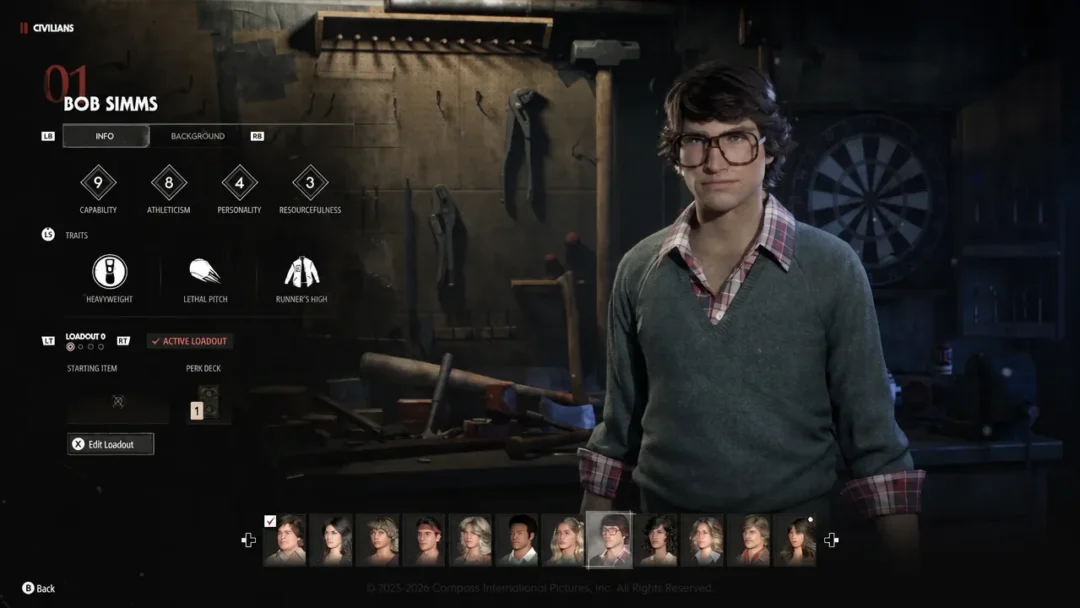
Note: residents are not helpless. Groups gather weapons, help each other, and fight, so splitting them up matters more than raw damage. Escape attempts also make noise, which gives away the location of whoever is trying to leave.
Weapons and ranged kills
Michael starts a match with one weapon, and the choice changes how you approach a target. The kitchen knife is the close-quarters default. The hatchet and meat cleaver both work in melee but can also be thrown, and a thrown blade that connects is an instant kill from range — enough to drop a target across a street or beside a shed with a single headshot.
The trade-off is cleanup. A thrown weapon drops a body wherever the target was standing, often in the open, which is exactly the situation that gets the police called.
Environmental executions and where they trigger
Grabbing a resident lets you walk them toward a usable object, and the prompt changes based on what is in front of you. These are the finishers built into the maps rather than into a weapon.
| Execution | Object required |
|---|---|
| TV Zap | A powered television set |
| Window Crush | An open or breakable window frame |
| Head Slam | A wall corner or a phone booth |
| Fridge Smash | Kitchen refrigerator |
| Flamingo Stab | Lawn ornament in a yard |
| Toilet Stump | Bathroom toilet |
| Motorcycle Crush | Parked motorcycle |
| Ledge Slam | Tombstone or similar ledge |
| Phone Cord Choke | Landline phone with a cord |
| Tool Stab | Screwdriver or workbench tools |
| Stove Sear | Hot stove burner |
| Car Lift Crush | Raised vehicle |
Cemeteries, garages, and kitchens are the densest spots for these. If you are hunting a specific animation, herd the target into the room that has the object rather than killing them where they stand.
Keeping the police out of the match
This is the part that decides most matches. If a resident or NPC finds a body you left in the open, they call for help, and the match shifts into a timed state with POLICE WAGON CALLED and a countdown reading COPS ARRIVING IN 02:00. You will also see A COP HAS ARRIVED TO INVESTIGATE when an officer shows up to check the scene. Michael cannot be killed, but he can be knocked down or detained.
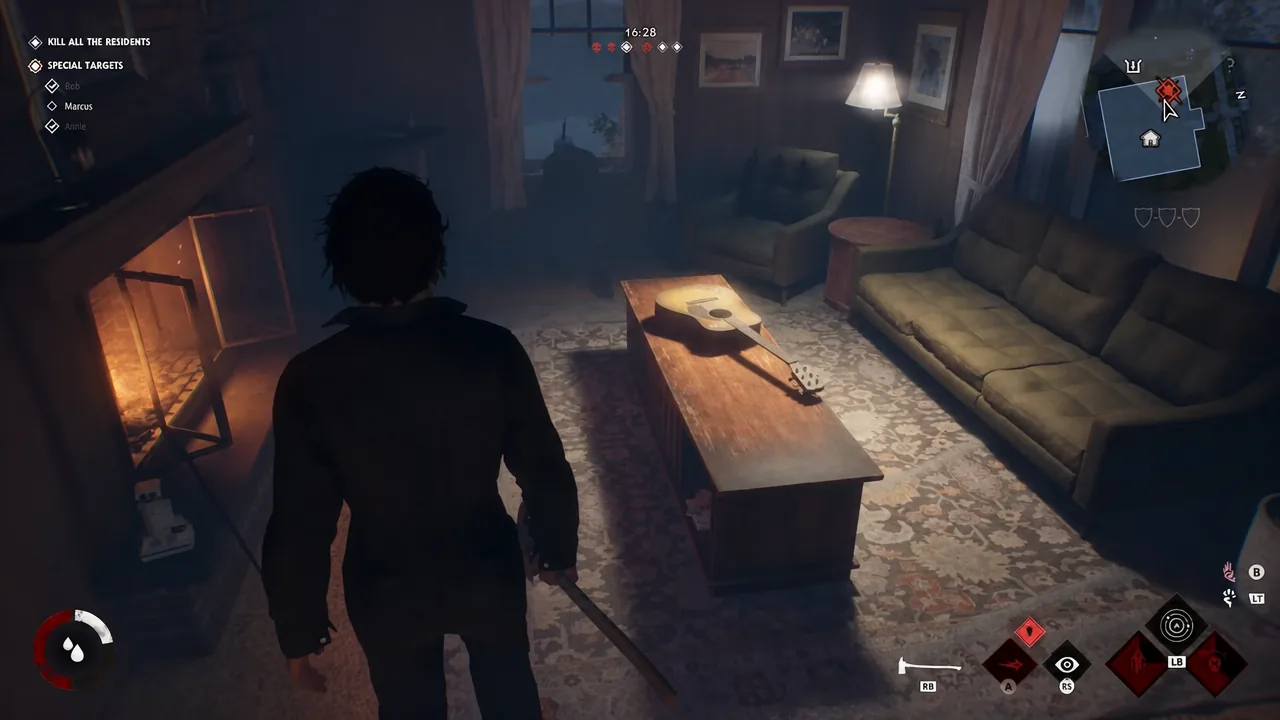
Two things prevent the call. Cut the line, or hide the body.
You know it worked when no alert fires and the countdown never appears. If the timer does start, the match is not over — killing the remaining residents before the wagon arrives still closes it out.
Special targets and bonus scoring
Each match assigns Michael a named list under a SPECIAL TARGETS header, with residents such as Bob, Marcus, Annie, Lynda, Jennifer, Rachel, and Eric appearing as marked names. Killing them before the timer expires is worth extra points.
Finding them is not guesswork. A yellow beam of light rises into the sky above a special target’s position, so you can commit to a direction instead of sweeping houses at random. Confirmation comes as a banner reading SPECIAL TARGET BOB KILLED or the equivalent name.
Because these targets exist alongside the general resident population, a match against skilled survivors still has something to hunt. When the last resident goes down, the match ends with ALL RESIDENTS KILLED followed by GAME OVER.
Maps in rotation
Four Haddonfield locations are in play, and each changes how much cover and how many usable objects you have. Suburban maps are dense with houses, interiors, and yard props. Town Center trades some of that for open ground, phone booths, and a cemetery.
| Map | Notable features |
|---|---|
| Haddonfield Heights | Rain-soaked suburb, porches, house interiors with TVs and bathtubs |
| Orange Grove Estates | Residential streets, kitchens, yards, parked cars for trunk hiding |
| Haddonfield Town Center | Phone booths, sheds, motorcycles, a cemetery with tombstones |
| East Haddonfield | Garages, kitchens, workbenches and tool-based executions |
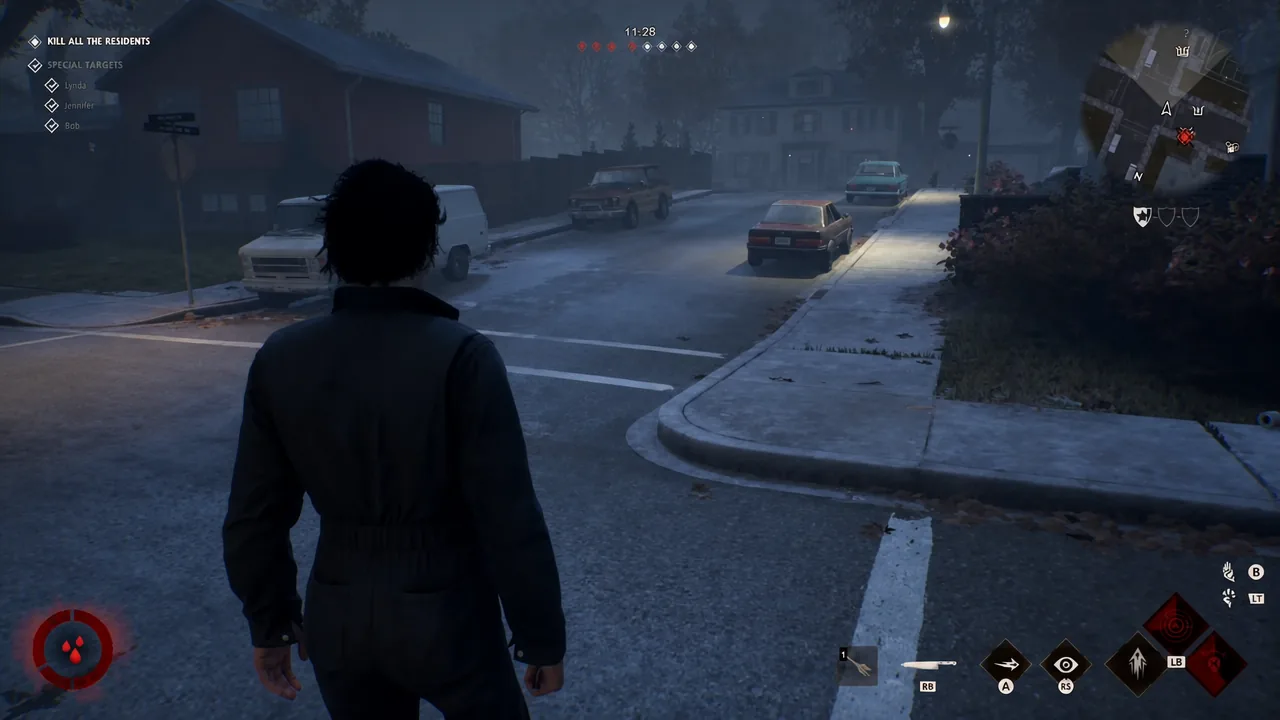
Michael’s loop rewards restraint over aggression. Watch a house, cut the power, take the target the phone line cannot save, and put the body somewhere nobody looks. The game itself runs on PlayStation 5, Xbox Series X/S, and PC, with the full release arriving September 8th, 2026 and Advance Access already live for Deluxe Edition owners on the Steam store page.